Sita Sings the Blues: a great film we gotta see here

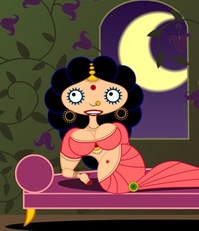
1sita-thumb-200x2312I just heard about this animated film that Ebert is raving about. Get this: an animated film based on the Indian epic, The Ramayana, with songs from 1930s singer Annette Hanshaw.

The Ramayana tells the story of a great betrayal by a husband and his mother on the husband’s wife. It is one of the oldest texts in India, and rife with magic, monkeys and religion. It was made to be a thriller–a very long thriller.

The movie though, is animated.

Here’s the trailer, without the Hanshaw.

The problem: Hanshaw’s estate won’t give Nina Paley, the creator of Sita Sings the Blues, the rights to use the songs, so no distributor will touch it. It can win tons of awards–and it has–check out this site. But it can’t be mass distributed. Update:  Here is Nina’s Distribution Plan since Ebert’s article!  Click there to find the movie…and where you’ll be able to see it.

I can’t wait to see this film. I wonder if we can get Yukon Film Society folks to bring it up. It seems to be showing at film festivals everywhere….

So, this is another outlet for fantasy writing: cartooning and reinterpreting world epics with lots of fantasy elements. And adding in some historical footage too. It’s remarkable. Listen to this. Here’s a nice mix of 1930s Singing, modern animation, and a world Epic:

There are no limits for fantasy writing. None. Okay, well, copyright….but really, no limits. 😉

Novelists! Classes start Monday at Yukon College

rightimg1Happy New Year to Everyone! I hope this coming new year brings you what you want.

It’s a long and interesting journey, no doubt.

Perhaps, you are looking to work on your novel? Perhaps, you have been working on one for years and you want to get some guided help through a course? Maybe, you just plunked one out in November during NaNoWriMo (National Novel Writing Month) and you want to work on revising it, or just getting feedback on it.

Yukon College is offering two courses: Monday nights for Realism/Mainstream writing and Tuesday nights for Speculative Fiction (Fantasy, Science Fiction, Horror, Fantastical Children’s Lit). The school, though, is closed till Jan 2, or Friday. So, if you’re gonna sign up and come to the first class on Monday, you’ll have to sign up on Friday or Next week. Regardless of when you sign up, come to the first classes. We have to get a viable head count to know if the classes will make. We need 8 people each class, at least, to make this happen. We’ll be working on synopsis writing and editing three chapters of your novel.

Click on Writing Classes to learn more.

Also, don’t forget that Yukon writers, in classes or not, should be getting ready for the Editor’s Weekend that is happening at the beginning of April. Six editors are coming up to talk with Yukoners, give workshops, about the next steps in publishing their manuscripts. This coincides with the last weekend of our coursework. So it makes a fitting transition after our class is done to move towards shopping a manuscript around.

So, if working on your novel is part of your planned journey for 2009, I hope to see you in class in the new year!

Go to the General Store in Whitehorse for the Chocolate Covered Potato Chips

Hey, gang. My friends bought me those dark chocolate covered potato chips here IN TOWN! The General Store carries them. Go make the store happy–and yourself–by trying these not-to-be-missed, soon-to-be your-favorite-snack goodies.

Apologies if you were looking for astute comments on Science Fiction and Fantasy. The Holidays have tuned my mind in a chocolate direction. Astutism will return soon.

New Anthology Market– Triangulation: Dark Glass

March 31, 2009, Deadline— From Their Website:

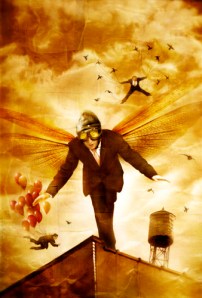
Taking Flight by Vincent ChongTriangulation is an annual 125-150+ page short fiction anthology that publishes science fiction, fantasy, horror, and any other speculative fiction that caught the editors’ fancy. Every year we have a theme: 2009’s theme is “Dark Glass”. We pay semi-pro rates and are available online at places like Amazon.com. We use Lulu.com as our printer, so if the publish-on-demand thing leaves a foul taste in your mouth, avoid us. We’re a small outfit but we work hard to produce a quality product; Asimov’s Science Fiction said we were “equal to any issue of your favorite prozine.”

No, we don’t get tired of mentioning that Asimov’s said nice things about us.

We define “short fiction” as “up to about 5,000 words or so.” We have no reason to impose hard and fast arbitrary word limits, but we are interested in publishing a wide variety of entertaining and literate stories, so the more space a story would take, the more it will need to impress us. If you have an awesome story that exceeds 5K then by all means send it; but be warned that if you’re closer to 10,000 words, it will probably need to have the editorial staff cheering and high-fiving each other so much that the senior editor’s roommate’s poodle runs into the room to see what all the commotion is about. And that dog likes his naps.

We dig flash; there is no minimum word count.

We have no interest in getting more specific about the term “speculative fiction.” Science fiction, horror, fantasy, magic realism, alternate history, whatever — if there’s a speculative element vital to your story, we’ll gladly give it a read.

We love creative interpretations of our theme, “Dark Glass”. Don’t ask us what it means — tell us what it means with a story that convinces us you’re right.

We publish both new and established writers; the level of experience for the authors gracing our pages has ranged from “first time in print” to “Hugo winner.” The majority of our stories usually wind up being from American authors, but we’ve had a number of international contributions; we’re happy to consider work from anywhere in the world, just as long as it’s written in English.

We will run mature content if we like the story. So make sure there’s an actual story in that mature content.

We will gladly consider reprints. If the story ran someplace obscure, then it’s probably new to our readers; and if it ran someplace high-profile, it’s probably really good. Either way, we win!

No poetry. Sorry.

No fanfic, even if it’s fanfic of a fictional universe that has passed into public domain. Cthulhu Mythos, I’m looking in your direction.

No thinly-disguised transcripts of roleplaying sessions, no settings obviously based on D&D or other such games. Don’t get us wrong, we love to game ourselves — which means our imaginations are probably too cluttered with elves and dwarves and orcs and the like as it is.

Submission deadline is March 31, 2009. All electronic submits must be sent by that time, all snail mail submits must be postmarked by that date.

Compensation:

We pay two cents per word (USA funds, rounded to the nearest 100 words, US$10 minimum payment) on publication and a single contributor’s copy. The anthology will be published in late July of 2009. We purchase North American Serial Rights, and Electronic Rights for the PDF downloadable version; since we’re cool with reprints, we really don’t care whether we have firsties. All subsidiary rights released upon publication. Contributors will also have the option of purchasing additional copies of the anthology at-cost, exact price TBD.

How To Submit:

Electronic submissions make our lives easier. Please send your story to editor@parsecink.org. Please put your subject line in the format of “SUBMISSION: Story Title” so we can tell you apart from the spam.

We’ll consider stories ONLY in the following formats:

  • .odt (OpenDocument Text — format used by the OpenOffice.org suite) — preferred format
  • .rtf (Rich Text Format — generic document format that most word processors can create)
  • .doc (MS Word — we’re not crazy about it, but let’s face it, it’s the one most people actually use)

Please use industry standard manuscript format. There’s disagreement on some of the exact details of the “standard” — we’re cool with that. We’re not testing you to see if you can follow each and every niggling detail, we just want a manuscript that looks professional.

If you absolutely positively can’t use email, please send the manuscript (with either a SASE or a return email address) to:

Triangulation 2008
134 Orchard Dr.
Penn Hills, PA 15235

No hand-written manuscripts. We gotta draw the line somewhere.

Please, no multiple submissions; only send us one story at a time. We’ll get back to you promptly, we promise.

For Full GUIDELINES, CLICK HERE>

Alpha Inventions: Just Go Somewhere

Okay, by fluke, it seems, a website called Alpha Inventions started showing my blog in a series of rotating blogs. It increased my traffic in seconds–with one caveat–it did not increase any clicks on any pages.

Here’s what happens: the carousel of blogs go round. They are random. Often they are from people who have come there seeking info about how their blog got on the carousel. You can pause a blog and read it. 

If you go there, you’re in control.  PAUSE something and read it.  Go browse on pages you find interesting. I found a few blogs myself that are pretty nifty.  

Some things that do cause a little concern on the site:  I just started noticing advertising on the page, and that the blogs which had been shown at 30 second intervals are now at 2 second intervals.  Not a lot of time to see anything of interest, or even for the pictures on blogs to download all the way.  Kind of defeats the purpose.  

My assumption, and I can be wrong, but it seems that Alpha Inventions, then, is just using your blog to get people to stay on the site to read the advertising.   From about twenty minutes on the site, where the blogs rotated fast, it seemed the Mormons were a top benefactor.  It’s unfortunate that Alpha Inventions will not show you what information they have gathered about you, so I couldn’t find where on the blog that my post was listed or how people were coming here.  Since they no longer show blogs for more than 2 seconds, its not a great way to browse blogs— Are they simply another commercial-producing site that uses my blog to hawk other people’s wares?  Maybe.  Those who subscribe get multiple showings.  But with two seconds, what are you getting?  What you paid for?  

And since I didn’t give anything to Alpha Inventions, is it just this entry that attracts the roving blog-grabber?  I don’t know.  But it seems that it capitalizes on a blogger’s desire to be seen, and so he/she puts their blog into the queue.  But it’s random, doesn’t last long in the queue, and you have no way of seeing how your blog got nabbed in the first place to get the attention.  

For something I don’t know much about–and which uses my blog to advertise other stuff–I’m a bit wary.

Like Love, but Chocolate

headerOkay, fast plug for Serotonin Chocolate from Vermillion Alberta. I am feeling something akin to love, a love that dare not speak its name, for Dark chocolate-covered potato chips. Amazing. I don’t know where my friends got these in Whitehorse, but when I find out I’ll let you know. You can’t put them down. They haunt you in that little bag with the cellophane window….and the two cows on the front…

The makers claim that chocolate releases serotonin in your brain–the same thing you feel when you are in love–which might explain my heart palpitations.  Thank you Dave  and Jaime!   You have brought us together–and I know love!  😉

chocolatechips

How Fiction Changed Christmas

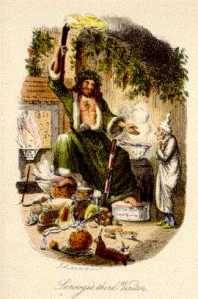
1971-toon-ghost of christmas presentI received this on my SF Canada listserv from Celu. But it fit so well into what we’ve been talking about here–that FICTION has power to change the world, that I wanted to post it. If there are errors in this posting, I apologize. I did not vet it ahead of time. The pic is from the 1971 cartoon. I grew up on this one and the Mr. Magoo version.

Merry Christmas!

_____

A CHRISTMAS CAROL: THE LITTLE GHOST STORY THAT SAVED CHRISTMAS

Not too many people are aware of the influence of Charles Dickens’ A Christmas Carol on the evolution of the modern Christmas holiday.

First of all– in 1843, when Dickens wrote it, the state of the Christmas Holiday was in flux. In the decades before that, Christmas celebration had been slowly falling off in Britain as a result of two factors: the residual effect of Puritanism under Cromwell’s government, which had completely shut down overt Christmas celebration in the mid-17th century, and a desire to get away from the older, more raucous practices of British Christmas.

Before Cromwell’s English Revolution and the resulting Protectorate, Christmas was celebrated much differently than most today imagine. It was more akin to 12 days of Mardi Gras, dominated by the “festum fatuorum,” or Feast of Fools on January 1st and lasting until Twelfth Night— during which time people traditionally took to the streets in all manner of outlandish costumes, with the sole motivation of getting drunk and eating until one was ready to burst. Roles were often reversed during this period, with servants “taking over” households and playing the part of the Master and Mistress of the house, while the rich rubbed elbows with the poor in a way not seen during the rest of the year– a way not always to their liking. This practice dated back to Roman rule in Britain, and had mingled with various Celtic and Norse traditions to produce a great feast of plenty to end the year, a fiery masquerade to drive away the cold and dark of winter and send the ghosts of the dead off in gran

Wassailing, the act of traveling in groups and singing at houses, was less a festive entertainment than an act of robbery. Drunken mobs would move from door to door like trick-or-treaters, demanding food and spirits from every house they passed “to honor the Season.” And if the occupants of a house were not forthcoming, they could expect retribution, and the mob might even storm the building and loot it then and there.

Give us some Figgy Pudding, indeed.

This debauchery sometimes got completely out of hand and turned into drunken city-wide riots, during which shops and homes were looted indiscriminately and whole neighborhoods were burned down. Several popes and prominent clergymen passed Papal Bulls and Interdicts against the practice, and it was roundly denounced by several English monarchs.

Oliver Cromwell and his puritan Protectorate squashed all of that. But after the Restoration, people didn’t really have much left by way of tradition to apply to their Christmas celebrations. Christmas became a big party, or series of smaller parties– but the riotous drunken feasts of yore were no more.

As the Age of Reason progressed into the beginnings of the Industrial Revolution, the celebration of Christmas began to lull. Many considered it an uncouth throw-back to heathen times best forgotten, and not civilized enough for the new buttoned-down, corseted society of the dawning era of enlightened Victorianism.

Christmas had become old fashioned and passe. And was gradually fading away.

Enter Charles Dickens.

By 1843, Dickens was already a best-selling author and novelist, who had firmly gained the ear of his country and whose works were growing in international popularity. Victoria, 23 years old, had been queen for 5 years, and a new spirit of youth and vigor was abroad in the land, supported by Victoria’s rejection of the stodgy customs and arbitrary political probity of the Charlesian period which preceded her. British economic might was on the upswing, there was a hint of liberalism in the air, and things were changing.

So it was that Dickens sat down in December of 1843 to write a Christmas book. It was not entirely a charitable act for the ages– Dickens had recently had a number of monetary investments go sour on him, and needed to generate some quick cash to pay off a debt. But as was his gift, Dickens had the uncanny knack for stating in prose what the rest of his countrymen were thinking. He was England’s literary conscience. And he was able to speak directly to the hearts and minds of his readers.

The name of his story was “A Christmas Carol in Prose, Being a Ghost Story of Christmas.” Dickens himself called it his “little Christmas Book.” It was first published on December 19, 1843 with illustrations by John Leech. Despite his financial duress, Dickens didn’t believe it would do that much to bail him out– his own sentimental insistence that the novella be richly bound and copiously illustrated seemed to doom the little book to earn little in the way of profit. Still, its simple message seemed worth telling– that there was much that was good and true about the sincere celebration of the Christmas season, and that the true meaning of the holiday– forbearance, hope, brotherhood and good will to all men– still had a worthy place at the center of the ever-changing English hearth and home.

Dickens was wrong about its financial chances. Despite its brevity (Dickens was known at the time for lengthy novels published in serial form), it was a smash hit– a runaway bestseller. It completely sold out and went to reprint almost immediately, selling over six thousand copies in one week. It has never been out of print since the day it was published.

The book re-popularized Christmas in the British Isles, and the “traditional British Christmas” it represented spread far and wide to influence the rest of the world. Christmas had become civilized– indeed, NOT to celebrate the holiday had become downright UNcivilized.

What traditions did Dickens re-popularize in his little Christmas book?

Well, there are no Christmas trees in A Christmas Carol. Those had yet to be imported from Germany by Prince Albert and Queen Victoria, nor did that happen until 1848, when a woodcut featuring the Queen and Royal Consort at their Christmas tree appeared publicly, sparking a frenzy of emulation througjout England and abroad.

Santa Claus or Saint Nicholas do not appear in A Christmas Carol, either. Not in his Victorian (and later accepted British and American) form, that is.

But he DOES appear in the story in his original pagan form– The Ghost of Christmas Present— the SPIRIT of Christmas– is depicted in Dicken’s work as being essentially identical to the far older concept of “Olde Christmas” and “Master Christmas” described by Ben Jonson in the late 16th century, and believed to be older by far even than that.

The Christmas traditions Dickens reinvigorated were simply the act of giving, of generosity of the spirit, of familial togetherness and joyful celebration. Dicken asserted that Christmastime was still, and had always been, SPECIAL. And the world believed him.

Dickens’ tale is also primarily a ghost story– a fact which he adamantly asserted until the end of his days. Ghost stories are also traditionally connected with Christmas, that 12 day period being the time when the last wandering ghosts of the dead are sent by the finality of year’s end to their ultimate fates. Christmas ghost stories are very much a part of our oldest traditions, a way to bid farewell to our fallen friends and love ones, while enjoying a shudder as we consider the icy hand of death that constantly awaits, perhaps just beyond our doors.

It also bears mentioning that the events depicted in A Christmas Carol are not strictly Victorian– in fact they seem to predate Victoria by several decades, despite the fact that many modern interpretations of the tale move it forward into the mid-1800’s.

Scrooge was an old man, or at the very least middle-aged, when the ghosts visited him. The events of Christmases Past took place around the turn of the 19th century, therefore, or even earlier– which explains Fezziwig’s old style powdered Welsh wig. The events of Christmas Present, to Scrooge, take place over the holiday when the ghosts visited him– but we are later told by Dickens, who is writing in 1843, that Scrooge went on to become much-revered as a great champion of Christmas in the time following his great change of habits. So it makes sense that Scrooge was visited by the ghosts much earlier than 1843– perhaps in the 1830’s or thereabouts.

None of which really matters. The simple fact is, Christmas was a dying tradition by the time Dickens took hold of it and reinterpreted it for his Victorian audience, who took it to heart and embarked on a Victorian Christmas craze from which we today draw our most beloved and revered Christmas traditions. Dickens lit the spark– and a romantic Victorian England, hungry for the stability and emotional resonance of tradition, fanned it into a flame that has since warmed the world.

And so I raise my proverbial glass to Master Dickens, this year and every year, and toast the old fellow, whose little Christmas book reinvigorated and reinvented one of the celebrations which so many hold so near and dear to their hearts.

Well done, sir, sayeth I. Well done indeed.

____________________________________

Thanks, CELU!!

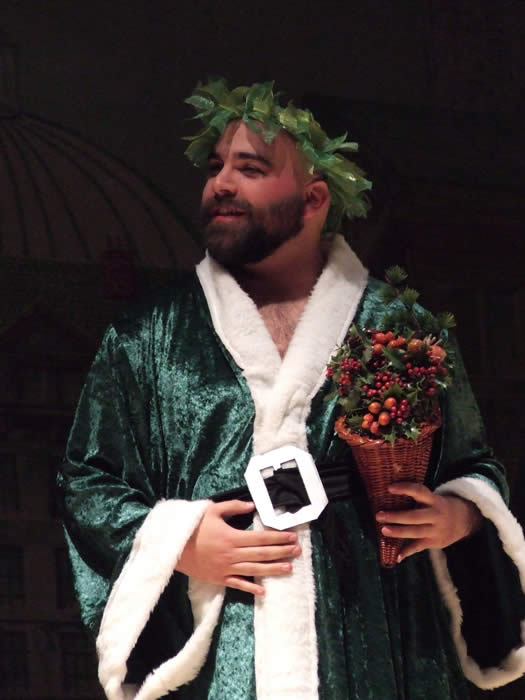
PS.  Wherever you find pics of the Ghost of Christmas Present, he’s always a hunk.
DSCF3069
carol-5

Writing Classes at Yukon College–Get Your Novels Out

Hey, Novelists!

For some of you Nanowrimo was a great experience–but what next??  Or some of you have an old novel kicking around in your closet.  Dust it off, get it ready.

I’m teaching two courses at Yukon College in the Winter, both of them are Fiction Writing Workshops.  You can read more about them if you click on Writing Classes up on the Menu Bar.

In brief:  Monday night is for novels that are more realistic–they don’t have magic, or time travel, or science fiction, or monsters in them.  They are set in this world, working with people as we know them.  They can be set in the past.

If you have at least 3/4 of a novel manuscript through a first draft, you are welcome to join the course.  If you don’t have that much done, that’s okay to join too, as long as you know that a majority of people will be working on novels, and that class time discussion will be focussed on longer story arcs.  People with novels are required to workshop 3 chapters over the course of the semester, comment on other people’s chapters, and with a group, present one novel to the class, one of the ones that we will be reading (we have three on the schedule), and  turning in to the class a synopsis of your novel.

The practical side is that in April you will need one synopsis and the first three chapters of your novel ready to show editors who are coming to the Yukon!!  Don’t pass up this opportunity. BIG name people are coming to look for manuscripts and help people move towards publication.  They will take our class to the next level, much farther than most could take you.  They will also take you to that next level if you AREN’T a part of the class–the Editor’s Weekend is a Yukon Wide event… (oh, it won’t be named Editor’s Weekend…I just made that up….).

Tuesday nights are for those novelists with a speculative element in their novel.  There are different considerations when you are working with speculative elements and you will want people who are familiar with those elements.  The rest of the class will be VERY similar to the Monday night group–all that’s different is that we will be working with texts that are outside of realism, even just slightly.

The courses are 16 weeks long, are the cheapest prices in any college in North America (dare anyone to beat $150 per course), and I think you will get more bang for your buck.  Workshops are good to use to get a good opinion of what to look at more closely.  Only come if you are ready to receive the opinions of 15 other readers, and to consider their thoughts on your work.

Come and Join us for a good workshop experience!  CRWR 241: Fiction Writing Workshop (Mondays–realism; Tuesdays–Speculative) Starts Jan 5 at Yukon College!

Muslim Punk Rock, or What Fiction Can Do

23moth_muslimThis just in from the New York Times. Michael Muhammad Knight wrote a book about Muslim-Americans forming a punk band in Buffalo New York. From the article by Christopher Maag, “Young Muslims Build a Subculture on an Underground Book“:

Five years ago, young Muslims across the United States began reading and passing along a blurry, photocopied novel called “The Taqwacores,” about imaginary punk rock Muslims in Buffalo.

“This book helped me create my identity,” said Naina Syed, 14, a high school freshman in Coventry, Conn.

A Muslim born in Pakistan, Naina said she spent hours on the phone listening to her older sister read the novel to her. “When I finally read the book for myself,” she said, “it was an amazing experience.”

The novel is “The Catcher in the Rye” for young Muslims, said Carl W. Ernst, a professor of Islamic studies at the University of North Carolina at Chapel Hill. Springing from the imagination of Michael Muhammad Knight, it inspired disaffected young Muslims in the United States to form real Muslim punk bands and build their own subculture.

As a writer, the article is fascinating to me. Fiction has the power to give method and ideas to real people, helping to create reality. Now Stephanie Meyer’s Twilight isn’t gonna make vampires out of anyone–but it might make teenage girls want a chaste boyfriend. But Taqwacores imagined a reality for alienated Muslim teens in the States, a way to cope, a way to establish a new identity, a counter culture. The book empowers people. Through fiction.

Countless movies have played on the idea that a writer could create reality through writing about it–they are mostly comedies. But the concept, I think, is a powerful one. What if –instead of reflecting culture–we created it? What if we consciously created something that was not there before–something that could happen–so that it inspires others to create it?

Science Fiction often does this in reverse. Create something that we DON’T want around and then destroy it. And thank God we got rid of “it.” I think the Shine Anthology is seeking to help us imagine some creative solutions–and I still encourage you to submit. But I want to keep harping on the idea that you, as writers, can change the world. Michael M. Knight did. (I love that his name is the same as the hero from Knight Rider, the 80s TV show (with recent makeover)).

Go create something you want to see that doesn’t exist right now. Like Knight, create a subculture for disenfranchised teens. Or create the ultimate youth center in your town and inspire someone to imagine the real one. Or show oppressed people in power, how a family operates using green technology in their house, believable, doable, possible things. And then I hope your novel is photocopied and passed around and around and around. The world.

It’s a Wonderful Life, Captain Picard

270px-st-tng_tapestrySeeing that it’s Christmas, and I’m going through a midlife crisis, I thought I would further comment on the magic of “It’s a Wonderful Life.” That magic: the Re-vision of a person’s life has been played out on a number of TV shows. That 70’s Show undid a kiss, Moonlighting a meeting, etc. Each show played off the idea that life could be revised differently, playing to our many regrets. All of us have wondered from time to time how life might have been different if we’d chosen another option.

Here’s Star Trek’s version of the Capra classic, and whether you are a Sci fi fan or not, or a Trekkie, the message in this episode is broad enough to speak about the human condition.

In “Tapestry,” Captain Picard is killed on an away mission. His artificial heart is damaged and it fails him. He meets up with Q as an afterlife. Q is the Trek Universe’s answer to God–an amoral, irresponsible, uncompassionate God. Omnipotence with no ethics. Clarence with no caring. Q offers to change one aspect of Picard’s life, and he uncovers a pivotal moment when Picard loses his real heart in a fight with badass aliens, when he was a young officer. Picard never realizes that the moment is pivotal. Q transports him back in time to play out that moment when he was stabbed. Q forces him to either accept death, or find a way not to get stabbed and see what his life would have been like with a real heart instead of an artificial one.

Picard replays the days leading up to the argument, to the fight, to the stabbing, to avoid violence. To do this, he has to stop his friends from defending their honor, and in doing so, loses his friends–but gains his life. Q transports him back to the future–or to the present. Picard finds that he has a completely different life. A life void of risk, completely safe. And by playing it safe, Picard has become a Lt. Astrophysics analyst, who transports data back and forth to senior officers.

If you want the whole episode, go to Youtube and begin here.

But I think the end has the meat of the message. Watch here.

The difference here is not that Picard is pivotal in the lives of others. Undoubtedly he was. But that our risks bring about a person who can lead. Our risks, or lack of them, define us. George Bailey’s sacrifices define him. Picard’s daring defines him. What defines you?

For another take on this idea, here’s a heartwarming video by Garth Brooks called “Standing Outside the Fire.” Pardon me mixing Star Trek and country music, but the themes are nice together.