Bullying the Met Opera is not a way to treat a gay ally


Most Americans already agree that the new law banning gay expression and propaganda by Russian Prime Minister Vladimir Putin is draconian, oppressive, discriminatory and against the human rights of the LGBT community.  The United Nations yesterday (August 19) issued a statement to Russia and Moldova to repeal those laws. Leaders of countries, including Pres. Obama, have made strong statements against those laws.  Countless individuals have taken stands.


Which brings me to the MET Opera, and the current controversy over a petition that is trying to force the MET to turn their production of Eugene Onegin into a political statement for gay rights.  The gist of the argument is that:

a. Tchaikovsky is a Russian composer–a gay one–and Eugene Onegin is a Russian story

b.  Anna Netrebko (soprano) and Valery Gergiev (conductor) are Russians who have vocally supported Putin in the past.  Let’s make them prove their loyalty.

c.  The oppressive law from Putin needs a huge American venue to vocalize our anger at Russia.  The Met looks dandy.

Some have already pointed out that the MET is not a battleground for arguing a composer’s beliefs and opinions.  Who would perform Wagner if his beliefs were paramount to enjoying the music?

Just because a) Tchaikovsky is a gay Russian composer doesn’t mean the MET has to take a political stand.  The nature of Art is that it is in itself a political stand.  Let Eugene Onegin speak for itself.  It’s a powerful work.  Onegin’s disrespect for a whole group of people makes him pass up true love and end up alone.  That speaks volumes.

The petition names the conductor, Gergiev, and the diva soprano, Netrebko, as “supporters in the past of Mr. Putin”.  In the past, I have been a supporter of US policy.  Does that make me a supporter of Bush?  Or current laws produced by Congress?  No.  Does that make me like everything that Obama does?  I can’t go to Canada and tell them that I agree with how Obama is treating Canada economically.  Netrebko, the soprano, has voiced her LGBT support (prompted by the threat of LGBT backlash!).  Are we requiring a show of loyalty to gays?  Prove to us, we seem to say, that you support gays by denouncing Putin and dedicating your performance to LGBT people.  That’s like asking Obama to wear a flagpin to PROVE he’s patriotic and that he loves America.  Why can’t he just say he loves America?  Because some people want him to bow to pressure.  It was silly then; it’s silly now.  Punishing Netrebko and Gergiev based on PAST support of Putin–when they have said nothing in support of those current anti-gay laws–is wrong.  It’s bullying.

The Met Opera c) is not a handy vehicle for your political expression.  It can be a vehicle for political expression by the director of the Opera being produced, or by the MET itself, but it doesn’t have to be.  It’s their choice to show support, not our choice.  If it’s forced, it’s not real.  Further: The Art itself is powerful.  Adding statements to the art diminishes the art.

But what have you done for me lately, Met Opera?  What the MET already does for LGBT people:

The Metropolitan Opera gives LGBT people the opportunity that Russia never gave Tchaikovsky: the ability to be an out performer, an out stagehand, an out composer, costume designer, etc.  It gives LGBT people jobs and freedom of expression.  Russia still DOES NOT offer this.

The MET has performed operas with gay themes:  Billy Budd for example.  Sure, I’d love it if directors substituted men in women’s roles to shake things up a bit (as easily as those who direct Shakespeare do), but composers have written for ranges, not genders, specifically.  Music must sound harmonic and beautiful.  You just can’t have, usually, a man replacing a woman in a role.  However, the opera does often cast women in male roles that sometimes require higher vocal ranges–and so, onstage, one gets to see what looks like a lesbian romance (see Anna Bolena, for example, where the man in love with Anna Bolena is played by a woman, and Mozart’s Clemenza di Tito, and multiple other operas I have seen).

At the MET, they would have no problem staging and performing a well-written opera WITH gay themes.  Write a Billy Budd.  Write a lyrical, thoughtful version of the AIDS crisis, or of Fred Phelps, or Greg Louganis, or Ellen…. the MET might produce it on its artistic merits.  Try that in Moscow.

They are already a gay ally.  Forcing them to dedicate the night to gays in Russia, or turning over proceeds, or making Netrebko and Gergiev meet and greet with LGBT people to prove loyalty is too much.  It’s like saying, I don’t believe GLAAD cared enough for Katrina victims.  I’m going to require them to turn over proceeds of GLAAD events, verbally show support, help out in the clean-up of Katrina, etc.  Or maybe I should start requiring all American opera singers to denounce the oppressive economic foreign trade policies of Obama whenever they perform in an international venue.  Will that be enough?  Are performers required to make political statements before every performance?  No, they are required to be artists and to be damn good at what they do, not appease the morals of majorities or minorities in the causes they have.  I’m happy if Sting says something in support of a cause I care about, but I won’t stop buying Sting’s CDs if he doesn’t verbally say something I want to hear.  I want to hear him sing.  I want to hear Anna Netrebko sing.

Bullying

I find the current culture of celebrity/organizational bullying (especially by the LGBT community) to be unacceptable.  We have far more effective means at our disposal besides bullying.  We have targeted a Latvian producer of vodka, Stoli–whose CEO is a gay ally–to dump in protest of Russia.  This neither hurts Russia, nor does it hurt an anti-gay supporter.  It hurts an ally.  The argument that this raises the issue in the consciousness of your average person is unproven.  No one can say that the dumping of Stoli is solely responsible for raising awareness of the anti-gay Russian policies.  The news has reported on this quite a bit.  And they got it from Twitter or from their reporters or from other sources.  They didn’t have to watch someone dump Stoli to suddenly become a capable reporter.  It’s a argument fallacy to say that one thing causes another if there is no direct proof.  (see post hoc ergo proctor hoc in any English textbook)  A graph of awareness is not proof of direct cause.  Anymore than I could say that Dan Savage’s tweets alone caused the awareness to shift.

Yes, I know it’s a petition, not a law requiring compliance.  But there’s been talk of booing the performance, of holding the MET accountable, of withdrawing support, and right now creating a lot of bad media about the MET.  Asking me to help is one thing: berating me when I say no is not.

As a gay man, I appreciate vocal support.  I do not require it from every person who comes on TV, every ad, every organization.  Sometimes, organizations show support by BEING supportive.  Not by wearing a rainbow pin.  Opera has given us music, story, relationships, history, comfort, excitement, Art in the highest form, allowed LGBT artists to be themselves (in this country, definitely)–it has done more to transform LGBT lives for hundreds of years than one gala night of verbalized, forced support could ever do.  And if the MET is forced to comply with the oppressive tactics of some in the LGBT community, then our community will become the dictatorship, limiting freedom of expression, and forcing compliance and obedience in everyone around us.  If we become those who judge others based on whether they promote and shout out their support of us, then we have proven that we are a fragile community, reliant on fear and intimidation to get our way, always insecure even inside of a country that is on a steady march to full equality.  We will have proven that Bush adage: “If you are not with us, you are against us.”  That brought us a war.  In that moment we force idelogical obedience, we become the Putins.

Back in the Saddle, and the Horse Didn’t Buck

IMG_4592Well, it’s been awhile since I pumped out some fiction.  I’ve been working on a longer novella, hit and miss, for ages, based on my own experiences on Long Island in 2004, and on a longer novel full of fun things.   But I just looked at my “written work” section and discovered that I had a good six fiction publications in 2010, but what have I done for you lately?  Not a darn thing sold since 2010–and that means not a darn fiction thing written, really.  I have sold some nice short pieces to GEEZ, and I’m glad.  But for fiction, it’s been awhile.

So, I’m thrilled that I got a story done for the Tesseracts 17 deadline (tonight at midnight).  Sent it off yesterday.  Hope they like it.  But I’m chomping at the bit to get more done.  So, I’ll see if I can’t pull off another story or two in March.  I have a lot of started stories that lost their way….or which got derailed by work or life or both.

I tell you it was GREAT to get back into writing fiction.  I wanted to write stories with werewolves, time travelers, Kings, ghosts–things you just don’t get to see everyday.  And I’ve been reading Graham Greene’s The Quiet American.  If Graham Greene wrote about magical creatures…. anyway, glad I’m back into the swing of things, and hope I can keep this up.

Proud that other Yukoners, including my two minions, Santana and Zeb, also found the deadline for Tess 17 to be an adequate kick-your-butt deadline for writing.  YAY.  Now, let’s see if I can do it without a deadline.

I also purchased an e-book for .99.  I have to say it was great reading.  Good ideas, and helped push me along.  It’s called 2k to 10K: Writing Faster, Writing Better and Writing More of What You Love, by Rachel Aaron.   One idea of hers, to sketch out a scene before you write it saved me a lot of time.  And made the scene crystallize more.  I’ve always been a huge note-taker–but her ideas were about making those notes more efficient and more usable for the final writing.  Working out scene problems ahead of time–before you sit down–saves time when you sit down.

Anyway, nothing but praise for that book, for Tesseracts 17, and for writing again.  Good to be back in the saddle.

Canada offers a Way to Avoid the “Hockey Cliff”, forms New League

"What else can we do? We have an obligation to our Canadian fans, our players. Playing them is the only option," says Mike Gillis GM of the Canucks
“What else can we do? We have an obligation to our Canadian fans, our charities and our players. Playing them is the only option,” says Mike Gillis GM of the Vancouver Canucks

There’s more than one cliff North America approaches and, even as US President Barack Obama hopes to steer clear of the “fiscal cliff,” the NHL is trying to avoid a cliff of their own.  After 107 days of the NHL Lockout, fans are steaming at a lack of hockey in their lives.  Just in time, perhaps, to save everyone, Canada has a plan.

Canadians announced today that their teams are withdrawing from the NHL and immediately forming the Hockey League of Canada.  Prime Minister Stephen Harper has budgeted that every major city in Canada will have its own Hockey team if they don’t already have one.  For example, this includes Goose Bay, Iqaluit and Whitehorse.  They are inviting all Canadian hockey players to ditch their American teams and come play on a new league immediately.

“It’s Canada, so players can be assured that they will receive great pensions and healthcare, without having to barter their lives and careers away for that,” Dermott Mulchahy said in a statement to the press this afternoon outside of Rogers Arena, home of the Vancouver Canucks.  After Muchahy spoke, GM Mike Gillis of the Canucks said, “What choice do we have?  We have an obligation to our Canadian fans, our charities, and our players. Playing them is better than not playing them. Playing them is the only option.”  He looked around the room.  “Canadians and hockey fans in general are fed up.”

Players will be chosen in a lottery so that every city has the chance of winning star players.  This completely shakes up any of the teams–but many already believe this will be a good thing.  The new games begin on February 1st.  Mulchahy, as President of the newly formed Hockey League of Canada, believes that fans will be so excited to see hockey happening that they won’t care if it’s called NHL or HLC.  And American cities, still mired in the negotiations for their hockey teams, minus Canadian players who defect and come back home, will probably find themselves watching HLC games and not caring if the NHL ever forms again.

Farm teams in the south, like the Odessa Jackalopes, are being offered the chance to come play major league hockey right away, adding a lot of surprise, and fresh blood, to the game.  “Me and my buddies, we’re already heading north!” said Jamie Gonzalez, one of the best scorers in the Jackalopes.

Whitehorse, Yukon, already knows the name of their team, the Dawson City Nuggets, even though the team will play in Whitehorse.  “It’ll bond our two cities together,” said Whitehorse mayor, Dan Curtis.  “We couldn’t be more thrilled.”

If the NHL does not reach an agreement by midnight January 1st, the HLC goes into effect in Canada.  Canadians are now hoping that the NHL never gets their act together.

“Come home,” Prime Minister Stephen Harper said in a statement today to Canadian hockey players worldwide.  “Come back home to Canada and play your hearts out.  We’ll tend your goals.”

______________________

You’re reading a blog about science fiction, fantasy and the Yukon.

My Interview over on Speculating Canada

Bears at AMNHDerek Newman-Stille, over at Speculating Canada, a hot new-ish site for reviewing Canadian science fiction/fantasy and horror, gave me a really fun set of questions for this interview, asking me to think pretty deeply about the motivations I had when writing three of my stories, as well as asking me farther-reaching questions about the power of science fiction to change society!  Pretty heavy stuff, but I did my best to come up with answers.  We all hope to sound intelligent during interviews, at least interesting.  It helps to have good questions.

We cover subjects as diverse as the American educational system, healthcare and the difference to science it would make if animals really did talk. (What would that grizzly be saying to you?)

Thanks to Derek for doing what he does to help get more science fiction reviewed, and read, by those looking for it!

(photo is from the American Museum of Natural History in New York City, a display of grizzlies in the North American Mammals section.  I do believe Theodore Roosevelt brought these in.)

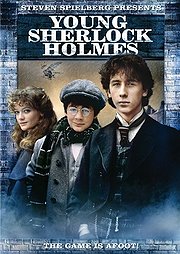
Young Sherlock Holmes vs. Harry Potter: If Chris Columbus doesn’t bring claims against JK Rowling, No One Should

Rereading this in 2026, 14 years later. Let me just say that my admiration for Rowling as a writer is gone, like many others who have read and enjoyed her work. Trans rights are too important. That said, this post is about the similarities between Young Sherlock Holmes and the Harry Potter series. Both this movie and the first Harry Potter movie had the same director, and other similarities. I found them a little striking, but this was written at a time where many unknown writers were coming forward and claiming Rowling had pilfered their ideas. But their cases didn’t have as much evidence as the coincidences of this movie and Harry Potter.

____________________

Yes, this should ease JK Rowling’s mind and set a new standard for anyone pursuing copyright claims against her.  If they can’t get as close as the Barry Levinson directed, Steven Spielberg produced, Chris Columbus penned, Young Sherlock Holmes (1985), then they have absolutely no case.  If Chris hasn’t pursued a claim, no one should.

Young Sherlock Holmes was a fantastic movie for its time.  But it could never have been made AFTER Harry Potter.  Let’s look at it through Post Potter eyes.

Taking place in a boarding school, it involves two boys and a girl who uncover magic mystery that involves the duplicity of one of their teachers.  A beloved, befuddled mentor figure dies.  One of the boys is short and has glasses, looking very Harry Potter.  A lot of running to the library to figure out what teachers and detectives won’t tell them, and Holmes is the most famous kid in class, whose rival is the rich, pompous Dudley, every bit the Malfoy look alike.  His hair is even died ice blond as Holmes’ revenge.  The young Watson, who looks too much like Potter, is called a Weasel at one point, and his character works like that of Ron Weasley, comic relief, loyal buddy, and always trying to get out of adventure.  The girl, Elizabeth, is no Hermoine, but then Rowling admitted that Hermoine is herself in the Harry Potter series.  The kids spend most of their time with a retired schoolteacher, WaxFlatter who serves as both Dumbledore and Hagrid.  The kids are threatened with expulsion for all their snooping around.  A cult is the culprit and the villain is their own professor.  Magic, in the form of hallucinations, is the staple of the film.  Many of the scenes are set as they would be on Harry Potter–including an identical Great Hall scene, though cramped, and a Professor of Chemistry that reminds me of any of the professors from Potter, especially the Potions room (though I imagine many are typical boarding school sets).  There is a Diagon Alley full of shops and crowds of consumers. Even a shopkeeper who closely examines their blowpipe reminds one of the wand seller.  The set up in this movie is that Holmes’ nemesis Moriarty will continue to plague him, even as the Potter/Voldemort must occupy the series.

This is NOT to say that Rowling copies anything or even saw this movie, but that Chris Columbus, her first director knew this kind of film intimately.  Though Wikipedia claims that he was selected based on Mrs. Doubtfire and Home Alone, no one can miss the Harry Potterness of Young Sherlock Holmes.  Spielberg, who was in negotiations, it is said, to direct Potter 1 ultimately wanted to make it animated–according to this source.  Why would he say that?  Young Sherlock Holmes does everything that Harry Potter did–except the story and casting are weaker–he could have just rinsed and repeated.  Rowling had a better story, but the sets and the structure would have been very familiar to Columbus and Spielberg.

If you see the film, you’ll realize this could not have been made post Harry Potter–too many elements are the same.  Columbus wrote the script for Holmes, so it was conceived as a movie first, which means that it was built to be filmed not read.

My biggest question is that when Potter came out as a book, then a film, people asked themselves–why did this strike such a chord?  And my question is why didn’t Young Sherlock Holmes grab that same audience in a film first.

It could be that Holmes and Watson were already established characters–they had no freshness to them.  But a boarding school mystery with magic and the occult—with two boys and a girl.  It’s the formula that wins in Potter.  One can’t merely say that it was that combination that finally became a hit with audiences and children.  ONe has to look at the execution of that kind of story.

Inevitably a huge nod in Rowling’s direction must be given for taking a combination that had been seen before and making it fresh and more complex.  Whereas Columbus was restricted by Doyle, to a certain extent, on the way he could craft the characters of Watson and Holmes, Rowling’s development of the main three characters, as well as a believable world is to her credit.  Columbus was good in his writing of Young Sherlock Holmes, but Rowling was amazing with the same elements in Harry Potter.

So when I hear of silly people who think Rowling copied them–one can point back to an earlier model for all of them–and say that it’s not the material you have, it’s not the little elements that add up because no one beats Columbus for more elements.  It’s what you do with it that’s important.

Rowling is not in the set pieces; Rowling is in the writing.

Here’s Dave White’s interview with Karen Fowler and I about our team of writers helping raise money for the very well known Clarion Science Fiction and Fantasy Workshop. They’re creating scholarships–so us alumni, we’re helping out! And new writers as well!

jstueart's avatarTeam Bears Discover Fire

Well, this is freakin’ cool!  Dave White, one of the local broadcasting DJs here at CBC North, asked if he could interview Karen Joy Fowler about this write-a-thon–the VERY ONE YOU ARE DOING.  Yep!  Team Bears Discover Fire gets a shout out even!

And two of our writers, besides myself, are from Whitehorse, and this gave it its local component–but the talk with Karen is about the importance of Clarion, this write-a-thon, and your getting done with what you are doing!

If you’ve got a moment, here’s the full clip.

http://www.cbc.ca/airplay/episodes/2012/07/16/supporting-science-fiction/

She says I’m supposed to nag you more…. I need to nag you!

How are things going?  How are you feeling?  What are you doing?  And most importantly, are you having fun yet?

View original post

Solidarity in Purple: Supporting Gay Teens After Spirit Day

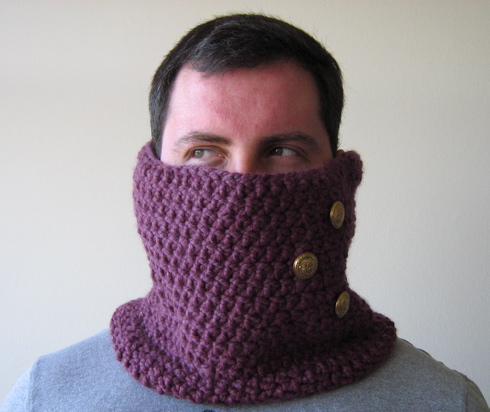
Heather Kennedy, or moria on Flickr, used under Creative Commons LicenseAs millions are wearing purple today, Wednesday, I found myself trying to imagine what this might mean to a closeted man or woman.  Walking down the street are all the people who would support you coming out. 

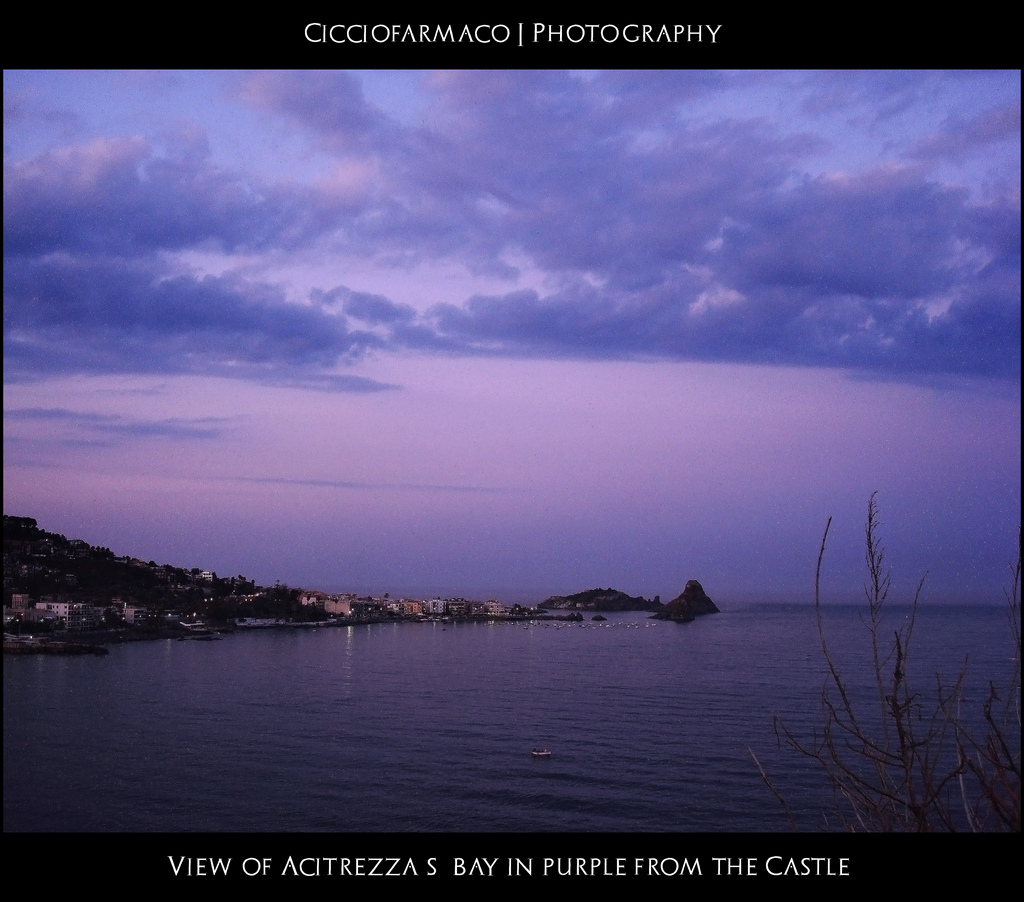
When I was struggling with coming out–I didn’t know who might be supportive and who wouldn’t.  I grew up in a culture that would designate a day, “If you wear Purple on Fridays, you’re gay.”  So it was a color to avoid–for fear of being outcast.  Today, it is THE color–not to show you are weird or different, or even “in” or “cool”–but to help others come out, and know that it’s safe.by ciccioetneo on Flickr, creative commons license  That you support and love them and are waiting for the day when they feel comfortable, and pushing for the day when there is no more bullying about anything. 

So in the Spirit of Spirit Day, let’s keep the purple flowing–as long as we can, in concerted efforts.  Let’s celebrate the color purple.  (All of these photos were found on Flickr and are part of the Creative Commons distribution license.) 

Purple has a long history of being associated with royalty, kings, priests, and even with Christ.  Lydia, famous for her purple cloths, was one of the first leaders of bible studies in the early Christian era.  Purple is a rare color in nature–but when it happens, you notice. 

kevindooley on Flickr, used under Creative Commons LicenseRight now, the climate for gay people is getting better.  However, there are still large pockets where gay and lesbian people are not affirmed for who they are, and what they bring to their communities, and society in general.  We’ve built up a long tradition of pushing men and women back for their sexual orientation, and it’s entrenched in our churches, our military, our governments, our city councils, and it finds its way into schools where kids–who can’t hide a prejudice–act on it.  We punish the kids, but they learn it from the adults. 

So, go out there and get your purple on.   Show your kids that you stand in solidarity with those who are in the LGBT community, and that you want to assure them that not only smittenkittenorig on Flickr, used under Creative Commons Licensedoes it get better, but we–every day–are making it better for them.  Slipping on a hat or a shirt or some purple shoes is the simplest start. 

Binary Ape, from Flickr, Creative Commons License What are the next steps–the day after Spirit Day, the week after Spirit Day?  The next steps may be harder, but we can do those too. 

Get a group of you to wear purple in your churches.  Ask to speak from the podium announcing something, address everyone, but specifically those gay people who may be present in your congregations–out or not–and tell them that they have someone in your church (or a group of you wearing purple) that they can count on to be supportive no matter what your church’s theology might say.  Your purple shows them that you support them right now.  

Get a group of people to wear purple and show up during a city council meeting and ask to speak in honor of gay teens. 

As a gay man, I would look for any, any sign that someone might be friendly, supportive, and understanding– the weight of our secret–our fear that being different makes us less than–is

Purple Heart by the US Army, on Flickr, used under Creative Commons License

 sometimes a lot, especially when we come from communities where there is active discrimination towards gay people.  This can take many forms:  a theology which doesn’t treat gay and lesbian people as equals in the church, a simple understanding that something “gay” is wrong or weird, or a belief that being a gay man is somehow not masculine enough. 

Our military values each soldier, but currently doesn’t value the gay ones if they say they are gay.  The soldier at the right here is receiving a purple heart–and that’s why I have him in the post.  We value what we give Purple to: kings, deities, soldiers, priests–purple is considered one of the rarest colors, hard to create, and therefore highly prized. 

by aussiegall on Flickr, used with Creative Commons licenseWhen we wear purple today–we say, “We highly prize gay teens.  We value you.  We know you have something worth giving and sharing with us.  We value what you have to say and the point of view you have.  You are loved and appreciated.  We want to see what you’ll become.  Our country is changing.  Our governments are changing.  Our churches are changing.   And it starts today.  It starts with me.”

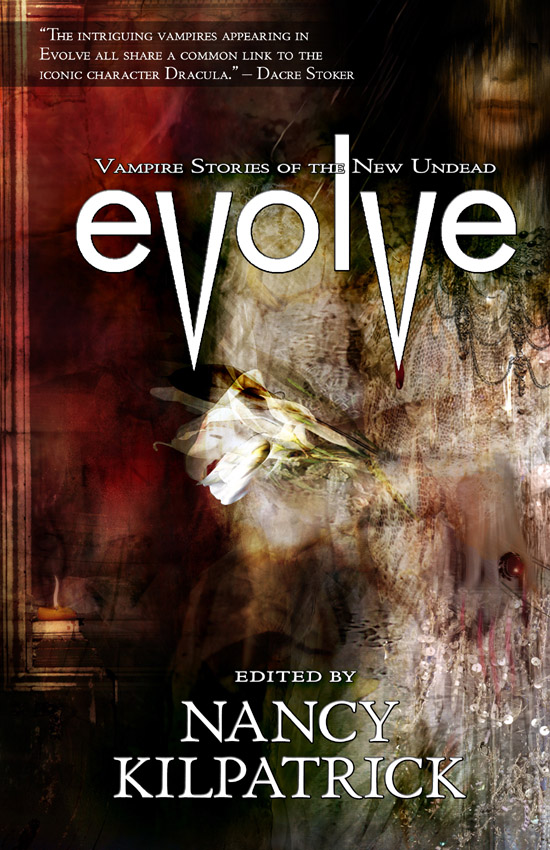
EVOLVE anthology covered in depth by Temple Library Review

I got a thorough review in Temple Library Review–and so did everyone in the Evolve: Vampire Stories of the New Undead.  Read the conclusion of his review of me here, and then go to the link to find the rest.  It’s really nice to have anyone review an anthology in this much depth.  Thanks!

How Magnificent is the Universal Donor does what few short stories manage. It remains strong on all fronts. Well developed characters, a clever and unorthodox world and enough suspense all result in a must-read page turner. It’s a true gem that fulfills the anthology’s theme and delivers a lot more.

Read his entire review of “How Magnificent is the Universal Donor” here.  

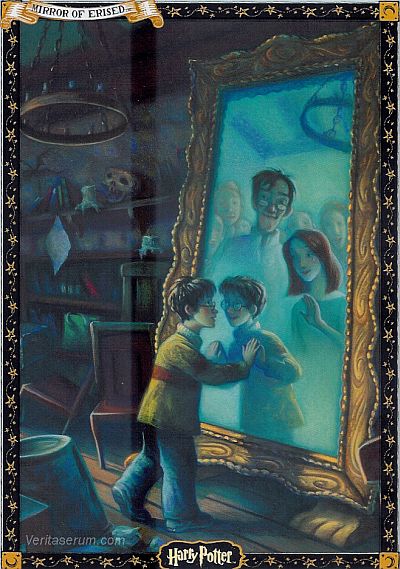
Harry Potter Diary: Outside the Demographic Looking Inside Hogwarts

I decided to read the Harry Potter Series this summer, for the first time.  After 10 billion people were happily served by the boy wizard and his pals, after the series was put to rest by JK Rowling years ago, and just as the film franchise explodes to a close, I decided to read the books.

Some questions immediately pop to mind: Why didn’t I read the books years ago?  

1.  I’m not a fad kind of guy, so having millions of people read the books actually made me feel less like becoming part of the phenomenon.  

2.  I actually loved the movies.  I did read HP 2 after the first movie came out, and before the second movie.  And loved it.  But when I watched the film, I was terribly disappointed that a whole mess of story was eliminated as if it didn’t count.  I vowed then and there to see the movies first, and then I would read the books to add in parts that the movies had left out.  This is actually a decent strategy.  

And why now??

Well, the end of the era is around the corner…. by summer 2011, the films will be done.  But I think it’s more because I really want to read the books.  I want to see how Rowling built the arcs, how she developed series characters, and how she managed to maintain the hook for so long.  It’s okay to admire the books on a “how are they written?” sort of way.  

I want the magic too.  Even though, now, I know at least where the movies have taken me.  Now I want to see where the books take me.  

I’m not the demographic JK Rowling was aiming for.  Her 9-17 age bracket probably resonated with the idea that children can have power too; that magic exists under adult noses; that the world doesn’t have to be like their parents told them it would be–office buildings, stock markets and 2 hour commutes.  

So what would a 41 year old, single, gay writer and English teacher living in the Yukon Territory–with no children– get from reading the Harry Potter series–besides how to create a blockbuster series?  It’s a good question to think about.  How does a book transcend its ideal market, appeal across the board to adults and children alike?  What will be the pull of the series for me?  (I already loved the movies—but why.)  

I’m keeping a Harry Potter Diary as I go to ponder things about the series along the way.   Just reactions to, thoughts about, resonances with the series.  

There’s a spot at Hogwarts for me–and I’m going to find it.