Flashforward: the Excellence that “Knowing” could have been

flashforward Watch Flashforward, Episode One

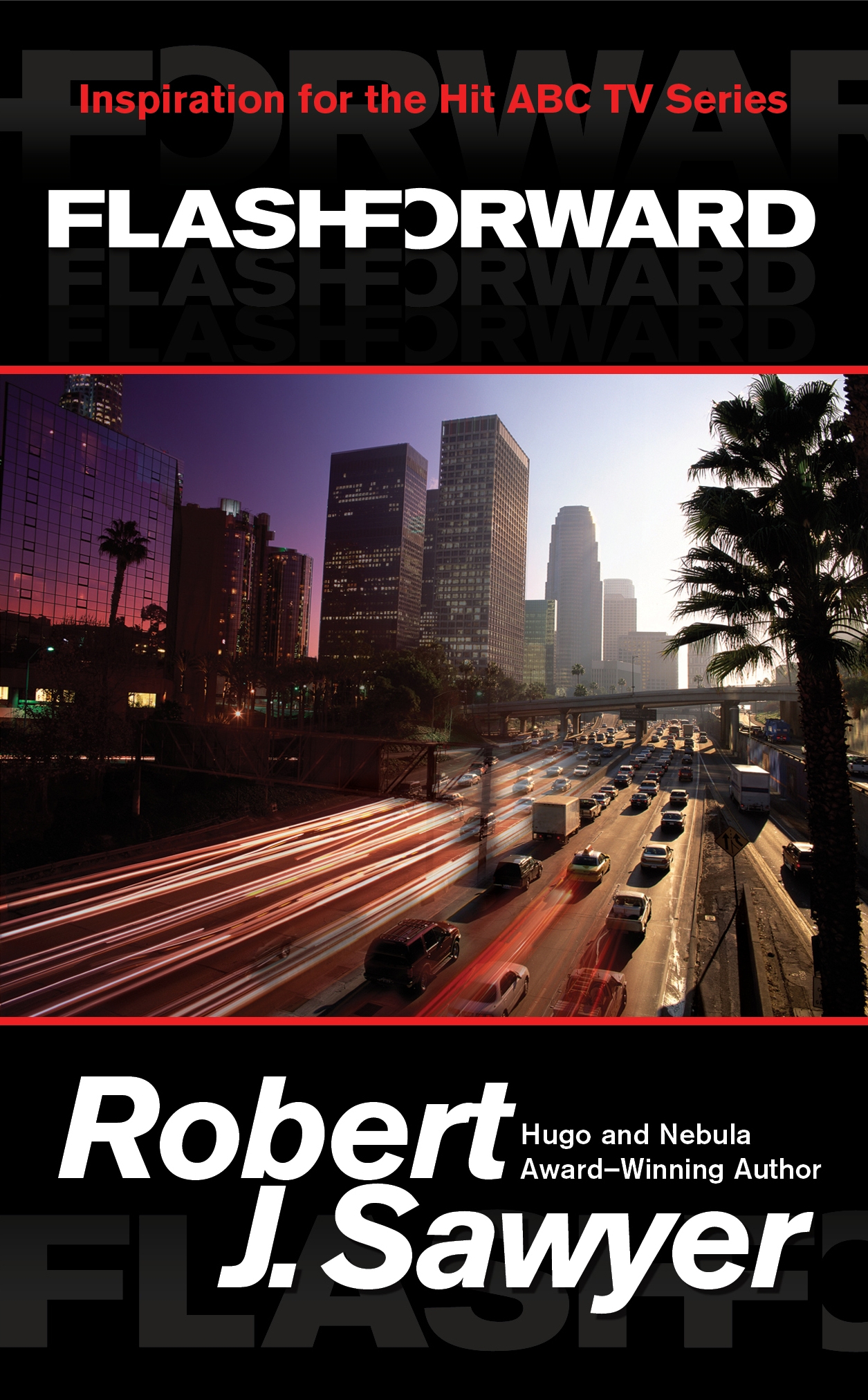
Robert Sawyer’s Flashforward has been made into an ABC miniseries. It is a masterpiece. I haven’t read the book, so I don’t know how faithful the series is to the original book, but the book won an Aurora Award.

The premise is that everyone blacks out at the same moment for 2 min and 17 seconds. In that time, they glimpse their futures. When they return to the present, mass chaos has already happened. Planes fell from the sky, cars crashed, trains derailed. People died, lots of people died. Everyone had blacked out, so no one was in control of all those vehicles.

The main characters, and there are several, include two FBI agents, a surgeon, a man who lost a daughter in Afghanistan, a doctor about to commit suicide, and several others. The series will be about them either trying to avoid their futures, or trying to get to them, depending on what they saw.

Oddly enough, the date they jump to, April 29, 2010, will be the season finale of the show–and at that moment you get to see if they reenact their futures or not.

Obviously, I don’t know how they can carry this through after that episode…BUT, I’m thoroughly pleased with watching till they get there. After this first episode I know that we have a great team of writers involved.

Now, this is what “Knowing” should have been. In my original review of “Knowing” I talked about how the movie, though predicting disasters, left very few for the main characters to experience, and I was troubled by the fact that it seemed the directors had determined that no one could change anything, so why bother.  That movie dripped with errant theology and left no doubt that everything was predetermined.  I don’t mind that fate or God may be a part of my life, but free-will is a human trait,and makes movies much more palatable.  To see someone struggle against their fate, to see them try.  It is what makes those who are given two weeks to live all the more heroic for skydiving or organizing a political rally.  How we react to what seems to be inevitable–THAT is interesting.

Already, I can tell that the show has set up five or six different beliefs about pre-determinism.  Some believe God gave them a gift, others that He gave them a punishment.  Some want to avoid the future, some to run to it.  For some it predicted a horrible mistake they will make.  

“Knowing” passed up all opportunities for real drama with real people, skidded ahead with bad dialogue and coincidence, to an ending which tried to justify the movie.  

Flashforward is like Mozart taking hold of the Salieri “Knowing” and actually making a great movie out of it.  Yes, I know, Knowing only had two hours…but still, this series is good solid writing.

1.  The characters are individuals, who walk onto the scene with their own problems, their own pasts.  They are well drawn and WHAT they do will determine the plot, not what others do.  Now that the big blackout is done, the characters guide the series.  They will push things forward accidentally or on purpose to meet up to April 29th.  They will determine their plots!

2.  Great dialogue, great stuff that isn’t about “the plot”— that Dimitri has to dance at his wedding to “Islands in the Stream.”  That the chief of the FBI has to lie about his vision because he’s embarrassed.  

3.  The plot starts with the action.  I can imagine this series beginning without the crash first.  But who would have waited the whole episode to have the blackout?  Nope, have the crash first, back up, and then take it slow.  Maybe this is just the difference between TV and reading….but I think starting as fast as you can into the action gets people involved with you.  I noticed in Robert’s book, first chapter, that he has a description of each character first…but within a page, he gets to the blackout.  He knows the blackout is a great hook, and that everything of importance happens afterwards.  

4.  I like the music in this series, already, the building, the back and forth between plots so quickly so that you know they are happening simultaneously–the music and this choice to flash around gives you a sense that everything is tied together.  In some sense it is like a trailer—when the trailer starts shuffling between images so fast that you get excited: all trailers seem to end this way these days.  The director took the music and that shuffling sequence to build suspense.  

I hope Robert Sawyer makes a huge amount of cash from this.  This is brilliant stuff.  And I’m glad to see a Canadian Science Fiction Writer land such an opportunity.  I hope they do more interviews with Robert Sawyer in the States.  

Well, I will keep watching the series.  I’ve already become a HUGE fan.

Realistic Science Fiction: District 9

Scene-from-District-9-200-001This is an amazing film, both for what it sets out to do, and for what it accomplishes.  Taking the form of a documentary, it brings science fiction as close to real as I’ve ever seen it.  It is the documentary form, I think, that convinces a viewer that this is happening, or has happened.  

The film is about what would happen if aliens came to Earth powerless and malnourished.  Human kindness would collide with our own aversion to aliens and suddenly you have camps where the aliens are kept.  It’s a brilliant stroke to make this set in South Africa and not New York or LA or London.  

This film will surprise you at every moment.  I found myself, a film junkie, a sci-fi enthusiast, completely unprepared for where the movie would take me until it took me there.  The writing is superb.  You can’t find a traditional plot here anywhere.  

Certainly we’ve come to an age where we can make special effects seem real—Peter Jackson, the producer and Neill Blomkamp, the director, have gone out of their way to make you see the special effects as realistically as possible.  Yes, the insectoid aliens are CGI, but there’s not a lot of special effects here that are obvious.  God bless ’em, effects are being smoothed into a film now.  

This is not a mockumentary, whose job it is to make you laugh; it is filmed as a documentary to trick your brain into accepting its premise.  And it works.  I remember reading Dracula by Bram Stoker, as a kid.  And I hated the diary parts—but it is the story in letters that make that novel all the more horrifying because the author didn’t want it to seem like fiction.  They wanted you scared because these were actual letters.  It was more creepy to do it that way.  And this film, using documentary style–down to the archived tapes, the dates at the bottom, the steadycam moments–makes you think that someone pieced this together from twenty years of real footage.  Some of it is grainy, some of it is blurry.  

If you want realistic science fiction, you blend the techniques and technology we have now with the strange and possible technology; you bring in recognizable cultural reactions (the Nigerians scamming the aliens), historical patterns of behavior (Nazi experimentation), all without winking at the audience.  Letting them react.  They will think it’s real–because you have torn away what they expect in a movie.  

You expect a hero.  The main character is an idiot, really.  So, he’s not Bruce Willis.  He’s not super-intelligent, and rarely does the right thing.  But what an interesting character!   Again, if you are going for realistic science fiction, your main character may not be the best man or woman on the planet–but they are pivotal and they can learn.  A learning character is all you need.  

The movie is brilliant on many levels.  It works as a science fiction thriller, yes.  But it also works as a metaphor for immigration, for refugees, and for the slums that are in South Africa.  Anytime a people are empowered over another people, stupid things happen to us.  The main character of the movie really is us–as we treat other people as alien.  That shift of power is the focus of the film, I think, and makes the most poignant statement.  Given the right circumstances, human kindness can become dispassionate, cold power.

And what it takes to regain a sense of humanity, perhaps, is to lose it altogether.  But I won’t spoil any of the movie.  I’m so thrilled with the movie, I know that sci-fi junkies will love it and I know people who prefer realism and a smart script will love it.  

I also know that if you have a passion for oppressed people in the world, and the injustice present in nations around the world who have subjugated another race, then you will also find the reflection of that, and the reflection, maybe, of hope.

Star Trek: Playful, Exciting, Character-driven

spaceball-12947135322_30ab2b2c4fStar Trek has come a long way and just when you thought there were no surprises left, they show up.  I’ll admit, the last few Star Trek movies left me cold.  Nemesis bombed because the writer tried to copy too much from ST2 but without any of the heart.  Insurrection was a trite story line.  Abrams’ Star Trek reinvigorizes the franchise by giving us both old and new–it completely satisfies this Trekkie.

If you go, you will get a thrill ride, and you will also be reintroduced slowly to characters you thought you knew. Yes, everyone looks young and the sets look like Apple designed them, but that’s what it means to restart the series.  You will get your money’s worth from this movie.  Most people know these characters even if they aren’t fans–but they are reintroduced to us here in great detail.  And there’s lots in here for fans of the show–little touches that show that the writers know the whole series.

I’ll try to keep out all of the surprises.  But you already know that there is time travel involved, and it shows up at the very beginning.  And because of that, events are altered.  “Our destinies are not what they would have been,” says a young Spock.  This is okay.  Star Trek has thrived on the “might have been” storylines.  The Mirror Universe got a lot of play in nearly every incarnation of Star Trek; Tom Riker was a might-have-been Will Riker; Voyager had the two part episode “Year of Hell” and the Finale which changed and altered timelines.  Even ST: First Contact imagined a Borg-filled Earth.  So, it’s nothing illegal–it just gives the writers room to wiggle.  They got to play a little with the histories–legally –because a villain altered the timeline.

But that’s the premise.  The cool part of the movie is not what they changed, but what stayed the same.  We get to see some fine actors inhabit these characters and manage to put a bit of the former actor’s style into it.  You watch Chris Pine–slowly he becomes a bit of William Shatner; Quinto is a fantastic Spock.  I swear I can hear Kelley in this new McCoy!  Uhura shows her inner Nichols in a turbo-lift.  Sulu, Chekhov and Scotty all have their moments of channeling as well.  But the writers also let the actors play—play with these histories and parts.

The plot allows each character to be introduced separately. This is a brilliant maneuver.  instead of just dumping them all on the stage at once, we get to know each character in their context.  We meet Kirk and Spock as children, Uhura in a bar, McCoy on a shuttlecraft, Scotty in a Starfleet Outpost, Sulu as a pilot and in a fight, and Chekhov in a funny homage to ST4.

I wish Wolverine would have been this good.  This had just as much action as Wolvie, but ST had a unified plot, and well-developed characters we thought we knew completely.  In the same way Wolvie failed–by being a prequel with no surprises at all–Abrams managed to give us a bit of parallelism in the lives of these characters and the ones we already know.  And there are so many great and interesting surprises–what ifs–that are allowed to play out.

This is what revision should be.  The series was great, but Myth can revise a story and get to its essence, even if the details have somewhat changed.  I can accept both Roddenberry’s original and Abrams’ version–because this isn’t an arbitrary version.  It fits in with the timeline because Nero changed the timeline.  I’m cool with that.  Just as I’m cool with Janeway’s original arrival back on Earth, and “Yesterday’s Enterprise” (a fan favorite).

And J.J. Abrams, a big high-five to you and the writers from a long-time fan!  When I was seven, I took my photo with the wax figure of Mr. Spock, my dad on the other side of Spock.  I don’t have a costume–but I was once Spock at Halloween.  I don’t know Klingon, nor do I collect the series, or any of the paraphenalia, but I loved the stories, and I recognize Star Trek as American Mythos.  You’ve done a great job at bringing that to the surface.  Well done.  Do a sequel.

The City of Ember: Clever Assignments For Everyone

Doon and Lina looking worriedThe City of Ember is a great fun family film, full of clever, unlockable mysteries. It comes with a map, all torn up and faded; it comes with a “ticking clock”–the fear that the city will wind up in the dark; and plenty of menacing obstacles. The ending leaves you wishing to be back in the more colorful Ember, but the movie enjoys itself and the city while it is there.

City of Ember is strongest when it is working within its world. Jeanne DuPrau is an excellent world-builder, trying to make a city buried beneath the earth believable. What would you do to make a nuclear bunker livable and expandable? The city is quirky and interesting and what I’d expect from a city slowly running down. Ramshackle, apartmental narrow English-looking cobblestone streets. No bad fumes down there–one would assume, with no cars–but then no oxygen either. True, the whole idea that the air and water are replenished–and yet not infected by radiation–is hard to swallow. But I’m willing to suspend my disbelief.

Opening sequence: I was getting ready for an infodump–but this is brilliantly constructed. If you’re gonna have to have an infodump, make it interesting. Tolkien does it with the history of the Ring in Lord of the Rings, and here, DuPrau talks about the Countdown box with the papers on how to Exit Ember. The directing on this scene focuses in on the hands of each successive mayor as they pass the box to each other in a line. So we set up our story’s inner problem, as soon as that line of succession is interrupted. Ember, like every other constructed engine, will fall apart. The city will go dark. The food will run out. And without the instructions, no one will escape. It’s up to two plucky teens to figure out how to escape.  It was a great way to start the movie/story.

I found the world so interesting–that unfortunately, I was disappointed when they escaped.  So let’s talk about the world of Ember.

High school graduation is not about living your dreams, but about getting an assignment to start working on keeping Ember going.  What a great idea!  Who needs years to find themselves?  Or following pursuits where there is no market?  (Where is the art down there?)  Lina wants to be a messenger; Doon wants to fix the engine, but on Assignment Day, they draw their jobs out of a hat (no more School Counselors with their aptitude tests!).  We start this movie with two people wanting something so badly, and they don’t get what they want!  Fantastic.

We see the city falling apart and the parents tell the kids not to worry about it.  This is the part that you feel resonating in today’s society.  There are several things we can do to make society work better and we better encourage our kids to work on them…or maybe we can do them.  Anyway, the city is falling apart–the kids join in the maintenance of Ember, but also want to fix Ember.

I was delighted by the cleverness of the plotting and worldbuilding in Ember, all the nooks and crannies we get to uncover.  In the movie, yes, we don’t get to spend enough time with Lina nor Doon’s past and their characters….so this is a plot-driven movie, as movies are wont to become.  But I still enjoy Lina and Doon.

Once their drive to exit Ember kicks in, though, they are consumed with that idea and we lose who they are.  They could be any two kids leaving the city.  It would have been nice to see more of heir characters shine through in their escapes–what they worry about, what they accidentally do.   But this is a MOVIE problem, not a story problem, likely.  The movie gadgets and Indiana-Jones style thrills take over to get the kids out of Ember.  And I liked the hidden “magic” inside the city–as if the city had been just a half-turn away from showing all its secrets.

Truly, I would have liked to have seen a whole movie about Ember BEFORE everything breaks down…but the plot moves them out of this nifty created world into, eventually, our own boring world with sunrises and prairies and mountains. Ahhh…landscapes.  They are nice.  But Lina and Doon, um, escaped the plot too, or forgot that they have no way of surviving on the surface.   The movie reminds me of a great carnival ride—a lot of action and joy and cleverness in the construction, and a sad sigh at the end when it’s over and the world has been “lost” and you have to exit the ride.  Not the sigh of characters you don’t want to leave–but the sigh that the cool part of the plot and story are gone.  For a discussion about movies that end with a “healed earth” as a trope, even when it’s looking more and more unlikely that the earth will just heal itself, click here.

I hear there are two sequels in books.  Both of them take place in a post-apocalyptic/new Earth in the US… but it is the idea of that buried, constructed city that sparks imagination.  If you’ve ever built a treehouse, ever put a sheet over tables and chairs as a fort in the living room, or marked up a cardboard moving box as a house–City of Ember appeals to you as the coolest underground fort can.  I hear that The Prophet of Yonwood is a prequel–and that will be cool to see how they built the city of Ember. I think DuPrau is hinting at some larger themes here and I like how she’s doing that.  We are all on Assignment Day–but we don’t have to draw ours out of a hat–but we need to pick them soon and get busy.

Rent the movie, enjoy the ride!  Or Read the Book, enjoy the characters!  Choose your assignment, fix the world!  That ought to cover it.

Stardust Shines: Character Motivation-ism

stardustSometimes it’s simply about giving everyone something to want, something realistic, and then setting them on their paths.  Stardust, the Neil Gaiman-inspired movie, does a great job of giving characters real desires and then setting them at odds with each other.

If you are writing science fiction or fantasy, even well-developed characters function at half-power until they have a goal.  Once they have a goal–man, they zip!  This is one of my favorite things to watch, as objectively as I can, that moment in my heart and interest level when the character finds a goal.  It has to be something they want, not just an interesting goal that should be “universally interesting.”  They have to want it enough to maneuver through a tangly set of obstacles.

Stardust Plot summary: To woo Victoria, poor boy Tristan promises to get her the falling star they just saw.  When he goes to get the star, he discovers Yvaine, a woman, is the star that fell.  Three witches want to eat Yvaine’s heart to make them younger, and seven scheming princes want the throne–which can only be had if they can find the necklace, which happens to be with Yvaine.  So people want Yvaine for what she can give them: eternal life, long lasting beauty, a kingdom.  Tristan wants her to impress Victoria.

Really clear goals: Tristan wants to win the heart of Victoria. When he meets up with Yvaine (Claire Danes) he doesn’t suddenly switch goals.  He could have life immortal or even Claire Danes!  But no, he wants Victoria.  He promised to have her this star and that’s what he’ll do.  Yvaine won’t budge until she sees he has a Babylon Candle which could actually get her home—so she goes with Tristan on his way to Victoria because he promises to send her back home when he gets done showing off in front of his girl.

The pirates collect lightning, the witches want beauty, the princes want the kingdom and to kill each other.  When all their plots become melded into a single objective–from different angles–it revs up into high gear.

I enjoyed this movie.  I think it’s well designed.  The narrative is strong and is propelled by the desire lines of each character.  I love how all of them use similar means to get them to where they need to go: runes.  Not a map, not a prophecy, but unpredictable magic that you have to keep checking over and over again.

It helps that the scenery–meaning the place, the occupations, the “world- building” is interesting–but without desire, it is just scenery.  With desire, it becomes charming.  There are few memorable lines in the movie–this isn’t “Princess Bride”, though I believe the plots are just as good.  The comedy isn’t as strong–too many characters for you to memorize everything.  And this is its only fault, I think, that the characters may be well-motivated, extremely well-motivated, but rarely rise above stereotype–even with all the “cool stuff” around them.  They are stock characters with bling.

Tristan IS his want.  Other than his desire, he is a bit of a goof whose entire existence seems to be winning the heart of Victoria.  No mention of what his life was like before, or his relationship with his dad and having no mom.  Yvaine has a bit more character–she has been spending her life as a star watching us (we’re so entertaining to celestial beings) so she’s always wanted to have an adventure and fall in love.  But really we can’t imagine her life as a star.  Which is why she is so much more interesting on Earth (she’s got motivation and means).   The witches seem obsessive—and we wonder how they spent their time before the star fell.  Oh, you know, the last three hundred years….  The princes are fiendish, but they have no personalities outside of good/bad/opportunistic.  They want the kingdom–they only exist to push their plotline.

So, after all is said and done: character motivation, aka desire, is essential to move characters along, but without more character work–as in WHO these people are that make them different than their archetypal roles–desire becomes plot without managing to deepen character.  I imagine that Gaiman packed more into the novel, but on screen we may only have time for one choice: character desire vs. character development.

Ebert gave this 2  1/2 stars out of 4, saying that plotlines were convoluted and that the movie never rose to the level of “Princess Bride.”  I didn’t think the plotlines were convoluted, but only that the plotlines were so well charted that it left little room for characters to grow beyond the plot necessities–but that doesn’t mean it doesn’t satisfy like the best story–especially the fairytale kind of story it represents.   I would still give it 3 out of 4 stars—it’s a great movie.  Really.  And not making it to Princess Bride Status is not necessarily a fault.  It’s a clever romp through a well-developed world.  All the pieces are in place and they interact with each other well, and you can learn a lot about the power of character motivation, and the power of character too.  Even when character shines less than character desires.

The Wonderfulness of “It’s A Wonderful Life”

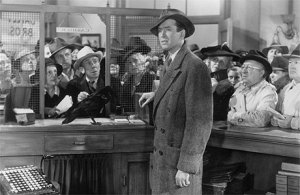
jamesstewart460This is my favorite Christmas movie.  So I’m a bit palled by recent articles that this is a dark film, or that George Bailey should never have been born.  Mainly, this is a response to a NYT article (and a short video commentary) about the “dark side” of “It’s a Wonderful Life.”  (But you can also see the seething condescension for Capra’s human vision in this article, “It’s a Wonderful Lie”)

Wonderful? Sorry, George, It’s a Pitiful Dreadful Life! by Wendell Jamieson revises, or attempts to revise the viewer’s reception of this movie, by making us concentrate on how miserable George’s life really was.

<“It’s a Wonderful Life” is a terrifying, asphyxiating story about growing up and relinquishing your dreams, of seeing your father driven to the grave before his time, of living among bitter, small-minded people. It is a story of being trapped, of compromising, of watching others move ahead and away, of becoming so filled with rage that you verbally abuse your children, their teacher and your oppressively perfect wife. It is also a nightmare account of an endless home renovation.>

While these are George’s circumstances, this not the point of the movie.  Coming out in 1946, this movie exemplifies the self-sacrifice that many Americans made during the war and the depression to get their families through.  Undoubtedly it was a paean to all those people who had sacrificed what they wanted for what was good for the country.  George Bailey still stands as an exemplary “citizen” who sacrifices his dreams–which if you look at them closely are founded on the idea of escape, and a small opinion of his small town–to care for the people of his town.  This film, for 1946, has a strong inclusive argument for immigrants.  Potter hates them; Bailey wants to give them a chance.  Certainly Capra’s viewers would have seen many immigrants in the 30s and 40s struggling with them in hard times.

The movie is also about the power of one man to fight against the greed and power of another man.  Bailey and Potter are two sides of this coin of power: Potter would rule Bedford Falls without George in his way.  But to do something great requires sacrifice.

Sadly, Jamieson doesn’t see the point of self-sacrifice.  I admire George for giving away his Honeymoon money to help the town stay afloat.  I admire Mary Bailey for all the reasons that Jamieson discounts her.  He calls her “oppressively perfect.”  I’m not sure WHO she’s oppressing.  She wants George to stay at home and raise a family, sure.  But she’s also willing to make the sacrifices and understands George’s need to help others.  She’s also the force that goes door to door to help raise funds for him.

Bedford Falls is not perfect—but it’s not stultifying.  Certainly it is better than Pottersville.  Jamieson disagrees:

Here’s the thing about Pottersville that struck me when I was 15: It looks like much more fun than stultifying Bedford Falls — the women are hot, the music swings, and the fun times go on all night. If anything, Pottersville captures just the type of excitement George had long been seeking

He later makes the point that Pottersville would have been a “resort town” and would have survived the latest crashes on Wall Street. Resort town?  Who’s he kidding.  No one looked happy or having “fun times.”  No one is happy in this version; not Mary, not Violet, not Bert or Ernie.  No one has a better life in the de-Georged version.  I saw bars and dance halls, triple X movie theatres, and people were in these places not because they were happy–they were there to drown themselves.  It wasn’t excitement.  I saw chaos.  Everyone was angry, bitter, frightened.
Jamieson catalogues George’s set of woes as if he is making a criminal case against God himself (or fate):

Soon enough, though, the darkness sets in. George’s brother, Harry (Todd Karns), almost drowns in a childhood accident; Mr. Gower, a pharmacist, nearly poisons a sick child; and then George, a head taller than everyone else, becomes the pathetic older sibling creepily hanging around Harry’s high school graduation party. That night George humiliates his future wife, Mary (Donna Reed), by forcing her to hide behind a bush naked, and the evening ends with his father’s sudden death.

Okay, I have never thought of the flirting scene with Mary as a humiliating moment with Mary, but merely of two kids who are teasing each other.  I don’t know what lens Jamieson sees this movie, but it is a twisted one–bringing out the dark elements and calling them the point.

I admire this film because it reminds us to think of others.  It is a lesson to the viewer who might be a George–that they DO count, that they have made a difference–and a template for those who might know a George on how to be a friend in times of need.  Everyone at the end sacrifices their small needs for George.  While Jamieson makes the case that George would still have been libel for the stolen money—no one in the film has accused anyone yet.  While the bank examiner has a warrant for George’s arrest–the policeman rips it in two a the party.  If they supply the $8000 back, then the money never went missing–especially if the bank examiner and the police are conspirators on forgetting the whole thing.

George Bailey is canonized in the hearts of Americans because he does good for others for the sake of doing good.  While, yes, his human rage at having been denied so many things gets the better of him at the beginning, it’s all the more to remind us how fragile our saints can be–that George is not a God nor a robot, but a man who makes the better choices each time.  Until, he can’t do them any more.

Writing a story, an author is told to torture his main character.  Good plots do this well–by taking away what our characters hold dear.  “Wonderful Life” just follows that pattern–taking away from George until he is laid bare on the night when his life could be destroyed.  His miracle is less a miracle than a vision.  It works so well as a device because despite the hocus-pocus of Becoming Pottersville, the idea is something we can actually envision for ourselves.  Each of us can imagine our own Pottersville in the wake of our disappearance–and this can reassure us in our darkest times.  I think we have all been on the bridge, looking at that swirling water.  We may need a Clarence to point out our worth, a human Clarence, which requires us to step up.  But in the end “It’s a Wonderful Life” is about the value of community–and for all George’s sacrifices he gained a community that loved him.  Don’t discount this.  In our heady, Me-oriented societies–we’re losing the idea of our community.  And when we get to the bridge, I’m afraid we won’t have a Clarence, and we won’t have the vision to see that we made any difference in the lives of others if we don’t practice self-sacrifice.  I’m not one to talk–having not done much—but I am one to watch and learn from George Bailey.

New Armour, Same Climax: a review of Iron Man

Now the title is gonna make you think I didn’t like Iron Man. But I did. I enjoyed it. Robert Downey Jr. is not the most conventional superhero actor–and he definitely brings a new level of cycnism and self-deprecating humour to the superhero idea. The heart-device is completely cool–and makes our hero vulnerable. There’s great stuff here that stretches the superhero genre. But I’m noticing something about Marvel superhero movies that is making me just a little…well…concerned.

Iron Man had a great beginning. Starting the movie with a horrendous attack in Afghanistan, it then brought us back in time 36 hours to show how things got so wonky for Mr. Tony Stark. Usually superhero movies stick to straight biopic rules–start us at childhood, move us forward—but I like this prelude dug out from the middle of the movie. Then it brought us up to where we began and put him in Afghanistan, with terrorists. This was such a bold plot move by the writers–to make Iron Man contemporary, to make him relevant. (Why didn’t they stay there?)

When terrorists begin to rebuild Iron Man version 1, and have a Jericho missile (missiles that look like fireworks–fun!) and threaten to fire it –and do– then the unique story of hero facing war in the middle east takes a left turn back into cliche. Iron man zooms over and takes care of pesky, GOOD, plot with one shot.

Inevitably, in these superhero movies, one hero must face one villain (or in the case of Spidey 3, 3 villains!) and inevitably it must be someone with mucho screen time, who is close to our hero who decides to follow in the footsteps of the hero and brazenly “duplicate” the process of “transformation”. Abomination in Hulk; souped up Jeff Bridges in Iron Man; even in some ways, Venom (the “copy” of Spiderman) in Spidey 3 (the Goblins earlier, the mad Doc Oc).

But what a story Iron Man left behind! Weapons manufacturer held hostage by Afghani terrorists who turns the table on them–shown to a theater of people who are longing for an end, or any victory, in this war; why didn’t they just send Iron Man back into the fray again and again? They could have shown us that the issues were complicated, the fixes not so easy and that Iron Man was really one big Tank as hero–a suit of armor with weapons. Tony Stark is still a weapon–he’s manufactured himself as a weapon. He has not changed, in a sense, though he has foregone making money from the weapons industry–a huge difference. But that’s not really followed up on because we’ve got to move this plot towards Jeff Bridges and the one-on-one shoot ’em up which has become the hallmark of superhero movies.

Perhaps superhero movies have been influenced by the game industry, pitting the largest foe at the end of the movie–a foe that is his “equal” if not his doppelganger. But then, it could just be adventure plots which nearly dictate that a climax has to be between the protagonist and the antagonist. It’s just that Jeff Bridges was the B-class antagonist and the Afghanis were so much more interesting. More complex. It is their style of fighting–which resists making one man a central figure (Bin Laden is not in control in Iraq–Al Queda is a hydra with many heads, hence the difficulty of defeating it)–which challenges the antagonist-protagonist motif.

Wouldn’t you like a movie that dealt with the issue of the war from a superhero POV? We almost had it. And then Iron Man went on autopilot.

Still Iron Man is a great movie for what it is: two hours of great entertainment. Robert Downey Jr at his best. Jeff Bridges looking cool as a bald, bearded guy. Gwenyth Paltrow as Pepper Potts. Dialogue is snappy. There’s lots of good joke moments. Rent it and enjoy. But I had a writing teacher tell me this once: “The good is the enemy of the best.” And here, I think this is a good movie that wanted to be the best.

For another thought on this movie–and a four star rating–read Roger Ebert, my hero.

How Kung Fu Panda Gets Fantasy Writing Right

Brilliantly concevied and executed, Kung Fu Panda soars as a Fantasy compared to The Forbidden Kingdom. And essentially, they have the same plot.

Take a fan of martial arts and make him the only one who can stop the big villain in a martial arts film.

The post-modernism of films is actually a delight to see–how “fans” are being incorporated into the films they love as plot and character. I’m sure it’s done well other places (most notably Galaxy Quest which takes actors from a show and puts them in reality, but also has a place for fans of the show as heroes too) but KFP does it with style, owing, I think, in no small part to the casting of Jack Black who has played a fan before: School of Rock and Tenacious D come to mind as well as Be Kind Rewind. So naturally, he’s cast as an adoring fan of Kung Fu–and of the Five heroes that protect the city. When he’s picked as the next Dragon Warrior, he has to learn how to become a warrior. Here’s how I think they did it, the writers, and Black, to make it more believable, more fun, and a better overall handling of the same plot from The Forbidden Kingdom.

1. Po’s training is designed for Po. First this is a comedy, so the training is a parody of Martial Arts films, and a parody of the newbie getting quick-trained by the Master. But Jason’s training in TFK is just standard training with looks of disapproval and lots of complaining and then an unbelievable transformation… Po has to be trained (SPOILER!!) using food–his desire. His training reflects his personality–so in a way, we learn more about Po through his training. For Jason in TFK, his training has no reflection of either his masters or him, and it is merely a trudge to get him to the plot. For KFP, Po’s training furthers the plot and the Po we see after training is still Po–vulnerable, quirky, just better with movees that have little style but are fun to watch…

2. Both have to believe in themselves, but Po offers the more believable moments of doubt and overcoming that doubt.

3. Jackie Chan is in both of these movies playing a Monkey like person–strange. But KFP knows that they keep the dialogue to a minimum on Jackie. And Dustin Hoffman as Shifu is a much more layered character than Jackie Chan’s mentor in TFK. There is a troubled past, some disappointment, a reason he’s gruff, and the promise that he has a character arc too….

4. Other characters have arcs as well–Tigress, Oogway the Turtle, Tai Lung the villain–they all have their pasts, and how they are connected, and how they affect each other. Yes, the crane, viper and monkey and mantis have little to no growth, but by far KFP handles more rounded characters than TFK even tried to.

5. Though we are told that Po will save the day, we don’t know how–and we really never do until he does it. We can’t see that Tai Lung can be stopped, until we watch how it happens. This is brilliant as there is only a little foreshadowing, and most of the time we are discovering Po’s potential as he does.

6. Jason in TFK is a big fan of Martial Arts Films, and Po is the fan of the Five. In KFP, they play up the fandom aspect, making it a part of Po’s character, and why he has an inferiority complex to go with his Hero Worship. Jason rarely exhibits his fanboyness–he’s too busy being a stock character, and never realizing what makes him unique–cause no writer has written it for him. he has two or three jokes in the middle of his training related to his knowledge of a certain move. But the film could have capitalized on Jason’s worship and film knowledge, but after the opening sequence, Jason could have been any kid. With Po, we know his worship is what drives the film…he believes in these heroes, wants to be one of them, is devastated when they don’t like him, and runs when he is burdened with doing what his heroes could not do.

7. Po is likeable. Unlike Jason in TFK, there are no insurmountable character flaws in Po–he just has self-doubt, a low self-image, a bit overweight. But he wants to be better. He tries, he never gives up, and he is thwarted more than once from getting what he wants. He has a dad that loves him, but a future in fast food that many of us would identify with. Jason has that awful moment when he takes the thugs directly to the old man and lets them beat him up…. viewers never recover from that. At least, I didn’t. It was unnecessary.

So, further comparisons might be done on the two movies, but I was thrilled with Panda. And yeah, it was cartoon—but cartoons should never be able to do more with plot or character than live action. In fact, if they do, it really shows the shallowness and deficit of the live action. Cartoons can do more with style and camera shots–and making animals out of everyone–but plot and character aren’t necessarily strengthened with cartoon. So, KFP didn’t win over TFK because of animation—but because the writing was SO much better.

How not to write Fantasy: The Forbidden Kingdom

The movie is based on one of the oldest known novels, Journey to the West, a Chinese Epic. Written down finally in the 1590s from oral stories dating much farther back, it’s 100 chapters long and is one of the four classic novels of Chinese literature, so any screenwriter would have challenges in writing up even a portion of it for screen. Whether The Forbidden Kingdom works on a literature-to-movie basis or not is not my point below. It doesn’t matter to me if the movie represents any part of the classic novel itself, or whether the Monkey King is true to character as depictd by Wu Cheng’en, the purported author of the novel.

To me the problem is always how the film stands up as a story. And here for me the movie serves as a good example on how not to write a Fantasy.

1. There is very little character set-up for the main character and the character that does develop is unlikeable. His name is so forgettable that I have forgotten it. Josh or Seth watches a LOT of kung-fu movies–we know this because of his room decor, posters and posters of old films. He rents movies. He has a thin relationship to the old shopkeeper–who seems to run a kung-fu Movie Warehouse and Knick Knack store. The movie seems in a hurry to get us to the “object”–the staff–and so makes Josh/Seth see it through a door that’s been left open, pick it up off the floor, and we get to feel the “weird” importance of the object. In the next scene, unknown girl gets Josh/Seth to tell us what he does and why he lives there–she’s so much a schill that she doesn’t even scream when Josh is then beat up by a gang of thugs. He doesn’t react much either. When they discover he has rented movies from Shopkeeper’s Kung-fu Emporium, they assume he can get them in to see the old guy and rob him. He walks them straight to the shop, tricks the shopkeeper, and watches as they beat him up.

Okay, I don’t like this character already. He’s shuffled through his plot points like an understudy during a rehearsal (and then you’ll stumble here and then you’ll look pathetic here and then ….) and allowed to have no reaction to what the director wants us to think as weakness. But this isn’t just weakness of strength and skill–as the movie makes it out to be–but HUGE weakness of character. He doesn’t have to lead Thugs to the Shop. He has taken thugs to an old man to beat him up. Without more plot to tell me he was forced or coerced, he’s an accomplice. I could have actually liked him if they had beat him up because he hadn’t led them to the old man. But now I think he’s worthless. The Thugs are merely there so we can (spoiler!) see them beat up at the end.

We know nothing about Josh/Seth but that he has an addiction to Kung-Fu. No background, no relationships–he’s a cypher. His choices are to not choose. I don’t believe he doesn’t try to run or fight back against the thugs. I don’t believe he would lead them to this shopkeeper. I don’t believe he’d stand back and let the shopkeeper get beat up. And if I DID, that would make Josh/Seth into a worthless person, not a sympathetic one, and not one who gets to go to 13th Century China, or is that 12th? Anyway.

On another note, the only movies that the writers have seen are the Karate Kid movies—Josh/Seth is a dead ringer for Ralph Macchio, and the beat-up gang scene and the old man are plot point for plot point Karate Kid; even Josh/Seth’s past–a kid from New Jersey–is straight from KK’s bio.

2. Pick up Companions at the Corner of First and Main. Well, Joseph Campbell would have been happy. Naive character, after going unwillingly into adventure, is taken to an otherworldly bar. I was waiting for the Star Wars Cantina theme here as Josh/Seth tried to get Jackie Chan to help him. All the main companions will say no first and then there they are marching with him. We merely pick them up as the plot goes on, and we pick them up for no reason. There are no extra characters–those we might pick up, those who might become important–just the Main Characters and the Villains.

3. Josh/Seth’s unprecedented rise to Kung-fu competency: never before has one mastered Kung Fu so quickly except in the Matrix. There are some funny moments here, more than anywhere else in the movie, genuinely good dialogue that plays on J/S’s knowledge of kung-fu moves, or rather the names for moves. This should have been a constant shtick–J/S quoting movie references, etc and pitting them against “reality”. Unfortunately, he seems to know as much about those movies as Wikipedia could tell him. He can list off moves. But what do his movies tell him about plots, expectations, characters?

4. None of the places are really used. I loved the movie, Hero, because each setting became a living character, part of the plot, and part of the action. Here a cherry blossom orchard is a backdrop. A pit that leads to magma is merely a piece of furniture–not a real obstacle for any of the fighting….there’s no threat that anyone will fall into that magma. A field of very long reeds/wheat/something is merely there to cut into for some training. Our characters go from sudden desert to sudden lush green hills–quite the ecosystem juxtapositioning.

5. The characters are plastic with plastic motives. Sparrow is out for revenge. Jackie Chan is along for the ride, perhaps to be the kid’s mentor, though we don’t know why. Jet Li is a monk seeking the staff. The Witch wants immortality–because everyone wants it (apparently there’s only enough juice to make one person eternal). The Jade Warlord wants the staff. The kid has to return the staff to “its rightful owner.” No one in the story thinks about the motivation they were handed on a card. No one thinks of turning back, of making a different decision, of negotiating a deal. There are NO complications. Fantasies can’t be built on a single plot system–with no twists. We know that the characters have to reach their destination–it’s in the script. I’m never in doubt because these aren’t real characters–they are an assembled entourage for the audience. They escort us through the plot–and, dang, they aren’t even that entertaining.

I almost walked out of the movie–it had nothing to hold my interest. Even the fight scenes. Nothing new was given to Kung-fu repetoire–not like the movies it purported to love in the opening credits. I got tired of watching the kung-fu kicks–and I can watch Matrix 1-3, which can’t be comparable to classic Kung Fu, several times!

There was one surprise in the movie, and I won’t give it away, but it wasn’t possible even by the movie’s logic. I think I will show this movie whenever I get half way through teaching a Fantasy writing course. Yes, it still manages to string together a bad plot, but getting to the end of your plot is not the end of your quest, Grasshopper.