The Short Happy Life of “The Snowman”

Okay, it’s going to get Christmasy soon, so I thought I would try to shape the Christmas I want. I think we all do it. Through decoration and choice of songs and events, we shape this important holiday. Well, I’d like to craft my holiday with “The Snowman,” my second favorite Christmas story, next to Jesus.

“The Snowman,” Raymond Briggs’ christmas story made into a wordless film about a boy who goes on a midnight adventure with his snowman–complete with a flight up to the north pole to dance with a whole bevy of snowmen, and a brief encounter with Claus–is beautiful and heart-breaking. The music that accompanies the story brilliantly illustrates the emotional mood of the story, and if you’ve ever heard the main song sung in the film, it probably gave you chills.

That driving piano rumbling–that rolling and rolling in a minor key makes the moment exist between wonder-filled and ominous. Some of the scenes of the flight show a whale as a shadow in the water; some have the boy almost falling; but through it all, the snowman keeps a-hold of him, and the other snowmen fly in formation like blue angels around the pair as they glide over a winter landscape.

With every snowman story there is a theme of how temporary life is. Even Frosty the Snowman lives a short happy life. I love how “The Snowman,” without words, is able to put the joy and sorrow of friendship in one story.

And there’s something about this scene that makes me long for a snowman of my own, someone that still might take me on an adventure. I’d like to think that’s the kid in me, maybe. But I know it’s something more grown-up and universal–a longing for companionship, a feeling of being chosen, and desire for the world to have real magic somewhere–a little surprise still.

Maybe this Christmas, eh?

New Star Trek movie and the Power of Myth

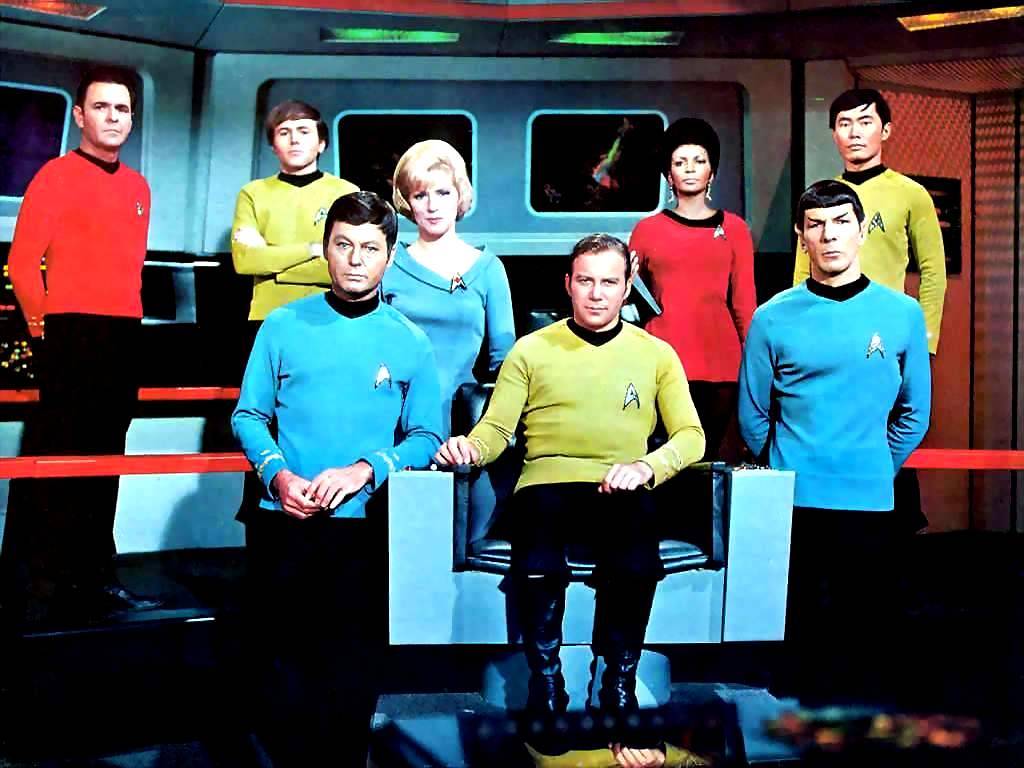
What I love about what seems to be Abrams’ vision is that he is turning this story into myth. He’s taken Kirk and made him into a man who is dissatisfied with his current state and yearning for a destiny, and taken Spock and made him into a conflicted man who must choose between two paths. While Abrams will no doubt rewrite some of the canon, by escaping the usual players (Shatner, Nimoy–though Nimoy does have a role in the film, Nichols, Takei), he allows these “characters” to be interpreted much like –and on the scale of–Shakespeare. Now hold with me. I ain’t saying that Roddenberry’s original show was Shakespearean, or certainly that the original episodes were on par with the Bard, only that the design of archetypal characters was hidden there all along.

Kirk as a man who leads with his gut; Spock a man who thinks with his brain; McCoy a man who decides with his heart. All three of them make up the primary triad of most every episode where a concept or idea must be batted around between these three polarities—does the gut, the brain or the heart win out?

Abrams looks as if he has captured that archetypal quality in at least the main two characters. I’m hoping McCoy is fleshed out a bit (he should have been quite a bit older than Kirk).

When Peter Jackson remade King Kong, he turned it into myth, and I loved that movie. Myth is where you know the basic gist of what will happen–what has to happen–the Empire State building throws its shadow on the whole film–which makes Kong into a tragic figure, lurching towards that building no matter what. But it gives Jackson a chance to play with the inbetween scenes–which he does.

Now Abrams is getting a chance to interpret character, much as an actor like Branaugh or Gibson or Olivier interprets Hamlet. By gutting the Nimoy from Spock, and the Shatner from Kirk, we’re left with the essence of the character—these two torn, universal, archetypal men. And I think you will see that Star Trek will move–as it has always been moving–into American Myth.

Yep, America has myths–just as profound as the Greek ones. We’re starting to see those myths coalesce. You can tell a myth–it keeps being referred to, being reinterpreted, having something new to say, becomes universal. In my opinion, American myths include: The Wizard of Oz, Batman, Superman, Star Wars, Star Trek, King Kong, Spiderman. Nearly all of them started as Art in one way or another. The Oz books got the promotion into mythos when Judy Garland put on the red slippers–but all the reincarnations of that story have mythologized it. Certainly, though, the books were illustrated and this helped.

There are other broader myths too: the cowboy, Western expansion, the American Dream–but in the fictional ones I mentioned, America gets stories. They get strong characters that can be played and played again.

I am glad that Star Trek is entering the realm of Myth, even as we come closer to the days of space exploration. I look forward to Abrams’ rendering of the characters–not the show–of the ways these men and women represent the American story, and how they keep reflecting us back to ourselves in the mirror of Science Fiction and Myth.

Shine Anthology, and Dreaming of a Better World

In another post I talked about thinking positive about the future.  I linked to an anthology, SHINE, open to writers, that wants to make the world a better place in the future–a vision of how we WILL get it right eventually.  How  decisions we make technologically, politically, personally will solve–or begin to solve–global crises we face right now.  For years, scientists have been cast as Dr. Frankensteins in movies–playing God with forces we don’t understand–and rarely are they those who solve the problem.  If they do arch heroically at the end, it’s often to put back what went wrong, the Hamlets of a technological Denmark gone rotten.

When doing the radio series, Yukon 2058, I was sitting with Lil from Lil’s Diner and we were talking about Angel’s Nest, the future home for the homeless teens in our area, a cause Lil’s Diner has taken a personal investment in, literally.  For Halloween, the employees at the diner donated all wages made that day to Angel’s Nest and they kept the diner open most of the night to host a fund drive party.  We sat and talked about what teens need in this town, and I realized that science fiction could be used to describe what we want in the world–not just to warn people, not just a good story, but planting seeds in the minds of those who might be able to help us make those changes.  SF can be used to help people envision.

Who wants to walk into a post-apocalyptic future?  Why not place things in the future we need to see–and once seen, that we can create for real.  So, via radio, I created a youth center, the kind I would love to see the town create in the old Canadian Tire building.  And I put it on the air, and inside my vision for the future.

So, if you have ideas about what kinds of positive strides the world could make in the future–ways of solving crises in the world– allow me to suggest some positive outlets for you, outlets where your vision could inspire the vision of others who can make it happen:

1)  CBC North is going to want to interview you for your vision of the Yukon–a place that will be much changed in the next 50 years.  Imagine the future, and then talk about it on the radio.

2)  SHINE anthology, edited by Jetse de Vries, is open to writers this next spring who want to write optimistic science fiction.  This doesn’t mean that utopia comes without dramatic tension or story, only that it includes a positive vision of the world of the future.  If you want to write up your idea as story, read these guidelines.  This is going to be a great opportunity for writers and thinkers, since anthologies, collecting these positive views of science, will likely have a great distribution and put you in pages populated by well-known, world-class thinktankers/writers.  (If only there could be a weekend to gather engineers, scientists and science fiction writers to pool ideas…)

3) the 24hr Playwriting competition, held here in Whitehorse by Nakai Theatre in April, might be another place to launch a positive future in the Yukon, as local plays are funded, produced and showcased through the Homegrown Theatre Festival in the Yukon, in order to get them ready for possible Canadian distribution.

4) Write directly to the Governmental groups that might help implement your idea: help them see what impact your idea–all consequences considered–might have on the Yukon.  Write for funding to research it through the Northern Research Institute

5)  Don’t forget other Canadian science fiction magazines: On Spec needs you!  And loves you.  And wants to promote Canadian voices.

I think if a people down south, my fellow Americans, can be inspired to change by electing Barack Obama as President, then anything is possible.  I think we are being called on to help make that change ourselves, first by envisioning and then by doing.  I think science fiction writers inspire change.

Else why would the first American space shuttle be named Enterprise

Egalité at the World Fantasy Convention, a report

img_7941I have returned from Calgary where I attended the World Fantasy Convention, a yearly gathering of editors, publishers, writers of Fantasy literature. There were three of us from Whitehorse–Marcelle Dubé, Claire Eamer and me–forming a Contingency.

The convention for me was divided into four parts: the seminars, the networking, the readings and the dealer’s room.

The Seminars: The theme was Mystery in Fantasy Literature, with some seminars on how to put mystery elements into your fantasy fiction, or the best Fantasy novels of the last 20 years, etc. You can go and hear editors and publishers and writers speak about their writing strategies and their interests. Important was putting names and faces together in the editing and publishing world and getting an idea of what each editor might enjoy seeing in fantasy fiction, and how they might be to work with as editors and publishers. I also learned a lot about which authors were considered the best in the field, and how to catch up on authors I’d missed out on.

Networking: This is actually a lot of fun. Catching people for dinner, or talking with them in the convention suites after programming/seminars were over. You meet a lot of people you could never meet otherwise and this is for them–and you–to put names and faces together. I was able to hand out a few cards (ones that I’d made on my computer an hour before I left on the Air North plane), and meet a lot of people one on one who are exciting, interesting folks–fellow writers, and the aforementioned editors and publishers. You’d be surprised to learn, I’m sure, that I’m not a good schmoozer. I couldn’t last the many hours it requires. However, as the picture implies, we all got nametags and were encouraged to sit in the autograph room as equals–this is actually a very nice egalitarian maneuver. We’ve been hearing and talking to editors and publishers as they are movers, shakers, and opinion-makers–and then for two hours, we are all on the same level together. Nope, no one came up to have me sign anything. But it was nice–to feel like a writer, someone who COULD give autographs at any moment.

The readings: though I didn’t go to very many, I did enjoy the ones I went to. Mostly they were friends that I knew. Here you can hear about books you haven’t bought yet.

The dealer’s room: where books are sold. Ah, the joy of the dealer’s room. Lots of books. And I got to do an interview with Edge Books Website for a podcast. I even signed some books for them: Tesseracts Nine and Eleven. Edge Books and Hades Publications are fantastic people.

I’d like to do it again. But one of the biggest lessons I learned there was that you could be a well-known name despite publishing very much. If you send stuff out to be published, and are rejected, your name will still be more recognizable than if you had never submitted at all.

So, courage–even without publication–is rewarded with recognition. And recognition in a small cadre of people is worth its weight in gold.

(picture: l-r, Catherine Cheek, Derek Kunsken, me, Peter Atwood—Catherine and Peter were fellow Clarionites–and thanks to Liza Trombi of LOCUS for the pic!  Thanks, Liza!)

Predicting the Yukon of the Future: a new radio series

I’m excited to announce that there will be a new 5-part radio series beginning sometime in November, either next Monday, 17th, or the following Monday, lasting 5 days in a row, exploring life in the Yukon in 2058. In honour of CBC North’s 50th Anniversary, we take you flash-forward into a very positive look at the future.

Recently I read a column at Fantasy Magazine’s website entitled, Why We Need Scientist Heroes Again, and the author made a good case for thinking positive:

“Show of hands – who wants to retire to their grandchildren’s sub-prime one-room hovel in the decayed urban warzone that was once America?

Or perhaps roam the sweltering wasteland looking for gasoline while the mutants hunt you down?

Yeah, thought so.

Then let’s inspire some smart folks to get scientifical and create smart solutions to our stupid problems.”

So, in that spirit, I pitched Yukon 2058 to CBC North and they liked it. And I think things will get more and more interesting in the north over the next 50 years. Not every positive accomplishment will have positive consequences all the way round. And that too is a power science fiction has–to warn us. If everything turns out just hunky-dory we never have to change what we’re doing. But in the spirit of thinking positive– of actually dealing with climate change (cause it will happen), I hope you enjoy Yukon 2058, my own personal vision of the Yukon of the future. If you like some of the things, don’t wait 50 years to start them, or to think up things on your own. Create the place you want to live in, the place you want your kids to live in, the place you want to retire in. The world is going to turn its collective global head north very soon–let people know what you would like to see in fifty years.

Also, there’s a science fiction anthology in the works looking at optimistic near future science fiction, called Shine. Check out the website and submit your stories. I’ll write another post about Shine too.

Dream Jobs and Just Doing It: Star Trek Series

For the new Star Trek the Movie, see my posts: Star Trek: Movie Review and

New Star Trek Movie Trailer and the Power of Myth.

___________________

Okay. I’m not gonna be a self-help guru here, but I will tell you what happened to me.

I think my number one thing I’ve always wanted to do was to write for Star Trek. Or for some TV sci-fi series. I think I liked the idea of developing characters through adventures together, and writing with a team of people. And seeing that each episode became something that added to a whole. Maybe, too, I was disappointed by the squandered potential of Enterprise. I felt like Season One was underdeveloped; no one died at all and this was our first time into space…. The characters had potential but they were never utilized and the plots were dull. When the season finale came up, and the new season premiere completed it, I was sure that the problem was the writers–or the writers had been hemmed in by too many rules, I don’t know….

So, today I was complaining about how little time I have to write and that I’m working too much, and I told a colleague about my silly dream of writing for Star Trek, and she said, pulling out a notebook and a pen: Okay, let’s write for Star Trek.

The next two hours were a blast! We created a whole cast of new characters drawn from the Star Trek universe, and some from my own brain, and then created a series—what we do in season one, season two , season three. I had high hopes for the series—hehe. I learned that without a series going on, of course, selling a new series would be very difficult, and two, that Pocket Books really wants books with major characters who have appeared on the show–not your own. Who knows if one can write “similar” Federation type settings for books that are not Star Trek, but obviously borrowing the universe-structure. If anyone knows if publishers can’t stand ST-like books, let me know….but I may write this up as a novel pitch.

I have nothing to lose for trying. And that’s kind of what today proved to me. Laurie, my colleague, proved to me by pulling out the notebook and pen that sitting around and complaining does little good, and that it’s better when you just do it. If you want to write for Star Trek, do it. Create what you want. Perhaps with some positive energy, I can a) sell a TV series! or b) sell a book. Who knows? But I do know I’m several steps closer than I was. And I loved brainstorming with Laurie. It picked up my mood, and made me feel as if I were closer to my goals.

So, maybe don’t look at all the obstacles–just do it. You might as well have fun–and who knows–the product might be salable outside the frame you thought you wanted to work within. It was fun creating, and maybe that’s the whole point.

(I’ve just, of course, shown my complete geekness to the world….but multiple character arcs, episodic TV and science fiction are fun. Maybe I should just go ahead and create the Television Station that will run my show! Hey, Laurie—get out that notebook!)