Grandmother Rapunzel Teaches Us What to Do with a Tower

“Grandmother Rapunzel Knows What to Do With A Tower,” by Jerome Stueart (11 x 15) watercolor, mixed media on paper.

I wondered what an older Rapunzel might teach us about how we live with the past, how we get over our towers, and how we might transform them.

Rapunzel had a lot of “Tower” moments.” She lived inside a tower moment created by great upheaval and change when she was traded to a witch as a baby and raised in the tower, isolated, trapped. The Witch, as mother figure, wanted to control what she saw, what she did, who she knew, what she thought. In Sondheim’s “Into the Woods,” the witch is just an over-protective mother; in Disney’s version, she is Dame Gothel and uses the girl’s hair for immortality. In the Disney version (Tangled, 2010) Rapunzel transforms her tower inside to something beautiful–always “repainting” her childhood, the isolation, as a place of joy. I liked that — but I also thought an older Rapunzel, someone we never ever see, might be able to give us some pointers.

Fairy tales could have lessons for Elders too if we heard how the story continued.

In my reimagined Rapunzel here, she tries to thrive inside the tower, even making a swing out of her hair. If there are suitors, they are scared off by the witch. Rapunzel eventually outlives the witch, but she is left with the tower.

What do you do with the Tower you are left with?

  1. Examine the Tower from the Inside

As a writer, I have been circling around tower moments in my own life, trying to see them honestly, not relive them, and write about them, so that maybe I can put the tower behind me. But it is hard to look closely at your tower without feeling trapped, or feeling the pain of what it was like inside that tower. People who hurt me are long gone; circumstances have changed. But I am still in the tower because I don’t know how to climb down.

Rapunzel had her hair, but she’d have to remove it to leave. There’s no door at the bottom. In some versions of the fairy tale, she makes a ladder of straw and climbs down — so maybe there doesn’t have to be a sacrifice, but getting out of your tower is not always easy. They tend to travel with you.

Before I can leave though, I need to understand what my tower is, and how it shaped me going forward. It’s hard to look closely at your tower but I don’t think we can escape them without understanding them first — and understanding how we ourselves are NOT our towers.

Continue reading

Great Queer Fantasy and Science Fiction

I moderated a “Queering Fantasy” panel at the virtual 2020 World Fantasy convention that looked at the connection between adding queer characters and queering the fantasy tropes themselves.

How do you queer Fantasy and Fantasy tropes? Is it dropping in a queer character into an otherwise fantastical plot? Slipping in a positive queer romance? Or is it dismantling, changing, altering, and questioning the tropes that have been present in Fantasy for decades? Is it queering the way power is distributed in a society, or queering character goals and story endings? Does it touch how we build a Fantasy economy, a government, a landscape, a culture? We would say it includes all these things. Queer characters invite complete queer make-overs of Fantasy tropes. We’re here to discuss that– discussing the contributions of LGBTQIAA2S+ authors to the field; we want to give you plenty to look at and consider. Heck, we might, at the end, even compose multiple queer “I want” Disney songs for the Fantasy stories we want to create or see created–ya never know. Whether you’re an activist or an ally, we welcome you.

We had a great time–and if you went to WFC2020 and didn’t see it, it is recorded. We could have talked another hour on these themes. Part of our takeaway for guests to that panel was a list of great queer fantasy and science fiction. We placed it in the Session Pages section of WFC 2020’s online presence at Crowdcast. We had originally just been thinking of fantasy, and then it expanded to include SF and then horror, steampunk, etc…. but here is the list (with a few more edits by me).

Caveats: This is NOT a list of every queer story out there–by no means–but was a list that four panelists Corry L. Lee, Cheryl Morgan, S. Qiouyi Lu and I could come up with over a couple of days to hand to people when they got done with the panel.

It’s intended to be a starter list–a recommended reading list. These are books we’ve read and recommended. It is limited by our personal reading. It will have holes (not enough of us read YA and MG) and S. didn’t get a chance to put aer complete list with ours, but I hope ae does and then I will add aers to the rest.

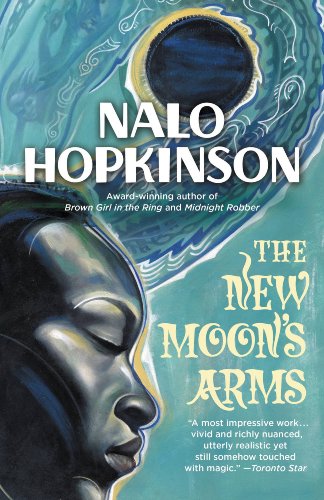
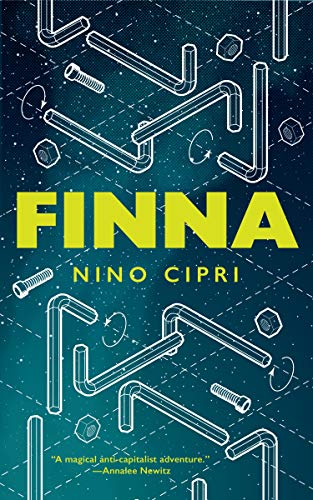
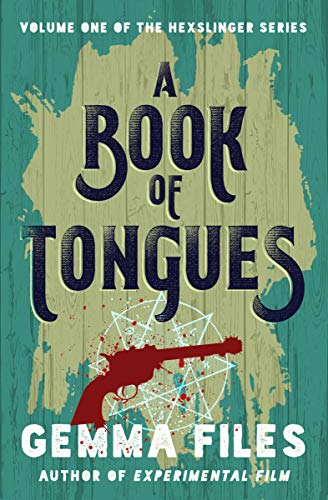
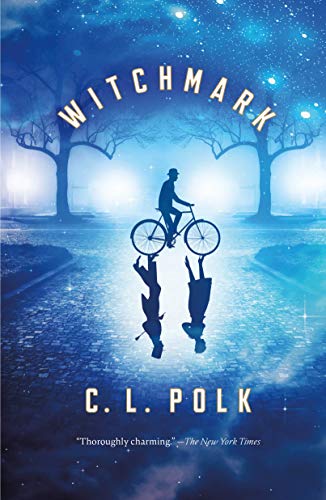
I chose representative covers with complete randomness, not as any statement.

There are many great reading lists for queer books–this one is ours.

So, from the “Queering Fantasy” panel at the 2020 World Fantasy Convention, a list of their recommended reading:

Great Queer Fantasy and Science Fiction

Feel free to circulate and add your own–or let me know! Let it grow, let it grow, let it grow!

Recommendations by Corry L. Lee, Cheryl Morgan, Jerome Stueart, and S. Qiouyi Lu

Key: SF = Science Fiction, F = Fantasy, YA = Young Adult, MG = Middle Grade, H = Horror, SP = Steampunk, SH = Superheroes, GN = Graphic Novel SS = short story collection

Adult:

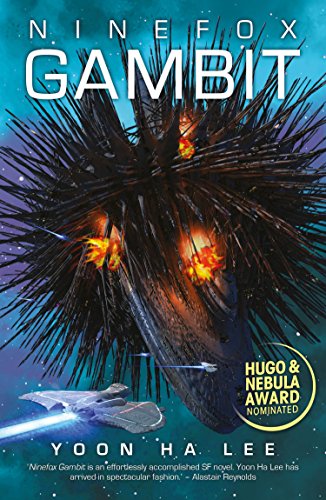
  • Ninefox Gambit – Yoon Ha Lee (SF)
  • The City We Became – N.K. Jemisin (F/contemporary)
  • The Perfect Assassin – K.A. Doore (F)
  • Raven Tower – Ann Leckie (F)
  • Ancillary Justice – Ann Leckie (SF)
  • A Memory Called Empire – Arkady Martine (SF)
  • The Future of Another Timeline – Annalee Newitz (SF, Alt Hist)
  • Weave the Lightning – Corry L. Lee (F, novel)
  • Dhalgren — Samuel R. Delany (SF, novel)
  • Stars in my Pocket Like Grains of Sand — Samuel R. Delany (SF, novel)
  • The Affair of the Mysterious Letter – Alexis Hall (F)
  • Will Do Magic for Small Change – Andrea Hairston (F/contemporary)
  • Silver in the Wood & The Drowned Country – Emily Tesh (F, novellas)
  • The Seep – Chana Porter (SF, novella)
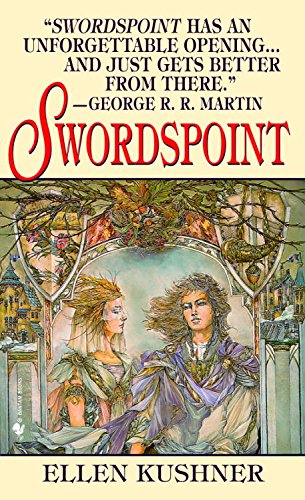
  • Swordspoint – Ellen Kushner (F, novel and the whole Riverside series)
  • The Outremer Series – Chaz Brenchley (F, 6 novels in US, 3 fat novels in UK)
Continue reading

My Year of Canadian Reading: what stories are you made of?

As I’m approaching an inevitable embrace of Canada (oh, sweet mystery of life at last I’ve found you!) I’m aware that I have very little knowledge of the Canadian literary tradition.   A poor citizen is one who does not know his country’s stories. It is how we speak to one another–a cultural physiography and language that connects Canadians together.  How can I become a citizen without learning this cultural language?   I thought a more creative way would be for Yukoners to suggest Canadian books that meant something to them–then it would be more personal.

So I went on CBC with Dave White and we came up with a plan for book suggestions–a reading list of sorts–so that I could become more literate about Canada.  We are getting great results, but please call in to Dave and suggest more books.  I’d like to build a canon, of sorts, of Yukon-suggested Canadian literature.  Right now I’m looking mostly for fiction, poetry and drama—but creative nonfiction would be appropriate too.  I built a blog to read and discuss this literature.  It’s called “A Year of Canadian Reading” and you can follow the link to see what I’m reading, what I’m up to, and what I thought about books you suggested.  Follow along if you like.  Read them with me.  I want to get an idea about Canada from its literature.  I want to understand you through your stories.

I don’t have any intention of stopping reading after the Year is over—but an actual year is a start.  I’ve read some Canadian Literature–Mordecai Richler, Al Purdy, Tomson Highway, Alistair MacLeod, Alice Munro, Margaret Atwood and Michael Ondaatje (as well as some great science fiction and fantasy).  But I’m aiming for a deeper understanding of Canada through breadth and depth of your suggestions.

Let me know if you want to play.  Follow these links if you want to:  SUGGEST A BOOK FOR ME, or find out WHAT I’M GOING TO READ.

Harry Potter Diary: Harry, the Suppressed, Closeted Wizard

At 41, I’m reading the Harry Potter series for the first time.  Outside the demographic for the book, I was wondering what I would latch onto as an adult.  What would speak to me?

Harry Potter and the Philosopher’s Stone, HP1, gives us a kid whose true identity is being suppressed.  His muggle guardians KNOW he is a wizard, but they are hoping that he will just not learn about this heritage, and certainly won’t become a wizard.  They never mention his parents were wizards, never tell what really happened the day his parents died, and they never want to hear if he has any wizard “tendencies”… and they punish him severely whenever those “tendencies” appear—when Harry acts on his wizarding nature.

I always found the scene when the owls try to deliver his welcome letter from Hogwarts School of Wizardry and Witchcraft to be quite moving.  While on the surface it looks like the Dursleys are merely being subverted in their plan to keep Harry from knowing the truth–it is a moment where Harry learns WHO he is and that he has great potential.  Without this moment, there is no Harry Potter or Harry Potter series.

The urgency with which the owls start tossing their letters into the house; the extremes that the Dursleys go to hide away from the letters finding Harry; this is no small event.  I would say it is the biggest turning point in Harry’s life–because afterwards he will understand who he is, and be given the skills to fulfill his destiny, while before he is humiliated and punished when any sign of his true nature reveals itself, and living as a secondary person, almost a slave, in the Dursley household.  He lives in a closet under the stairs!  (I mean, really, people… a closet???)

It’s hard for me to escape seeing this as a coming out moment for Harry, or see this as a metaphor (at least for me) of a boy society has been trying to make more and more “straight”–who just can’t help certain natural tendencies.  As a gay man, I saw myself in Harry.  Society hides our history from us, brands us as immoral, makes us feel humiliated for being who we are–if we even get to know that information–and somewhere along early puberty, the signs start coming in unusually fast… the letters telling us who we are and what we are capable of start flying in.

I had great parents.  No, they didn’t know what to do either when I started exhibiting behavior outside of what they had expected.  I don’t think they ever tried to hide who I was, though; they were afraid to mention anything, uncertain if this might be a tipping point where I would start to explore what this meant.  But certainly my religion tried to separate me from the immorality of a whole group of people, convincing me that I could never be a “homosexual”– because I was a good boy, a good Christian.

If I’d only had a list of the great gay and lesbian people of history, or that so many of our revered American writers were gay or lesbian.  If only I’d realized how much we contributed to history.  Or known what was happening to me physically and mentally and sexually.  I’m glad that Mason Crest Publishers recently announced a line of books for middle-schoolers about being gay, about coming out, about gay and lesbian role models, history, religion.  Like 15 letters!  I want to own those books.

In my life, though, the letters stopped coming, the owls gave up.  I never realized I was gay until I was 34.

But in Harry Potter, the Dursleys can’t prevent Harry from knowing who he is because a giant comes through the door.   Hagrid—man, would I love my own Hagrid!—breaks down the door of the shack on the island where the Dursleys and Harry have hidden.  And he is angry when he finds out that Harry’s history has been suppressed, that Harry’s true nature has been ridiculed and been denied him.  There is triumph and relief in that moment of comeuppance for the Dursleys.  Not only have they been shamed, but Harry has seen them as they are— as no longer the standard or authority for telling him who he is.  He cannot be shamed.  Hagrid has revealed a higher truth.  Harry is allowed to break free of their mental tyranny–because Hogwarts, a place designed for people just like him, is waiting for him.  They value him.

Now, at Hogwarts, everyone treats Harry as someone they love.  Yes, a few treat him like a superstar, but I’m amazed at how loving and caring all the characters are towards Harry–especially the adults.  They become his new family.  Dumbledore and McGonagall serve as surrogate parents, and Hagrid as a protective big brother.

We see the Dursleys as comedic backdrop, but I think, in some ways, they are as dangerous to Harry as Voldemort is.  While Voldemort wants to take Harry’s life, the Dursleys also want to take Harry’s life–his soul, his self-worth, his personhood.  Whoever would rob you of who you are, or try to shame you for being who you are–that is a dangerous person.  If the Dursleys had been successful in keeping the truth from Harry, it would have robbed him of a joyful, adventurous life.  Those who want to keep their children from realizing who they are–and the joys of being that person, the contributions that other people like ourselves have made to history–are extremely dangerous people.  There is nothing wrong with being gay.  And great people in history have been gay.  It is extremely important for every person to have role models.  We spend an inordinate amount of time in Christianity talking about our role models, and in American History about role models, and in sports about role models.  Gays have been hidden from history for a long time.

Oddly enough, we were handed a great role model when Dumbledore was outed by JK Rowling.  Such a huge moment–that a beloved character could be gay and still be the wisest, most caring, fatherly, most powerful character in an already beloved series.  We were handed a beautiful role model, who doesn’t have to just be “gay”–he’s allowed to do other things with his character.   And it completes my attachment to this scene.  Harry is saved by Hagrid, a man of the woods, an earthy gamekeeper, in service to the Head Wizard himself, who is gay, and finally taken from the suppression that had marked his whole life.  Harry is given a new start as a Wizard, in a place that values him, and this makes me cheer.

I’m not implying at all that Harry is gay, only that this scene–where the truth is revealed, and assumption that Harry is worthless is wrong–resonates with me as a 41 year old man.  And that there is a whole hidden history, a whole place where people value who you are–who’d have thought?

It never would have occurred to me at 10 or 12 even… but there is something powerful in these books even for us 41 year olds.