Jerome Stueart
(TW: this essay contains frank discussions about sex, sexuality, body image, religion and being queer.)
(a previous version of this essay originally appeared in Fat & Queer: An Anthology of Queer and Trans Bodies and Lives, ed. Morales, Grimm, Ferentini. Jessica Kingsley Publishers, 2021.)
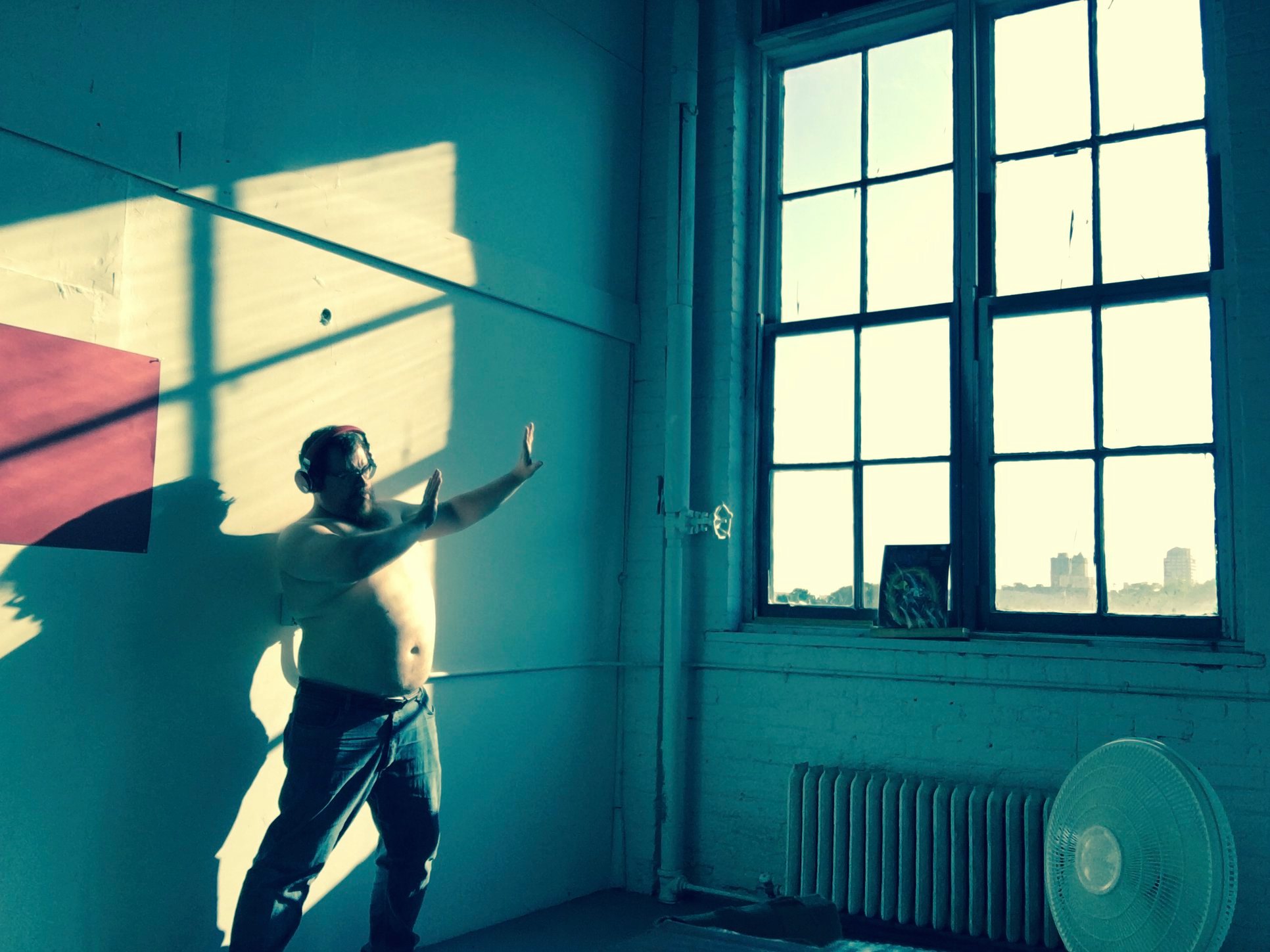
I had a little art studio for one year. A place for all my paints, my canvases, my artistic dreams. A place to be alone, to create masterpieces, to rock out to music, to be myself, to grow and learn.
Then, a year later, the art studio was completely erased, as if it had never been there.
All the walls were taken down; the room became a much larger gallery. You couldn’t find it if you didn’t know where it had been. If you didn’t know my window, you couldn’t see any fingerprint of where I had been.
While the studio was there, that brief year, it changed my life. It gave me a better understanding of my body — something I had never really seen before. It gave me back my sexuality — something taken from me by evangelical churches. It let me see myself as a work of Art — something I never would have believed.
While I struggled to create art, the studio worked on creating me.

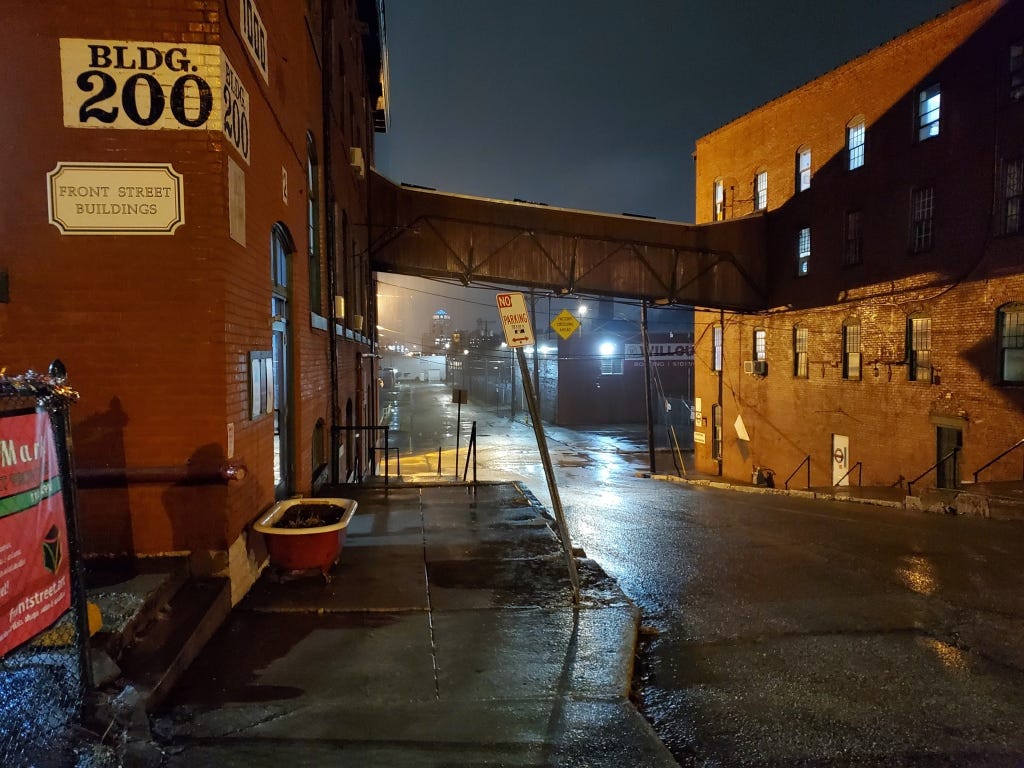
For decades, Front Street Studios in Dayton, OH, had used an old Singer Sewing Machine factory as living space for artists. A set of imposing red brick buildings, some two story, some three, with giant fifteen foot windows, sat next to a very active set of railroad tracks, with a river not far away. Over a few decades, the old factory had gone to seed, become unlivable, a place for drug deals and fire hazards. A few years before I got there, it was taken over by new management. The new owners cleaned it up, bought out whoever was still there, and turned it into studio spaces for artists, with open studios twice a month where people from Dayton could come through, wine in hand, and visit your studio and buy your Art. The new owners brought in live bands outside, sold burgers and hot dogs on those open studio days. You’d never have known the place was abandoned and trashed just a few years before.
Continue reading Bear Witness