
Well, it actually does repeat that racist motif, Jerome.
I wrote a post in 2010 trying to make an argument that Jake Sully and Avatar were not repeating the “white savior” motif and, you know what, it just sounds hollow and naive now.
There is no reason why there couldn’t have been a brilliant Na’vi fight against the outsider corporation movie except that we “needed” to teach white men why others were worth saving, why other cultures have value, especially cultures that may treat technology differently than we do.
Sure, it’s valuable to teach people things! I do like the idea of taking a group who is having trouble understanding or accepting you (hello, conservative evangelical Christians) and using a story to teach them how to understand people (LGBTQ people) better. But The Birdcage isn’t about the straight Senator saving the gays. It’s about the gays saving the Senator–and he learns. The N’avi could have EASILY saved Jake Sully AND fought back against the evil humans.
Do I think Avatar could have been a better movie? Sure, but with all the changes that this writer mentioned:
Avatar: “Totally Racist, Dude” from the Filmsmith
If Sully had spent more time with the Na’vi, wasn’t responsible for destroying their home, showed some conviction before a last second attempt to warn the Na’vi, and included more scenes of his body’s decay, Cameron might have avoided some of my problems. Of course, this is based on my reading of the film. If Sully was believably a part of the Na’vi to you, you may not have so many problems. Of course, I still stand by my assertion that we didn’t need Jake in the first place.
I’m writing this now because I’m sure a few others read my blog from 2010, some as recent as yesterday, and my attempt to argue away the “White savior” problem from Avatar brought up brilliantly by other reviewers, but I was wrong. It’s better to acknowledge that it’s in the film, and support those who are trying to help us see the inherent problems in tropes and storylines that may be incredibly popular and still be incredibly dangerous. We/I still need to make better choices as writers and reviewers.
I loved Avatar so much that I didn’t want to see its problems. And that’s the danger of my privilege, to not have to see the problems. But when I talk about films being homophobic, or using homophobic tropes, and I’m upset about them, and others are like, “It’s not that bad” or “I still enjoyed it” that is the danger of their privilege to not have to see the messages that hurt me, or hurt others, or that perpetuate a way of thinking that leads to harm. It’s a blindness. Educating ourselves and others about racist, homophobic, transphobic, misogynistic, ableist tropes should be/could be the baseline level of living together.
I think about how mental health is portrayed on screen now, how LGBTQ people are portrayed in films, how bad tropes are perpetuated. Usually tropes lose their attraction when we explain how they are dangerous. But even then, folks, it took me 9 years to find this old blogpost, know it was a problem, and rip it down. I just forgot it was here till I saw that someone read it, and then I reread it and, well, I saw it as problematic. I was deeply embarrassed, and ashamed, and just wanted to kick 2010 me for not having a better understanding then.
Changing your mind, learning from your mistakes, and doing better is more important than how you believed yesterday. Repairing damage is also important. So I write this tonight. But I think we are all learning things together. If I held everyone accountable for being homophobic sometime in their past, I’d not be speaking to 80% of people over 30. But I’ve watched people “evolve on these issues,” as my favorite President said. And I see myself evolving and learning and growing too—just as everyone is supposed to do.













 As most people know, on June 1st, Netflix decided not to renew Sense8. Fans of the Wachowski Sisters + J Michael Straczynski show, a show that weaves a global narrative to tell a very human story of eight people sharing their minds, knowledge, and empathy, were devastated that the story would not have a third season. Many knew that it only had one more season of story, but Netflix decided not to renew. Then the fanbase rallied and wrote and tweeted and called out! and helped show-writers garner a
  I’m late to announce this, but no less thrilled. On May 29, 2017, the Sunburst Award Society revealed their longlist for novels/short stories in the running for the Sunburst Award. The Angels of Our Better Beasts was on it. Well, I was completely taken by surprise, and deeply honored at the same time. A friend told me “Congratulations!” and I had to ask why. I quickly went to the website to see. The list is full of amazing works by writers in Canada–and there I was among them. The Sunburst Award is given for “excellence in Canadian literature of the Fantastic.” Five judges read all the submissions and make their longlist. Later they will make a short-list of about five works per category, and in September, they will announce winners. I’m so stoked even to make the longlist with my debut book, that I’m going to revel in this for a long time! I want to buy all the other books in the Adult Fiction section and read them! And put them on a little shelf in this order, because I’m cheesy that way. And because, if you like great lit of the fantastic, you’ll love what’s on this list Sunburst has made for us. Thank you, Sunburst Award Society, for making lists like this, for loving literature of the fantastic, and especially, right now, for choosing my book for your longlist. It means a lot to me as both a writer and a Canadian.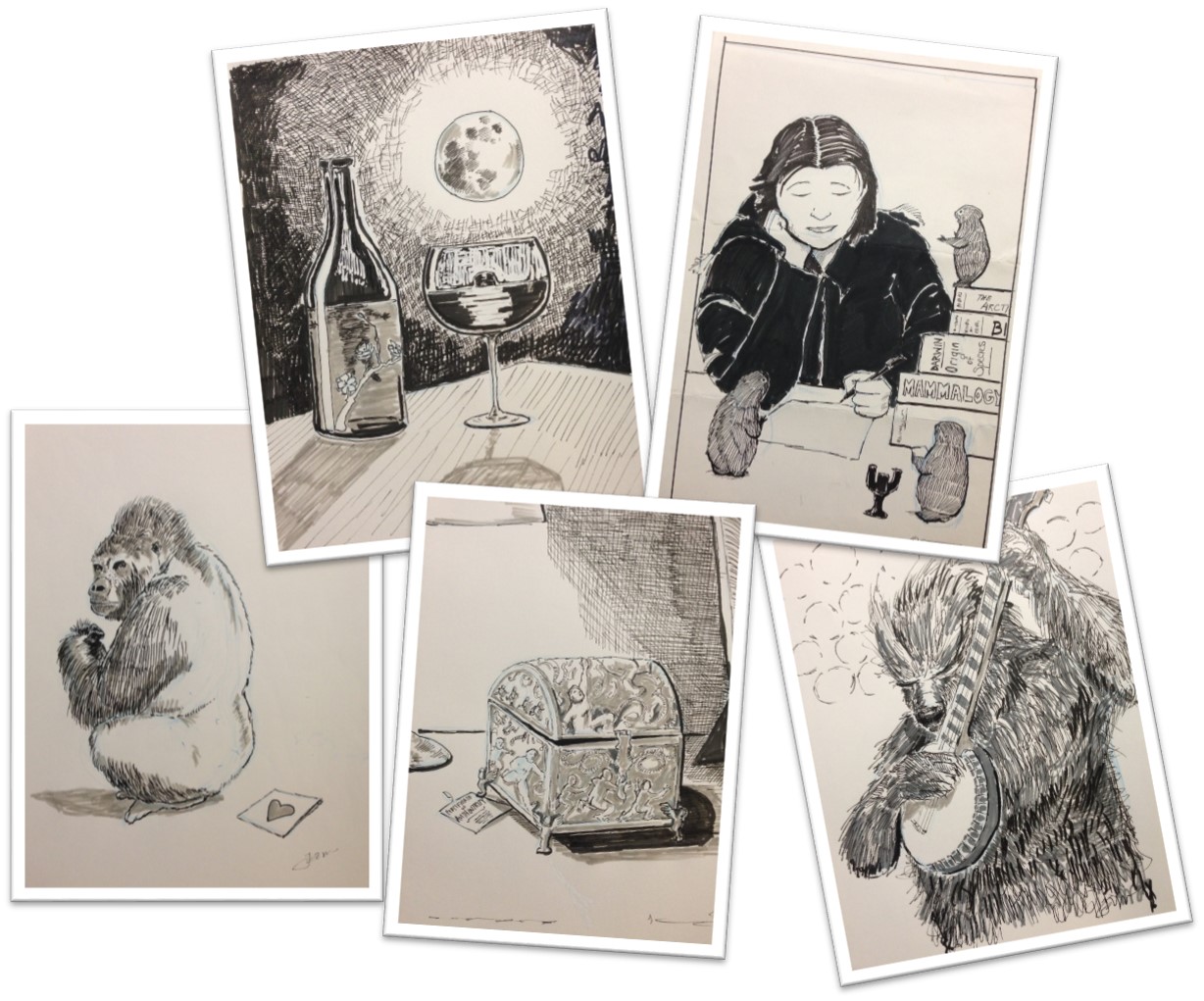
 2016 World Fantasy Award-winning Black Gate Magazine just reviewed The Angels of Our Better Beasts, and it just made my week! Wow!
 Bear Witness