MAD goes into Outer Space for Halloween

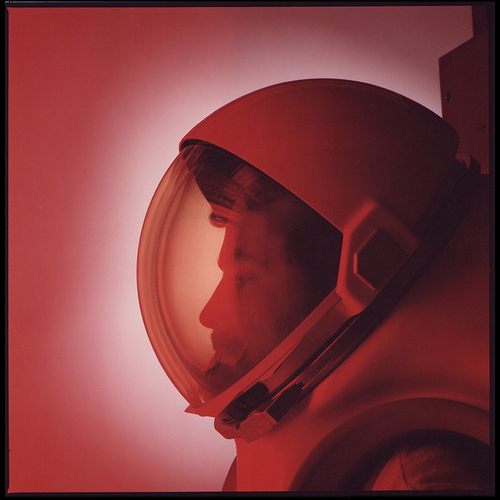
alien1Kudos to the kids of MAD (Music Art Drama) for their Haunted House this year, with its, yes, SCIENCE FICTION theme.  I won’t give anything away, but it’s a lot of fun.  

I didn’t know what to expect, but I was pleasantly shocked.  I really enjoyed the opening number with their rendition of “Science Fiction/Double Feature” and the old movie posters and clips through that number!  Brought back a lot of good memories.  

My advice is not to come too early because you’ll be sitting for a bit.  Come closer to the times they let people in: 1:00 and 2:30 on Halloween.  

You have a hard choice–whether to go through the line and into the haunted house, or sit and watch some cute homemade films from the kids.  I say, stay and enjoy the films at first; the haunted house will be there, so you don’t need to be in line up front.  

I won’t tell you what’s in the rooms, but they’ve done a good job at recreating some of the frights of space travel that have been highly “documented” in science fiction…and playing them for all their worth in front of people.  

I just want to tell the kids: You got me back for scaring you.  The rooms are excellent.  I left wanting more rooms.  There’s some nice originality in these scenes.  I love the Observatory!  But it was the room with the synchronized bodies in it that freaked me out….  The use of the scrim on the stairs was a nice, scary touch, too.  What the MAD kids seem to know is that it doesn’t matter if you show all the details…they leave a lot un-shown, and that’s what frightens you.

Five Dollars will get you a good scare!  Go out and support these high schoolers from MAD.  They’ve done an awesome job. 

And thank you, Jeff and Mary, for thinking of Science Fiction when you think of scary…

Flash Mobs as Fantasy Writing: Some Tips from Mobs

Who doesn’t love a flash mob suddenly breaking out and dancing?  Below are many examples of the Flash Mob, some of my favorites.  I wonder if they could be called Fantasy Writing, in a sense.  A collaborative work that changes the reality of those watching into a fantasy version of reality.  It’s more honestly described as theatre—probably Guerilla Theatre,  and certainly it is based on “musical reality” where tough gangsters in Guys and Dolls dance, or thugs in West Side Story snap their fingers.  But I think the Flash Mob which has really gained popularity has a more recent common ancestor.

A film called, The Fisher King, starring Robin Williams and Jeff Bridges.  In that film, there’s a sequence where all the walking people in Grand Central Station suddenly turn into dancers.  It’s the essence of Flash Mob–to create a dream sequence.  It’s such a stunning moment that I often see it in mash-ups of film retrospectives.  And the fact that modern flash mob dance sequences take place in large public spaces–like Grand Central–nods, at least a little to “The Fisher King.”

Here’s the Fisher King sequence, and then following it a selection of some of the most entertaining Fantasy moments you’ll find, this side of Reality.  Following that is a short selection of tips I think Fantasy writers can pick up from Flash Mobs.

Fisher King dance at Grand Central Station

Michael Jackson tribute in Stockholm

Oprah and Black-Eyed Peas

Frozen Grand Central Station (the opposite of Fisher King)

And for more of Improv Everywhere–they do musicals in grocery stores and much much more!

What tips can Fantasy Writers pick up from Flash Mobs

1.  They know what their audience expects, and they do the unexpected.  Grand central is supposed to be busy and chaotic–but not when it’s choreographed or frozen in place.  Fantasy writing wants to both fulfill desires and offer something new.   If you have a dwarf, an elf, a ring….uh….we know what might happen, we know what could happen, and we may not wait for anything surprising TO happen.  Shrek and Princess Bride play off expectations.  They successfully surprise and entertain their readers—but they are parodies.  Creating completely surprising fantasy realms–with new creatures, new settings, no medieval setting–can also surprise a reader and make him or her want to read.

2.  Flash Mobs bring joy to their watchers, or a sense of wonder, by giving the mundane new life.  Subway commutes, catching a train, buying groceries–now that’s a list of first dates I wanna go on!  But if you give the mundane a new sense of wonder you can re-vitalize something that was boring.  Wish they’d do that with filling out registration for car insurance….  Fantasy writing can take the ordinary and make it amazing.  Look at how exciting a compass got in The Golden Compass (yep, an alethiometer!), or CS Lewis transforming a game of hide and seek in an old mansion on a rainy day, or tornadoes in Kansas….  Find a way to take something ordinary, an object, an action, and give it new meaning, new wonder.  Honestly, I want reality to be a little more like fantasy, a little more like a flash mob.

3.  Flash Mobs are Choreographed.  They look spontaneous!  But in reality, a lot of effort was put in to make them look effortless.  Same in writing.  In writing, you guide the reader’s experience.  It requires you to be more calculating and choreagraphical than maybe you’re used to, but that’s what an interesting plot is.  Imagine if the dancers in these sequences had done boring moves…  Plot is choreography–telling your reader where to move, and what to watch….

4.  But everyday flashmobbing would become boring.  If you saw this happen all the time, you’d start to think this was reality, and ignore it.  It’s the unusual nature of a flashmob–the sudden coming together of people doing the same thing–that makes it unique.  It has to stay unusual to escape being usual.  What does that mean for fantasy writers?  That we should only create one thing— nope, but variation is important.  If you only do one kind of thing, dragons, let’s say, then your reader may eventually become bored with what you’re doing–even your interesting fantasy might become mundane.  Imagine ten more books of Harry Potter.  HP had to have a story arc that encompassed a certain number of books.  Plan that arc, and then, it’s over.  Else you get a Wheel of Time that keeps on spinning.

Good fantasy writing changes reality—and ripples into your reality forever altering it.  

Okay, I could be analyzing too much.  Enjoy the damn flashmobs and stop thinking of writing….  Oh, look, over there, it’s a whole collection of random werewolves doing Bollywood!  Made you look. 

Deadline Nov 30 for Tesseracts 14: Canadian Sci-fi and Fantasy Stories

from Woodleywonderworks on FlickrA reminder to all those thinking about submitting your short fiction (limit 7500 words) to Tesseracts 14, the latest in the series of anthologies featuring Canadian science fiction and fantasy.  It doesn’t have to be about Canada, or about the north.  Basically they are anthologies of Canadian writing.  (Okay, and a few stray Americans or other Nationalities who have immigrated to the fair shores of Canada)

Personally, Brian Hades, publisher of this series, would love to see greater representation of Canada in the anthology.  So, the Yukon needs to put out!  Haha.  Seriously, if you have fiction that strays just outside the everyday reality, consider submitting to Tesseracts 14.  Let’s wow Brian with Yukon writers!

More information at my previous post here:  Tesseracts 14 Open for Submissions

Kluane Lake Research Station Radio Series

Donjek, myself and Ruth Klinkhammer at KLRSI did a nine part radio series on research and science out at the Kluane Lake Research Station this Summer.  It was under the auspices of the International Polar Year and the Arctic Institute of North America (AINA).  AINA and Ruth Klinkhammer did a great job at compiling and showcasing my work at the Station and they set up a page of my radio series.  

If you’d like to listen to some of the fun that I had this summer with the gang at KLRS, stop by this website and check out the broadcasts.  

FOCUS ON RESEARCH:  KLUANE LAKE RESEARCH STATION

Who’d have thought they’d hire a science fiction writer to write about real science?  It taught me a lot, though.  And what I learned there will stick with me for a long time.

Realms of Fantasy re-opened and ready for your submissions

Shuttafly by Natassia A. Davis, from her Flickr pageIt’s official:  Realms of Fantasy is back, and expecting a ton of submissions.  I don’t think we should disappoint them.  

Note, Canadian authors: though you still have to submit hardcopy, if you supply your email, they will answer you via email.  They don’t want to work with IRCs and who does?  So, this saves us time too.  

Editorial guidelines from their link:

Editorial Guidelines

Realms of Fantasy, a bimonthly magazine, is a professional market for the best in fantastic short fiction. Stories should be no longer than 10,000 words, and can address any area in the realms of fantasy: heroic, contemporary, traditional, feminist, dark, light, and the ever-popular “unclassifiable.” What we do not want to see is standard SF (this means no alien worlds, no hard-edged technology, no FTL drives, etc.)  Additionally, ROF is not a market for poetry.  What we do want to see is the very best in the field–Realms of Fantasy is a highly competitive market.

For stories under 7,500 words, rates begin at 6 cents per word for new writers and move upward as a writer gains recognition. For stories over 7,500 words, the rates break at 7,500 to 4 cents a word. Thus, a 10,000-word story by a newcomer would pay $550. Again, for established writers, the rates will be proportionally higher.

All submissions must be typed in a 12 pt. serif font such as Courier or Times Roman, double-spaced, and accompanied by a self-addressed stamped envelope large enough to hold your manuscript.  Manuscripts not typed and double-spaced will not be considered.  Manuscripts without return postage will not be returned.  If you wish us to discard the ms. and reply only by letter, you need only enclose a letter-size (#10) envelope and mark your ms. DISPOSABLE.  Your name, address, email address and phone number should appear on the first page of the text, not on a cover sheet, as cover sheets can easily get separated from the rest of the ms.

International authors must still submit hardcopies of their stories but we will respond via email rather than regular mail, assuming that you do not require your ms. to be returned to you.  We do not accept multiple or simultaneous submissions.  Response time is ordinarily 8 to 12 weeks.  We regret that the majority of our responses must be in the form of pretyped letters.  This in no way reflects on your work, only on our time and work load.

Thank you for your interest in Realms of Fantasy, and we look forward to seeing your work in our pages.

Shawna McCarthy 
Editorial Address: Realms of Fantasy P.O. Box 527 Rumson, NJ 07760

Now, go give them what they want!  Good Yukon Stories, or stories from Yukon authors.  


The Resonance of Flashforward for People of Faith

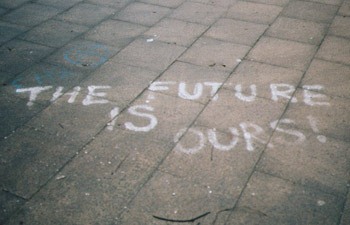
graph on the sidewalkThe ABC series, Flashforward, arguably one of the best written series in a long time, and the best using a science fiction concept, wrestles with a very old idea:  what if you knew the future?  The show expands it to ask: what if everyone knew the future? And by Episode 3:  What if everyone THOUGHT they knew the future?  This is not a new concept when you are dealing with people of faith.  Christians, specifically, have a vision of the future they hold on to.  Actually, they have two.

The first one is a concept of Heaven/Hell–that after they die, they will forever be installed in one of two polar extremes: a place of happiness vs. a place of sorrow–both eternal (also known as With God and Without God).  After that moment, there will only be a seamless future–one that never changes.  

This vision of the future does guide their/our actions to certain degree.  Some believe, still, that you have to hedge your bets.  Do a lot of good things to move your path towards Heaven, or ask forgiveness–quickly–and move yourself away from Hell.  This can also guide people’s actions towards you as they try to drag you to one path or the other–most often to Heaven by use of guilt, judgment or restriction.  Ah well, the path to Heaven, I guess is paved with good intentions too.

But really it’s the other vision of the future that is more worrisome for people of faith.  

Revelation was a book written based on John’s Flashforward.  In that vision he saw lots of stuff–lots of destruction, lots of wrath…it gets ugly.  And believers think they may have an escape route–the Rapture.  That miraculously they get to escape the major drama of the Earth’s end because they believed.  This is not unsubstantiated by the Bible, but it is questionable when it will happen. Trust me, I don’t want to argue pre-post-or mid-millenial tribulation/rapture.  And please–don’t discuss it in the comments!  

What I’d rather discuss is the idea that Christians may be creating the Tribulation themselves–or creating parts of it.

In Flashforward we are slowly beginning to believe that the main character, Agent Benford, is actually creating the bulletin-board he saw in his vision not because it has answers but because it was there.  In some ways, he may be creating his future, not actually solving the mystery of why everyone blacked out for two minutes.  We’ve already seen, in Episode 3, a man get hired to the position of airport security, not based on good qualifications, but because he saw himself in that future, and so did someone else.   

Many times I’ve watched Christians start to cringe if current events start to resemble events predicted in the Bible: the Anti-christ being a big icon to watch out for, as well as the Mark of the Beast, etc.  Credit cards, health cards, any kind of number that identifies you will no doubt bring a lot of fear–and have that implanted in a chip inside your hand or your forehead, and Christians will freak out.  (Hopefully lawmakers would NEVER pass an idea like that unless they want great opposition from Christians).  

I’ve lived through three people who were thought to be the Anti-Christ:  Ronald Reagan, Pope John Paul II and now, Barack Obama, for various reasons.  Often each one of them had a mystical kabbalistic criteria (their names added up to three sixes as Reagan’s does, or Obama’s “name” was spoken about in the Bible as paired with Lucifer–a complete stretch of the imagination) and a few of them have been “assassinated” and come back to life (Reagan and the Pope).  Each time I hear that someone new is the anti-christ, I cringe, thinking that people are gonna start believing all us Christians are loony.  And some of them, those that seem to be magnets for the news, deserve that label, not the airtime.

But then I wonder how often I too look at events with Revelation in the back of my mind.  At what point will events start coinciding so well that there’s a tipping point in even the most casual reader of the Bible–where people start to say–Hey, I’ve seen that before?  How often do we reject good things based on a false premise that THIS moment is part of Revelation, when obviously time just keeps rolling on?  


In Christian circles, we often thank God we don’t know the future–because if we did, it might take away from “who holds the future” and make it Fate, not choice.  But maybe that fits more squarely in Christian mythos–that our fates, our destinies, are already written.  I don’t think so, myself.  Everyone has choices.  But if you see a glimpse of your future, you won’t know if it is meant to be, or if you are being given a warning. We ask all the time for God to guide our lives, for us to make good choices, but we fear getting on the road to the wrong destiny.  As if the roads are already there and once on them, we’ll go 90 miles an hour.  

From Cassandra’s ignored warnings to Oedipus fighting against his fate to modern day futurists who tell us what will happen based on world economic events…one of our eyes is always on the future.  But will we let our concepts of the future influence today’s actions?  Will we allow small evidence to convince us that we are living in  “the end times” and then make irrational decisions?  Or will we make good decisions based on evidence in front of us and walk knowingly into the future, brave, but watchful, not reacting to everyone who says—the anti-christ is here, the anti-christ is there, etc.

What’s probably most disturbing is the Christian concept that they will be persecuted in the End Times.  And certainly every time someone critiques a Christian we hear echoes of this “end times” fear resurface.  That the critique means that the critic must be an enemy, and that Christians are being targeted.  This most resembles “making the future happen.”  By letting ourselves be irrational, afraid of debate, sensitive to criticism, and dogmatically judgmental–I think we will create the discrimination and persecution that will probably come.  But it happens because we’re being a$holes.  I mean, spread negativity long enough, represent bigotry, discrimination and narrow-mindedness long enough and folks will be distrustful.  Eventually, yes, being a Christian will be bad publicity.  But NOT because the enemy is bad, but because Christians are unloving, paranoid judges.  We will create the future we don’t want to happen.  Just like Benford is creating in Flashforward.  

Flashforward is a great show, allowing us to be thankful we DON’T know the future.  What a burden.  Hopefully it will teach us to treasure the moments we have, without being afraid of what’s coming–and make us watch out not to create the fates we want to avoid.  Let’s be good to each other out there.  We’re in this world together.
Bondsmen, my story, up at Metazen: James Bond meets himselves

secret-agent2My story, “Bondsmen”, is up at Metazen.  The story–meant to be a comedy– is a bit surreal, having the latest James Bond (an actor beyond Daniel Craig) really stifled by all the things he has to do as James Bond—he just wants to be himself, dang-it, but he finds himself trapped in the character roles that have been played in the past by other actors….  This is a story of a man who wants to be an individual, not controlled by things he can and cannot do.  James Bond ends up quarreling with all the other actors who’ve ever played Bond–or rather, all the other versions of Bond.  It is meant to be parody, but also a way to think about living life suppressed, even when you’re a dangerous secret agent.  Does James Bond really get a choice to be anything else?

Metazen, ” is an online fiction zine that publishes short fiction and poetry by various authors. Metazen is a fly trap for metafiction, existentialism and  absurdism. It harbors all kinds of filth such as neurotic characters, obscure philosophies, love for inanimate objects and quests toward enlightenment. Metazen occasionally follows the real life, meta-fictional exploits of Frank.  Metazen is edited by Frank Hinton, Jessica Alchesse and Dylan Cohen.”

Enjoy the story!

2012: The Last Movie Explosions and the End of an Era

Well, just saw a clip from the movie 2012, out in theatres in November.  After this movie, there will be no bigger explosions.  Hurray!   

I remember when Independence Day blew up the White House, and much of New York.  It was a cool special effect.  I remember when the Titanic split in two.  Wowzers!  But now, there’s not gonna be a special effect left to do using real places after 2012.  We’ll have seen the Eiffel Tower destroyed so many times, seen a realistic crumbling of the Rio Jesus, seen California being pushed into the sea, or dribbling into it as is the case here.

I mean, after that, the real end, when and if it does come, will seem like a rerun.  I bet when an earthquake hits California, one day, God forbid, but if it does, people will say “It looked just like 2012.”

Now, imagine filmmakers discussing options after 2012 comes out:  

“Well, there goes my next volcano film.  Can’t get more realistic than that!”

“And they just sunk Iowa into the ground.”

“We can’t redo the crumbling of the Statue of Liberty–we’ll be copying!”

“Exactly, boys.”  They’ll sigh.  Nod their heads.  “You know what this means?”

They’ll look around nervously.  

“We go back to plots and characters.  People won’t expect it.”

“What you mean is–they’ll yawn through another White House implosion.  No,” someone will shake his head, “we’ll go back to those all right—there’s nothing left to blow up, or blow up more realistically.  There’s nothing left but characters.  Damn.”

And this will be the END OF SPECIAL EFFECTS DRIVEN MOVIES.  Relief.  

It’s like the last ten years–post Jurassic Park–that directors have been like little boys with a new Chem Set and a set of bottles—what can we blow up?  Or Matthew Broderick and Ally Sheedy in Wargames, playing “Global Thermonuclear War.”   “What will we nuke first?” Broderick asks Sheedy.  “Las Vegas!  Seattle!” 

So many films destroying highways and bridges and houses and monuments…like Godzillas of the Green Screen.  Well, we’re all done with that!  Who can follow 2012?  The special effects people will be looking around for things to do and they’ll have to morph bodies on screen or something else….cause we’ve seen every conceivable iteration now.  Reality won’t be half as good! 

Either we move on now to plot/character driven movies whose special effects serve the moment, or this really is the end of the world….

God:  “Well, they’ve blown up everything they can on screen.  If I don’t cash in my chips, and call my peeps home, they’ll get bored…”

Flashforward: the Excellence that “Knowing” could have been

flashforward Watch Flashforward, Episode One

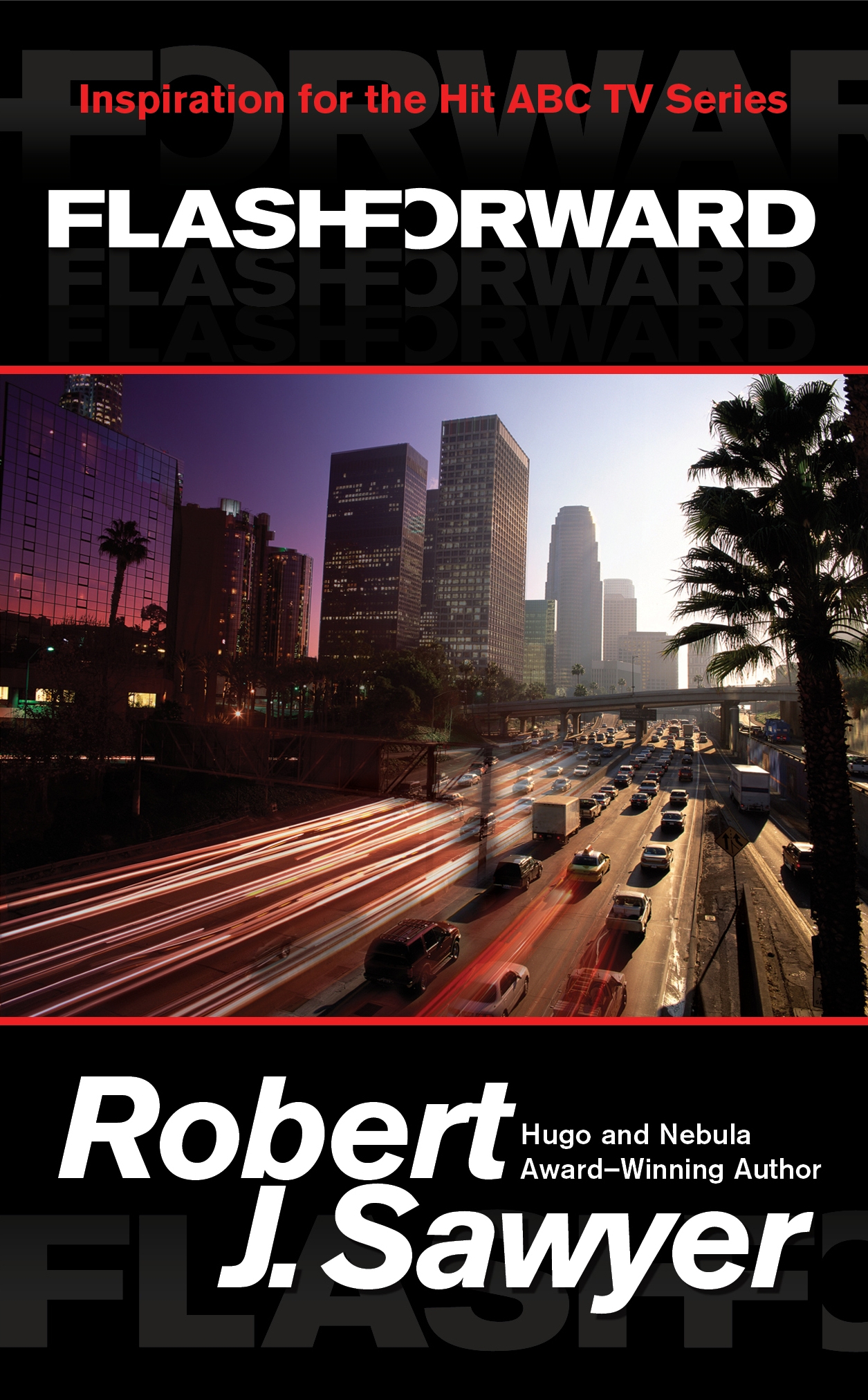
Robert Sawyer’s Flashforward has been made into an ABC miniseries. It is a masterpiece. I haven’t read the book, so I don’t know how faithful the series is to the original book, but the book won an Aurora Award.

The premise is that everyone blacks out at the same moment for 2 min and 17 seconds. In that time, they glimpse their futures. When they return to the present, mass chaos has already happened. Planes fell from the sky, cars crashed, trains derailed. People died, lots of people died. Everyone had blacked out, so no one was in control of all those vehicles.

The main characters, and there are several, include two FBI agents, a surgeon, a man who lost a daughter in Afghanistan, a doctor about to commit suicide, and several others. The series will be about them either trying to avoid their futures, or trying to get to them, depending on what they saw.

Oddly enough, the date they jump to, April 29, 2010, will be the season finale of the show–and at that moment you get to see if they reenact their futures or not.

Obviously, I don’t know how they can carry this through after that episode…BUT, I’m thoroughly pleased with watching till they get there. After this first episode I know that we have a great team of writers involved.

Now, this is what “Knowing” should have been. In my original review of “Knowing” I talked about how the movie, though predicting disasters, left very few for the main characters to experience, and I was troubled by the fact that it seemed the directors had determined that no one could change anything, so why bother.  That movie dripped with errant theology and left no doubt that everything was predetermined.  I don’t mind that fate or God may be a part of my life, but free-will is a human trait,and makes movies much more palatable.  To see someone struggle against their fate, to see them try.  It is what makes those who are given two weeks to live all the more heroic for skydiving or organizing a political rally.  How we react to what seems to be inevitable–THAT is interesting.

Already, I can tell that the show has set up five or six different beliefs about pre-determinism.  Some believe God gave them a gift, others that He gave them a punishment.  Some want to avoid the future, some to run to it.  For some it predicted a horrible mistake they will make.  

“Knowing” passed up all opportunities for real drama with real people, skidded ahead with bad dialogue and coincidence, to an ending which tried to justify the movie.  

Flashforward is like Mozart taking hold of the Salieri “Knowing” and actually making a great movie out of it.  Yes, I know, Knowing only had two hours…but still, this series is good solid writing.

1.  The characters are individuals, who walk onto the scene with their own problems, their own pasts.  They are well drawn and WHAT they do will determine the plot, not what others do.  Now that the big blackout is done, the characters guide the series.  They will push things forward accidentally or on purpose to meet up to April 29th.  They will determine their plots!

2.  Great dialogue, great stuff that isn’t about “the plot”— that Dimitri has to dance at his wedding to “Islands in the Stream.”  That the chief of the FBI has to lie about his vision because he’s embarrassed.  

3.  The plot starts with the action.  I can imagine this series beginning without the crash first.  But who would have waited the whole episode to have the blackout?  Nope, have the crash first, back up, and then take it slow.  Maybe this is just the difference between TV and reading….but I think starting as fast as you can into the action gets people involved with you.  I noticed in Robert’s book, first chapter, that he has a description of each character first…but within a page, he gets to the blackout.  He knows the blackout is a great hook, and that everything of importance happens afterwards.  

4.  I like the music in this series, already, the building, the back and forth between plots so quickly so that you know they are happening simultaneously–the music and this choice to flash around gives you a sense that everything is tied together.  In some sense it is like a trailer—when the trailer starts shuffling between images so fast that you get excited: all trailers seem to end this way these days.  The director took the music and that shuffling sequence to build suspense.  

I hope Robert Sawyer makes a huge amount of cash from this.  This is brilliant stuff.  And I’m glad to see a Canadian Science Fiction Writer land such an opportunity.  I hope they do more interviews with Robert Sawyer in the States.  

Well, I will keep watching the series.  I’ve already become a HUGE fan.

How to fix the Rural Brain Drain: link to article


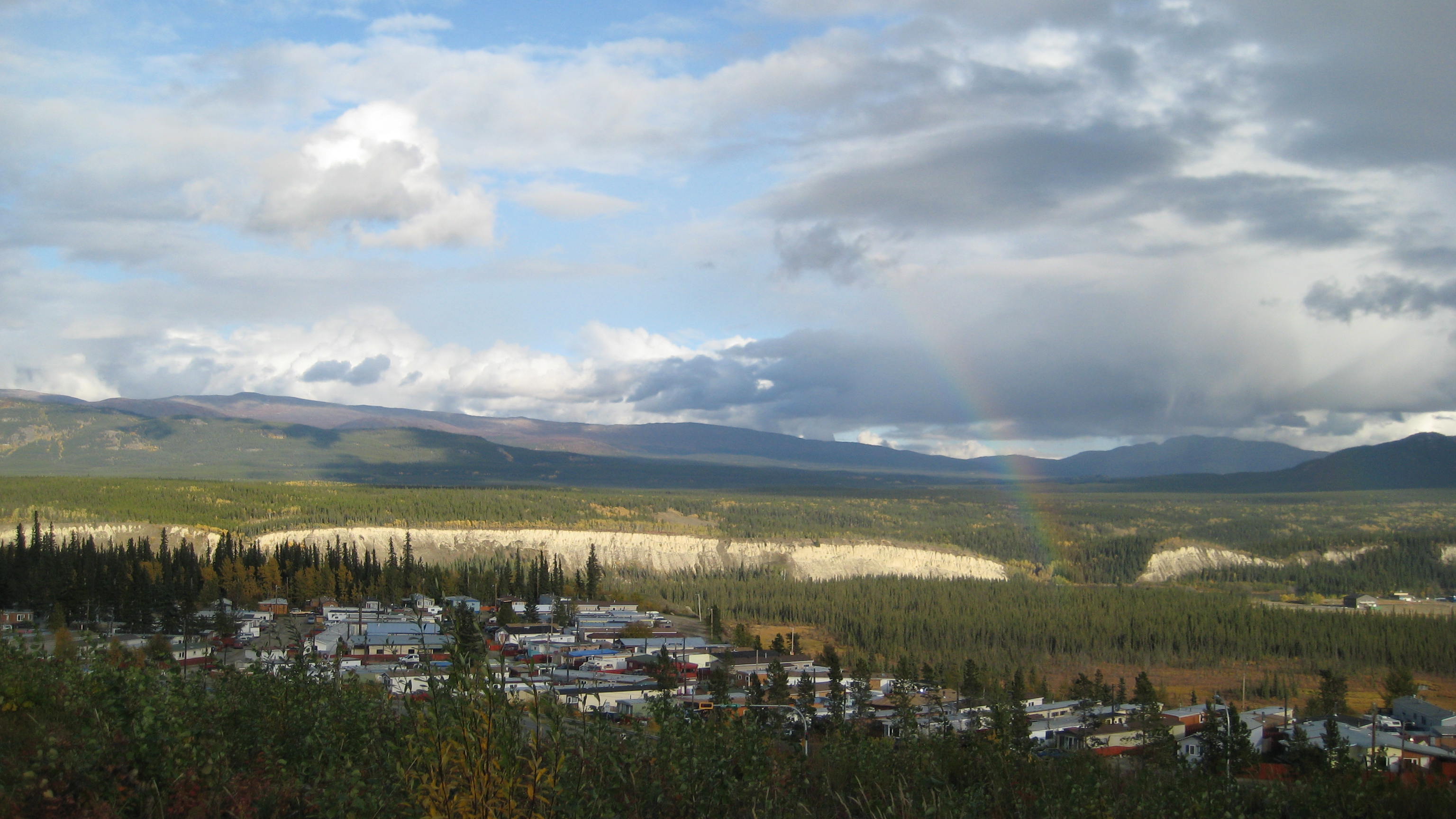
IMG_0674Authors and Husband-and-wife sociologists Patrick J. Carr (Rutgers University at New Brunswick) and Maria J. Kefalas (Saint Joseph’s University, Philadelphia) have written a new book on the Hollowing Out of the Middle: the Rural Brain Drain and What It Means For America, due out next month.  They’ve written an article in the Chronicle Review summarizing their results and providing tips for how to stop this from happening.

While this article is about the States, it applies to any North American small town, many that are at risk to rolling away.  

First of all, I hadn’t realized how important it was NOT to push people to go far away from their homes to succeed.  We’re always telling kids who have the knack for college to move far away and go to college and fly—become more than their small town roots.  It seems so logical to get the talented, creative, smart ones out of the “rut” and the “lack of opportunity” of a small town.  But the unintended message that those who stay receive is that their lives are smaller, more secondary, second-class.  In fact, however, if small towns are to survive, Carr and Kefalas suggest we boost our opportunities to those who will stay.  Rather than settling with the idea that the small town has no opportunity, Carr and Kefalas suggest we provide local links to opportunity and think ahead for the town.  In some ways, they seem to be thinking about the town first, and the individual second— but definitely using the creative energy produced by the town to create a better town.  It’s not unlike exporting Americans to foreign countries.  If we constantly say our country is declining—Johnny, you go over to France where you’ll do better, then we’re creating an immigration that will doom small town America.  

I like their ideas.  I love small towns–I grew up in them: Braymer, Caruthersville, Bledsoe, Plainview, Edmonson, and all their surrounding towns.  And I want to save small towns.  I think Carr and Kefalas have a lot to offer. Here’s a bit of that article, and afterwards, a place for you to read the whole thing.  This is the end section though, so if you want how they came to these tips, you need to read the beginning:

What can be done to plug the brain drain?

Though the problem is daunting, we believe that it is not intractable, but that any set of solutions must combine changes at micro and macro levels.

Small towns need to equalize their investments across different groups of young people. While it would be impractical, and downright wrong, to abort students’ ambitions, there must be a radical rethinking of the goals of high-school education. The single-minded focus on pushing the most motivated students into four-year colleges must be balanced by efforts to match young people not headed for bachelor’s degrees with training, vocational, and assorted associate-degree programs. Those programs fill the needs of a postindustrial economy but acknowledge that not every student wants to, or will, pursue a more traditional college path.

Also, school officials, parents, educators, and students must resist the temptation to think the noncollege bound will just get a job if a degree is not in the cards. Gone are the days of plentiful, well-paying blue-collar factory jobs that provided a 19-year-old with a living wage. Thinking that working the line at John Deere or Winnebago will vault you into the middle class makes about as much sense as buying eight-track tapes in the iPod age. All the planning and investments have been geared to collegebound students, while the reality is that students not earning a college degree need as much, if not more, intensive preparation for today’s labor market.

The next step is to build better links between high-school and postsecondary education, and map existing opportunities onto regional economic goals. Most of the job growth within Iowa is expected to come from computer, biotech, wind energy, and health care. Matching high-school students not headed for university with vocational or community-college programs, nurturing their interests while in high school through internships and training, will prepare them for the new economic growth areas. Such partnerships require close collaborations among business and civic leaders, elected officials, and secondary and community-college administrators who are accustomed to working in their own bureaucracies. Moreover, the growing distance-learning technology should not cater only to older, returning students. If students are interested in wind technology or nursing, rather than making them take social studies senior year, how about connecting them with a distance-learning class at Iowa Lakes Community College in Introduction to Computers?

Third, small towns should seek to embrace immigration whenever possible. The phenomenon of Hispanic boomtowns, a common occurrence in the Midwest, has the potential to transform moribund local economies. Such transformations will be possible only if there is careful planning to ensure that immigrants are integrated into the community in such as way as to increase contact between natives and immigrants and with attendant labor-law reform that curbs abuses and ensures sufficient wages and benefits for workers in agribusiness and manufacturing. Ph.D.’s from India or China and less-skilled immigrants from Mexico or Central America should all be recruited and supported in an effort to make the heartland an immigrant enterprise zone. The region is in critical need of professional-class workers, and bringing in Hispanic workers for the food industry will not be enough to rejuvenate the region.

And the article keeps going here, The Rural Brain Drain, in the Chronicle Review.