Redecorating the Website and Bearing Witness


Screenshot (36)

Hello friends! You might notice a few things have changed on my website.  Actually, all the decor has changed, but the content really hasn’t.  It still has all the articles I’ve written before.

As I got closer to the release of my first collection, I thought my website could use a makeover, so I chose a new easier to read design.  The former white text on a slate blue background hurt my eyes—and was too small to read, so I’ve enlarged the font a bit (perhaps that a sign I’m getting old) and streamlined it, and put it on white.

It has a new title too, which I think you’ll notice first.  It used to say Yukon Science Fiction Writer and now it says Bearing Witness.  Quite simply I wanted to give the blog its own title, and not just reflect myself.  I’m a Yukon Science Fiction Writer, but the blog is not.

I lived in the Yukon for nearly 10 years and a part of me is still there and I will return many times and hopefully even stay one day soon.  I will always be a Yukoner.  I became a Canadian citizen there.  I climbed those hills and mountains and swam naked in those lakes (okay, in one lake–but it was very very cold).  I went on Moose hunts and sheep hunts and I laid on the dirt and collected low bush cranberries with friends.  I sang on cold cold nights with people who love the north, sometimes while sitting in a hot tub, watching our hair freeze, and I still have their songs in my heart.  But I needed a title for the page that said something about my whole work, not just about me, and I felt, too, like Science Fiction was only part of it.  My interest in faith and spirituality in both fiction and nonfiction should be in there too.

The former title of the page never really captured all that I was doing.  It didn’t tell you I’m gay, or that I write about faith sometimes, or that I’m an American transplant in the Yukon who went over the mountain back to Ohio.  It doesn’t tell you I’m a Navy brat, a Texas Tech grad, or adopted.  So I thought–instead of saying all the stuff I am, why not give the blog an identity?

So I did.  Bearing Witness is something you do for those who need to be seen.  It’s also a term used in faith, to bear witness to the things God has done, or to bear witness to each other through hard times.  It is about keeping our eyes open.  It’s also got “bear” in it, which winks to my love of the gay bear subculture, and the colours are pretty… cheerful, if you think about it.  The glass from the Chihuly exhibit feels like a nebula in space—and so it has a science fiction feel to it too.

Now the blog becomes it’s own collection of work, bearing witness to what I’m trying to do and what others are trying to do too.

So get ready, I’m about to start writing much more on this blog and the Wrestling with Gods blog too.  There are good things happening out there! We need to see them.
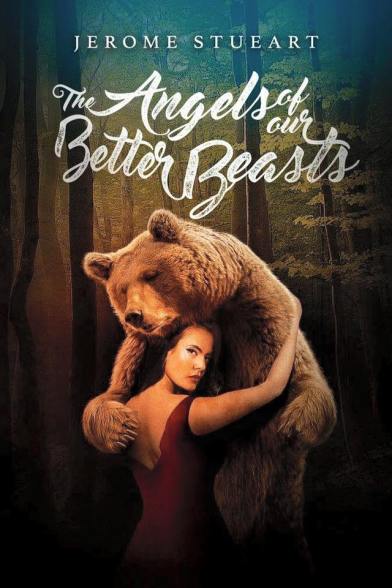
My first collection of stories, The Angels of Our Better Beasts, from ChiZine

12715744_10153895453277095_8059101292263897684_n


My first collection of short fiction comes out in October 2016 (from ChiZine) and will debut at World Fantasy in Columbus, Ohio.  Very excited because WF is next door this time.  (I think in 2017 it’s in DC.)

That cover!  Another amazing cover by Erik Mohr.

This collection of 13 stories and two poems is “beast” themed (many with actual beasts, but some with metaphorical beasts or monsters) with the idea that we have the power to influence others, and be influenced by them.

Below is the Table of Contents.  Many of these have been published in Canadian anthologies, a few in American magazines, and several have their first publishing here in this collection.  For example, the first, a poem, was never published but only read aloud at Arts in the Park, a daily summer performance by musicians and artists in a beautiful corner of a block with a stage, some microphones and dedicated people running it five days a week.  This poem was part of a “Heritage Day” themed performance where writers and musicians were asked to take a Yukon Historical Society walking tour around the city and develop a piece of music or writing from that tour.

Anyway, I’ll tell more stories as we go about the different pieces, if you’re interested in reading, in further posts.  But here’s the whole shebang–the first time they’ve all been in one place.


Continue reading

18 Days of Tesseracts: The ALL-OVER the Net Event

Check out some of the events happening at the 18 Days of Tesseracts:

Join us as we celebrate the Tesseracts anthologies of the past, present and the future.

The Wrestling With Gods (Tesseracts 18) blog will be hosting 18 different guestblogs by the authors of stories that deal with faith that have appeared in the Tesseracts series.  Come every day to read a new post in a discussion of Faith in Scifi and Fantasy, with leanings towards how you might incorporate faith and religious elements in your science fiction and fantasy writing. You might be reading craft-leaning blogposts on how an author tackled faith elements in their writing, or how their story reflects other stories/ novels that have had a similar faith element and how they all tackled that element–tying their story into the larger longer conversation scifi and fantasy is having about spiritual issues.  You might also find tips on how YOU might better incorporate spiritual elements into your writing using a story from Tesseracts–or several– as an example(s).

Each blogpost will tie a Tesseracts story in with the larger conversation that scifi and fantasy has been having with faith, and hopefully will give you, our readers, an insight on craft, and, of course, a way to celebrate the stories and poems in the Wrestling with Gods: Tesseracts 18 anthology.

We will also be tying each of our author’s guest blogposts in with their interview on Corey Redekop‘s blog where he interviews the different authors about their stories–making our blogs complement the ones on his site, we hope, in a cool way.

On the 18 Days of Tesseracts Event Page:

Tesseracts of the Past – on this event page, and on the EDGE Facebook Page, they will be featuring Tesseracts one through 17 and Tesseracts Q over the various days. Learn who the editors were, and the contributing authors. If you are an author of one of these anthologies, feel free to tell them about your contribution.  If you are a fan—you’ll learn about ALL the Tesseracts anthologies appearing above in that splendid montage of Tesseractses.

Tesseracts of the Present – For the 18 Days of Tesseracts we will hosting offline and online events, and doing various blog posts and interviews. This page will be the source of all information, so join up and keep up to date as to what is happening on this page. We will post updates as we go along. Watch the top pinned post for the schedule.

Tesseracts of the Future – we will get further updates from Superhero Universe. Learn what is new and happening in their Superhero world…AND we will be announcing the editors for Tesseracts 20.

And finally.. October 7th join us for an online Tesseracts Meet and Greet party for all who have loved this series, or who have contributed as an editor or author. This event will happen here on October 7 throughout the day and evening. No matter what the time, drop by and introduce yourself, and post a question for people to answer.

So….if you are an author, an editor or a fan of the Tesseracts anthologies, please join the event, and invite everyone you know. Lets see how far we can spread this invitation.  Share the FACEBOOK event with everyone!  Then come back and see what we have for you here, and elsewhere on the web!

Thanks for joining us for the 18 Days of Tesseracts…

Source: 18 Days of Tesseracts: The ALL-OVER the Net Event

“For a Look at New Worlds” is up on the Discover Nikkei website

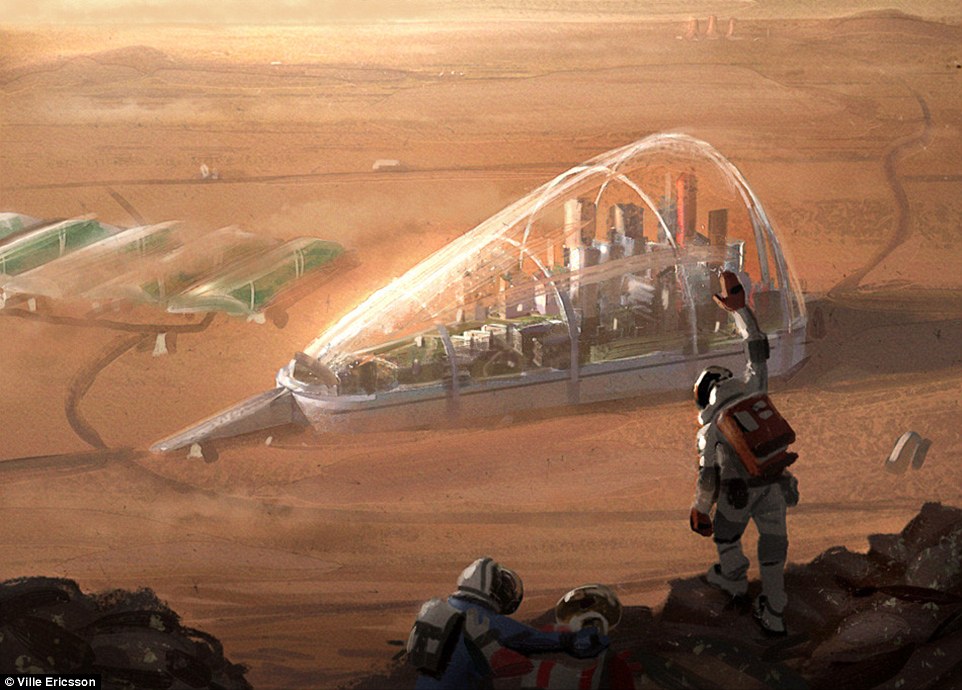
Concept Art for Martian colony by Ville Ericsson

Can you take Little Tokyo to Mars?  Find out in my second place award-winning short story, “For a Look at New Worlds” up at the Discover Nikkei website.  This story was part of the Imagine Little Tokyo Writing Contest held late last year, sponsored by the Little Tokyo Historical Society.  My story won second place for stories in English in the adult category and asks the question every immigrant knows: what can I take with me when I leave this place? Discover Nikkei has graciously published it.  Very thankful for Imagine Little Tokyo for putting on this great event!

FOR A LOOK AT NEW WORLDS

NEW 12-week course, Writing Faith (Spiritual Memoir and Fiction), offered this Fall at First Baptist Church, Dayton, OH

write_it_all

Writing Faith (Spiritual Memoir and Fiction):

12 week course

First Baptist Church, Dayton, OH.

Tuesdays, 5:30-8:30pm,  Sept 1-Nov 17, 2015. (Shared Potluck)

How do you write about your spiritual journey–about how you have changed, the difficulties of living a spiritual life, the joys?  Are there things that need to be said to our children, family or friends or the world?  This course will explore writing spiritual autobiography, biography and memoir as well as writing fiction.  No previous writing experience needed, but those who like writing and reading and would like to deepen what they know should feel very welcome.  All faiths and seekers welcome.  Readings provided.  Weekly shared potluck dinner.  You’ll deepen friendships over food and writing.  Whether you are writing for yourself, your family, or for others who might find inspiration or understanding in your story, come join this 12 week journey and learn how to write memoir and fiction and explore how we wrestle with faith.  Learn to help other writers find their voice and become better writers.  Create this writers workshop with us–a workshop that could stay stable, and offer a great resource, for many years to come. Writing Faith is taught by Dr. Jerome Stueart, author, editor and writing teacher with 20 years teaching experience in writing. Sept 1- Nov 17, Tuesday evenings.  There is a $120 fee for this course, or $10 per session, and scholarships available. See Rev. Jason Alspaugh at FBC Dayton for more information or call the office at 937-222-4691. Limit 20 participants.

Readings provided include Anne Lamott, Kathleen Norris, Mark Doty, John Updike, Faith Adiele, Annie Dillard, Virginia Stem Owens, Andre Dubus, and many others.

Grief Counselors Ready for Sunday’s Game of Thrones Finale

FullSizeRender (1)
Reoters: [Dayton, Ohio]  Dr. Harold Finnegan says he’s cleared his calendar on Monday and Tuesday as HBO has called him and 27 other local colleagues to be ready for distraught fans of the hit HBO TV series.

“We’ve sorta been warned,” he told us over the phone.  “We’ve each received The Fax,” he said.  He says it like you’d expect someone to talk about a subpoena.

The Fax: Sent by showrunners DB Weiss and Daniel Benioff, the Fax contains what is going to happen on Sunday night’s Finale episode and includes deaths, violence, even the words to “The Rains of Castamere”.  They sent this fax to major cities around the US to prepare for the unprecedented outpouring of grief for at least two beloved characters on the show (and several not so beloved ones).  We were not able to see the Fax ourselves.

“Cincinnati and Columbus and Toledo and Cleveland are prepared as well,” he told us.  “There are hundreds of us who were asked to clear calendars for the whole week.  I was able to ask other clients who had lost loved ones to hold off for another week or so and allow me to take Monday and Tuesday, at the very least, and reserve them exclusively for the fans of this show.

Continue reading

Gambling with Belief: Revealing Character through Religious Advisors, Prophets and Fanatics

Game-of-Thrones-Season-5-game-of-thrones-38264756-4500-2994

(For more of these Explorations of Faith in Science Fiction and Fantasy, see Wrestling with Gods blog where this was first published)

[SPOILERS if you have not yet seen last Sunday’s Game of Thrones episode “Dance of Dragons”]

Sunday’s Game of Thrones shocked many with its depiction of a father who decides to sacrifice his only daughter and heir to his name in order to Win the Throne.  George RR Martin may not have put it in his books yet—but he did tell the showrunners, DB Weiss and Dan Benioff, that this was definitely coming.  I don’t want to address the level of violence in the show.  I think its characters are appropriate to their world.  We have seen beheadings, slayings, burnings, stabbings, as well as rape, mutilation, etc. from good and bad characters.  This is the world Martin has written, so by those rules this is how our characters react to crisis and achieve goals.  It is profound then that level, compassionate heads are in short supply these days (and being mounted on spikes every season).  I count Tyrion, Doran, Jon, Samwell, Varys, Margeary, Olenna, and a handful of others as being the people I would listen to if I lived in Game of Thrones.  The Hound and Dario might have the most practical means of getting through this world alive, but I wouldn’t want to become them, so I wouldn’t want them as advisors.

Who one listens to—having good advisors—is a form of power, no different than a Valyrian sword, I will say.  We all cheered when Dany and Tyrion met because, frankly, Dany could use some good advisors. Her decisions have been erratic–as she seeks to maintain power in a desperately sinking cultural situation.

I want to highlight three “gods” or specifically, three “speakers” for their gods who have become either advisors or powerful people themselves, and ask questions about the ideas that Martin brings out (or the showrunners highlight).  I want to look at how an author might use religion or faith in his or her work to mirror, echo, or highlight something in our own culture.

Continue reading

The Seven Deadly Sins of Religion in Science Fiction (from io9)

Back in 2009, Charlie Jane Anders published a nifty blogpost on io9 in the midst of the BSG finale, last of the LOST episodes, and after the aftermath of Heroes, about how NOT to put religion in your science fiction.  Things she was tired of seeing, but also things she believed you might also be tired of seeing.  The blog post still feels relevant, though you can argue her points.  It challenges us to come up with ways to avoid putting faith in science fiction badly.  Try putting one of your “deadly sins” of putting religion in science fiction (or fantasy) in the comments section here–and let’s see if we can come up with our own version of this list.

—————————————————————————————————

The 7 Deadly Sins of Religion in Science Fiction.  

Religion is a huge part of science fiction – and it makes the genre better and more fascinating, as Battlestar Galactica proved. But there are seven mistakes SF should avoid in portraying the spiritual realm.

BSG wouldn’t have been nearly as epic if it hadn’t included spiritual themes from the beginning. The inclusion of religious elements added a way bigger scope and grandeur to the story of humanity’s last remnants struggling to survive – and it was realistic, since you’d expect people to be asking the big theological questions in that situation.

In general, religion and spiritual topics are a huge part of science fiction – if you’re really determined to avoid them altogether, you’re probably stuck with a few golden age novels, and a handful of Lost In Space reruns. But just like other science fiction elements, like first contact, time travel and space battles, science fictional religion can be done well – or it can be cheesy and weird.

Here are seven mistakes science fiction sometimes makes in handling religion (and I freely admit I was influenced to think about this by all the comments on Annalee’s final BSG recap and some of our other posts):

1. The cargo cult. Yes, I know, the gods really must be crazy. But I’m really sick of stories about primitive peoples who discover high technology and start worshipping it. Or the descendants of high-tech people, who have become primitive and started worshipping their ancestors’ technology. Like the Ewoks worshipping C-3PO, or the desert people worshipping the spacesuit in Doctor Who‘s “Planet Of Fire.” There’s usually an undertone of “See? This proves religion is teh stupid.” Also horrible: robots worshipping the people who made them, or aliens worshipping humans. Or aliens worshipping Ferengi.

The 7 Deadly Sins Of Religion In Science FictionEXPAND

2. The cheap Jesus. There’s nothing wrong with having a messianic figure in your science fiction – I’m not trying to take all the fun out of everything here – but don’t just pull the Jesus imagery out of thin air and expect it to mean something. Yes, I’m looking at you, crucified Neo. And I’m looking at you, Jesus H. Baltar. (And even though I love the ending of Doctor Who‘s “Last Of The Time Lords,” I’m also looking at you, floaty cruciform Doctor.) The indispensible TVTropes website has a great list of “random religious symbolism tossed in for no reason” moments.

3. The dumb space gods. Whenever we actually meet a god or gods in science fiction, it’s almost always a letdown. (There are exceptions – Star Trek: Deep Space Nine managed to have our heroes meet the timeless Prophets inside the wormhole, without ever losing their mystique.) Usually, though, when we meet a god or a godlike alien, it’s a cheesy old guy with a funny beard. Or it’s Jodie Foster’s condescending dad.

For the other 4 deadly sins…. seek out this link:  http://io9.com/5185748/the-7-deadly-sins-of-religion-in-scien

Space-Quakers: Why Quakers and Quakerism Can Find a Home in Science Fiction

Jo Walton has a nice 2009 review of Molly Gloss’s The Dazzle of Day over on Tor.com.  This is another book to add to your reading list if you like faith represented in science fiction/fantasy, and want to present faith reasonably well–without being preachy, or limiting a faith.  Certainly this book caught my attention.  I went to a seminar once on Quakers in Science Fiction which rattled off quite a few of those books.  I no longer have that list with me, but there is an annotated list of Quaker references in science fiction at adherents.com site.  Let me hit some highlights for you, and then give you the link to Jo Walton’s essay on Molly Gloss’s The Dazzle of Day.

Some of the books with major Quaker themes/ characters/ plot lines include:

Nancy Kress  CROSSFIRE

David E. Morse  THE IRON BRIDGE

Judith Moffett  PENNTERRA

Joan Slonsczewski  A DOOR INTO OCEAN, STILL FORMS ON FOXFIELD, THE WALL AROUND EDEN

Continue reading

A Flood of Great Writing Techniques in Noah: (Re)-Writing/Expanding Sacred Stories

Russell Crowe as NoahLet me praise Aronofsky’s Noah for its fleshing out of an iconic thin narrative of Noah in the Bible and making it a story.

The story of Noah in the Bible is relatively sparse.  Noah never says anything.  God does all the talking.  In the movie, well, God may be doing some communicating, but since the narrative is told more from the ground, from Noah and his family’s perspective, Noah is the main character, making choices.

Making choices.  I think that’s an important thing to highlight.  One of the strange ironies of religious life, it seems, is that the closer we get to our God, whomever that may be, the seemingly fewer choices we get–until we are the Hand of God, the Feet of God, the Puppet of God.  I don’t think this is really the case.  But depiction in movies and books sometimes have us think characters who are devoted to their god cease to think and act based completely on the commands of God.  One should add “the interpretation of what they believe to be” between “on” and “the” in that last sentence. Because in many cases, believers have to do a lot of interpreting.

The movie holds out that question to answer.  Certainly Noah has to decide HOW he is hearing God.  He gets parts right—there is going to be a flood.  God wants him to build an ark.  The animals are going to come and get on board the boat.  After that, though, Noah is subject to some speculation and extrapolation when he can’t really hear a clear answer from God.

Continue reading