Star Wars Barbershop: Moosebutter and Corey Vidal

Corey Vidal and Moosebutter were nominated for the People’s Choice Awards for Vidal’s video rendition of Moosebutter’s song. Moosebutter is an acapella group, and they took several of John William’s soundtrack themes and wrote Star Wars lyrics to them. What’s ironic, now, is that whenever I hear John Williams’ Indiana Jones theme, I think of Star Wars—“Fly the Fal-CON through an as-ter-oid!” and when I hear Jaws, I think, “Wooooo-KIE, Woooooo-KIE; Some-one get this walk-ing car-pet.” Fitting, perhaps, because John Williams is identified with Star Wars —and while we may remember all these great themes, I wonder if when we hear them, we say: Williams also wrote the Star Wars theme. Notice that Moosebutter doesn’t sing anything from Star Wars but you feel as if you’ve heard that theme too. An Aural Illusion, or an Aural Allusion. Hmmm.

Enjoy.

Corey got a lot of flack for lipsynching to Moosebutter’s song—but if you look at Youtube right now, there are hundreds of imitators of Vidal’s video. Though scolded for being unoriginal, Vidal brought a new form–the Brady Bunch Look Four Part Harmony Video. He deserves credit for the form, as well as the idea to take Moosebutter’s song and put it in a popular venue like Youtube. In many ways, Vidal has bumped up the recognition of Moosebutter’s songs–like a mass market ad campaign. In the same way a commercial that borrows a song from an obscure group can suddenly bring attention to that group, Corey brought attention to Moosebutter. The video received more than 3 million hits. Moosebutter thought it was great, and rumor has it, they have a contract with Warner Music–which may be why the video on this blog entry might not work. Moosebutter gave Corey their blessing to do the video–and Corey gave his blessing to the Video Response that Moosebutter made. Corey even put it on his Youtube showcase so it would get as many hits.  Vidal, in the end, was showcasing his video talents–what he could do with an interesting song. This is the heart, by the way, of Creative Commons License—and lookie there, the attention got people a big contract!  Woo-hoo!  (Except there’s bound to be more control on HOW things are distributed, shown, played with….)

Anyway, reception of creativity is often just as interesting as the creativity itself.

The Star Trek Barbershop Quartet: Hi-Fidelity

How fun is this?  Barbershop and Kirk and Spock.  The second one–they speak about beaming down to a Barbershop Quartet contest…. enjoy.

And then another one.  Hi-Fidelity is the group and they are participating in a Barbershop Quartet contest.

Grant and Lyall, if you were looking for a way to adapt the show towards those baby boomers….I’m wondering if we could alter the barbershop scene…..

Just kidding.  😉  Live Long and Prosper.

Fantasy Magazine Accepts My Story

Solar Ikon's Cheers on Flickr, creative commons license“Moon Over Tokyo Through Leaves in the Fall” found a home at Fantasy magazine, an online fantasy webzine. It’s a great webzine and I know it will be a good home for the story. They really treat their contributors well. They spotlight authors with interviews, and the website layout is very professional. It’s a solid venue for all types of fantasy and magic realism stories.

The story I submitted had to do with wine-making, hence the picture. This is from Solar Ikon’s Flickr collection. The story won’t be on the website for awhile, but it’s nice to have the acceptance. May the new year bring us all ….Acceptance. Cheers!

_____________

For guidelines to Fantasy magazine

Online SF Market: Futurismic–for near future stories

Another great market for Science Fiction writers, especially those dabbling in near future fiction.  Check out the full Guidelines here.  Here’s an excerpt of what they’re looking for.

Futurismic seeks contemporary, near future science fiction for online publication. We’re looking for innovative, exciting stories that use the tools of speculative fiction to examine contemporary issues and take a look at what’s just around the corner.

Whether by established professionals or promising newcomers, we would like to see the very best in today’s SF, with an emphasis on work that truly connects with and illuminates the fast-paced, fascinating times we live in.

Stories should be compelling and well written, with a strong emphasis on characters confronting or embracing imminent cultural, social, technological, and scientific changes.

PLEASE NOTE: Near-future, Earth-based science fiction is our primary focus!

WHAT WE’RE LOOKING FOR:

  • Mundane SF
  • Post-cyberpunk SF
  • Satirical/gonzo futurism
  • Realistic near future hard SF

WHAT WE’RE NOT LOOKING FOR:

  • Fantasy
  • Horror
  • Space opera
  • Off-world SF
  • Distant futures
  • Aliens
  • Time Travel
  • Alternate History

Length: up to 15,000 words!  and there’s a webform to submit with.  No nasty stamps and paper problems.  $200 flat rate for stories, 2-5 weeks to respond.

Click on the Guidelines link and read the rest if you are interested.  Good luck!

Sita Sings the Blues: a great film we gotta see here

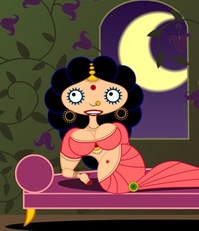
1sita-thumb-200x2312I just heard about this animated film that Ebert is raving about. Get this: an animated film based on the Indian epic, The Ramayana, with songs from 1930s singer Annette Hanshaw.

The Ramayana tells the story of a great betrayal by a husband and his mother on the husband’s wife. It is one of the oldest texts in India, and rife with magic, monkeys and religion. It was made to be a thriller–a very long thriller.

The movie though, is animated.

Here’s the trailer, without the Hanshaw.

The problem: Hanshaw’s estate won’t give Nina Paley, the creator of Sita Sings the Blues, the rights to use the songs, so no distributor will touch it. It can win tons of awards–and it has–check out this site. But it can’t be mass distributed. Update:  Here is Nina’s Distribution Plan since Ebert’s article!  Click there to find the movie…and where you’ll be able to see it.

I can’t wait to see this film. I wonder if we can get Yukon Film Society folks to bring it up. It seems to be showing at film festivals everywhere….

So, this is another outlet for fantasy writing: cartooning and reinterpreting world epics with lots of fantasy elements. And adding in some historical footage too. It’s remarkable. Listen to this. Here’s a nice mix of 1930s Singing, modern animation, and a world Epic:

There are no limits for fantasy writing. None. Okay, well, copyright….but really, no limits. 😉

Novelists! Classes start Monday at Yukon College

rightimg1Happy New Year to Everyone! I hope this coming new year brings you what you want.

It’s a long and interesting journey, no doubt.

Perhaps, you are looking to work on your novel? Perhaps, you have been working on one for years and you want to get some guided help through a course? Maybe, you just plunked one out in November during NaNoWriMo (National Novel Writing Month) and you want to work on revising it, or just getting feedback on it.

Yukon College is offering two courses: Monday nights for Realism/Mainstream writing and Tuesday nights for Speculative Fiction (Fantasy, Science Fiction, Horror, Fantastical Children’s Lit). The school, though, is closed till Jan 2, or Friday. So, if you’re gonna sign up and come to the first class on Monday, you’ll have to sign up on Friday or Next week. Regardless of when you sign up, come to the first classes. We have to get a viable head count to know if the classes will make. We need 8 people each class, at least, to make this happen. We’ll be working on synopsis writing and editing three chapters of your novel.

Click on Writing Classes to learn more.

Also, don’t forget that Yukon writers, in classes or not, should be getting ready for the Editor’s Weekend that is happening at the beginning of April. Six editors are coming up to talk with Yukoners, give workshops, about the next steps in publishing their manuscripts. This coincides with the last weekend of our coursework. So it makes a fitting transition after our class is done to move towards shopping a manuscript around.

So, if working on your novel is part of your planned journey for 2009, I hope to see you in class in the new year!

New Anthology Market– Triangulation: Dark Glass

March 31, 2009, Deadline— From Their Website:

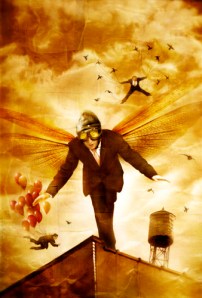
Taking Flight by Vincent ChongTriangulation is an annual 125-150+ page short fiction anthology that publishes science fiction, fantasy, horror, and any other speculative fiction that caught the editors’ fancy. Every year we have a theme: 2009’s theme is “Dark Glass”. We pay semi-pro rates and are available online at places like Amazon.com. We use Lulu.com as our printer, so if the publish-on-demand thing leaves a foul taste in your mouth, avoid us. We’re a small outfit but we work hard to produce a quality product; Asimov’s Science Fiction said we were “equal to any issue of your favorite prozine.”

No, we don’t get tired of mentioning that Asimov’s said nice things about us.

We define “short fiction” as “up to about 5,000 words or so.” We have no reason to impose hard and fast arbitrary word limits, but we are interested in publishing a wide variety of entertaining and literate stories, so the more space a story would take, the more it will need to impress us. If you have an awesome story that exceeds 5K then by all means send it; but be warned that if you’re closer to 10,000 words, it will probably need to have the editorial staff cheering and high-fiving each other so much that the senior editor’s roommate’s poodle runs into the room to see what all the commotion is about. And that dog likes his naps.

We dig flash; there is no minimum word count.

We have no interest in getting more specific about the term “speculative fiction.” Science fiction, horror, fantasy, magic realism, alternate history, whatever — if there’s a speculative element vital to your story, we’ll gladly give it a read.

We love creative interpretations of our theme, “Dark Glass”. Don’t ask us what it means — tell us what it means with a story that convinces us you’re right.

We publish both new and established writers; the level of experience for the authors gracing our pages has ranged from “first time in print” to “Hugo winner.” The majority of our stories usually wind up being from American authors, but we’ve had a number of international contributions; we’re happy to consider work from anywhere in the world, just as long as it’s written in English.

We will run mature content if we like the story. So make sure there’s an actual story in that mature content.

We will gladly consider reprints. If the story ran someplace obscure, then it’s probably new to our readers; and if it ran someplace high-profile, it’s probably really good. Either way, we win!

No poetry. Sorry.

No fanfic, even if it’s fanfic of a fictional universe that has passed into public domain. Cthulhu Mythos, I’m looking in your direction.

No thinly-disguised transcripts of roleplaying sessions, no settings obviously based on D&D or other such games. Don’t get us wrong, we love to game ourselves — which means our imaginations are probably too cluttered with elves and dwarves and orcs and the like as it is.

Submission deadline is March 31, 2009. All electronic submits must be sent by that time, all snail mail submits must be postmarked by that date.

Compensation:

We pay two cents per word (USA funds, rounded to the nearest 100 words, US$10 minimum payment) on publication and a single contributor’s copy. The anthology will be published in late July of 2009. We purchase North American Serial Rights, and Electronic Rights for the PDF downloadable version; since we’re cool with reprints, we really don’t care whether we have firsties. All subsidiary rights released upon publication. Contributors will also have the option of purchasing additional copies of the anthology at-cost, exact price TBD.

How To Submit:

Electronic submissions make our lives easier. Please send your story to editor@parsecink.org. Please put your subject line in the format of “SUBMISSION: Story Title” so we can tell you apart from the spam.

We’ll consider stories ONLY in the following formats:

  • .odt (OpenDocument Text — format used by the OpenOffice.org suite) — preferred format
  • .rtf (Rich Text Format — generic document format that most word processors can create)
  • .doc (MS Word — we’re not crazy about it, but let’s face it, it’s the one most people actually use)

Please use industry standard manuscript format. There’s disagreement on some of the exact details of the “standard” — we’re cool with that. We’re not testing you to see if you can follow each and every niggling detail, we just want a manuscript that looks professional.

If you absolutely positively can’t use email, please send the manuscript (with either a SASE or a return email address) to:

Triangulation 2008
134 Orchard Dr.
Penn Hills, PA 15235

No hand-written manuscripts. We gotta draw the line somewhere.

Please, no multiple submissions; only send us one story at a time. We’ll get back to you promptly, we promise.

For Full GUIDELINES, CLICK HERE>

How Fiction Changed Christmas

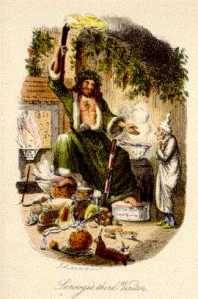
1971-toon-ghost of christmas presentI received this on my SF Canada listserv from Celu. But it fit so well into what we’ve been talking about here–that FICTION has power to change the world, that I wanted to post it. If there are errors in this posting, I apologize. I did not vet it ahead of time. The pic is from the 1971 cartoon. I grew up on this one and the Mr. Magoo version.

Merry Christmas!

_____

A CHRISTMAS CAROL: THE LITTLE GHOST STORY THAT SAVED CHRISTMAS

Not too many people are aware of the influence of Charles Dickens’ A Christmas Carol on the evolution of the modern Christmas holiday.

First of all– in 1843, when Dickens wrote it, the state of the Christmas Holiday was in flux. In the decades before that, Christmas celebration had been slowly falling off in Britain as a result of two factors: the residual effect of Puritanism under Cromwell’s government, which had completely shut down overt Christmas celebration in the mid-17th century, and a desire to get away from the older, more raucous practices of British Christmas.

Before Cromwell’s English Revolution and the resulting Protectorate, Christmas was celebrated much differently than most today imagine. It was more akin to 12 days of Mardi Gras, dominated by the “festum fatuorum,” or Feast of Fools on January 1st and lasting until Twelfth Night— during which time people traditionally took to the streets in all manner of outlandish costumes, with the sole motivation of getting drunk and eating until one was ready to burst. Roles were often reversed during this period, with servants “taking over” households and playing the part of the Master and Mistress of the house, while the rich rubbed elbows with the poor in a way not seen during the rest of the year– a way not always to their liking. This practice dated back to Roman rule in Britain, and had mingled with various Celtic and Norse traditions to produce a great feast of plenty to end the year, a fiery masquerade to drive away the cold and dark of winter and send the ghosts of the dead off in gran

Wassailing, the act of traveling in groups and singing at houses, was less a festive entertainment than an act of robbery. Drunken mobs would move from door to door like trick-or-treaters, demanding food and spirits from every house they passed “to honor the Season.” And if the occupants of a house were not forthcoming, they could expect retribution, and the mob might even storm the building and loot it then and there.

Give us some Figgy Pudding, indeed.

This debauchery sometimes got completely out of hand and turned into drunken city-wide riots, during which shops and homes were looted indiscriminately and whole neighborhoods were burned down. Several popes and prominent clergymen passed Papal Bulls and Interdicts against the practice, and it was roundly denounced by several English monarchs.

Oliver Cromwell and his puritan Protectorate squashed all of that. But after the Restoration, people didn’t really have much left by way of tradition to apply to their Christmas celebrations. Christmas became a big party, or series of smaller parties– but the riotous drunken feasts of yore were no more.

As the Age of Reason progressed into the beginnings of the Industrial Revolution, the celebration of Christmas began to lull. Many considered it an uncouth throw-back to heathen times best forgotten, and not civilized enough for the new buttoned-down, corseted society of the dawning era of enlightened Victorianism.

Christmas had become old fashioned and passe. And was gradually fading away.

Enter Charles Dickens.

By 1843, Dickens was already a best-selling author and novelist, who had firmly gained the ear of his country and whose works were growing in international popularity. Victoria, 23 years old, had been queen for 5 years, and a new spirit of youth and vigor was abroad in the land, supported by Victoria’s rejection of the stodgy customs and arbitrary political probity of the Charlesian period which preceded her. British economic might was on the upswing, there was a hint of liberalism in the air, and things were changing.

So it was that Dickens sat down in December of 1843 to write a Christmas book. It was not entirely a charitable act for the ages– Dickens had recently had a number of monetary investments go sour on him, and needed to generate some quick cash to pay off a debt. But as was his gift, Dickens had the uncanny knack for stating in prose what the rest of his countrymen were thinking. He was England’s literary conscience. And he was able to speak directly to the hearts and minds of his readers.

The name of his story was “A Christmas Carol in Prose, Being a Ghost Story of Christmas.” Dickens himself called it his “little Christmas Book.” It was first published on December 19, 1843 with illustrations by John Leech. Despite his financial duress, Dickens didn’t believe it would do that much to bail him out– his own sentimental insistence that the novella be richly bound and copiously illustrated seemed to doom the little book to earn little in the way of profit. Still, its simple message seemed worth telling– that there was much that was good and true about the sincere celebration of the Christmas season, and that the true meaning of the holiday– forbearance, hope, brotherhood and good will to all men– still had a worthy place at the center of the ever-changing English hearth and home.

Dickens was wrong about its financial chances. Despite its brevity (Dickens was known at the time for lengthy novels published in serial form), it was a smash hit– a runaway bestseller. It completely sold out and went to reprint almost immediately, selling over six thousand copies in one week. It has never been out of print since the day it was published.

The book re-popularized Christmas in the British Isles, and the “traditional British Christmas” it represented spread far and wide to influence the rest of the world. Christmas had become civilized– indeed, NOT to celebrate the holiday had become downright UNcivilized.

What traditions did Dickens re-popularize in his little Christmas book?

Well, there are no Christmas trees in A Christmas Carol. Those had yet to be imported from Germany by Prince Albert and Queen Victoria, nor did that happen until 1848, when a woodcut featuring the Queen and Royal Consort at their Christmas tree appeared publicly, sparking a frenzy of emulation througjout England and abroad.

Santa Claus or Saint Nicholas do not appear in A Christmas Carol, either. Not in his Victorian (and later accepted British and American) form, that is.

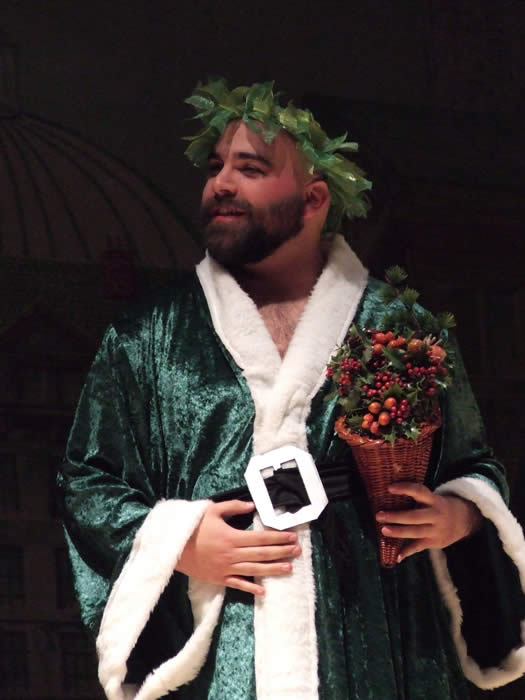
But he DOES appear in the story in his original pagan form– The Ghost of Christmas Present— the SPIRIT of Christmas– is depicted in Dicken’s work as being essentially identical to the far older concept of “Olde Christmas” and “Master Christmas” described by Ben Jonson in the late 16th century, and believed to be older by far even than that.

The Christmas traditions Dickens reinvigorated were simply the act of giving, of generosity of the spirit, of familial togetherness and joyful celebration. Dicken asserted that Christmastime was still, and had always been, SPECIAL. And the world believed him.

Dickens’ tale is also primarily a ghost story– a fact which he adamantly asserted until the end of his days. Ghost stories are also traditionally connected with Christmas, that 12 day period being the time when the last wandering ghosts of the dead are sent by the finality of year’s end to their ultimate fates. Christmas ghost stories are very much a part of our oldest traditions, a way to bid farewell to our fallen friends and love ones, while enjoying a shudder as we consider the icy hand of death that constantly awaits, perhaps just beyond our doors.

It also bears mentioning that the events depicted in A Christmas Carol are not strictly Victorian– in fact they seem to predate Victoria by several decades, despite the fact that many modern interpretations of the tale move it forward into the mid-1800’s.

Scrooge was an old man, or at the very least middle-aged, when the ghosts visited him. The events of Christmases Past took place around the turn of the 19th century, therefore, or even earlier– which explains Fezziwig’s old style powdered Welsh wig. The events of Christmas Present, to Scrooge, take place over the holiday when the ghosts visited him– but we are later told by Dickens, who is writing in 1843, that Scrooge went on to become much-revered as a great champion of Christmas in the time following his great change of habits. So it makes sense that Scrooge was visited by the ghosts much earlier than 1843– perhaps in the 1830’s or thereabouts.

None of which really matters. The simple fact is, Christmas was a dying tradition by the time Dickens took hold of it and reinterpreted it for his Victorian audience, who took it to heart and embarked on a Victorian Christmas craze from which we today draw our most beloved and revered Christmas traditions. Dickens lit the spark– and a romantic Victorian England, hungry for the stability and emotional resonance of tradition, fanned it into a flame that has since warmed the world.

And so I raise my proverbial glass to Master Dickens, this year and every year, and toast the old fellow, whose little Christmas book reinvigorated and reinvented one of the celebrations which so many hold so near and dear to their hearts.

Well done, sir, sayeth I. Well done indeed.

____________________________________

Thanks, CELU!!

PS.  Wherever you find pics of the Ghost of Christmas Present, he’s always a hunk.
DSCF3069
carol-5

Writing Classes at Yukon College–Get Your Novels Out

Hey, Novelists!

For some of you Nanowrimo was a great experience–but what next??  Or some of you have an old novel kicking around in your closet.  Dust it off, get it ready.

I’m teaching two courses at Yukon College in the Winter, both of them are Fiction Writing Workshops.  You can read more about them if you click on Writing Classes up on the Menu Bar.

In brief:  Monday night is for novels that are more realistic–they don’t have magic, or time travel, or science fiction, or monsters in them.  They are set in this world, working with people as we know them.  They can be set in the past.

If you have at least 3/4 of a novel manuscript through a first draft, you are welcome to join the course.  If you don’t have that much done, that’s okay to join too, as long as you know that a majority of people will be working on novels, and that class time discussion will be focussed on longer story arcs.  People with novels are required to workshop 3 chapters over the course of the semester, comment on other people’s chapters, and with a group, present one novel to the class, one of the ones that we will be reading (we have three on the schedule), and  turning in to the class a synopsis of your novel.

The practical side is that in April you will need one synopsis and the first three chapters of your novel ready to show editors who are coming to the Yukon!!  Don’t pass up this opportunity. BIG name people are coming to look for manuscripts and help people move towards publication.  They will take our class to the next level, much farther than most could take you.  They will also take you to that next level if you AREN’T a part of the class–the Editor’s Weekend is a Yukon Wide event… (oh, it won’t be named Editor’s Weekend…I just made that up….).

Tuesday nights are for those novelists with a speculative element in their novel.  There are different considerations when you are working with speculative elements and you will want people who are familiar with those elements.  The rest of the class will be VERY similar to the Monday night group–all that’s different is that we will be working with texts that are outside of realism, even just slightly.

The courses are 16 weeks long, are the cheapest prices in any college in North America (dare anyone to beat $150 per course), and I think you will get more bang for your buck.  Workshops are good to use to get a good opinion of what to look at more closely.  Only come if you are ready to receive the opinions of 15 other readers, and to consider their thoughts on your work.

Come and Join us for a good workshop experience!  CRWR 241: Fiction Writing Workshop (Mondays–realism; Tuesdays–Speculative) Starts Jan 5 at Yukon College!