Defining What Netflix Will Be, or Eight Reasons to Give Sense8 a full 3rd Season

19477719_10155330533657095_1420082545618168163_oAs most people know, on June 1st, Netflix decided not to renew Sense8.  Fans of the Wachowski Sisters + J Michael Straczynski show, a show that weaves a global narrative to tell a very human story of eight people sharing their minds, knowledge, and empathy, were devastated that the story would not have a third season.  Many knew that it only had one more season of story, but Netflix decided not to renew.  Then the fanbase rallied and wrote and tweeted and called out! and helped show-writers garner a 2 hour special for Sense8!  Amazing!

I am so happy that we get 2 hours to wrap up Sense8, and don’t take this blogpost here as less than gratitude for that 2 hours.  But I’d like to make a bigger case for you–a case you haven’t heard–about giving Sense8 a whole season based on what might be good for Netflix, not just for fans.

While there has been speculation as to why the show was not renewed, that’s speculation.  Netflix spends a lot of money trying to find hit series, and sometimes a good series doesn’t find the right market.  When the cancellation happened, there was plenty of anger towards Netflix, and, in the moment, I even threatened to dump Netflix.  But I love Stranger Things, and I watch Star Trek, Daredevil, Luke Cage, etc.  It would be hard for me to dump Netflix for good.  I know, they’re counting on that–they’ve made us LOVE this service. Okay.

Instead of eight negative reasons to renew Sense8, I want to give 8 positive reasons to renew Sense8 for a whole last season.  I want to give them something they can go to the marketing table with and say—“Let’s do one more season.” (Please especially consider #7)

Ultimately, right decisions aren’t made because of negative consequences but because the positive consequences are stronger.  We aren’t charitable because of Fear of Hell or Fear of Bad Publicity.  We are charitable because we want to help.

Why Netflix Would Want to Complete a Third Season of Sense8

1. NETFLIX IS COMMITTED TO COMPLETION: Sense8 has exactly ONE more season.  It’s a three season arc.  You renew that last season, you are a hero, and the story is complete, and people bingewatch the three seasons for years afterwards on Netflix.  They will come to Netflix for those three seasons.  You’re not having to commit to an unknown number of seasons, or risking anything AFTER this season.  You already committed two seasons and they were amazing, and fans loved them, and they are almost home-free.  You create NEW fans by following through on your series.  But MORE people will become afraid to watch or commit to a new series if the series could be cancelled before it’s finished.  The more unfinished series, the more Netflix becomes untrustworthy for a new viewer.  The positive spin: you complete series, and they can be assured that when they watch a series on Netflix, especially with the millions of fans this series has created, that it will have closure–that series runners will know ahead of time that their series must establish closure.  This one is close to being finished.

2.  NETFLIX EDUCATES ITS VIEWERSHIP ABOUT VIEWERSHIP.  You teach Netflix viewers about Viewership using Sense8.  Part of the shock of this announcement was that viewers thought that their fan base was enough.  We don’t get to watch the Viewership numbers like you do, so we can’t tell when to rally, or how we’re doing, or if we’re about to fall.  It’s a bit unfair to a very large group of fans to say that their numbers are not enough.  What kinds of viewership help make your decisions?  Do you need a certain number every week?  And how do you calculate when you drop 10 episodes over a weekend?  How many times should we view it?  How many tweets do you need?  How many blogposts analyzing the show?  If you give us those numbers, WE CAN HELP SAVE THE SHOWS WE LOVE.  I guarantee that the fanbase for Sense8 is the most dedicated fan base you’ve ever had (more on that below).  But telling us to love a show and then, when it’s not good enough, taking it from us without telling us how to celebrate and support it correctly can be very bad in the long run–it leaves a bad taste in fans’ mouths.  Netflix needs to teach its viewers what matters to save a show–how can we love a show enough to keep it if we don’t know what you need?  If not, fans won’t try a show till a second season is guaranteed…or may just not try it unless you do what you did with The Crown, and guarantee 6 seasons to tell that arc.

Continue reading

My Faith in Werewolves

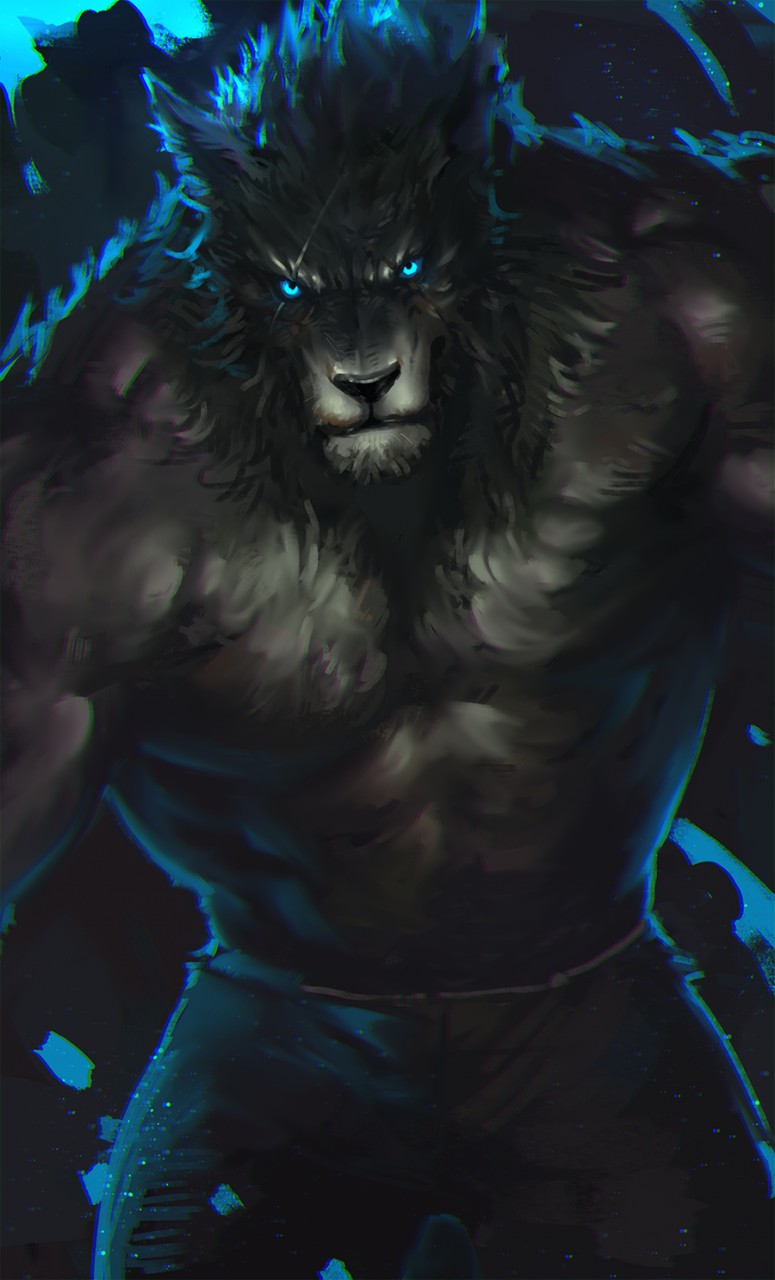
tumblr_nmlov9kobq1s3y6tro1_1280I grew up with a dangerous love of werewolves.  I wanted to meet them.  I wanted to run with them in the woods behind the house.  I wanted them to break into my room at night and kneel at my bed and whisper all the courageous, adventurous things I could become.

I drew pictures of werewolves. I couldn’t help myself.  Especially when I was 14 and living outside of Caruthersville, MO, on the levy by the Mississippi River, where my father was the pastor of a small country church–those pictures came every day into my head and just bled out of my pencils and pens.  Most of these werewolves were kind, masculine, big brotherly, mentor-like werewolves.  I was not clued-in to my head at the time.

These werewolves came, most likely, from my deeply embedded and hidden sexuality, a love for hairy men that I could not understand–a feeling like there was a wild side of me that I must hide away.  But the werewolves at my window were always free.  Free to run.

These werewolves I drew–the first one made me weep as a teenager–there was something important in that picture, something I couldn’t fully understand growing up in my deeply religious environment.  I don’t regret the beautiful years of being deep in that family and faith (and I’m still a big part of my family and faith) but I regret not knowing what that was.  I’d have been a much different person if I had known I was gay at 15 instead of at 34.

I appreciate the magic and wonder my ignorance left me–and that’s a strange blessing to be thankful for, but it’s a blessing nonetheless. Because I could not believe in my sexuality, I believed werewolves were real.  I musta lived under some really awesome bubble of cognitive dissonance for an A+ student to believe werewolves were possible and still understand and love my science classes.  But there I was–a high school student who kept a space open in my brain for the possibility of werewolves.  It’s not so hard to believe.  For me, son of a Southern Baptist minister, I had a world with angel-demon fights, Jesus talking to you out of the air, fiery chariots racing to the sky, resurrecting dead people, talking donkeys–that’s a world where werewolves can happen, too, isn’t it?  That space I kept open–it’s a similar space open for the possibility of miracles, of faith.  So why not a …sorta faith in werewolves?

Continue reading

The Book of Birmingham: Adding Martin Luther King Jr’s “Letter from a Birmingham Jail” to the Bible

Minister Martin Luther King, Jr. preaching at an eventI would like to see Martin Luther King Jr.’s “Letter from a Birmingham Jail” (1963) added to all new Bibles.
I don’t propose this lightly.  Three times in the Bible, in three different places, listeners (and they wouldn’t have been readers) are exhorted not to add to, or take away, from specific books.  One is about Revelation, one is specifically to the Israelites in Deuteronomy to listen to the law, and the other is in Proverbs: “Every word of God is true….do not add to his words, lest you be proved a liar.”  I think it’s safe to say that I won’t propose adding any new words of God to the Bible.  I’m advocating something less radical.  If we can have letters from Paul, we can have letters from Martin.

Continue reading

Write with Me at The BRAINERY workshop!

brainerybanner-800x253

Would you like to write a few stories this summer and work with me for ten weeks?  The Brainery Workshop has several spots still open to work with me or Valerie Valdes in times that are convenient for you!

EVERYTHING IS ONLINE.  So you can participate no matter WHERE you are in the world, as long as you have a good internet connection.

We get together once a week and work on your stories.  We also go through Ursula K. LeGuin’s workshop guide, Steering the Craft, and we use the Jeff VanderMeer and Jeremey Zerfoss’ Wonderbook.  We’ll also be reading stories from Lightspeed and other magazines.

Come join a small group online—using GoToMeeting and WetInk–to create a great place for writing!

Want to know more?:  Follow this link to the BRAINERY WORKSHOP.

Imaginarium 4: Table of Contents revealed

10982867_10153036781103855_735786566531418969_oVery honoured to be chosen to work with Sandra Kasturi of ChiZine Publications as a guest co-editor for Imaginarium 4: The Best Canadian Speculative Writing which features, yes, as advertised, the best speculative writing of Canadians from 2014.  This will be published in September, I think.  Follow the link above to see the Table of Contents.

Believe me, there were more amazing stories and poems than we could have possibly picked for one volume. These were hard choices, some of them, frankly, excruciating–but a 600 page volume was something that ChiZine said wasn’t possible for us at this time.

Congratulations to all who were chosen for this volume.  There is a significant list of Honourable Mentions that you’ll see in the book.

Damn, but Canadians are writing well.  That’s all I can say.

So happy too to have Margaret Atwood writing the Introduction to this collection.

For the Table of Contents please follow this link:

Imaginarium 4: The Best Canadian Speculative Writing

Teaching Writing the Spiritual Journey at University of Dayton’s Lifelong Learning Institute

3037998122_307fb8e593_bWriting the Spiritual Journey (UDLLI on the U of Dayton Campus)

Excited to be able to offer this workshop to the University of Dayton’s Lifelong Learning Institute on the River Campus.  6 Weeks and registration information link is below.

_____________________________

How do you describe the indescribable without sounding preachy or crazy? What if you’ve had bad experiences with faith? Speak it honestly anyway. We need all voices to chart the faith journey. Open to all faiths and believers and seekers, this workshop will use readings and memoir writing exercises in both in-class and take-home assignments. Readings feature Annie Dillard, Langston Hughes, Anne Lamott, Kathleen Norris, Mark Doty, John Updike, Elie Wiesel and others. You will give fellow writers feedback in class and will become better equipped to edit your own writing by the end of the workshop.

6 Mondays, January 12 – February 23 (No seminar on January 19)
9:30–11:30 a.m. at River Campus
Seminar Limit: 16

Recommended text: A number of readings in PDF format will be available before the first seminar meeting. These will also be printed out and available as a packet.

Jerome Stueart earned his Ph.D. in creative writing from Texas Tech University and has been teaching writing workshops for more than 20 years. He is a 1996 recipient of the Milton Fellowship (now sponsored by the journal Image), designed to foster excellence in writing for Christians. His writing has been published in Geist, Geez Magazine, Joyland and many other journals, anthologies, newspapers and magazines. He is the co-editor of Tesseracts 18: Wrestling with Gods, an anthology of faith-inspired science fiction and fantasy. His first book about religion in an altered-history America, One Nation Under Gods, is forthcoming from ChiZine Publications (November 2015); his collection of short stories follows in 2016.

For information on how to register for this course, please follow this link.

Writing Science Fiction and Fantasy Afterschool Program?

crocodile_hunter, mauro liraI would love to start teaching an afterschool program for teens to write science fiction and fantasy.  I have often taught this at a local school library–with snacks–once a week for high school students.  If you know of a way to contact or approach Dayton/Vandalia area high schools, or program coordinators at high schools, let me know.  I’d love to be able to offer these classes again.

Rocketfuel ignites imaginations


Depicting the Divine in Epic Fantasy via Tor.com

From Brian Stavely comes a thoughtful post on depicting the divine in Fantasy over on Tor.com.  I’ve included a short beginning here, but read the whole thing at this link to the whole article. Essentially Stavely counts off the ways one can describe a god in epic fantasy fiction–and there are five options.  I was thinking through his list, and it’s good, but I think there are at least three more ways to depict a god in epic fantasy, and I humbly offer them up:

Option 6: Use other people’s understanding of the god as description.  They might not all be alike, but the confluence, the overlap of them, will give a mosaic feel to your god.  It will also create character development for the characters who have seen/or believe in this god, as we tend to see what we desire in our gods.  A god’s description in the mouth of one character as a “god of vengeance” is a very different character than someone who calls him “a god of protection.”  May be same god.

Option 7: Use tales of the deeds of a god to describe him or her.  Actually what a god does says more about him than his/her description.  And again, people have tales. If you can gather up the tales of a god, you can capture a character description that readers can fill in as they go.  Then if and when the god shows up in your text, it may already have a pretty firm description in the mind of the reader, based on what it has done in the world.  God is rarely described in the Bible, but his deeds let you know exactly what kind of God he is.

Option 8: Every culture uses Art to talk about its gods.  Can you pull together images of the divine from a culture’s art?  That will help form a picture in a reader’s mind through the cultural depictions of the gods, telling you a hell of a lot about the culture, as well as the god.  Michaelangelo’s God touching Adam who seems curly headed and benevolent, and other depictions of God as a fiery, anger-filled rage monster.

___________________________________

Depicting the Divine in Epic Fantasy

by Brian Stavely

There’s a striking moment near the end of the twenty-first canto of Dante’s Inferno, one that almost all readers tend to remember, when the demon Barbariccia “avea del cul fatto trombetta.” It’s hard to put it delicately: he turns his ass into a trumpet. Not the kind of thing you expect out of a writer recording the steps his salvation, but the image stays with you.

Likewise, readers of the Divine Comedy remember Ugolino, who, for the sin of eating his sons, is forever frozen to his neck in ice, gnawing on the brains of Archbishop Ruggieri. In fact, Dante has no trouble at all depicting sinners in the various postures of their suffering, and for seven centuries readers have kept turning the pages. Corporal violence sells. Electronic Arts even has an eponymously titled video game in which Dante looks less like a poet and more like a Muay Thai Knight Templar. The EA people are no fools—they understand that there’s a ready market for brain eating and ass trumpets.

When it comes to the celestial realm of heaven, however, Dante runs into trouble.

READ MORE HERE.

Thanks, Brian and Tor.com!!

Hopefully these suggestions help YOU when writing about Faith in your Fantasy or Science Fiction.  Let me know what you think.  And don’t forget, you can write about Faith in Fantasy and Science Fiction for the Tesseracts 18: Wrestling with Gods anthology, open for submissions right now over at http://www.tesseracts18.com!

Tesseracts 18: Wrestling with Gods open for submissions

Very proud to announce the new Tesseracts 18 is open for Submissions.  We’ve built a website for it at Tesseracts18.com  Come check out our conversations about faith and science fiction and fantasy.  This anthology is open to Canadian citizens, landed immigrants of Canada, longtime residents and, of course, Canadians living abroad. Yukoners, I hope to see you write a story and submit.

IMG_1094Tesseracts 18: Wrestling With Gods — Faith in Science Fiction & Fantasy

Well this is an all new topic for Tesseracts!  And possibly a completely new topic for an anthology: a multi-faith, creative faith anthology of science fiction and fantasy.  Who would have thought?

Here’s our thoughts on that kind of anthology:

______________

Jacob wrestled with an angel in the night, earning him the name “Israel”, which means “struggles with god.”  Buddha wrestled, and the hero of the Mahabarata wrestled too.   Wrestling is a part of faith.  Having a faith can help immensely with struggles in our lives, but we also must struggle against the rules, the boundaries, and the very doctrine at times.  We all wrestle with our cultures and our gods, whether we believe in them or not.  Faith is not passive.  Human progress has relied on brave souls willing to challenge convention through their beliefs.  And faith is not separate from Fantasy and Science Fiction.  Fantastic elements are integral to all major faiths–they have their gods, fantastic creatures, miracles, blessings, power and magic.  We continue that journey into space, possibly encountering worlds with their faiths.  Since our cultures all began with fantasy and struggling with faith, Tesseracts 18 will continue the Science Fiction and Fantasy tradition of wrestling with Faith, without declaring all-out war.

The anthology will include a diverse representation of both real-world religions and faiths of fictional cultures.   Instead of looking to pass historical or cultural judgement, it will feature character-driven stories including faith, doubt, miracles, spiritual journeys, and diversity of opinion within a faith.  It will avoid blanket stereotypes of faith-based cultures.  We’d love to see faith surprise us, and surprise science fiction and fantasy readers.

________________

Some questions we think naturally come from this:

How does Faith inform a culture, change a culture?  What does it mean to really believe?  What kinds of religions and faiths are out there in the universe?  How does faith play out already through established fantasy cultures?  How can people keep believing, sometimes with very little evidence?  Or is there evidence that is so personal, it is never shown to others?  How does faith effect an individual, a family, a city, a society, a race, a conflict, love?

Starting soon, we’ll start posting conversations about how science fiction and fantasy has dealt with faith and religion in the past—just to be able to talk about where we’ve come from, how those representations challenge the genre or challenge readers and writers.

Mostly we just want to create a conversation about faith in fantasy and science fiction–in all its diversity!  PLEASE join us.  We’ll talk a blue streak with ourselves, but we’d just as soon have as many voices as possible in this conversation.

TO SUBMIT: Borrowed straight from EDGE BOOKS.

SUBMISSION DETAILS:

    • This anthology will include as diverse a representation of both real-world religions and faiths of fictional cultures as possible. Stories should not be looking to pass historical or cultural judgment, instead they should feature character-driven plots that include faith, doubt, miracles, spiritual journeys, and diversity of opinion within a faith.  Please avoid blanket stereotypes of faith-based cultures.  The editors want to “see faith surprise us”, as well as “surprise science fiction and fantasy readers”.
    • The Tesseracts Eighteen anthology will reflect as broad a spectrum of stories as possible; highlighting unique styles and manners.
    • Submissions must be speculative fiction: science fiction, fantasy, dark fantasy, magic realism, slipstream, supernatural horror, weird tales, alternate history, space opera, planetary adventure, surrealism, superheroes, mythic fantasy, etc.
    • Submissions may be either short fiction or poetry.
    • The maximum length for stories is 5,000 words, with shorter works preferred.
    • The Tesseracts anthology series is only open to submissions from Canadians, landed immigrants living in Canada, longtime residents of Canada, and Canadian expatriates living abroad.
    • Canadian authors who write in languages other than English are welcome to submit an English translation of their work, provided it otherwise falls within the parameters of this anthology. Translation into English is the sole responsibility of the author. Please supply details of original publication for any submission that originally appeared in a language other than English.
    • Deadline: December 31, 2013 (midnight).
    • Do not query before submitting.
    • Email submissions to: tesseracts18@edgewebsite.com
    • Emails MUST contain the word “submission” in the subject line, or they will be deleted automatically by the server. Please also include the story title in the subject line.
    • Submissions MUST come in an attachment: only .RTF and/or .DOC formats are acceptable.
    • Emails MUST contain a cover letter in the body of the email; for security reasons, email attachments with no cover letter will be deleted unread and unanswered.
    • Cover letter: include your name, the title of your story, your full contact information (address, phone, email), and a brief bio. If you do not live in the place where you were born, please also include your place of birth.
    • Do not describe or summarize the story.
    • If your address is not within Canada, please indicate in the cover letter your status vis-à-vis Canada.
    • Reprints (stories having previously appeared in English in any format, print or electronic, including but not limited to any form of web publication) can be considered but will be a hard sell; reprints must come from a source not easily available in Canada. If your submission is a reprint, please supply full publication history of the story. If your story appeared previously, including but not limited to anywhere on the web, and you do not disclose this information to the editor upon submission, you will be disqualified from consideration.
    • Submission format: no strange formatting, colour fonts, changing fonts, borders, backgrounds, etc. Leave italics in italics, NOT underlined. Put your full contact information on the first page (name, address, email address, phone). No headers, no footers, no page numbering. DO NOT leave a blank line between paragraphs. Indent paragraphs. ALWAYS put a # to indicate scene breaks (a blank line is NOT enough).
    • ALWAYS include your full contact information (name/address/email/phone number) on the first page of the attached submission.
    • Payment for short poetry is $20.00. Payment for short stories is prorated as follows: $50 for stories up to 1,500 words, rising to a maximum of $150 for stories up to 5,000 words (longer stories are paid a slightly higher fee, but in order to exceed the word length limit of 5,000 words, the editors must judge a story to be of surpassing excellence.)
    • Rights: for original fiction, first World English publication, with a two-month exclusive from publication date; for all, non-exclusive anthology rights; all other rights remain with the author.
    • Spelling: please use Canadian spelling, as per the Canadian Oxford Dictionary.
    • Response time: initial responses (no / rewrite request / hold for further consideration) will be prompt, usually within fifteen days. Please query if you’ve not heard back within 30 days. Final responses no later than 15 February 2014.
    • Submit only one story or poem. Multiple submissions will not be accepted.
    • Simultaneous submissions will not be accepted.
 

*Image is from a Chihuly glass exhibit in Seattle, WA

Jerome in the Yukon Writers Festival

20130422-154228.jpg

A really nice article by Dan Davidson appeared in the Whitehorse Star on Friday, April 19. Alistair Maitland did the photo. I appreciate them both. I think this Festival will be a lot of fun. It’s always good to get to teach Yukon high school students as part of the Young Authors Conference as well.

The Festival starts with a big reading at the Kwanlin Dun Cultural Centre Tuesday night at 7pm. The Young Authors Conference is held the next two days after that in FH Collins Library and then we head off Friday to Haines Junction for a reading.

Organizer Sara Davidson has done a great job at gathering diverse writers together. Yukoner Dennis Allen, as well as Drew Hayden Taylor and Carrie Mac and Beverley Brenna.

If you can, come and enjoy the readings with us.