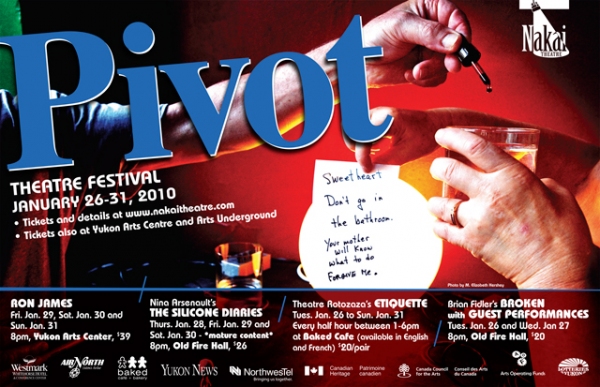
Etiquette: Let Yourself Be Part of the Play

I was able to be a part of Etiquette, the new play by Theatre Rotozaza from the UK now set up at Baked Cafe, at First and Main.  It is unlike anything you’ve ever experienced.  

Yep, you’re sitting down, yep there are actors and a stage, and lines, and things are acted out, but you are the participants and no one in the cafe knows you are doing it.  It’s visceral and you feel as if you are being used, a bit, by the play.  After all, the voice tells you what to say and what to do.  You will be talking about it for awhile.  

You participate with one other person sitting across from you.  You wear headphones and whatever the voice says to you on the headphones to say or do, you say or do.  But it’s not so loud that anyone will ever hear you.  It’s not embarrassing.  It’s a conversation you are having with another person who is also wearing headphones.  

The play is called Etiquette because it seems to want to examine the whole idea of proper things to say.  Here you are, being the actor, being fed lines, much like you go to a Book of Etiquette to know how to say appropriate things at a wedding, funeral, dinner party.  You are handed lines in those situations.  But there are some situations you won’t have words for…

In the course of the play, you are directed to pick up small objects and figurines, place them on the table, do things with them.  The play uses you to get itself acted.  It’s really clever that way.  

It references at one point Henrik Ibsen’s play, The Doll’s House, and you witness the last scene of that play, where Nora does something that no woman in theatre was ever allowed to do, until then.  She leaves her husband.  He is left nearly speechless.  There’s nothing he can say–nothing that makes any sense.  This is the crux of the play Etiquette, not Ibsen’s scene, but the idea that we need words to understand how to act or feel at certain times.  

There will come a moment when you have to read a note while looking through a glass of water.  Hold the note close to the glass and move it sideways.  It will be clearer if you do that.  If you can’t, just flip it over and read the note outloud.  The rest of the directions are pretty easy to follow–you pick things up and place them on the table in front of you, you turn, look around, look at each other.  

I can’t tell you much more about the play—you have to live it to know what it is.  And whichever character you are, you will only know the play from that perspective.  This challenged a lot of what I think about theatre–about the audience’s ability to stay as observers to the play.  Here, you are forced to BE the play, and you don’t know what the other character will say, or what you will say, until you’ve said it.  But all the elements of theatre are there.  They are on the table, in your hands, out of your mouth.  It’s unique and visceral, and if you get a chance to sign up at Baked Cafe to do it, do it.  It takes 30 minutes, and there are only two tables in the room to use (so only four people can participate at a time).  No one really sees you or thinks about what you are doing.  It just looks like you are having a conversation.  But you are really deep inside a play, while the rest of the world drinks coffee around you. 

Etiquette is brought to you through the 2010 Pivot Theatre Festival arranged by Nakai Theatre.  For more information, see their website.  

Etiquette happens Tuesday January 26 to Sunday January 31,

Baked Cafe, every half hour between 1 and 6 pm, $20/pair

Tickets available at Baked Cafe starting Jan. 26 at noon.
Tesseracts 14 Submitters: Not to Worry

Eager to hear any news about Tesseracts 14?  

New Update:  The Table of Contents has been finalized and will, I hear, be revealed soon.  Brett and John are sending out emails right now.  That will take some time as I’m sure there were lots of submitters for this anthology.  But everyone should know everything in, at least, about a day or two, I’d guess.  Good luck everyone!  

_____________________________________

Everything below this is old news: dated January 9 2010.  

Brian Hades has posted this on the Tess 14 webpage:

WE ARE A BIT BEHIND 

With December holidays and more snow than one ever needs clogging up the works, we are about two weeks behind schedule. Please have patience as we catch up during the month of January. Thanks. – Brian Hades, publisher

This supersedes my other reports from SFC listserv.  Thanks Marcelle for those original tips.  I know folks were worried theirs were lost in the mail.  The snow has a way of swiping mail sometimes. Godspeed to the editors, and to us– good luck on your next projects–several deadlines approaching.  As for Tess 14, good luck to everyone!  Now back to snowfall, dogwalks and deadlines.

Hounded (and Happy) in the Yukon Woods

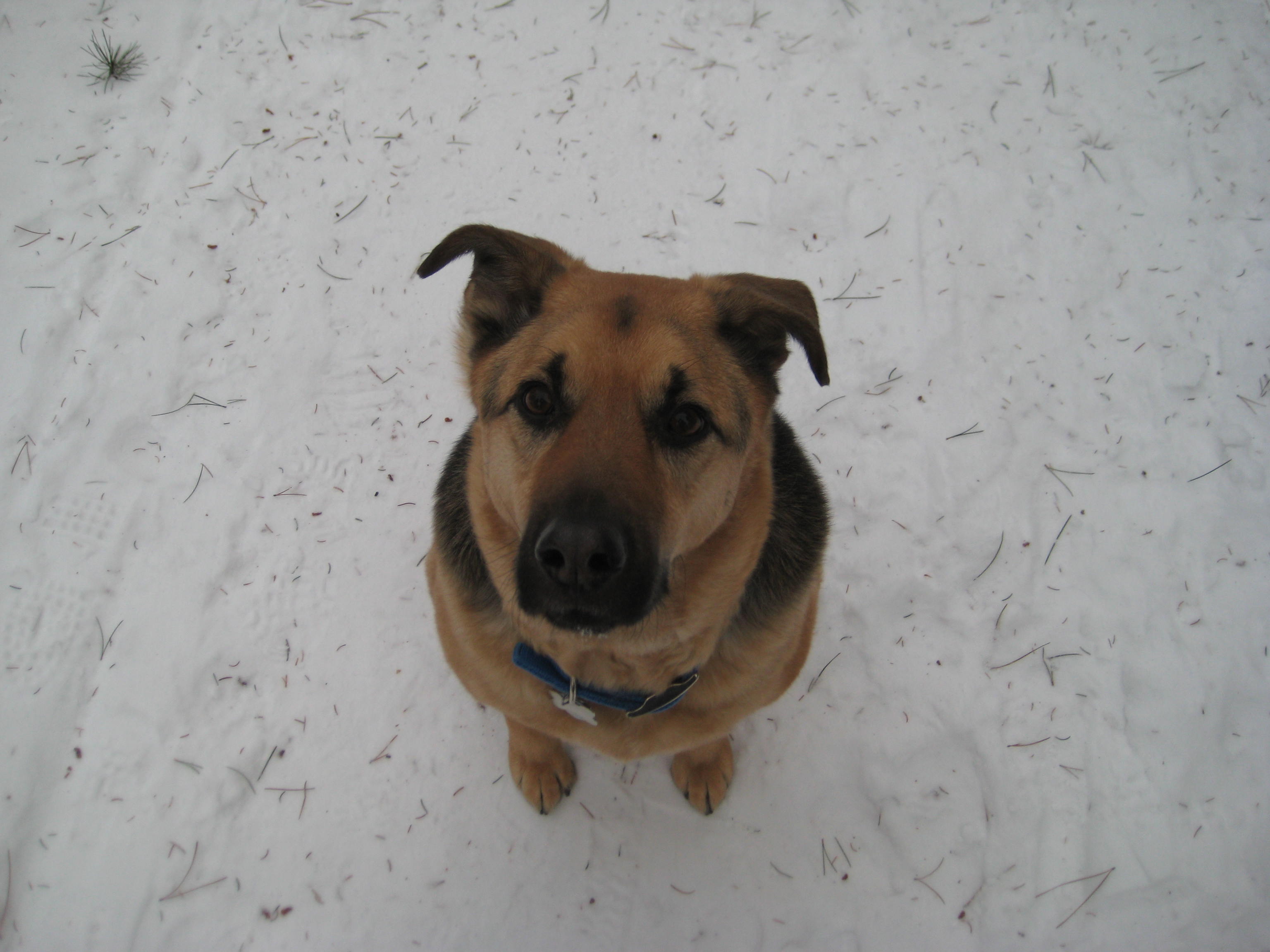
I can’t tell you how much I’ve enjoyed sitting a house with a dog over the holidays.  I got to spend two weeks with a fine German Shepherd named Qimmik.  He’s about 5 years old and over the last while we’ve bonded.  How do I know this?  He wants to go on long walks with me, but he doesn’t run that far ahead.  And when I get out of breath–dang hill I had to climb–he walks slowly ahead of me and turns to check on me, leading me back home.  He even waits till I catch up with him.  

He’ll greet other dogs—very friendly–but he’ll stick close to me, and walk beside me most of the time.  He protects me from being too “hounded” –but in a way, I like being “hounded”–encountering dogs in the woods that greet you, as if they are the doorgreeters.  And with Qimmik, I’ve become permanently “hounded”.  And this is a good thing.  

I LOVE dogs.  I want a dog.  And I love their company.  This one is a great companion.  I wish he could talk, honestly.  So I could understand what he wants.  But sometimes he just wants to be with me.  

When I get home he’s wound up like a top–runs, gets excited, out of breath, jumps!  So we go on a walk right away.  And he also sleeps in the same bed, down at the bottom of the bed.  He breathes at night, and he sighs really big if I’m turning over too much.  I like his company and the structure he gives my day.  It’s too bad that I have to give him up on Wednesday.  

There’s a great culture of dog owners in the Yukon–nearly everyone I meet has a dog or two or three….  And everyone walks their dogs in the woods, so you meet lots of people.  

I did make this video, my first iMovie, of Qimmik and I walking each other on Christmas Eve.  I made it as a gift for a dear friend, Susan Zettell, who let me sit her house 8 years ago, with her dog, Misery.  It was a wonderful time.  

In the video, it’s mostly him in the woods.  I set it to Bon Iver’s “Woods” a song that builds and builds with the same four lines:

I’m up in the woods

And I’m down on my mind

I’m building a still

to slow down the time.  

                                         —until there are multiple voices, multiple harmonies.  I’d like to slow down the time and enjoy the season more, enjoy the moment more, enjoy just being in the woods….

Hoping you get “hounded” this year, and you enjoy being “hounded” by the four footed friend that loves you most.  (Okay, even you catted people count….or are you felined….)  

Be Hounded and Happy.

Rocketfuel Ignites Imaginations, the Yukon News story on my class


Photo by Ian Stewart for the Yukon News

My most excellent class of writers is the subject of a Yukon News article below.  These writers are an awesome group of imaginateurs.  I’m impressed, especially, with how they conducted themselves in an interview–thoughtful, insightful, well-read, interesting and interested in each other.  Love to start a book club with them!  

Article is by James Munson for the Yukon News.

_________________________________________

Zeb Berryman has some demons he’d like to share.

The 18-year-old scribe is an aficionado of the “dark side” in his literary circle, a dozen Whitehorse high school students known as Rocket Fuel.

“The darkness and violence is what makes it beautiful,” says Zeb, referring to one of his current anime reads.

Zeb’s comment elicits a few nods from his fellow science fiction enthusiasts sitting around the table in the FH Collins library.

These young adults have an encyclopedic knowledge of the fantasy genre, and can discuss the intricacies of alchemists, monsters, gods and goblins at length.

“It’s like literature discussion about a whole bunch of books you never get to hear literature discussions about,” says Jerome Stueart, a science fiction writer who started Rocket Fuel two years ago.

But more impressively, it’s their own literary creations they’re the most familiar with.

Ask any one of these students about their works, and it won’t be long before another interjects.

Franz Krabel, 12, tends to kill off his characters a lot, says Santana Berryman, Zeb’s 14-year-old sister.

Santana, for her part, has an obsession with the afterlife, says Stueart.

These writers know each other inside out.

Read the rest of the article

Fantasy-Filled Young Readers Give the Season Imagination

Rocketfuel, the youngest group of science fiction and fantasy writers in the Yukon, showcased their own writing (and art and music) Dec 4th at the Frank Slim’s Building at Shipyard’s Park.  It’s a nice venue with a roaring fireplace.  Makes it cozy.  Snacks were had, parents were entertained.  Must have been about twenty people there.  

About the readings–wow.  Okay, I know, I’m biased, but even I was blown away that night.  My boss, Mia Lee, was also amazed.  And the parents were too.  The writing was great, and fun.  We had readings about a day in the life of one of the heads of Cerberus, an alien abduction, a psychiatrist who knows a bit too much about Hell, an amulet that everyone wants, and other writings of imagination. 

Even the parents got to play when we brought out Justin Whitney’s patented Story Seeds, guaranteed to jump start a story, and starting playing the game around the room.  

I’d like to thank all those students in our Rocketfuel afterschool writing program–Franz, Hal, Santana, Zeb, Kylie, Erica, Kalyna, Renyka, Aubrey–and our emeritus writers Ashley, Bailey and Victoria.  We really do believe that writing contributes to the well-being of a young adult, and that fantasy and science fiction are part of our culture–a vivid part–that contributes to our cultural identity.  It can also change the way we see our world.  

Every culture holds dear a story that has supernatural elements in it, and this story defines and contributes to that culture.  Someone had to write about the dragon, Grendel and his mother, chomping on knights in the King’s Hall, or a Monkey to bring back the wisdom from the West, or captured a Djinn in a lamp, or brought a people across a sea split by the hand of God, and someone defined vampires, werewolves, ghosts and the Devil for a culture that enjoyed hearing the dark stories as much as the light ones….  Fiction even changed the way we celebrate Christmas. When our young writers write fantasy they are contributing to a long line of fantastical stories–to explain their world, even as they live in ours.  

The Young Author’s Conference understands this, and every summer, when the writers gather with our high schoolers, those writers read the works of our kids and at least half of them are fantasy and science fiction.  It’s important to develop a vivid and detailed imagination.  This is how adults solve problems—by imagining the solutions AND how to get there.  

Watch for the Yukon News article on Rocketfuel on Dec 23rd!  Woo-hoo!  

In January, TWO Rocketfuels start back up after school.  One at Porter Creek on Tuesdays and one at FH on Wednesdays.  If you think someone in your family might enjoy this, sign up through the Parks and Recreation, City of Whitehorse Leisure Guide or by calling Mia Lee at 668-8327.  

Treats, Beverages, and a bit of Fantasy, Shipyards Park, Fri. Dec 4

Students who are a part of Rocketfuel, the science fiction and fantasy writing group afterschool program–sponsored by the City of Whitehorse–will have a reading Friday night–TOMORROW–at Shipyards Park.  They’ll be reading from some of their current work.  There might actually be a story of Santa Claus meeting the Reaper…you never know.  

THE DETAILS:

Shipyards Park

Friday Dec 4, 7-9 pm.  

Treats, goodies, beverages like tea and coffee, and a bit of Fantasy to go home with and share with your season….

If you’re free tomorrow night, come by.  We’d love to have you.

MAD goes into Outer Space for Halloween

alien1Kudos to the kids of MAD (Music Art Drama) for their Haunted House this year, with its, yes, SCIENCE FICTION theme.  I won’t give anything away, but it’s a lot of fun.  

I didn’t know what to expect, but I was pleasantly shocked.  I really enjoyed the opening number with their rendition of “Science Fiction/Double Feature” and the old movie posters and clips through that number!  Brought back a lot of good memories.  

My advice is not to come too early because you’ll be sitting for a bit.  Come closer to the times they let people in: 1:00 and 2:30 on Halloween.  

You have a hard choice–whether to go through the line and into the haunted house, or sit and watch some cute homemade films from the kids.  I say, stay and enjoy the films at first; the haunted house will be there, so you don’t need to be in line up front.  

I won’t tell you what’s in the rooms, but they’ve done a good job at recreating some of the frights of space travel that have been highly “documented” in science fiction…and playing them for all their worth in front of people.  

I just want to tell the kids: You got me back for scaring you.  The rooms are excellent.  I left wanting more rooms.  There’s some nice originality in these scenes.  I love the Observatory!  But it was the room with the synchronized bodies in it that freaked me out….  The use of the scrim on the stairs was a nice, scary touch, too.  What the MAD kids seem to know is that it doesn’t matter if you show all the details…they leave a lot un-shown, and that’s what frightens you.

Five Dollars will get you a good scare!  Go out and support these high schoolers from MAD.  They’ve done an awesome job. 

And thank you, Jeff and Mary, for thinking of Science Fiction when you think of scary…

Kluane Lake Research Station Radio Series

Donjek, myself and Ruth Klinkhammer at KLRSI did a nine part radio series on research and science out at the Kluane Lake Research Station this Summer.  It was under the auspices of the International Polar Year and the Arctic Institute of North America (AINA).  AINA and Ruth Klinkhammer did a great job at compiling and showcasing my work at the Station and they set up a page of my radio series.  

If you’d like to listen to some of the fun that I had this summer with the gang at KLRS, stop by this website and check out the broadcasts.  

FOCUS ON RESEARCH:  KLUANE LAKE RESEARCH STATION

Who’d have thought they’d hire a science fiction writer to write about real science?  It taught me a lot, though.  And what I learned there will stick with me for a long time.

Bondsmen, my story, up at Metazen: James Bond meets himselves

secret-agent2My story, “Bondsmen”, is up at Metazen.  The story–meant to be a comedy– is a bit surreal, having the latest James Bond (an actor beyond Daniel Craig) really stifled by all the things he has to do as James Bond—he just wants to be himself, dang-it, but he finds himself trapped in the character roles that have been played in the past by other actors….  This is a story of a man who wants to be an individual, not controlled by things he can and cannot do.  James Bond ends up quarreling with all the other actors who’ve ever played Bond–or rather, all the other versions of Bond.  It is meant to be parody, but also a way to think about living life suppressed, even when you’re a dangerous secret agent.  Does James Bond really get a choice to be anything else?

Metazen, ” is an online fiction zine that publishes short fiction and poetry by various authors. Metazen is a fly trap for metafiction, existentialism and  absurdism. It harbors all kinds of filth such as neurotic characters, obscure philosophies, love for inanimate objects and quests toward enlightenment. Metazen occasionally follows the real life, meta-fictional exploits of Frank.  Metazen is edited by Frank Hinton, Jessica Alchesse and Dylan Cohen.”

Enjoy the story!

Fantasy Magazine Interviews Me: Writing the Other

DSC_0360_255Fantasy Magazine, which published my short story,  “The Moon Over Tokyo Through Leaves in the Fall,” did a companion interview, which I thought was incredibly thoughtful.  When you write a story, you always hope for questions like this–that someone will ask what you meant when a character said this or that, or ask how you go about writing the story.  

And secretly too, you hope you don’t sound like a dork.  

I appreciate the interviewer, TJ McIntyre, and the work he put into the questions.  Thank you.  


An excerpt

There have been many controversies over the years relating to writing the “Other” or writing with a voice outside of one’s own natural experience. “The Moon Over Tokyo Through Leaves in the Fall” is written from the point of view of a modern Asian-American female. Did this create a challenge for you? What steps, if any, did you take to verify the authenticity of your voice in this piece? What tips do you have for other writers out there working on pieces where they are writing from the perspective of the “Other?”

Hmmm . . . This is a hard question for me because I think every character you write about is an “Other.” I do understand the argument, that writing something completely different from you is more challenging. But unless you are writing memoir, the characters have completely different childhoods, desires, relationships — all the characters, not just the POV one. So they all take a lot of work to understand and “get right,” so to speak.

But if someone wants to write a character which is “other” I wouldn’t stop them. Instead, I would encourage them to stretch themselves. I certainly don’t immediately identify with, or always find accurate to my experiences, the white, rural, college-educated, religious gay male characters I find. And I don’t always want to write that character. I would hate to stop someone else from writing them though.

So I think that’s my first tip: Feel free to be whoever you need to be for the story, without holding yourself hostage to criteria. Criteria can turn into stereotype. I remember once writing a poem about Theodore Roosevelt surviving the Amazon River. A fellow writer said that I had no albino catfish in the poem and that it was a weakness. If I didn’t mention them, I would be called on the authenticity of place. Even worse may be the authenticity of race or gender or sexual orientation — since we are multi-faceted people. I go back to my first statement: Everyone in your story that isn’t yourself is an “Other” . . . and you are required to be careful with all of them.

Saying that, though, I think writing a nasty, mean, selfish gay character might be an accurate representation of one particular person, and might make a funny character, but I would trust that character more in the hands of a gay man who knows the consequences of pushing a bad stereotype in a culture that seems to want to believe the stereotype, than in someone else’s hands. I tried hard to be sympathetic to both Matsui and Yumi equally — showing their flaws, their desires, and hopefully helping a reader side with both at different times.

So, not that you have to always treat your Other characters with kid gloves, but that you make everyone understandable and as authentic as a human being as you possibly can through research, and through infusing them with your own flaws/desires. I infused Yumi with some of my own doubts about my relevancy/impact on the world, my own relationship experiences, the sometimes clash of cultures I find with people older than me. The story doesn’t have my exact experiences, but the shades of feelings are right, the tone is right, the need to be loved and validated is right, I think.

Run the draft through a close set of writerly friends to check for bias. I did run this through Clarion 2007 in San Diego, past a rigorous group of fellow writers, half of them women, who had some questions about the way I wrote Yumi, and I followed their advice. Not that a character can’t make bad decisions, or have perceptible flaws, only that they should be unique, individually motivated and free from OBVIOUS bias.

Be open to learning what it’s like to be someone other than you. It’s really difficult to shed Jerome in order to take on Yumi or Matsui, but I try. Like an actor taking a role.

I think if we only wrote within our experience we’d really limit our stories, and ourselves. I remember once writing from the perspective of my brother, and I learned a lot about what it felt like to have to make some of his decisions. The story moved radically away from my brother’s actual deeds, but the writing process allowed me to feel empathy and understanding for him in a way I had never felt before writing about him.

The process allows a writer to “put themselves in someone else’s shoes” and that’s good, both for the writer — who learns something outside him/herself — and the reader — who doesn’t have to put up with a bunch of main characters who are sci-fi movie buffs. Viva l’Other!

______________________________________________

Read the whole interview on the Fantasy Magazine Website here.