Defining What Netflix Will Be, or Eight Reasons to Give Sense8 a full 3rd Season

19477719_10155330533657095_1420082545618168163_oAs most people know, on June 1st, Netflix decided not to renew Sense8.  Fans of the Wachowski Sisters + J Michael Straczynski show, a show that weaves a global narrative to tell a very human story of eight people sharing their minds, knowledge, and empathy, were devastated that the story would not have a third season.  Many knew that it only had one more season of story, but Netflix decided not to renew.  Then the fanbase rallied and wrote and tweeted and called out! and helped show-writers garner a 2 hour special for Sense8!  Amazing!

I am so happy that we get 2 hours to wrap up Sense8, and don’t take this blogpost here as less than gratitude for that 2 hours.  But I’d like to make a bigger case for you–a case you haven’t heard–about giving Sense8 a whole season based on what might be good for Netflix, not just for fans.

While there has been speculation as to why the show was not renewed, that’s speculation.  Netflix spends a lot of money trying to find hit series, and sometimes a good series doesn’t find the right market.  When the cancellation happened, there was plenty of anger towards Netflix, and, in the moment, I even threatened to dump Netflix.  But I love Stranger Things, and I watch Star Trek, Daredevil, Luke Cage, etc.  It would be hard for me to dump Netflix for good.  I know, they’re counting on that–they’ve made us LOVE this service. Okay.

Instead of eight negative reasons to renew Sense8, I want to give 8 positive reasons to renew Sense8 for a whole last season.  I want to give them something they can go to the marketing table with and say—“Let’s do one more season.” (Please especially consider #7)

Ultimately, right decisions aren’t made because of negative consequences but because the positive consequences are stronger.  We aren’t charitable because of Fear of Hell or Fear of Bad Publicity.  We are charitable because we want to help.

Why Netflix Would Want to Complete a Third Season of Sense8

1. NETFLIX IS COMMITTED TO COMPLETION: Sense8 has exactly ONE more season.  It’s a three season arc.  You renew that last season, you are a hero, and the story is complete, and people bingewatch the three seasons for years afterwards on Netflix.  They will come to Netflix for those three seasons.  You’re not having to commit to an unknown number of seasons, or risking anything AFTER this season.  You already committed two seasons and they were amazing, and fans loved them, and they are almost home-free.  You create NEW fans by following through on your series.  But MORE people will become afraid to watch or commit to a new series if the series could be cancelled before it’s finished.  The more unfinished series, the more Netflix becomes untrustworthy for a new viewer.  The positive spin: you complete series, and they can be assured that when they watch a series on Netflix, especially with the millions of fans this series has created, that it will have closure–that series runners will know ahead of time that their series must establish closure.  This one is close to being finished.

2.  NETFLIX EDUCATES ITS VIEWERSHIP ABOUT VIEWERSHIP.  You teach Netflix viewers about Viewership using Sense8.  Part of the shock of this announcement was that viewers thought that their fan base was enough.  We don’t get to watch the Viewership numbers like you do, so we can’t tell when to rally, or how we’re doing, or if we’re about to fall.  It’s a bit unfair to a very large group of fans to say that their numbers are not enough.  What kinds of viewership help make your decisions?  Do you need a certain number every week?  And how do you calculate when you drop 10 episodes over a weekend?  How many times should we view it?  How many tweets do you need?  How many blogposts analyzing the show?  If you give us those numbers, WE CAN HELP SAVE THE SHOWS WE LOVE.  I guarantee that the fanbase for Sense8 is the most dedicated fan base you’ve ever had (more on that below).  But telling us to love a show and then, when it’s not good enough, taking it from us without telling us how to celebrate and support it correctly can be very bad in the long run–it leaves a bad taste in fans’ mouths.  Netflix needs to teach its viewers what matters to save a show–how can we love a show enough to keep it if we don’t know what you need?  If not, fans won’t try a show till a second season is guaranteed…or may just not try it unless you do what you did with The Crown, and guarantee 6 seasons to tell that arc.

Continue reading

Better Beasts makes the Sunburst Award Longlist

sunburst_logo_wideI’m late to announce this, but no less thrilled.  On May 29, 2017, the Sunburst Award Society revealed their longlist for novels/short stories in the running for the Sunburst Award.  The Angels of Our Better Beasts was on it.  Well, I was completely taken by surprise, and deeply honored at the same time.  A friend told me “Congratulations!” and I had to ask why.  I quickly went to the website to see.  The list is full of amazing works by writers in Canada–and there I was among them.  The Sunburst Award is given for “excellence in Canadian literature of the Fantastic.”  Five judges read all the submissions and make their longlist.  Later they will make a short-list of about five works per category, and in September, they will announce winners.  I’m so stoked even to make the longlist with my debut book, that I’m going to revel in this for a long time!  I want to buy all the other books in the Adult Fiction section and read them!  And put them on a little shelf in this order, because I’m cheesy that way.  And because, if you like great lit of the fantastic, you’ll love what’s on this list Sunburst has made for us.  Thank you, Sunburst Award Society, for making lists like this, for loving literature of the fantastic, and especially, right now, for choosing my book for your longlist.  It means a lot to me as both a writer and a Canadian.
The List:


“Art and Beauty in Weird Fiction”: SE Lindberg’s Review of The Angels of Our Better Beasts + Interview

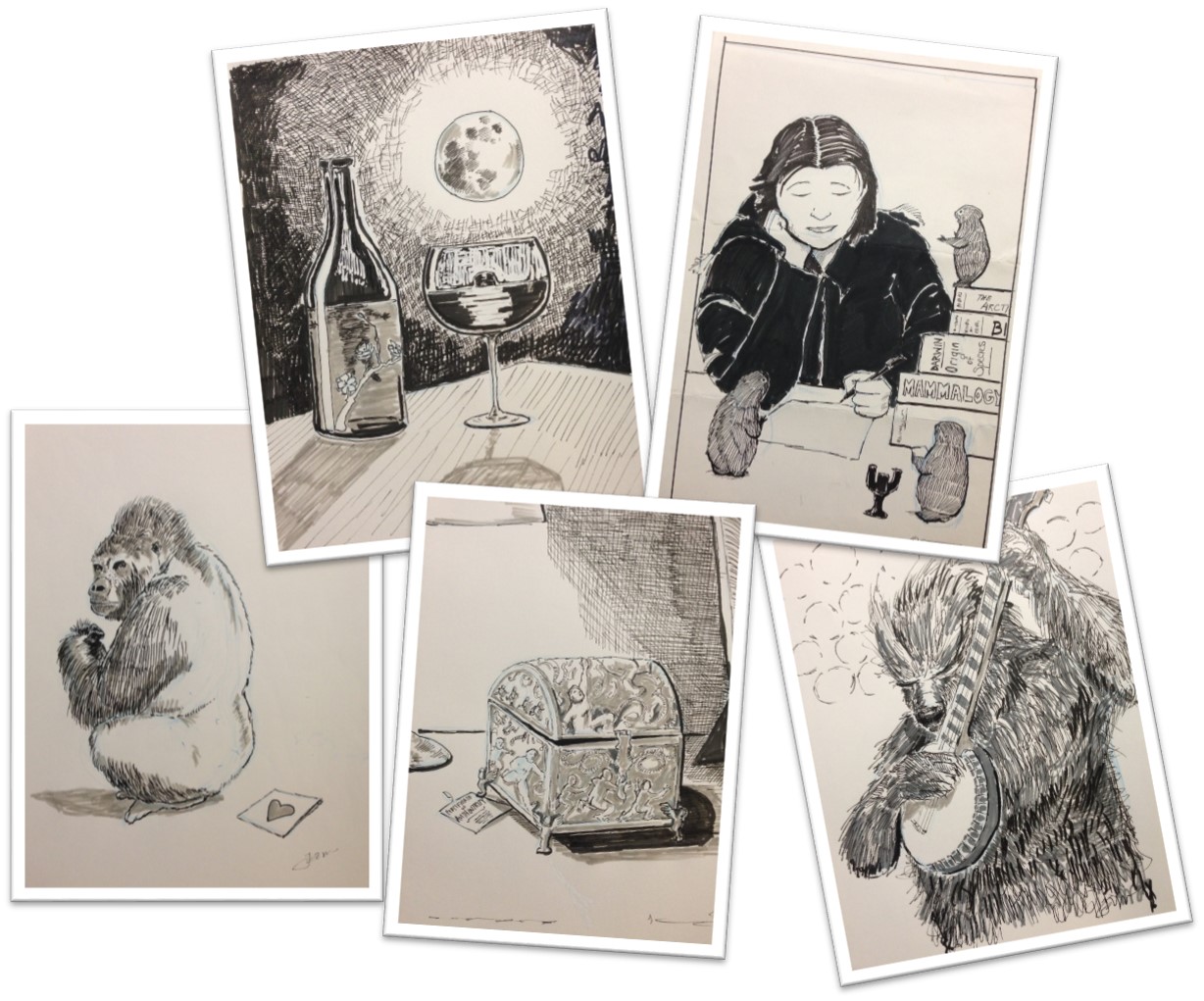
From February, author and artist SE Lindberg reviewed my collection on Booklikes and did an interview with me about “Art and Beauty in Weird Fiction”.

About The Angels of Our Better Beasts, he says, “The variety is great, but Stueart’s keen sense of humanity, and the role art plays in our relationships, is the key strength. Few times have weird fiction actually evoked real emotions.”– SE Lindberg.  Read more of his review here.

Seth also interviewed me for his blogsite–a fun interview about the role of the artist in writing, as well as art in fiction.  I get asked if I’m more a changeling or a chimera!  Also some insightful questions for me as an illustrator.

Assorted Beasts

Check out the interview here.

Thank you, Seth, and to everyone who reviews a book publicly.  It’s about the best gift you can give a writer you enjoy!  Your reviews turn are not just kind words, but they help lead others to our books, and this reassures publishers that we are worth publishing.  That people are reading us and liking our work.  Thank you, thank you, thank you.


“Easily one of the best collections by a single author I have ever read”:Black Gate Magazine reviews The Angels of Our Better Beasts

“Not a single story in this collection disappointed me – which is rare, as I’m sure you know if you read short fiction.” –Brandon Crilly for Black Gate Magazine.

12715744_10153895453277095_8059101292263897684_n2016 World Fantasy Award-winning Black Gate Magazine just reviewed The Angels of Our Better Beasts, and it just made my week!  Wow!
So glad you all enjoyed the book!

Read the FULL REVIEW here.


Interview Round-Up: December-January, The Angels of Our Better Beasts

Been doing a number of fun interviews for the new collection, The Angels of Our Better Beasts.  Here’s a round up so far for the months of December and January!

whitehorse-cbc-north-yukon

CBC NORTH:  Dave White has a chat with me about my new book and the Whitehorse launch of the book here on Soundcloud.


_____________________

wtffbwallp3

WAG THE FOX: a den for dark fiction interviewed me for The Angels of Our Better Beasts.  It was a fun interview!  You can find this interview here.


____________

download

FULBRIGHT:  Fulbright Canada asked me to write a guest blog about how receiving a Fulbright Fellowship to Canada influenced the writing of this book.  Most of that information, specifically how the Yukon helped me develop as a writer, I covered in the interview I did with Jessica Simon. But specifically, I talk here about how important going to another country can be to you—especially if you let yourself be permeated by the culture of that country.  Being open to Canada was the beginning of a great journey for me.


______________________

download

THE WHITEHORSE STAR: I was interviewed by Jessica Simon for the Whitehorse Star about the influence the Yukon had on me as a writer.  We got into some very interesting discussion about who gets to be a Yukon Writer and does that end when one leaves the Yukon?page-4-jan-09_17-1

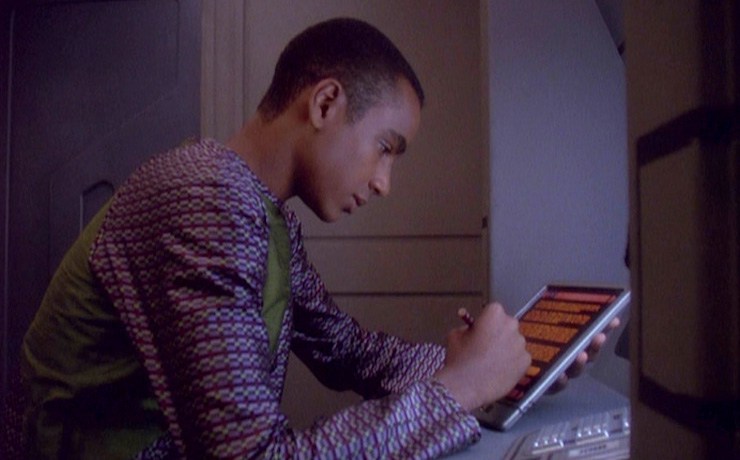
Tor.com published my essay, “What Can We Learn from Star Trek’s Jake Sisko, Writer?”

VERY happy to have an essay up at Tor.com examining the roles of writers in the 24th Century, specifically through the lens of DS9 and Jake Sisko.  By offering us a character who chooses to be a writer in the 24th Century–even among all that technology and science–DS9 puts a value on writing, storytelling, literature even in the future.  We will need writers to understand new cultures.

Hope you enjoy the essay!

ds9-jakesisko

The 24th anniversary of the first episode of Star Trek: Deep Space 9 took place earlier this month. The series took a lot of risks with the “idealized future” of Roddenberry as written into Star Trek’s DNA, adding nuance to Starfleet ideals by incorporating human desires and failings into the narrative. Some praised it for being more real, more relatable; some criticized it for being “too dark” and showing Starfleet in a bad light.

One thing I enjoyed was that in the midst of the Star Trek Universe’s science-and-tech-centric STEM paradise, DS9 showrunners made the captain’s son, Jake Sisko, a writer. We science fiction writers love our astronauts and engineers, but I was thrilled to see 14-year-old Jake developing into a writer and storyteller. They gave him a familiar writer’s journey: he dabbled in poetry, moved into short stories, then novels, and along the way he became a journalist, a war correspondent (echoes of Hemingway and Crane), and published a collection of essays about living under Dominion occupation, as well as a semi-autobiographical novel. By committing to Jake’s arc through the whole series, DS9 brought into broader relief how the series honoured storytellers.

Read the rest at Tor.com.  


My Faith in Werewolves

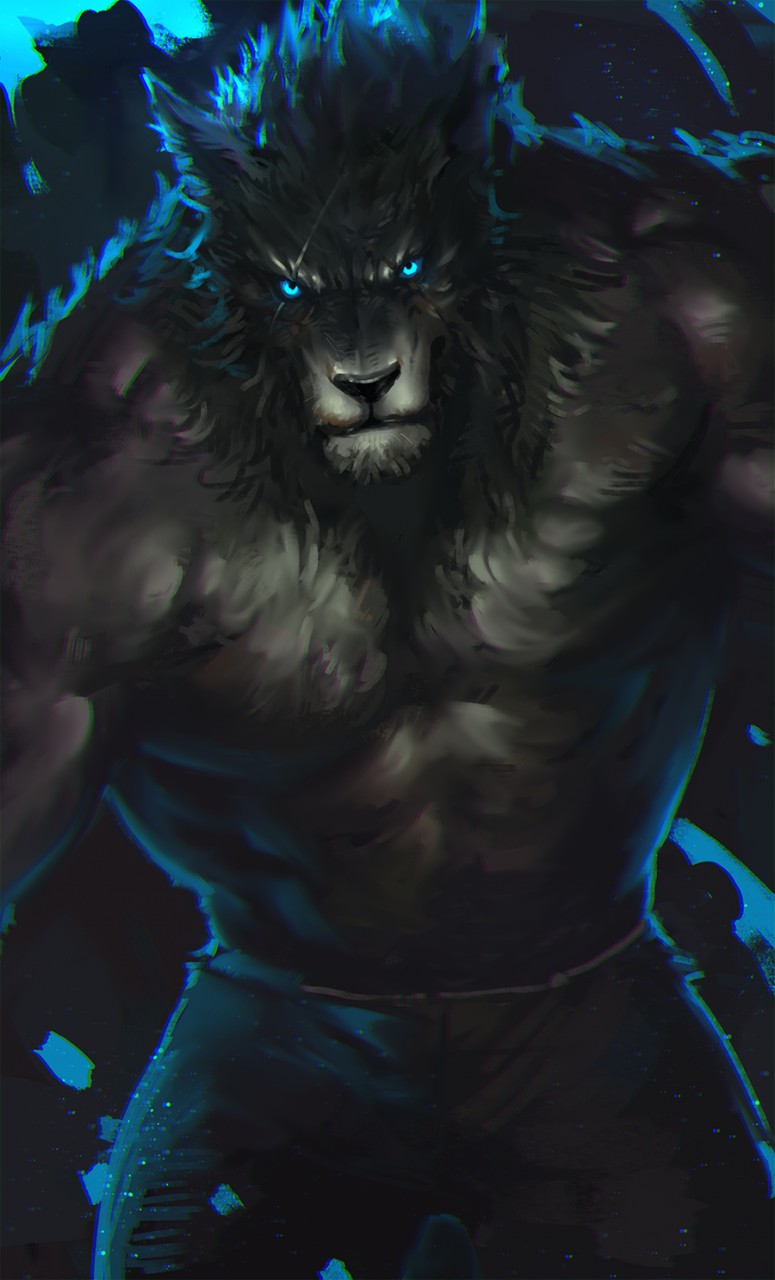
tumblr_nmlov9kobq1s3y6tro1_1280I grew up with a dangerous love of werewolves.  I wanted to meet them.  I wanted to run with them in the woods behind the house.  I wanted them to break into my room at night and kneel at my bed and whisper all the courageous, adventurous things I could become.

I drew pictures of werewolves. I couldn’t help myself.  Especially when I was 14 and living outside of Caruthersville, MO, on the levy by the Mississippi River, where my father was the pastor of a small country church–those pictures came every day into my head and just bled out of my pencils and pens.  Most of these werewolves were kind, masculine, big brotherly, mentor-like werewolves.  I was not clued-in to my head at the time.

These werewolves came, most likely, from my deeply embedded and hidden sexuality, a love for hairy men that I could not understand–a feeling like there was a wild side of me that I must hide away.  But the werewolves at my window were always free.  Free to run.

These werewolves I drew–the first one made me weep as a teenager–there was something important in that picture, something I couldn’t fully understand growing up in my deeply religious environment.  I don’t regret the beautiful years of being deep in that family and faith (and I’m still a big part of my family and faith) but I regret not knowing what that was.  I’d have been a much different person if I had known I was gay at 15 instead of at 34.

I appreciate the magic and wonder my ignorance left me–and that’s a strange blessing to be thankful for, but it’s a blessing nonetheless. Because I could not believe in my sexuality, I believed werewolves were real.  I musta lived under some really awesome bubble of cognitive dissonance for an A+ student to believe werewolves were possible and still understand and love my science classes.  But there I was–a high school student who kept a space open in my brain for the possibility of werewolves.  It’s not so hard to believe.  For me, son of a Southern Baptist minister, I had a world with angel-demon fights, Jesus talking to you out of the air, fiery chariots racing to the sky, resurrecting dead people, talking donkeys–that’s a world where werewolves can happen, too, isn’t it?  That space I kept open–it’s a similar space open for the possibility of miracles, of faith.  So why not a …sorta faith in werewolves?

Continue reading

Launching Beasts in Whitehorse at -32C.

czp-version-of-posterIt was -35C in the Yukon Territory on December 13, and Baked Cafe was still packed. It’s a testimony to great friends I have in Whitehorse and the extent Yukoners will go to support musicians and writers and artists.

I felt so privileged and honoured to launch The Angels of Our Better Beasts in Baked Cafe in Whitehorse, Yukon Territory.  Baked Cafe was like an unofficial office for me for many years.  I sometimes wrote there, but more often I met folks there and talked for hours.  The lattes there are perfect.  I used to order a “Husky Hazelnut” latte–which is a 2% Milk version of the Hazelnut latte.  Instead of indicating I was trying to lower the fat in my drink, though, by calling it “skinny,” I wanted to call myself “husky” instead, which is a nice way of saying, “He’s a big fella.”

Anyway, the Launch. Yes.  So happy to have Marcelle Dube and Steve Parker there to read with.  Marcelle Dube is primarily a mystery/thriller writer in Whitehorse, but she does have science fiction and fantasy stories.  Steve Parker is best known for his Skrelsaga–and we hear he’s working on a sequel.  These two writers have been my friends for nearly as long as I’ve known the Yukon.  So–reading with them, and reading in Baked Cafe was a real wonderful pleasure.

I made a video of the launch–or at least of the parts before we started reading.  I wanted to give you a feeling of what it was like to have friends be there for you in a warm space inside a cold, cold night.  Sarah MacDougall kindly lent her song, “Cold Night” to the video.


My Fulbright experience: Be Transformed

cropped-img_3457.jpgFulbright asked me to write a short piece on how my Fulbright experience affected the writing of my stories, and–as I took it–my development as a writer.  Though the Fulbright was only one year, I stayed nearly 10 years in Whitehorse, Yukon, and go back frequently.  The north deeply affected my writing, and helped develop me as a writer.

In this piece, I encourage people to open themselves, become vulnerable, to another culture–whether it’s a short trip or a long immersion.  Culture, you’re soaking in it.

Be Transformed is up on the Fulbright blog.

For those who aren’t aware of Fulbright–they are a program that allows for an exchange of scholars to different countries.  I went to the far north of Canada.  (I was once loudly laughed at during a phone interview by a prospective college who was looking at my application to become their professor.  They wondered why I bothered getting a Fulbright to Canada.  As if we all have the money to skip across the border and stay for nine months–or as if Canada has nothing to teach us.  Believe me, my fellow Americans, you will be studying Canada in great detail in the coming years. )

For more on Fulbright in Canada, go here. I went on a Creative Writing Fulbright.  If you are currently a student, you can too.  There are also programs for scholars and teachers.

Be transformed by a place—let it sink into your bones.


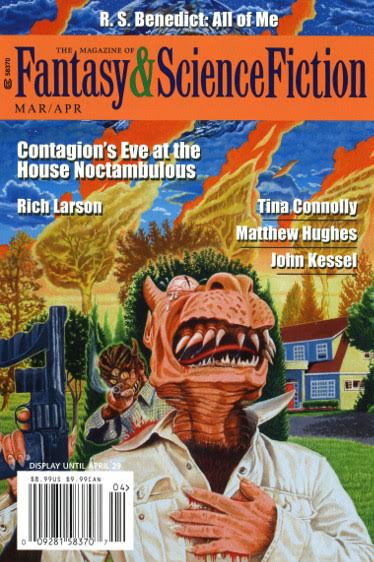
They are queer Lumberjacks, and that’s okay: “A Lumberjack’s Guide to Dryad Spotting” by Charles Payseur reviewed

11884994176_203f040455_z_ink_liThere’s a sweet flashfiction piece by Charles Payseur on Flashfiction Online that highlights something awesome about LGBT writing today.  It deserves a read and a shout out.  “A Lumberjack’s Guide to Dryad Spotting” is probably about 1000 words, but it tells a pretty big story about two gay lumberjacks that goes beyond where I thought the story would go.


Be careful in these woods: SPOILERS AHEAD.  Why don’t you just go read it and come back here.

Good, you’re back.

First, let me say how happy I am to keep seeing LGBT writers in Lightspeed, Clarkesworld, Magazine of Fantasy and Science Fiction, Flashfiction Online, and other mainstream venues even beyond the “Queers Destroy” series, and other special issues.

The story sets us up to believe how valuable Dryads are in this world, that you can monetize their parts and sell them for money.  Our heroes, a pair of gay lumberjacks who are subtle, but not that subtle, in the camp about their relationship, are presented as good lumberjacks: they get there early, they chop down trees.  They do their jobs well.  We are also led to believe that these two men have a dream that requires money.

The narrative often tells us how aggressively hostile Dryads are to humans, and how to find them and collect the money on them.

But along the way, some great narrative magic happens–and the plight of our heroes becomes the plight of the Dryads. And instead of thinking selfishly–using the Dryads to fund their escape into safety–they take the dryads with them.

I love this story because it highlights an aspect of being LGBT that isn’t often explored in fiction: that our persecution does not make us selfishly protect ourselves, but creates compassion towards others who are hunted and persecuted too.  Even though the story establishes that the dryads have a hunger for human blood, and that they can be dangerous and attack, the gay lumberjacks are saving the dryads–in exchange for the dryads helping the couple hide in safety in the future.

“Come away with me,”is a beautiful line because it is so unexpected, and because it deepens the way we understand the main characters.

I also enjoy the shout out to the diversity in the LGBT community—that these main characters are “bears” (read: big bearded hairy gay men).  I also like where this story didn’t go: The other lumberjacks could have “found them out” and hurt them and this would have been a predictable “hurt the gays” story—but the men’s reactions are complex: they both desire the freedom of these gay men to form a relationship, and also have an impression that there is a fluidity to sexuality and the man you are in camp is not the man you are back in the “real world.”  There is a strange allowance for incongruity and a blurriness of masculinity here in the forest.  But, the text still signals the danger the men are in the more the camp fills up with other lumberjacks, and they keep their voices down in the tent, and they smother the openness they had when they were alone.

It helps Payseur make the comparison with the Dryads–who are perfectly fine if no one finds them, but who are in trouble the more the men encroach upon their privacy.  These gay men are not in some gay paradise–they are in an allowed limbo that is incumbent upon tacit ignorance and acceptance–a short-lived window of opportunity.

They use it well.  In the last paragraph, just as you’ve decided these men will use the dryads to fund their escape from this tricky life of masculine conformity, they form a union with the dryads by rescuing them, and, at least in the proposition one of the gay lumberjacks offers, replanting them in a “safe space” with the lumberjacks in their new home.

Perhaps it’s the sense of hope that I love in this piece, and maybe it’s the accurate reflection of compassion over self-interest.  Either way, it’s beautiful.

__________________