Hounded (and Happy) in the Yukon Woods

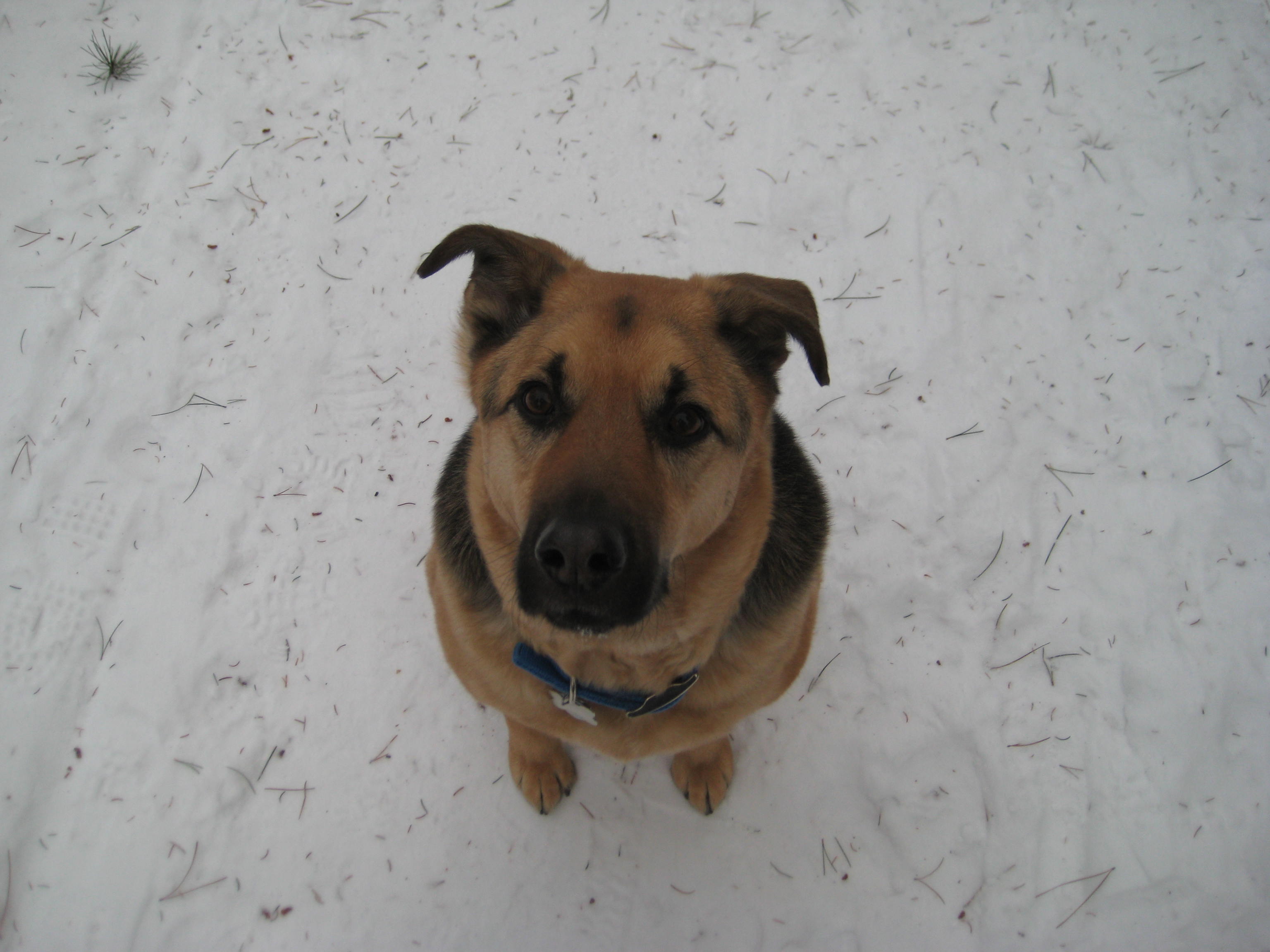
I can’t tell you how much I’ve enjoyed sitting a house with a dog over the holidays.  I got to spend two weeks with a fine German Shepherd named Qimmik.  He’s about 5 years old and over the last while we’ve bonded.  How do I know this?  He wants to go on long walks with me, but he doesn’t run that far ahead.  And when I get out of breath–dang hill I had to climb–he walks slowly ahead of me and turns to check on me, leading me back home.  He even waits till I catch up with him.  

He’ll greet other dogs—very friendly–but he’ll stick close to me, and walk beside me most of the time.  He protects me from being too “hounded” –but in a way, I like being “hounded”–encountering dogs in the woods that greet you, as if they are the doorgreeters.  And with Qimmik, I’ve become permanently “hounded”.  And this is a good thing.  

I LOVE dogs.  I want a dog.  And I love their company.  This one is a great companion.  I wish he could talk, honestly.  So I could understand what he wants.  But sometimes he just wants to be with me.  

When I get home he’s wound up like a top–runs, gets excited, out of breath, jumps!  So we go on a walk right away.  And he also sleeps in the same bed, down at the bottom of the bed.  He breathes at night, and he sighs really big if I’m turning over too much.  I like his company and the structure he gives my day.  It’s too bad that I have to give him up on Wednesday.  

There’s a great culture of dog owners in the Yukon–nearly everyone I meet has a dog or two or three….  And everyone walks their dogs in the woods, so you meet lots of people.  

I did make this video, my first iMovie, of Qimmik and I walking each other on Christmas Eve.  I made it as a gift for a dear friend, Susan Zettell, who let me sit her house 8 years ago, with her dog, Misery.  It was a wonderful time.  

In the video, it’s mostly him in the woods.  I set it to Bon Iver’s “Woods” a song that builds and builds with the same four lines:

I’m up in the woods

And I’m down on my mind

I’m building a still

to slow down the time.  

                                         —until there are multiple voices, multiple harmonies.  I’d like to slow down the time and enjoy the season more, enjoy the moment more, enjoy just being in the woods….

Hoping you get “hounded” this year, and you enjoy being “hounded” by the four footed friend that loves you most.  (Okay, even you catted people count….or are you felined….)  

Be Hounded and Happy.

Rocketfuel Ignites Imaginations, the Yukon News story on my class


Photo by Ian Stewart for the Yukon News

My most excellent class of writers is the subject of a Yukon News article below.  These writers are an awesome group of imaginateurs.  I’m impressed, especially, with how they conducted themselves in an interview–thoughtful, insightful, well-read, interesting and interested in each other.  Love to start a book club with them!  

Article is by James Munson for the Yukon News.

_________________________________________

Zeb Berryman has some demons he’d like to share.

The 18-year-old scribe is an aficionado of the “dark side” in his literary circle, a dozen Whitehorse high school students known as Rocket Fuel.

“The darkness and violence is what makes it beautiful,” says Zeb, referring to one of his current anime reads.

Zeb’s comment elicits a few nods from his fellow science fiction enthusiasts sitting around the table in the FH Collins library.

These young adults have an encyclopedic knowledge of the fantasy genre, and can discuss the intricacies of alchemists, monsters, gods and goblins at length.

“It’s like literature discussion about a whole bunch of books you never get to hear literature discussions about,” says Jerome Stueart, a science fiction writer who started Rocket Fuel two years ago.

But more impressively, it’s their own literary creations they’re the most familiar with.

Ask any one of these students about their works, and it won’t be long before another interjects.

Franz Krabel, 12, tends to kill off his characters a lot, says Santana Berryman, Zeb’s 14-year-old sister.

Santana, for her part, has an obsession with the afterlife, says Stueart.

These writers know each other inside out.

Read the rest of the article

The Bishop’s Wife and the Inclusive God

One of my three favorite Christmas Movies and the last one I’ll blog about this season (I did the other two–It’s A Wonderful Life and The Snowman last year) is The Bishop’s Wife.  There was a remake in 1996, The Preacher’s Wife, with Denzel Washington and Whitney Houston, and it has its own merits.  But this post is about the original with Cary Grant, David Niven, and Loretta Young.

Grant plays an angel named Dudley who has come down to help out David Niven, the Bishop of the title.  The Bishop is seeking funding for a great cathedral he is building for God.  He’s run into a bit of a roadblock in the name of Mrs. Hamilton, a rich woman who won’t pony up her million unless her late husband is prominent in all the plans–making this more of a memorial than a cathedral.

What I like about this film–even though it is obvious that this film came after It’s a Wonderful Life and borrows a few tricks (and actors) from it–is that Cary Grant plays the angel as a very inclusive, open minded angel.  In fact, he seems to want to show us a God that is less condemning and more loving.

Dudley becomes good friends with an atheist professor–who finally, yes, does darken the church door, but it’s not because Dudley has prompted him.  In fact, Dudley seems to have fun turning the professor’s sherry into an endless bottle of sherry (recalling Christ’s miracle of the water into wine….”and good sherry at that!”).  Dudley also sees a palm reader, and instead of condemning her, he tries a little palm reading on the Bishop’s Wife.  Dudley knows Santa Claus and tells people.  In fact, Dudley seems to embrace all people where they are in belief, without sacrificing his angelic qualities.  And he’s not embarrassed by them.  He certainly doesn’t shun them.

Dudley even plays a bit devilish with the Bishop, by purposely dating the Bishop’s Wife to anger the Bishop into realizing what he’s got.  He basically gives the Bishop a choice–he can either represent the Bishop in these “important” funding meetings, or represent him with his wife.  Since the Bishop refuses to let the angel represent him at the meetings, naturally Dudley takes up with Loretta Young.  And they go out to the restaurants, and skate on the pond, and shop together…and the Bishop’s Wife loves it.  She blossoms.  She does not fall in love with Dudley.  In fact, Dudley almost plays the gay best friend here—almost a non-sexual male counterpart, who is nonetheless, doing all the romantic things that the Bishop should be doing, but isn’t.  The Bishop doesn’t see him as a threat, at first.  Until Dudley makes a pass….

Some great lines:  “No one expects him to be normal!  He’s a bishop,” says the maid.

“The only people who grow old are the ones who were old to begin with,” Dudley to the Bishop’s Wife.

And Dudley’s quote about mankind is really interesting and makes my point about his inclusiveness:  “We all come from our own little planets.  We’re all different.  That’s what makes life interesting.”  He loves the atheist professor, Santa, the palmist, the Bishop, the maid, everyone he meets–equally.  He thinks no more highly of the Bishop for being a bishop than he does the professor or the maid.  He has no judgment, no arrogance, no religiosity.  He is an angel outside of our religion.  And that may speak to a host of borders, boundaries, and restrictions that we put on our version of God.  And yet, Dudley’s fully believable as an angel of the God I know of.

It’s just unusual to see on screen–a lovable Christian man without all the harumph, all the damnation, all the trying-to-be-good.  He just is.  And that’s a bigger point than what David Niven learns.

If you get a chance, rent and watch The Bishop’s Wife.  It’s an under-appreciated Christmas Classic.

Fantasy-Filled Young Readers Give the Season Imagination

Rocketfuel, the youngest group of science fiction and fantasy writers in the Yukon, showcased their own writing (and art and music) Dec 4th at the Frank Slim’s Building at Shipyard’s Park.  It’s a nice venue with a roaring fireplace.  Makes it cozy.  Snacks were had, parents were entertained.  Must have been about twenty people there.  

About the readings–wow.  Okay, I know, I’m biased, but even I was blown away that night.  My boss, Mia Lee, was also amazed.  And the parents were too.  The writing was great, and fun.  We had readings about a day in the life of one of the heads of Cerberus, an alien abduction, a psychiatrist who knows a bit too much about Hell, an amulet that everyone wants, and other writings of imagination. 

Even the parents got to play when we brought out Justin Whitney’s patented Story Seeds, guaranteed to jump start a story, and starting playing the game around the room.  

I’d like to thank all those students in our Rocketfuel afterschool writing program–Franz, Hal, Santana, Zeb, Kylie, Erica, Kalyna, Renyka, Aubrey–and our emeritus writers Ashley, Bailey and Victoria.  We really do believe that writing contributes to the well-being of a young adult, and that fantasy and science fiction are part of our culture–a vivid part–that contributes to our cultural identity.  It can also change the way we see our world.  

Every culture holds dear a story that has supernatural elements in it, and this story defines and contributes to that culture.  Someone had to write about the dragon, Grendel and his mother, chomping on knights in the King’s Hall, or a Monkey to bring back the wisdom from the West, or captured a Djinn in a lamp, or brought a people across a sea split by the hand of God, and someone defined vampires, werewolves, ghosts and the Devil for a culture that enjoyed hearing the dark stories as much as the light ones….  Fiction even changed the way we celebrate Christmas. When our young writers write fantasy they are contributing to a long line of fantastical stories–to explain their world, even as they live in ours.  

The Young Author’s Conference understands this, and every summer, when the writers gather with our high schoolers, those writers read the works of our kids and at least half of them are fantasy and science fiction.  It’s important to develop a vivid and detailed imagination.  This is how adults solve problems—by imagining the solutions AND how to get there.  

Watch for the Yukon News article on Rocketfuel on Dec 23rd!  Woo-hoo!  

In January, TWO Rocketfuels start back up after school.  One at Porter Creek on Tuesdays and one at FH on Wednesdays.  If you think someone in your family might enjoy this, sign up through the Parks and Recreation, City of Whitehorse Leisure Guide or by calling Mia Lee at 668-8327.  

Treats, Beverages, and a bit of Fantasy, Shipyards Park, Fri. Dec 4

Students who are a part of Rocketfuel, the science fiction and fantasy writing group afterschool program–sponsored by the City of Whitehorse–will have a reading Friday night–TOMORROW–at Shipyards Park.  They’ll be reading from some of their current work.  There might actually be a story of Santa Claus meeting the Reaper…you never know.  

THE DETAILS:

Shipyards Park

Friday Dec 4, 7-9 pm.  

Treats, goodies, beverages like tea and coffee, and a bit of Fantasy to go home with and share with your season….

If you’re free tomorrow night, come by.  We’d love to have you.

The Thrill of Deadlines, and How to Meet Them Alive.

(Corrected: eliminated all the bad advice about the two week story)

That race to a deadline is fun and satisfying.  It’s a test to see if you can pull it off, get that story done and out by the time that clock strikes.  But you have to plan ahead, or else you’ll be turning in bad stuff, or stressed so much you miss the deadline.  

Douglas Adams loved deadlines too.  “I love deadlines.  I love the whooshing sound as they shoot past.”  

New Scientist says your heart attack risk rises six times normal at the approach of a stressful deadline.  

(But they also list sexual activity as a precursor to heart attack, and who wants to cut that out??)

My history has been spotty on deadlines.  I’ll admit, like Adams, I let them reluctantly whoosh past me, relieved at the amount of stress reduction they can have when they do leave—or when the professor gives you another day, or another hour—but this has not been good for me in the long run.  Always hoping that I’ll get an extension on a deadline has made me think that anyone will give an extension.  And this is not the case.  

I remember when I got my story in to an anthology Claude Lalumiere was editing at like 12:40, forty minutes past the deadline.  He said, no!  Holy cow.  I thought that he was a stickler, but I’ve learned this is standard practice.  Not everyone will give you an extension, and no one is obligated to.  There has to be a cutoff time.  Chaos can ensue.

And really, it’s bad form (Jerome!) to ask for extension on deadlines outside of real emergencies.  I’ve done that once in awhile, and I’m very happy for those who accommodate me.  But that puts them at risk.  An editor I know once had a rule about her deadlines: “Never tell the author the REAL deadline.”  She always told me a false deadline, in advance, knowing I would push it.  She actually had three false deadlines (one day I pushed through nearly all of them! eek).  But this was a magazine deadline, not a submission one.  

Submission deadlines are part of life.  They should be hard.  They make you plan better, and I think, increases the thrill without increasing bad stress if you aim accurately for the deadline.  

I can’t wake up two hours before a story deadline and think I’ll be able to pull off a winner: I’ve tried writing stories too close to the deadline, and I get bad stories.   But when I’ve had a story go through revision about six times and then I spot an anthology deadline, it really makes me polish well.  And a polished story, even if you send it in 17 minutes before midnight, still feels great!   

My heartfelt applause goes out to all those who made it by Tesseracts 14’s deadline, and the man who made it by the stroke of midnight!  WOO-HOO!  

How to plan ahead for deadlines.  Okay, I should preface this with the following disclaimer: I don’t write stories in two weeks, not normally.  And so I can’t tell anyone to write a story in two weeks.  A lot of my stories have been through lots of drafts, some over years, to figure out what the dang things are about.  But there are a few tips I have to think about when I’m writing towards a deadline.  

I go backwards from the last thing I have to do and count that as time I need.  So I save enough time for the spell-checking, the last minute editing, the spit-polishing.

I also try to save enough time for multiple drafts.  My worst writing comes out in the first draft, usually.  Bad, stinky writing.  So, you have to save time for yourself to redraft and rethink your story.  How long? I don’t know.  Sometimes, if I’m doing nothing but writing, a few days.  But this doesn’t count the thinking time in between a first draft and the multiple drafts that come after.  I’m working on a story right now that started life in 2002 as a 2500 word short story.   Then it had another incarnation in my dissertation as a 7000 word short story and now, in 2009, well, it’s getting another draft.  Not everything takes this long—but some of ’em do.

A week is only enough time for me to get an adrenaline draft—that first idea that you run on a pretend course to get to some conclusion.  Like a pace car.  But that isn’t time to see all the layers, the themes, etc.  It’s barely time to get the first draft out of your fingers.  

The ideas take longer:  you’ve been mulling over a cool idea, or have a vision of a great scene, so you’ve been jotting notes…this can take as long as it takes before it gels enough into a story.  Normally I won’t count this in the time I need.  If it hasn’t gelled, it’s not ready for a story.  

Your timeline will be different, but know where you are in the course of your writing, and what your normal speed to write your best story, in order to know how to plan for a deadline.  I remember a story not too long ago that I planned too short a time for….. and all I got was a nice first draft out of the story.  Yikes!  So, now I get to go back and give it work and it will shine!  

Thomas Jefferson had his deadlines too.   This quote from the Independence Visitor Center in Philadelphia:  “Thomas Jefferson wrote the rough draft of the Declaration in only a few days? He spent a period of two weeks refining it and even gave a copy to John Adams and Benjamin Franklin for their review.”  I’m no Thomas Jefferson, but I’m imagining he was under a tough deadline and had to get it right.  

Know your writing speed, and count backwards from the deadline.  Then you’ll be alive when you cross it.  Really, really alive!
MAD goes into Outer Space for Halloween

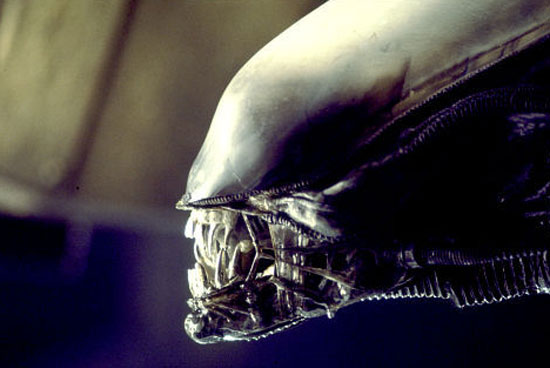
alien1Kudos to the kids of MAD (Music Art Drama) for their Haunted House this year, with its, yes, SCIENCE FICTION theme.  I won’t give anything away, but it’s a lot of fun.  

I didn’t know what to expect, but I was pleasantly shocked.  I really enjoyed the opening number with their rendition of “Science Fiction/Double Feature” and the old movie posters and clips through that number!  Brought back a lot of good memories.  

My advice is not to come too early because you’ll be sitting for a bit.  Come closer to the times they let people in: 1:00 and 2:30 on Halloween.  

You have a hard choice–whether to go through the line and into the haunted house, or sit and watch some cute homemade films from the kids.  I say, stay and enjoy the films at first; the haunted house will be there, so you don’t need to be in line up front.  

I won’t tell you what’s in the rooms, but they’ve done a good job at recreating some of the frights of space travel that have been highly “documented” in science fiction…and playing them for all their worth in front of people.  

I just want to tell the kids: You got me back for scaring you.  The rooms are excellent.  I left wanting more rooms.  There’s some nice originality in these scenes.  I love the Observatory!  But it was the room with the synchronized bodies in it that freaked me out….  The use of the scrim on the stairs was a nice, scary touch, too.  What the MAD kids seem to know is that it doesn’t matter if you show all the details…they leave a lot un-shown, and that’s what frightens you.

Five Dollars will get you a good scare!  Go out and support these high schoolers from MAD.  They’ve done an awesome job. 

And thank you, Jeff and Mary, for thinking of Science Fiction when you think of scary…

Flash Mobs as Fantasy Writing: Some Tips from Mobs

Who doesn’t love a flash mob suddenly breaking out and dancing?  Below are many examples of the Flash Mob, some of my favorites.  I wonder if they could be called Fantasy Writing, in a sense.  A collaborative work that changes the reality of those watching into a fantasy version of reality.  It’s more honestly described as theatre—probably Guerilla Theatre,  and certainly it is based on “musical reality” where tough gangsters in Guys and Dolls dance, or thugs in West Side Story snap their fingers.  But I think the Flash Mob which has really gained popularity has a more recent common ancestor.

A film called, The Fisher King, starring Robin Williams and Jeff Bridges.  In that film, there’s a sequence where all the walking people in Grand Central Station suddenly turn into dancers.  It’s the essence of Flash Mob–to create a dream sequence.  It’s such a stunning moment that I often see it in mash-ups of film retrospectives.  And the fact that modern flash mob dance sequences take place in large public spaces–like Grand Central–nods, at least a little to “The Fisher King.”

Here’s the Fisher King sequence, and then following it a selection of some of the most entertaining Fantasy moments you’ll find, this side of Reality.  Following that is a short selection of tips I think Fantasy writers can pick up from Flash Mobs.

Fisher King dance at Grand Central Station

Michael Jackson tribute in Stockholm

Oprah and Black-Eyed Peas

Frozen Grand Central Station (the opposite of Fisher King)

And for more of Improv Everywhere–they do musicals in grocery stores and much much more!

What tips can Fantasy Writers pick up from Flash Mobs

1.  They know what their audience expects, and they do the unexpected.  Grand central is supposed to be busy and chaotic–but not when it’s choreographed or frozen in place.  Fantasy writing wants to both fulfill desires and offer something new.   If you have a dwarf, an elf, a ring….uh….we know what might happen, we know what could happen, and we may not wait for anything surprising TO happen.  Shrek and Princess Bride play off expectations.  They successfully surprise and entertain their readers—but they are parodies.  Creating completely surprising fantasy realms–with new creatures, new settings, no medieval setting–can also surprise a reader and make him or her want to read.

2.  Flash Mobs bring joy to their watchers, or a sense of wonder, by giving the mundane new life.  Subway commutes, catching a train, buying groceries–now that’s a list of first dates I wanna go on!  But if you give the mundane a new sense of wonder you can re-vitalize something that was boring.  Wish they’d do that with filling out registration for car insurance….  Fantasy writing can take the ordinary and make it amazing.  Look at how exciting a compass got in The Golden Compass (yep, an alethiometer!), or CS Lewis transforming a game of hide and seek in an old mansion on a rainy day, or tornadoes in Kansas….  Find a way to take something ordinary, an object, an action, and give it new meaning, new wonder.  Honestly, I want reality to be a little more like fantasy, a little more like a flash mob.

3.  Flash Mobs are Choreographed.  They look spontaneous!  But in reality, a lot of effort was put in to make them look effortless.  Same in writing.  In writing, you guide the reader’s experience.  It requires you to be more calculating and choreagraphical than maybe you’re used to, but that’s what an interesting plot is.  Imagine if the dancers in these sequences had done boring moves…  Plot is choreography–telling your reader where to move, and what to watch….

4.  But everyday flashmobbing would become boring.  If you saw this happen all the time, you’d start to think this was reality, and ignore it.  It’s the unusual nature of a flashmob–the sudden coming together of people doing the same thing–that makes it unique.  It has to stay unusual to escape being usual.  What does that mean for fantasy writers?  That we should only create one thing— nope, but variation is important.  If you only do one kind of thing, dragons, let’s say, then your reader may eventually become bored with what you’re doing–even your interesting fantasy might become mundane.  Imagine ten more books of Harry Potter.  HP had to have a story arc that encompassed a certain number of books.  Plan that arc, and then, it’s over.  Else you get a Wheel of Time that keeps on spinning.

Good fantasy writing changes reality—and ripples into your reality forever altering it.  

Okay, I could be analyzing too much.  Enjoy the damn flashmobs and stop thinking of writing….  Oh, look, over there, it’s a whole collection of random werewolves doing Bollywood!  Made you look. 

Deadline Nov 30 for Tesseracts 14: Canadian Sci-fi and Fantasy Stories

from Woodleywonderworks on FlickrA reminder to all those thinking about submitting your short fiction (limit 7500 words) to Tesseracts 14, the latest in the series of anthologies featuring Canadian science fiction and fantasy.  It doesn’t have to be about Canada, or about the north.  Basically they are anthologies of Canadian writing.  (Okay, and a few stray Americans or other Nationalities who have immigrated to the fair shores of Canada)

Personally, Brian Hades, publisher of this series, would love to see greater representation of Canada in the anthology.  So, the Yukon needs to put out!  Haha.  Seriously, if you have fiction that strays just outside the everyday reality, consider submitting to Tesseracts 14.  Let’s wow Brian with Yukon writers!

More information at my previous post here:  Tesseracts 14 Open for Submissions

Kluane Lake Research Station Radio Series

Donjek, myself and Ruth Klinkhammer at KLRSI did a nine part radio series on research and science out at the Kluane Lake Research Station this Summer.  It was under the auspices of the International Polar Year and the Arctic Institute of North America (AINA).  AINA and Ruth Klinkhammer did a great job at compiling and showcasing my work at the Station and they set up a page of my radio series.  

If you’d like to listen to some of the fun that I had this summer with the gang at KLRS, stop by this website and check out the broadcasts.  

FOCUS ON RESEARCH:  KLUANE LAKE RESEARCH STATION

Who’d have thought they’d hire a science fiction writer to write about real science?  It taught me a lot, though.  And what I learned there will stick with me for a long time.