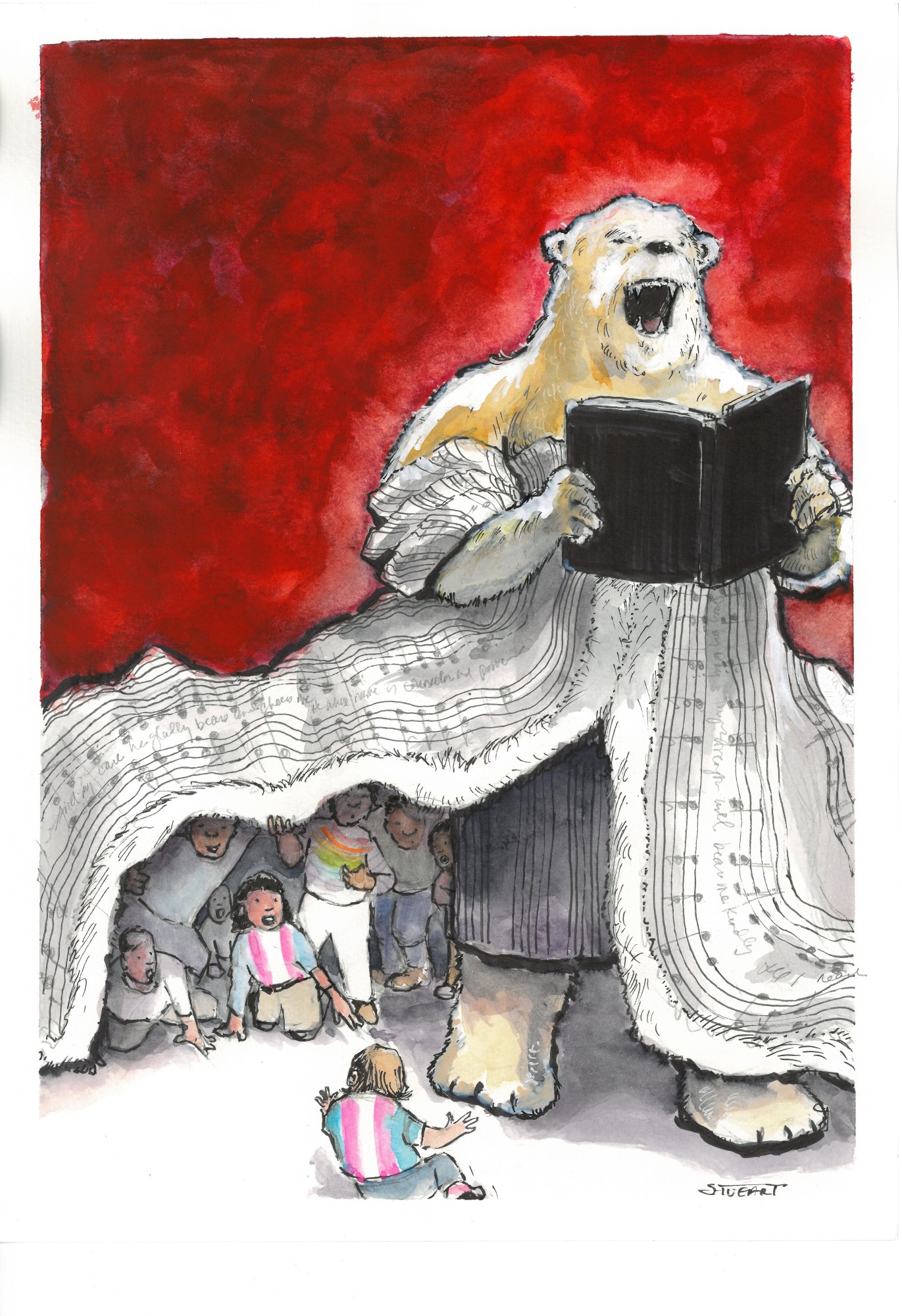
Day by Day, He Gladly Bears and Cheers Me

When I came out in 2009 to my church, it did not go as I’d hoped it would. But it was music that strengthened me. According to Hymnary, a database of all hymns and hymnals online, there are 6,165 bears in hymns that have been used in Christian churches. They might be “bearing the cross” or “bearing one another’s burdens” or ask us to help them “bear the light” or ask God to “bear us safely over.” Many hymns sung every week have a bear in them. Because I identified with the “bear” community of gay men, I felt like this was a little love note sent by God every Sunday to strengthen me, and so I would sing the hymns as I always would, but I’d be extra loud and strong on the word “bear.”

I’ve mentioned before that I had some leftover grief from that time fifteen years ago, some that bubbled up while I was watching Star Trek with Joey one night. I cried so hard and didn’t know why. I thought I’d worked through all of that years ago. So I went on a journey to find healing. Part of that journey involved creating 9 paintings that I want to share with you. They are images crafted by grief and pain and hope. I did them intuitively, just listening to what my heart was upset about, what it wanted to say, what it wanted to see. I discovered all these protective, strong bears were still there in my head and heart. Many of these paintings surprised me, but they also make my heart glad to see them. And I’m glad to start sharing them with you. I hope they make you glad too.

Originals and prints are available in the comments.

“Day by Day, He Gladly Bears and Cheers Me,” (11 x 15) Jerome Stueart, watercolor, mixed media on paper.
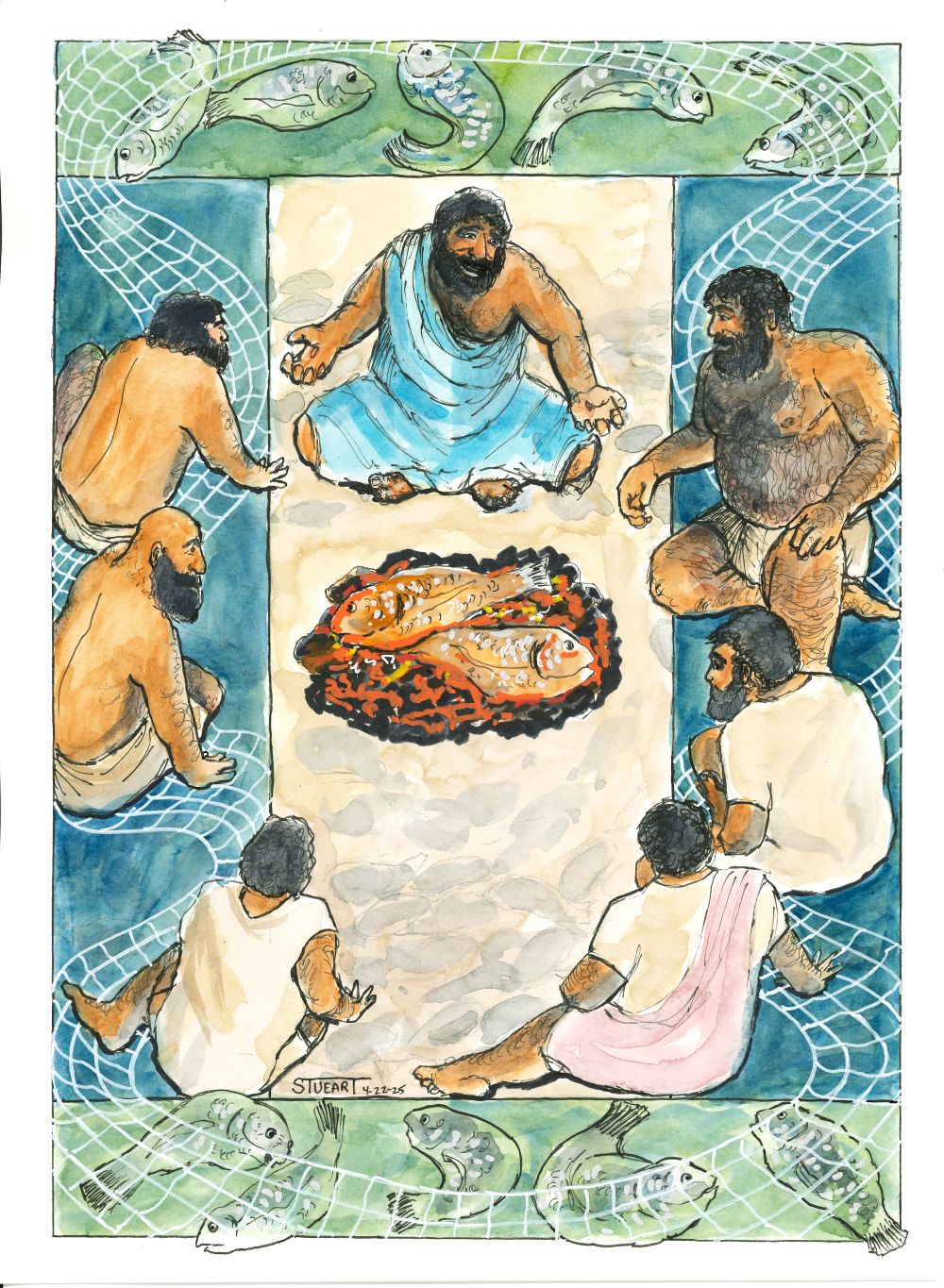
A Healing Breakfast on the Beach: Jesus and the Restoration of Peter

Peter learns to forgive himself.

“A Healing Breakfast on the Beach (After Easter Series),” Jerome Stueart, (11 x 15) watercolor and mixed media on paper. 4-22-2025.

A good meal can heal us.

This is a depiction of a beautiful story (John 21) of Jesus, after he comes back from the dead, visiting his friends. It’s not unlike stories from friends I’ve talked to who have had someone pass recently. Stories of healing conversations with loved ones who have died. These stories have a similar theme, though maybe they didn’t see their friend quite so “in the flesh,” but the idea of a healing conversation still rings true and is common. We need to have old wounds resolved and healed after someone dies. Part of grieving is healing wounds that we might be keeping alive inside ourselves.

Continue reading

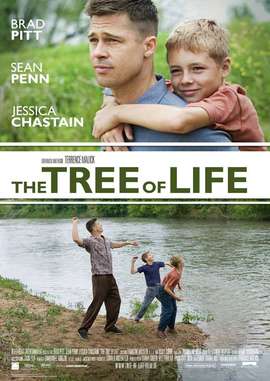
“Where were you?”: God and Grace in Terrence Malick’s The Tree of Life

It is a beautiful thing that the Yukon Film Society was able to bring us “Tree of Life” through their new Available Light Cinema incarnation at the Yukon Arts Centre once a month.  Even more amazing was the swiftness.  Whitehorse is not known as the place where new good films come quickly–but the YFS have almost bridged the gap between us and Seattle.  Tree of Life was handed the Palme D’Or in May, and we have it in September.  I’d say that was pretty darn fast. It shows again on Wednesday night, Sept 14 at the Yukon Arts Centre.

The Tree of Life is many things to many people.  The film doesn’t concern itself with a complicated, or even clear, narrative.  It has a simple one.  At the opening of the film, the death of brother/son sends the characters reeling.   What follows is a montage of scenes recalled from the mind of a surviving brother, now grown up (Sean Penn) as he tries to figure out what happened to “allow” this death in God’s great scheme of things.  The Tree of Life, for me, was a calling out, a plea, a requiem to God for our personal tragedies–asking many times of God, Where were you?  Why did you let this person die?  Was he a bad person?  The film is loosely tied together with scenes from a Texas childhood–a paradise of sorts–with a scary center, a frustrated musician father (Brad Pitt) who takes out his anger, at having to put away his music, on his three boys.

There’s a lot of whispering in this movie.  Be careful when you cough.  You’ll miss them.  Often the whispered pleas begin with “Father” or “Mother” or “You”— as the man, who speaks as the boy, tries to figure out whether he was more worthy of death than his brother.

God appears in this movie, but not as Christians typically think of him–he is a bit distant, but consistent with the book of Job.  There is the other “Where were you?” to consider:  the movie opens with an epigraph from Job, asking Job–in the voice of God–“where were you when I created the heavens and the earth?”  And there is stunning cinematography that takes a viewer from the beginnings of creation through to the moment the son is born.   Through this, the pleas and the questions cry out— “God, are you there?” plays over a volcanic planet being birthed.  The magnitude of the event of creation overshadows the magnitude of the personal tragedy.  It is almost as if Malick is answering for God: I was worried about much larger things.

But to make that the only statement Malick makes would be to miss his emphasis on the importance of love and forgiveness in the face of the cruelties of life and death.

Continue reading