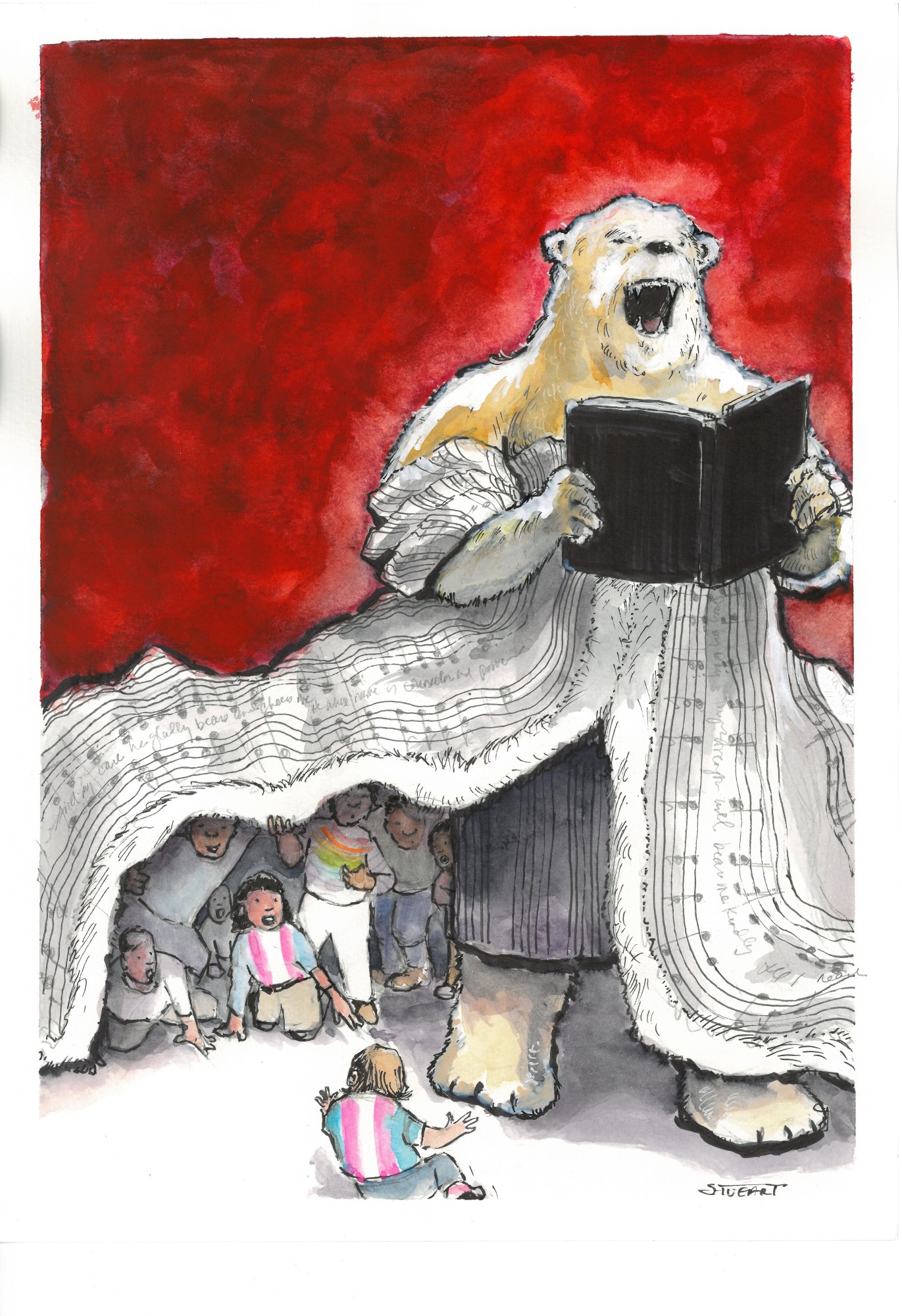
When I came out in 2009 to my church, it did not go as I’d hoped it would. But it was music that strengthened me. According to Hymnary, a database of all hymns and hymnals online, there are 6,165 bears in hymns that have been used in Christian churches. They might be “bearing the cross” or “bearing one another’s burdens” or ask us to help them “bear the light” or ask God to “bear us safely over.” Many hymns sung every week have a bear in them. Because I identified with the “bear” community of gay men, I felt like this was a little love note sent by God every Sunday to strengthen me, and so I would sing the hymns as I always would, but I’d be extra loud and strong on the word “bear.”
I’ve mentioned before that I had some leftover grief from that time fifteen years ago, some that bubbled up while I was watching Star Trek with Joey one night. I cried so hard and didn’t know why. I thought I’d worked through all of that years ago. So I went on a journey to find healing. Part of that journey involved creating 9 paintings that I want to share with you. They are images crafted by grief and pain and hope. I did them intuitively, just listening to what my heart was upset about, what it wanted to say, what it wanted to see. I discovered all these protective, strong bears were still there in my head and heart. Many of these paintings surprised me, but they also make my heart glad to see them. And I’m glad to start sharing them with you. I hope they make you glad too.
Originals and prints are available in the comments.
“Day by Day, He Gladly Bears and Cheers Me,” (11 x 15) Jerome Stueart, watercolor, mixed media on paper.
Bear Witness to Your Body: A 31-day Writing and Art-Making Journey towards Body Positivity
Body positivity is ultimately a personal journey, but it doesn’t have to be done alone.
Join us for Daily Art-Making and Journaling Prompts, 2 ZOOM Workshops, readings, affirmation, and motivation, with a Discord Channel to meet others on this journey, all designed towards discovering and loving your (and every) body.
Daily prompts, October 1-31 ZOOMS: Saturdays, Oct 5 and 26 — 2-5 pm EST
$120 –or $30 a week
We are given myths and distortions about our bodies, our sexuality, our desires from many places: our society, our religion, our parents, our significant relationships, our experiences. These are messages and myths we then “embody” and take with us. Our bodies “don’t belong, don’t fit in, take up too much space.” Chairs are not big enough, clothes are not affordably made to fit us, airplane seats, theatre seats cannot contain us. We are continuously asked to control and contort our bodies. Or perhaps our face is not what others want to see, or our hairstyle, our fashion—not acceptable. We are too short, too thin, to ungainly, too much– and while we try to fit in, we “fail” to hide ourselves enough. What is an acceptable body in public? In private? What’s acceptable sexual behavior? How has an unspoken need for acceptance shaped our ideas of our body? How do we begin to own, respect, and love our bodies again?
We are already given plenty of ways to think about our body–but we need to see those body image messages, confront them, and replace them with true, accurate concepts of body image through our own study.
***
Often, it takes a lot of work to reshape, re-craft our physical expectations and embrace our unique bodies, genders, sexual expressions. We must change our eyes, our perceptions, our beliefs. One way to re-vision our bodies again is through art-making– painting, sculpting, music, dance, writing, photography, etc. I wrote about this in my essay, “A Fat Lot of Good That Did: How an Art Studio Transformed My Eyes,” originally published in Fat & Queer: an anthology of Queer and Trans Bodies and Lives (eds. Morales, Grimm, Ferentini. Jessica Kingsley Publishers, 2021). I learned a lot about my body and myself through art-making, through photography, and later through daily watercolor art. That daily practice also improved my art making skills, and my body acceptance, tremendously.
This class will take inspiration from Classical Art to contemporary art, from Bouguereau to Boudoir. Daily, you will be invited to create art with a pen, a brush, a camera, with writing, or song, or dance, to understand the body you have better, to understand others better, and possibly to understand ourselves better.
We can bring JOY back to our bodies and our minds.
Based on the concept of thirty day art challenges to improve skills, you will receive email prompts, from October 1-31, with links that lead to our Discord channel—with a piece of classic or contemporary art and a short reading and prompt, asking you to think about the art, or the story surrounding the art, and inviting you to choose a way to creatively express your response to the prompt—through making art, photography, or writing (or dance, song, etc.). When you are finished with this month, you will have 31 expressions that you created that are in direct response to your personal exploration of bodies. You do not have to use yourself as a model.You do not have to share anything private that you are not ready to share.
(TW: this essay contains frank discussions about sex, sexuality, body image, religion and being queer.)
(a previous version of this essay originally appeared in Fat & Queer: An Anthology of Queer and Trans Bodies and Lives, ed. Morales, Grimm, Ferentini. Jessica Kingsley Publishers, 2021.)
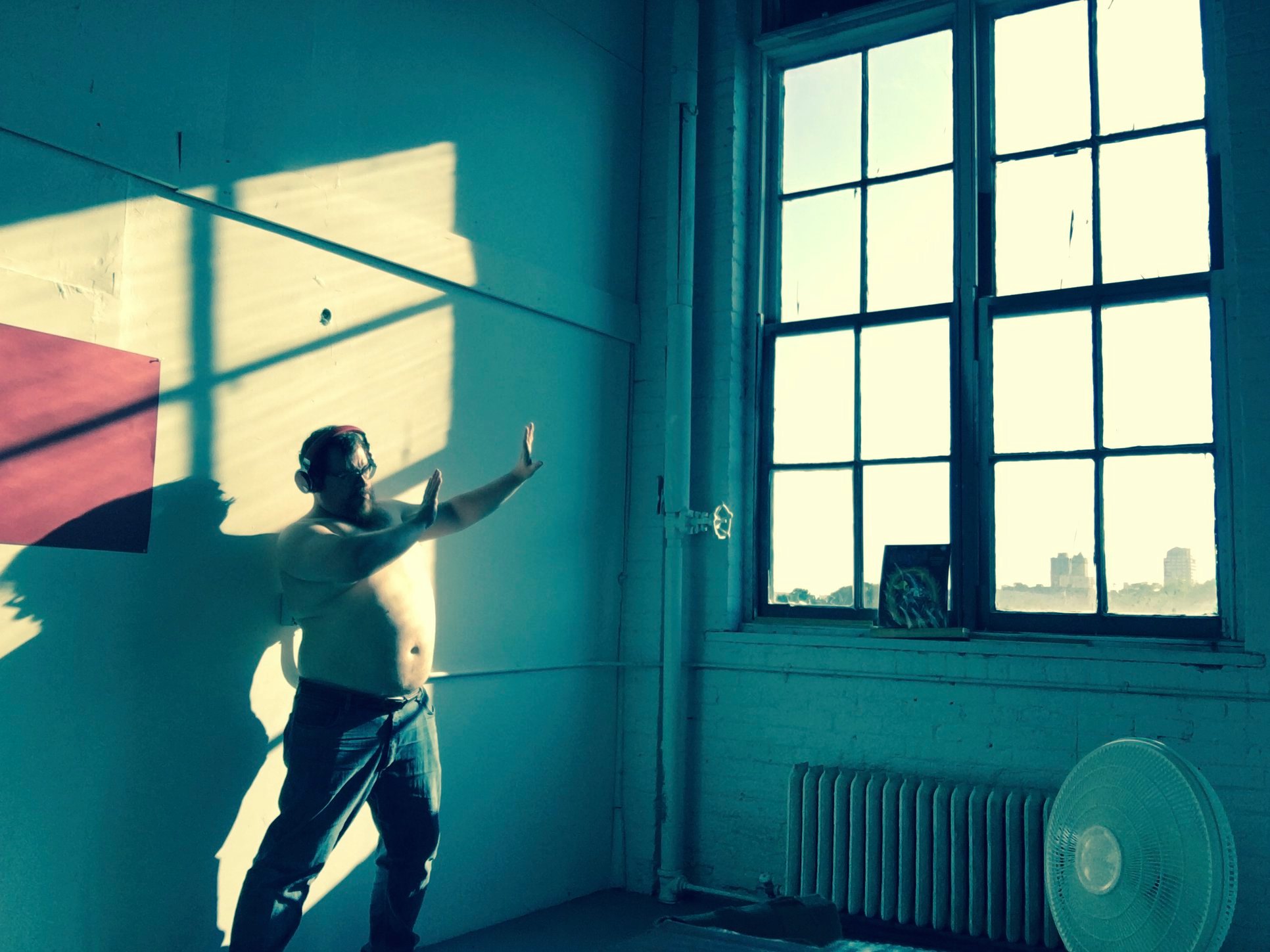
I had a little art studio for one year. A place for all my paints, my canvases, my artistic dreams. A place to be alone, to create masterpieces, to rock out to music, to be myself, to grow and learn.
Then, a year later, the art studio was completely erased, as if it had never been there.
All the walls were taken down; the room became a much larger gallery. You couldn’t find it if you didn’t know where it had been. If you didn’t know my window, you couldn’t see any fingerprint of where I had been.
While the studio was there, that brief year, it changed my life. It gave me a better understanding of my body — something I had never really seen before. It gave me back my sexuality — something taken from me by evangelical churches. It let me see myself as a work of Art — something I never would have believed.
While I struggled to create art, the studio worked on creating me.
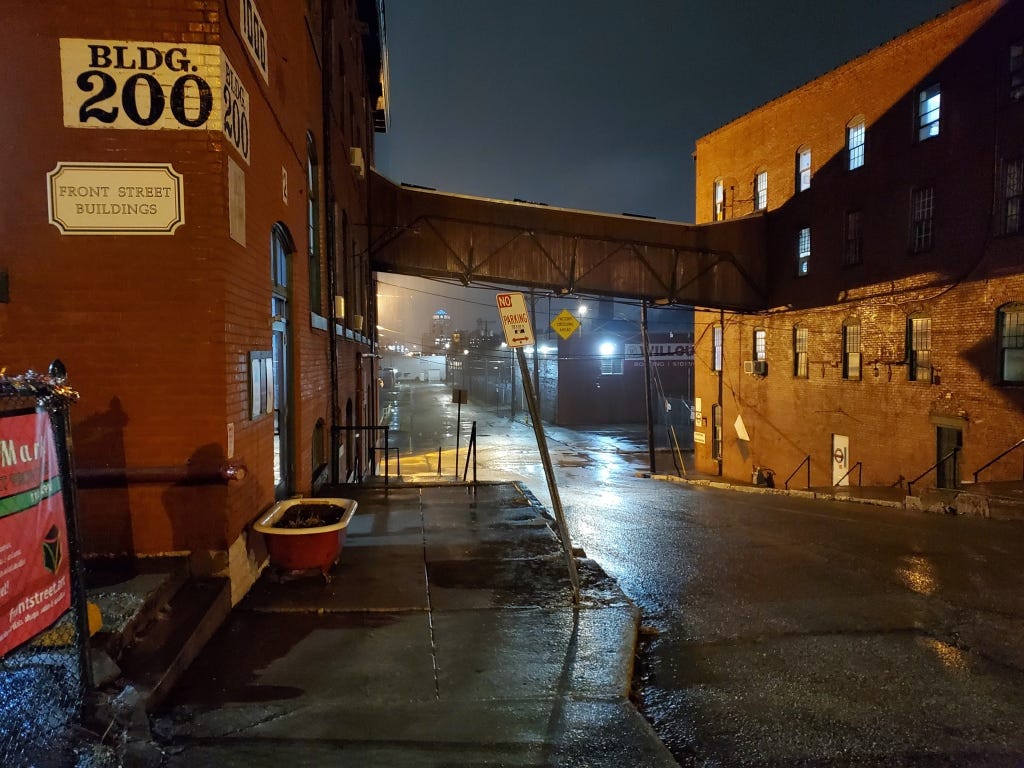
For decades, Front Street Studios in Dayton, OH, had used an old Singer Sewing Machine factory as living space for artists. A set of imposing red brick buildings, some two story, some three, with giant fifteen foot windows, sat next to a very active set of railroad tracks, with a river not far away. Over a few decades, the old factory had gone to seed, become unlivable, a place for drug deals and fire hazards. A few years before I got there, it was taken over by new management. The new owners cleaned it up, bought out whoever was still there, and turned it into studio spaces for artists, with open studios twice a month where people from Dayton could come through, wine in hand, and visit your studio and buy your Art. The new owners brought in live bands outside, sold burgers and hot dogs on those open studio days. You’d never have known the place was abandoned and trashed just a few years before.
Sometimes a work lands in the middle. In between interpretations. In between certainty of which way it might lean.
I shared my painting, “Code Red,” to a friend to look at it. She teaches Feminist Literature. “These Red Riding Hoods aren’t afraid anymore!” she said. But then the wolf looked petrified and worried. Surprised even. Sixteen red riding hoods surround him. Film him. Report him.
She could feel for the wolf too. The “red hoods” seem aggressive. Or are they just empowered? We felt like this picture might be a Rorschach test for gender studies. I can see how the woods aren’t safe for a wolf any more. I can also see that any girl can walk her path without fear. She said, “or are they ignoring a danger? Are they underestimating? Are they too cozy?”
Is the wolf performing for the camera? Why are two of the Red Hoods looking unhappy? Has the wolf done anything?
Fifteen years ago, 2009, I came out to my evangelical Baptist church in Whitehorse, Yukon, over Easter week. My last official duties as the Deacon of Worship were to lead the Maundy Thursday service—but I didn’t know they were my “last.” I wrote a poem called “Nobody called it the Last Supper” and read it during the service. I can’t find the poem right now, but the gist of it was that no one knows when the Last of anything will happen. The consequences of our actions, our revelations, may disrupt the future of Suppers with those we love. Mine did. THEN it becomes the “last” in retrospect.
I wanted to commemorate this anniversary (though it moves around according to the moon) by creating a painting of the last supper, but with the chaos that is implied in the Da Vinci painting, and the chaos that happened when I came out to each family at my church individually over dinner during Holy Week back in 2009.
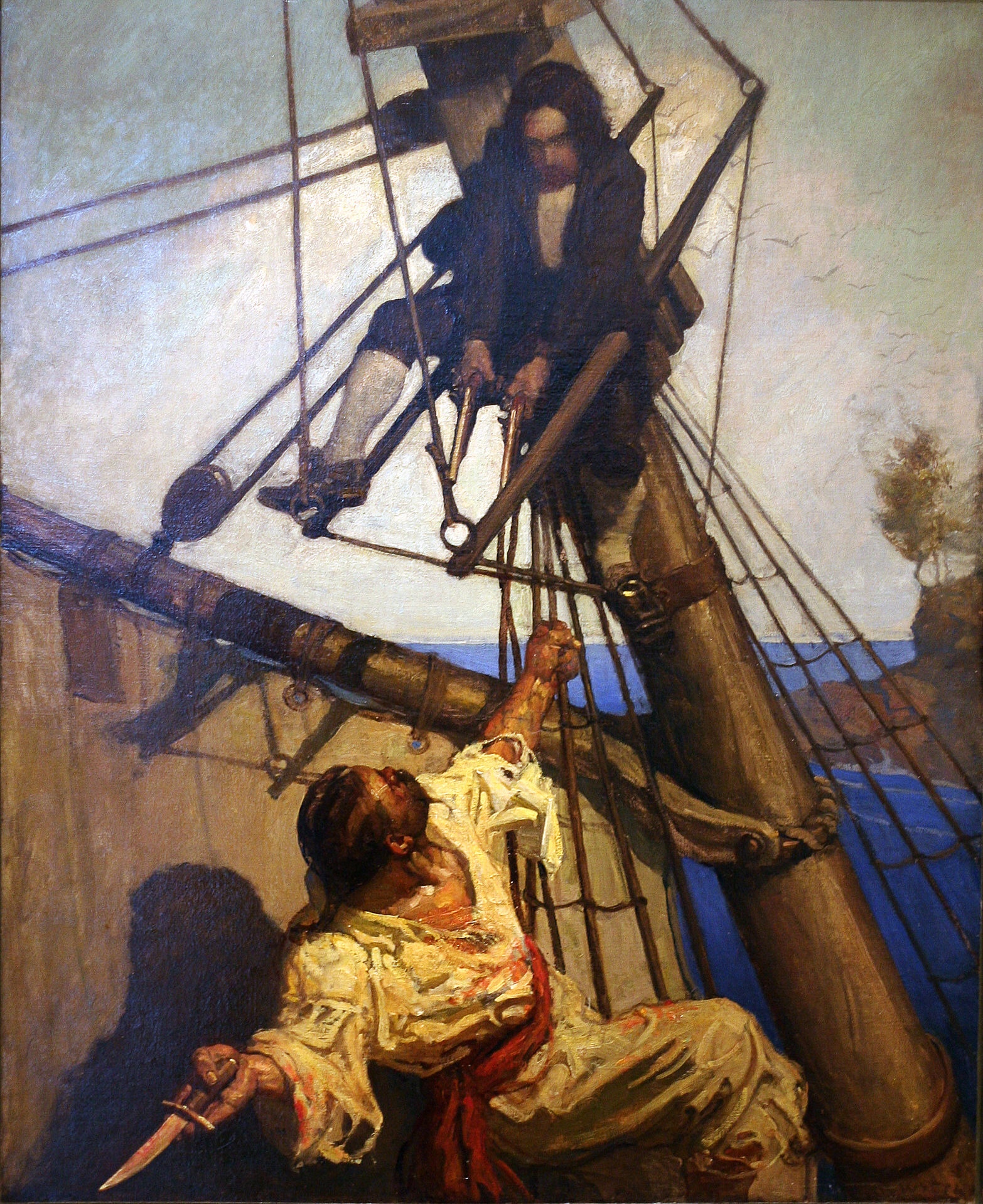
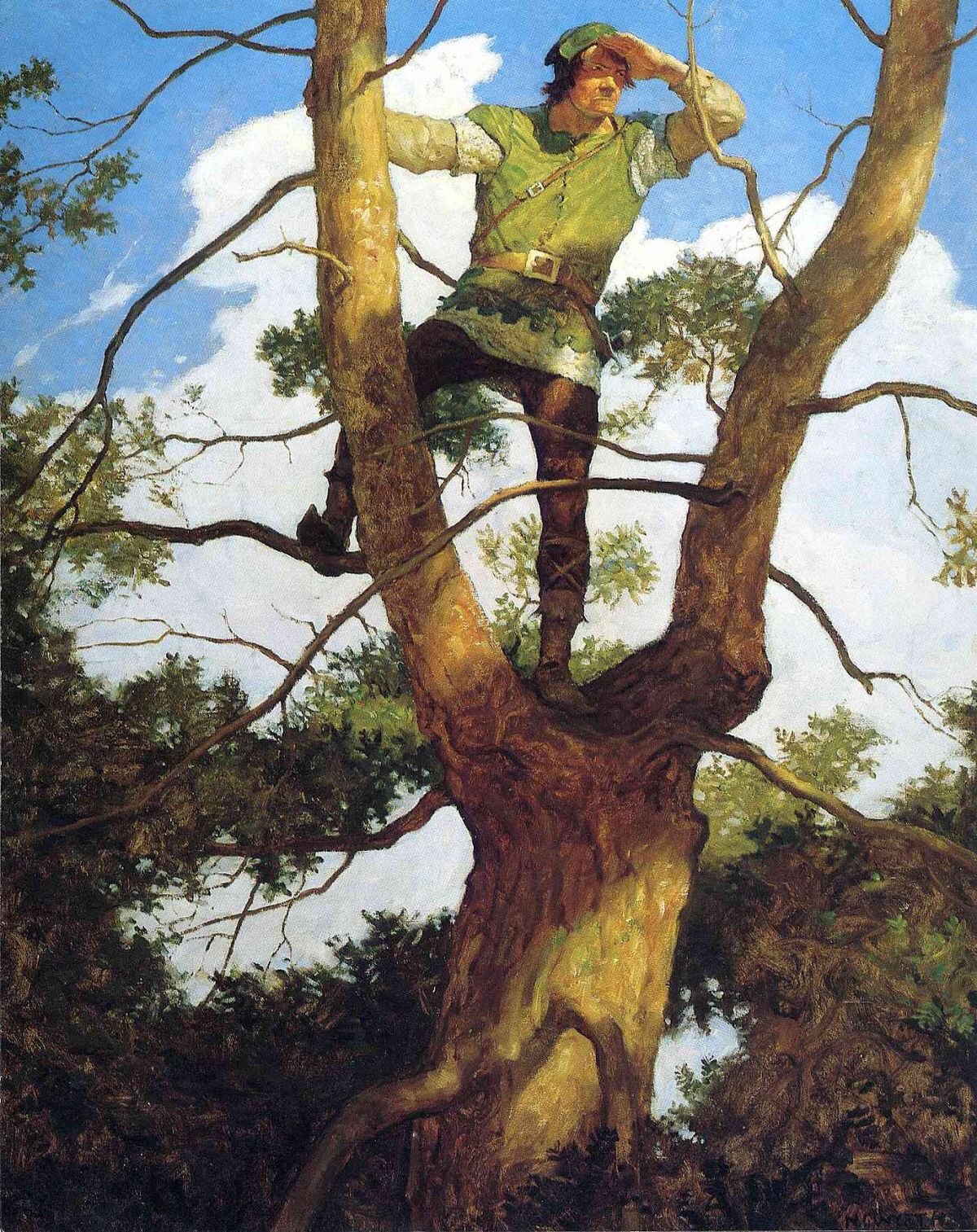
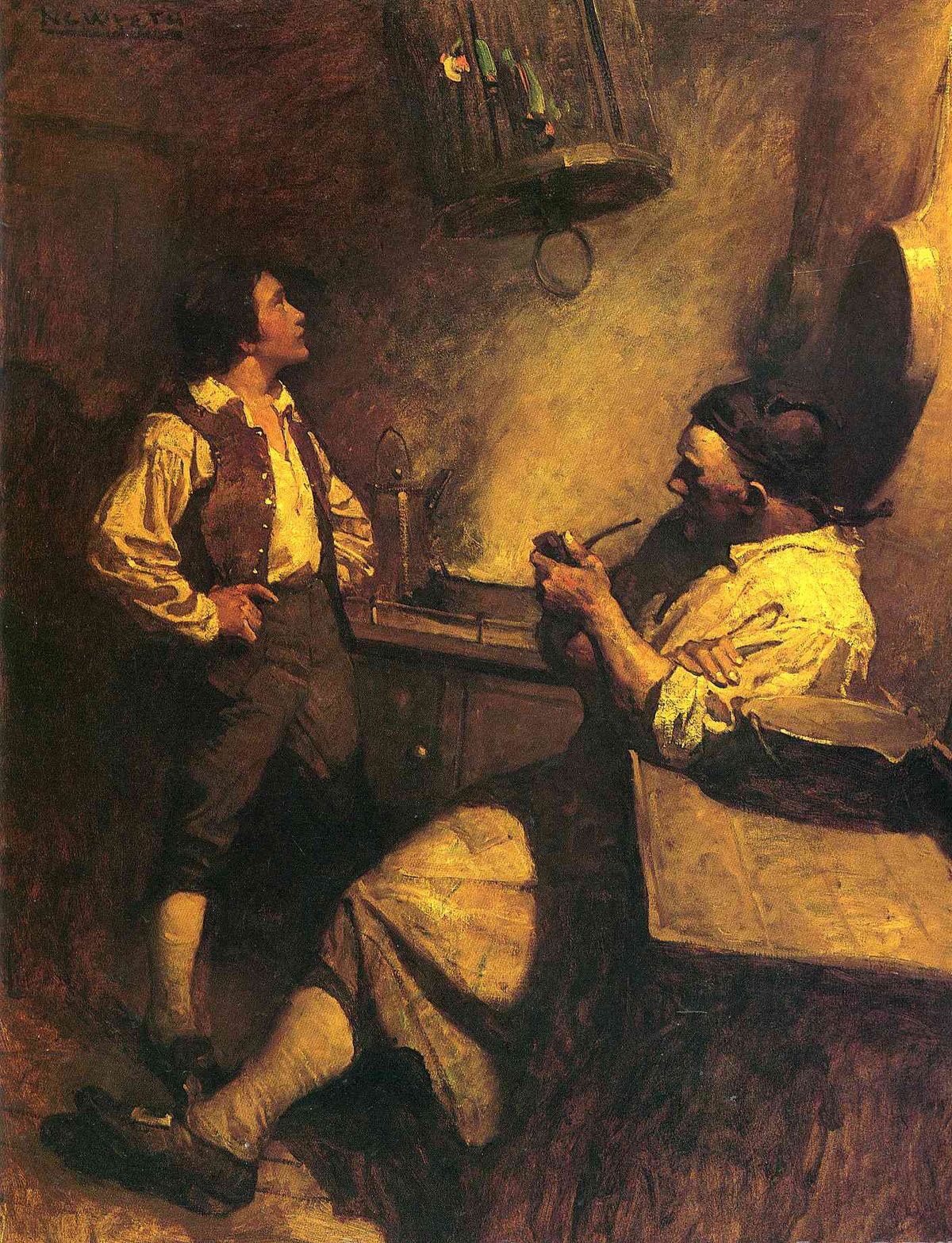
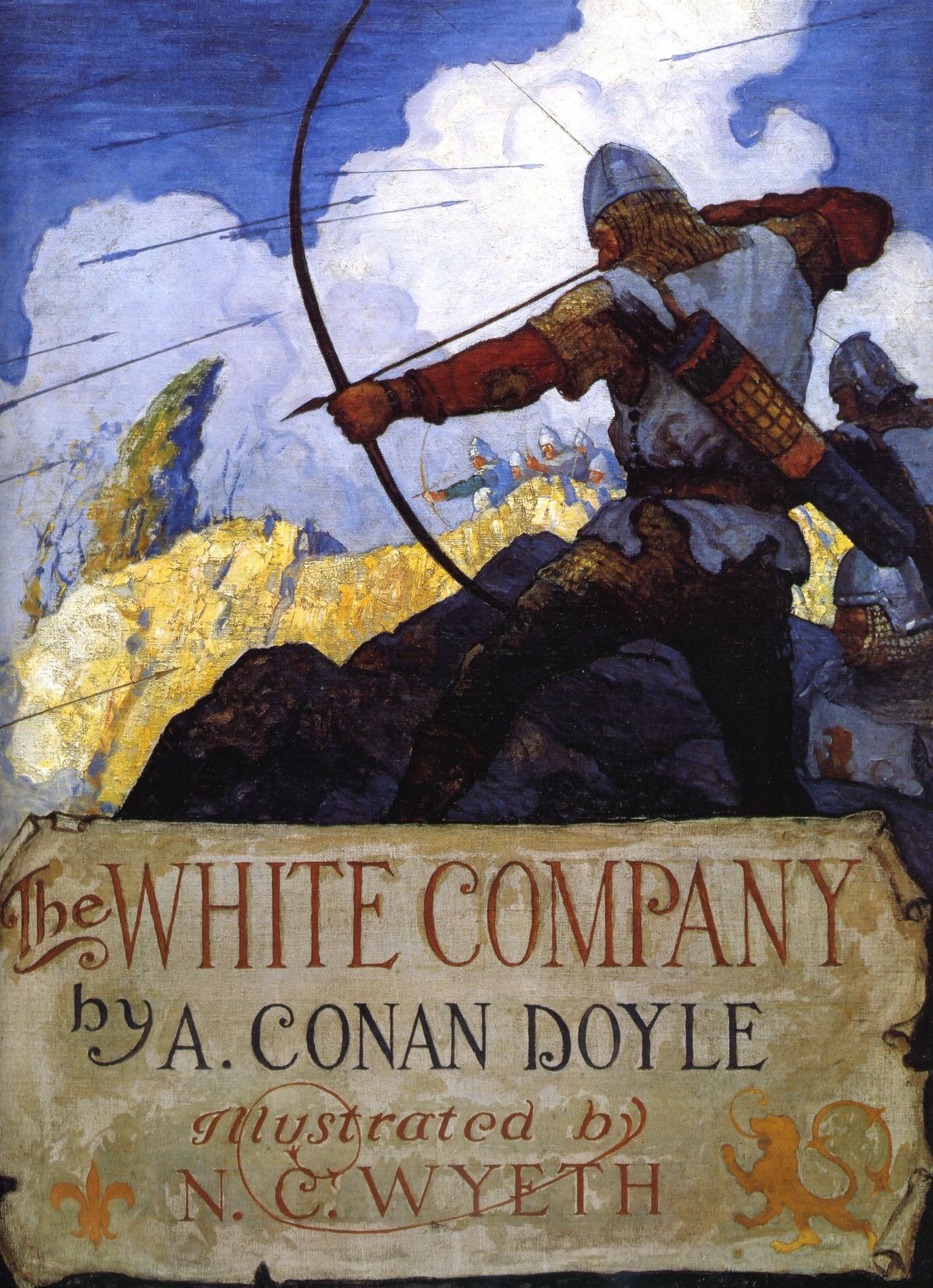
Me geeking out at the NC Wyeth Exhibit at Brandywine Museum in Chadd’s Ford, PA.
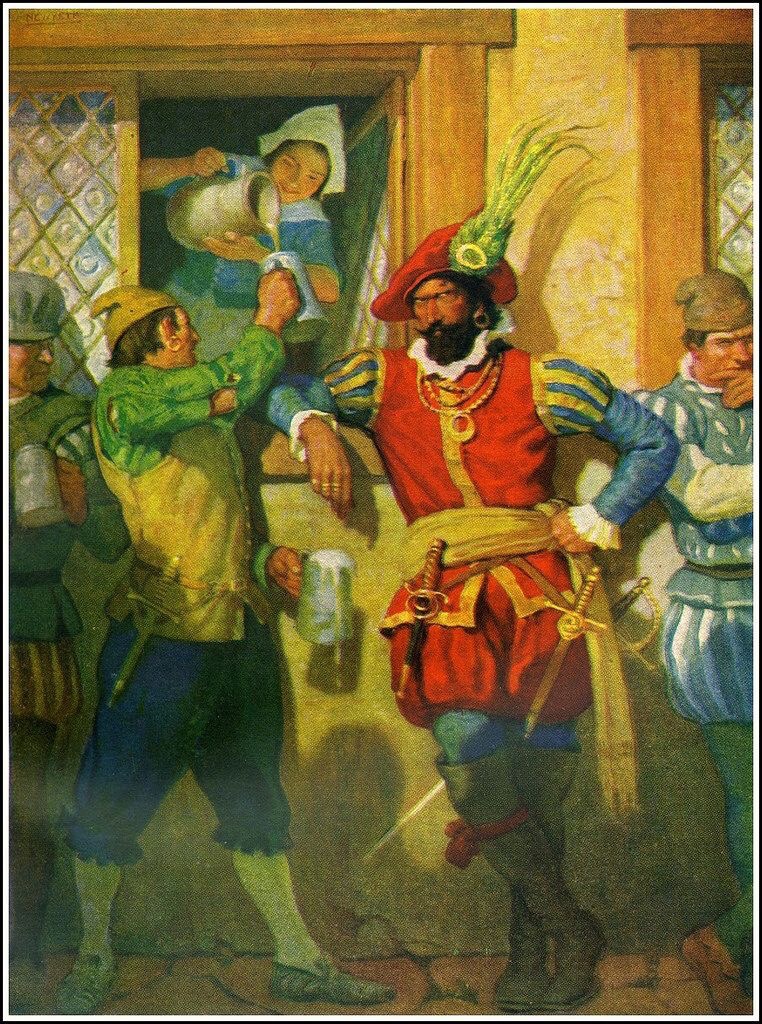
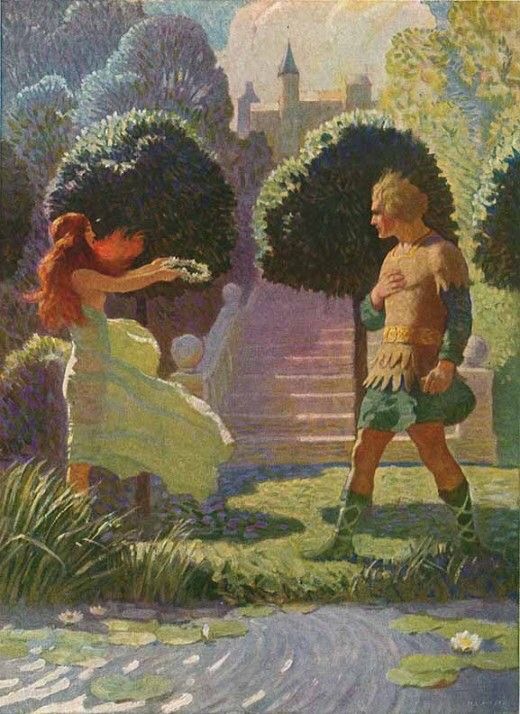
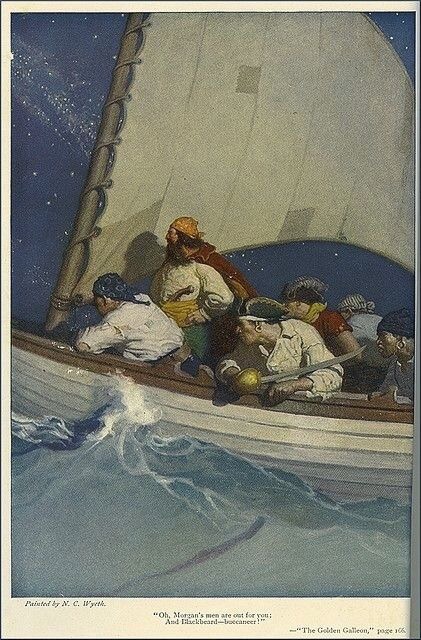
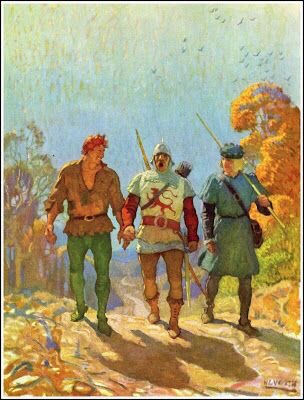
I have been a big admirer of the works of NC Wyeth for a long time. You might remember his illustrations from your favorite classic YA adventure novels (now assigned texts in college 19th Century and turn of the century literature classes), books like Treasure Island, Robinson Crusoe, Last of the Mohicans, A Boy’s King Arthur, Kidnapped, The Yearling, Robin Hood, The Deerslayer, etc. Very popular books in the early 20th Century with themes and storylines still made into movies today.
I loved his style! BIG color, lots of drama, action, adventure, stunning landscapes. I wished I could paint like that ever since I saw my first Wyeth up close at Texas Tech University. But I was a cartoonist at the time, and an occasional portrait artist, and I was working towards a PhD in Creative Writing. I wasn’t thinking of myself as an Artist, nor was I think of myself as an Artist who was going to study Wyeth.
As a gay man, growing up so Other from other boys, I had a peculiar relationship with the World of Boys and Men (which I will write about more in a later post) and that was a world that belonged to Wyeth as well. I had felt excluded for a long time from that world, and made up for it by being in other worlds. But I lingered outside the borders often and looked in at Things Which Were Not For Me.
So I pursued writing and teaching as a career, making art wait.
But in the last few years, my teaching situation changed, and it was difficult to find work as an adjunct teacher. I also continued to almost make it in the job market for tenure track positions. So i decided to make a change in my life–to build my art career–because I needed the money, a new source of income, and my art had waited long enough.
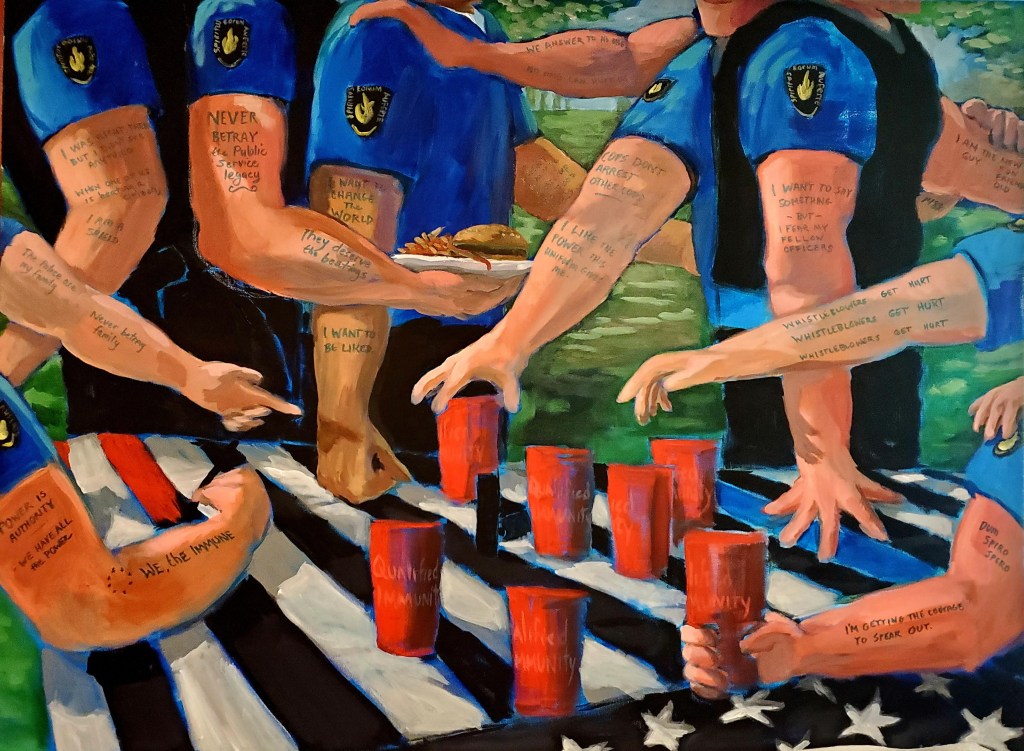
To Take Their Breath Away (Spiritus Eorum Auferte), 36 x 48 acrylic.
It is difficult to know how to address the current situation, how to speak out against the police violence and purposeful escalation of violent action against peaceful protesters, angry protesters, and protesters in the street speaking out against police brutality. They are often met with police brutality.
I’ve watched too many videos where police drag a protester into the middle or catch one on the side and physically assault them while they are “arresting” them. All the other officers crowd around the officer beating someone to make sure no one else interferes. They all cover each other.
It’s protected assault.
Officers have “qualified immunity” from work related violence that they do as part of their job. If they can say they needed to do it, then they can do it. They never have to be held criminally liable. Oh they MAY get fired, but then transferred to a new precinct, a new city, ready to start the abuse over again.
The Blue Code, the Blue Shield, Blue wall of silence, or other names, is an unwritten code of conduct that police officers buy into—protecting each other’s abusive or illegal activity. Even if they go in with the best of intentions, they will end up following the code and not turning in other officers, not speaking out, for fear of what might happen to them.
“Columbus, OH, the Night After George Floyd was Murdered, 2020,” acrylic on canvas, 36 x 48.
This was written a few nights after the event happened in 2020. It’s pretty raw, looking back at it 3 years later, but I’m going to leave it raw. Anything else wouldn’t be honest. (5/17/2023)
___________________
#BlackLivesMatter— At the end of my statement there are Columbus area black artists to follow, and a long list of video links to the Columbus Police using violence on Peaceful Protesters. #WeBearWitness
___________________
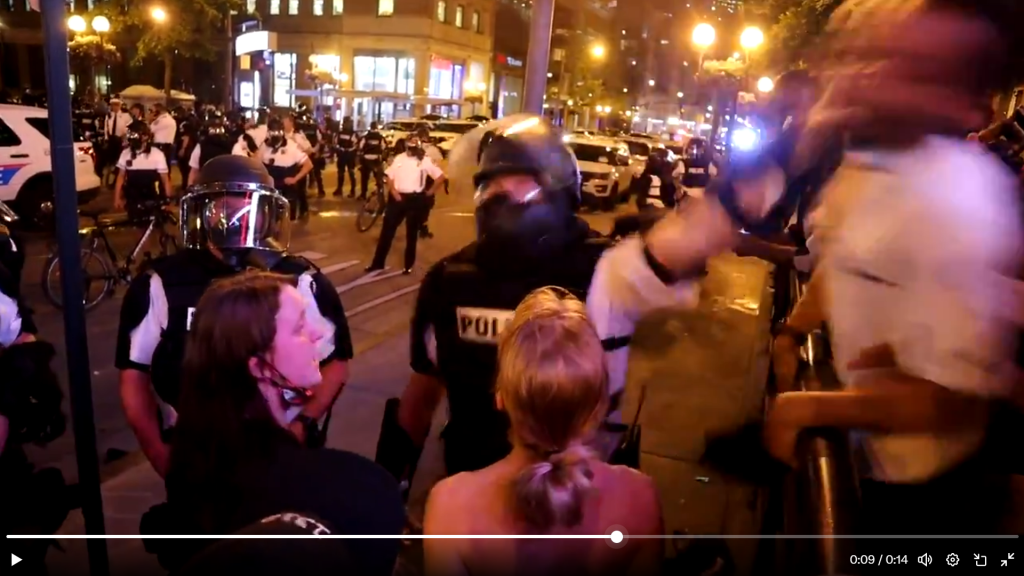
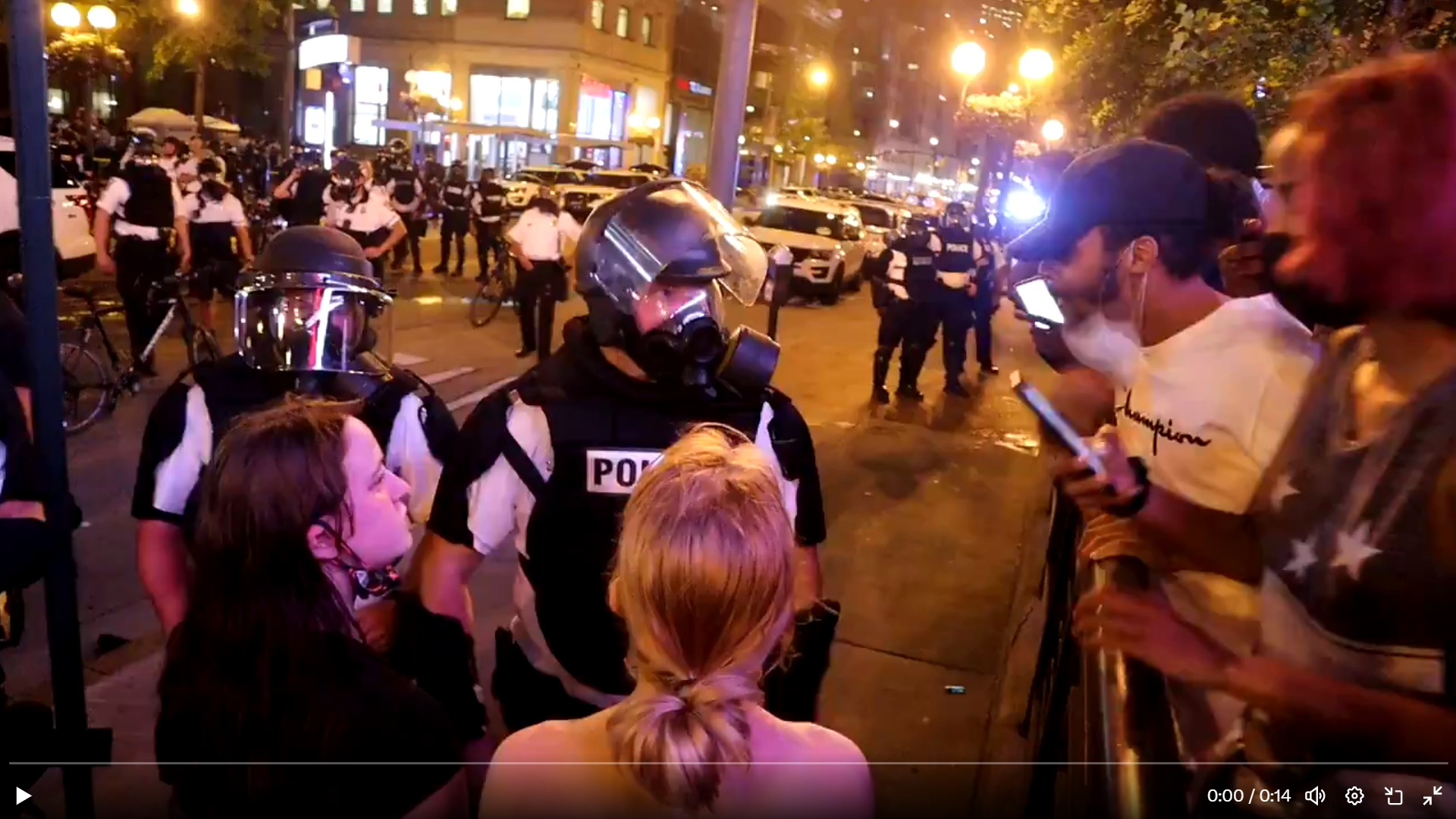
Still frame from video footage taken by Bryan Battle, Jr. of the incident. You can find the footage here.Nine seconds before. Same footage by Bryan Battle Jr. available here.
_______________
Normally I do joyful paintings about queer heroes and monsters, about large hairy men in love, or portraits of friends and family, but last Friday, protests for racial justice began in Columbus, Ohio during a worldwide pandemic. The combination of these two things prevented me from participating in the protest, as I’m immuno-compromised and over 50, overweight, etc. And so, like for the last two and a half months, I was sheltering in place but watching the videos of my friends and fellow Columbus-residents as their peaceful protests were met with violent, overreactive police retribution. They were sprayed, gassed, shot at, beaten, arrested during a peaceful protest meant to highlight the problem with police brutality. Well, nothing highlights police brutality like more police brutality.
For one protester who made a video, there was a moment all the violence started: when a police officer socked a protester. When the protesters objected to being assaulted by shouting, they were all sprayed with pepper spray. (Bryan Battle Jr video is also linked below)
Video after video surface from the #columbusprotest showing the Columbus Police using excessive force and assaulting citizens of Columbus (whose taxes pay for police and whose right it is to protest injustice–and whose taxes pay out the settlements in law suits made against the police.)
Infuriated by the videos and my inability to be there to support the movement, I did what I could. I took a screenshot of the video and created this painting.















 Bear Witness