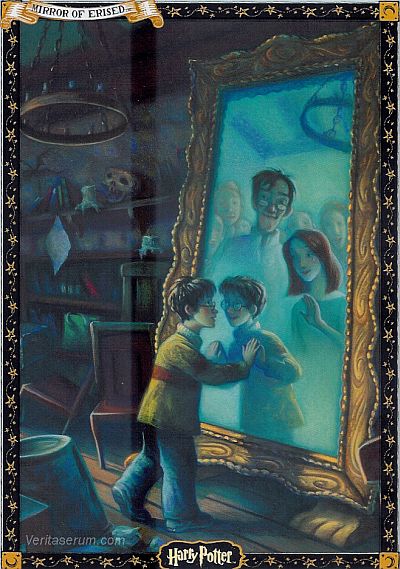
Harry Potter Diary: Outside the Demographic Looking Inside Hogwarts

I decided to read the Harry Potter Series this summer, for the first time.  After 10 billion people were happily served by the boy wizard and his pals, after the series was put to rest by JK Rowling years ago, and just as the film franchise explodes to a close, I decided to read the books.

Some questions immediately pop to mind: Why didn’t I read the books years ago?  

1.  I’m not a fad kind of guy, so having millions of people read the books actually made me feel less like becoming part of the phenomenon.  

2.  I actually loved the movies.  I did read HP 2 after the first movie came out, and before the second movie.  And loved it.  But when I watched the film, I was terribly disappointed that a whole mess of story was eliminated as if it didn’t count.  I vowed then and there to see the movies first, and then I would read the books to add in parts that the movies had left out.  This is actually a decent strategy.  

And why now??

Well, the end of the era is around the corner…. by summer 2011, the films will be done.  But I think it’s more because I really want to read the books.  I want to see how Rowling built the arcs, how she developed series characters, and how she managed to maintain the hook for so long.  It’s okay to admire the books on a “how are they written?” sort of way.  

I want the magic too.  Even though, now, I know at least where the movies have taken me.  Now I want to see where the books take me.  

I’m not the demographic JK Rowling was aiming for.  Her 9-17 age bracket probably resonated with the idea that children can have power too; that magic exists under adult noses; that the world doesn’t have to be like their parents told them it would be–office buildings, stock markets and 2 hour commutes.  

So what would a 41 year old, single, gay writer and English teacher living in the Yukon Territory–with no children– get from reading the Harry Potter series–besides how to create a blockbuster series?  It’s a good question to think about.  How does a book transcend its ideal market, appeal across the board to adults and children alike?  What will be the pull of the series for me?  (I already loved the movies—but why.)  

I’m keeping a Harry Potter Diary as I go to ponder things about the series along the way.   Just reactions to, thoughts about, resonances with the series.  

There’s a spot at Hogwarts for me–and I’m going to find it.
Clarion Write-A-Thon: Helping Writers Reach their Dreams


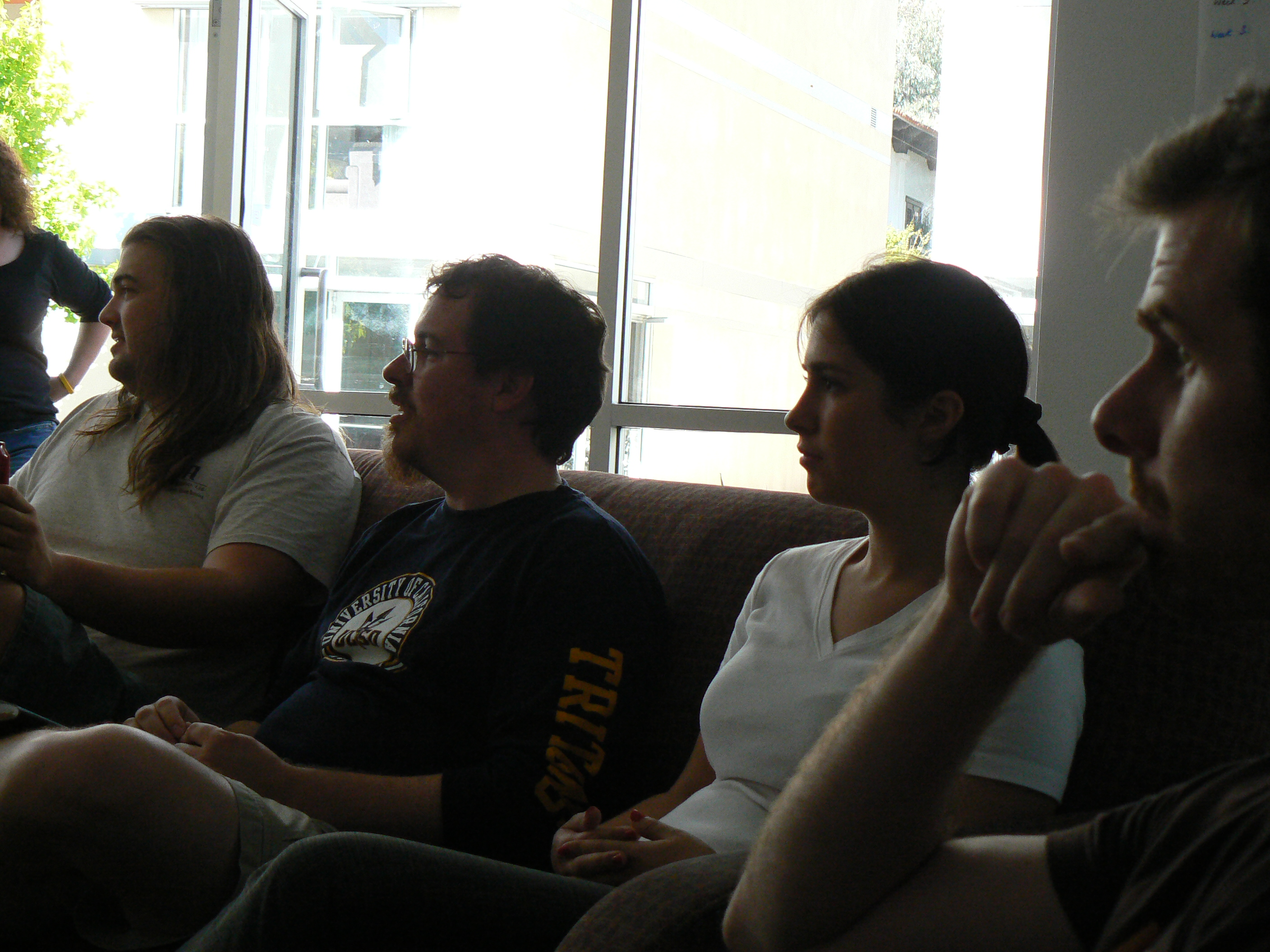
Writers Andrew Emmott, myself, Desirina Boskovich and Matthew Cody at Clarion


I signed up for the Clarion Write-A-Thon, a fundraiser that puts a whole bunch of writers into a sensory deprivation tank while they write for six weeks.  

Oh wait, there’s no sensory deprivation tank….

But still, the writers are joining together to keep Clarion San Diego alive and well for years to come by raising money to provide scholarships.  I’ve already written a whole essay about how life-changing my Clarion experience was.  I know it has been for my whole group of cohort writers–all 18 of them.  

The Link to My Writer’s Page lets you know what I’ll be doing for six weeks, and encourages you to donate a bit of money–maybe per day, per word, or just a small sum ($20, $50, $100) in total.  All proceeds go to Clarion for scholarships, helping more people like me get to attend.  Most of us who attend a six week workshop make sacrifices to be there, and certainly the costs can be high to spend six weeks anywhere in the world (even my apartment is $1050 just in rent for six weeks), but the benefit each student receives from that time is ginormous.  

Each Student gets:

  • individual instruction from 6 major writers in the field
  • connections to agents, publishers, editors
  • advice on how to create a writerly business
  • a cohort, band of writers that encourages during the long haul
  • a lifetime of mentoring
  • six weeks of time free to write, concentrate on their art

It’s very difficult to shave off time for writing, and this six weeks is a huge jumpstart.  I have sold 4 out of the 5 stories I wrote for Clarion, and frequently I take out that notebook that I kept during Clarion to record what the teachers/writers said, and I go through it again.  You can’t GET this kind of instruction anywhere else but with publishing writers, established in their fields.  

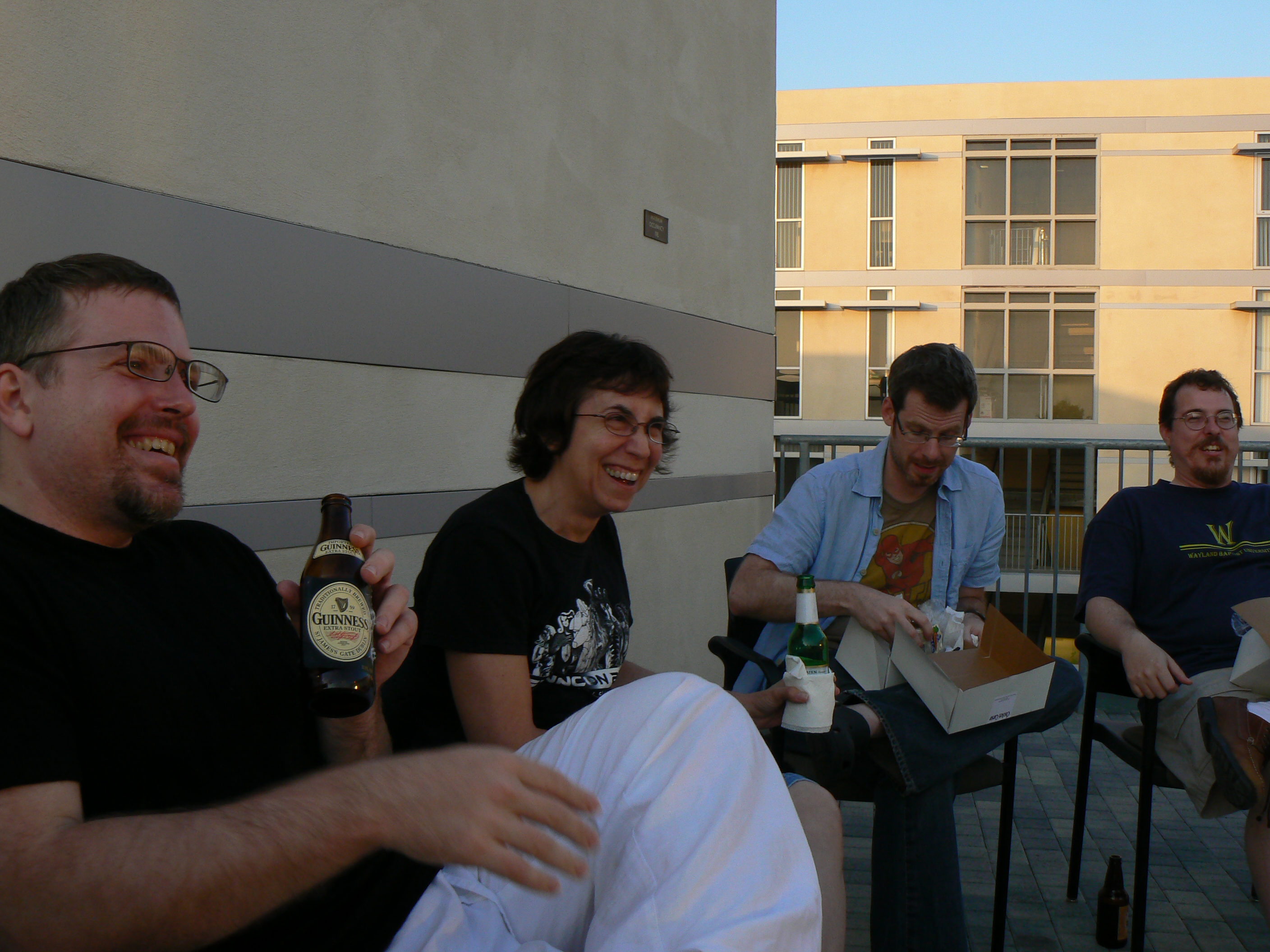
Enjoying the 4th of July: Jeff and Ann VanderMeer, Matthew Cody and myself


If you have trouble imagining what this would be like (maybe you don’t write science fiction), imagine a workshop of six weeks where each week you got to spend with these people: Margaret Atwood, Michael Chabon, John Updike, John Irving, Kazuo Ishiguro and Alice Munro.  And then editors from Harper Collins, Random House, etc came by to chat with you and take your pitches, and agents came by, and you went to a giant convention where all the big writers hung out.  You got to eat and drink with people who were doing your career— like job-shadowing, except they became your friends–for SIX WEEKS.  It’s just like that but with the big names of Science Fiction and Fantasy!

In the Golden Age of Science Fiction, a writer learned by joining up with a pulp magazine and writing stories every week to push into those magazines–they trained with writers around them, doing the same thing, encouraging each other.  

Nowadays, we’re all trying to get stories into those “pulp” magazines, Asimov’s, Fantasy and Science Fiction, Realms of Fantasy–but we’re not in a room full of other writers writing together–we’re strung out across the world.  The only places we get that kind of training are these workshops–they stand in for the kind of on-the-job writing/training you would get at a magazine.  The intensity is the same.  I think the quality is higher.  But without Clarions, writers wouldn’t have that avenue for training, and many who might not figure out how to write for the magazines, or their novels by osmosis, wouldn’t get published. 

For the six weeks, I will be working on chapters of my first novel, chapters a publisher is expecting and has asked for.  

Please consider donating even a small amount to the cause of helping writers in the Science Fiction and Fantasy field.  We brought you space shuttles and cell phones, fax machines and computers, rockets and really great entertainment.  

If you talked on your cell phone today, hug a science fiction writer for imagining it!  

And consider a small donation to the workshop that helps the visionaries think up such an interesting future.

Flash Fiction Challenge: Inhuman

INHUMAN:  Absolute Xpress, owned by Edge Books (the makers and owners of the Tesseracts series of science fiction and fantasy anthologies), have announced their fourth flash fiction challenge:  1000 words on what humans are like from a non-earth based, non-human perspective.  The title of the anthology is called “Inhuman” and details are here

In their words:

The Theme: InHuman

There are other beings out there. Demons, fae, aliens, robots and more. Creatures that have been watching us for a long time. They know us. For this challenge, write from the point of view of something “Inhuman”; an exterior point of view that is able to see what it really means to be Human.

You now have 6 weeks to answer this challenge. Flex your fingers and get typing. This challenge closes on May 15th at Midnight Pacific Standard Time (PST). For more details on how to submit check out the Flash Fiction Challenge page.

So what are we really looking for?

We want you to write from the point of view of a sentient, intelligent life form (no earth-based animals please (pets, birds, fish, etc.)). Perhaps they have been impacted by humanity, or visa versa. Or maybe they’ve been watching us from a distance. The big thing is that who ever these beings are, they have an insight into what it means to be human. This perspective is the key thing to highlight in your stories. It doesn’t have to be profound but these inhuman persons should notice something about what makes humanity human.


1000 words, one week left.  You can do it.

Saddam as Darth Vader: New Scientist and Tate Gallery Ponder Connections

Over at New Scientist, a fascinating article on a fascinating Tate Gallery, London, exhibition about the effect of pop culture–particularly Star Wars–on the late Saddam Hussein.  At first, you chuckle.  Then you hear some of the parallels–and you may still chuckle.

Saddam had an unpublished fantasy novel (which I’m dying to read now!  Can you imagine that hitting the market–a Fantasy novel by Saddam Hussein??) and a few more than coincidental leanings towards the dark figure.  However, from the article in New Scientist, the threads are thin.  I would have loved seeing more than a few stretches of metaphorical underpinnings to Saddam’s tactics and beliefs.  While the helmets are a nice touch; as they prove to be Vaderish, so are WW2 gasmasks….  and we aren’t making Hitler/Darth connections (though I would say that Darth was modeled after Hitler, obviously— Brown Shirts and Stormtroopers, no stretch there).  Since the Darth mask was most probably modeled on a gasmask, I think the Gallery is taking a bit of liberty to say that Saddam had a Darth-fetish.  

Consider this point the author, Jessica Griggs, makes:

Could this all be coincidence? Perhaps, but you’ll be convinced otherwise once you’ve read about Sadaam’s private militia’s uniform. Before his son, Uday, handed over control of the Fedayeen Sadaam (translation: “Saddam’s Men of Sacrifice”) to his younger brother he wanted to give his father something to remember his work by. So he presented Saddam with their new uniform: black shirt, black trousers and a ski-mask over which a strikingly Darth Vader-esque helmet was placed.

It seems more likely that Uday had a Star Wars ideal in mind for his father–since there are few other instances of Star Warsian artifacts.  The upraised swords is, at best, coincidental, made more science fiction-y by the artist who makes the swords into light sabers.  The “lurid” fantasy posters are from a different genre of literature.  The fact that the artist is a friend of the person who designed the poster for Star Wars is called a streeeeetch.  The paintings in Saddam’s “Safe House” were both by a fantasy artist.  The link here. 

It’s a stretch to see these fantasy paintings connected to Darth Vader of science fiction.  Yep, Saddam might have been a fan of fantasy/science fiction…but beyond that is the artist’s license. 

It is not unbelievable that science fiction pop culture might have an influence on dictators.  Certainly their heroes have a powerful pull on the Western World; couldn’t their powerful dictators be enamored by fellow dictators?   Since few of them survive in Science fiction past their novel series, I don’t think ANYONE would want to model an empire on them.  

Unless, of course, you can make sure that you have no plucky twins, rescued and hidden at birth, lurking somewhere in the galaxy, ready and waiting to upset your glorious domination.

Now, I want to see the article on Saddam Hussein’s fantasy novel.

“One Nation Under Gods” finds home in Tesseracts 14

My story, “One Nation Under Gods,” was selected to be part of the Canadian Science Fiction and Fantasy anthology, Tesseracts 14, edited by Brett Savory and John Robert Colombo, due out in September 2010.  The Tesseracts series is devoted to Canadian Science Fiction and Fantasy and Horror, and has had, as you might have guessed, 14 other volumes (a Tesseracts Q was for Quebec, and the requisite 1-13 which came before). 

You might have caught me reading a portion of this at the Yukon Writers Festival a couple of years back.  It involves two kids and a history test, and a complete restructuring of the United States based on values Americans, like me, hold sacred: patriotism, freedom, the just war, independence, religion.  I just personified them a bit.  I’m very pleased it found a home.  I’m now going to start work on the novel version of this story.  

The picture on the left is the construction of the Statue of Liberty, a figure which looms large on the landscape at the beginning of my story.  And as I was now an immigrant to Canada, the Statue of Liberty loomed large on my new immigrant’s mind…what a dramatic beginning to a new life for those coming to America.  For me, I saw her on my way out.  On my drive from Texas to the Yukon, I parked my red truck in Calgary for one month, flew to Vermont to be part of a writer’s colony, and in that time, snuck down to see her.  Like some mistress I was breaking up with.  

How do you explain to her that you are leaving?   

I put her in my story, though, and so in this way, she haunts me.

Clarion San Diego accepting applications till March 1st

If you want to write science fiction and fantasy there is no better crucible and proving ground, classroom and community, than Clarion San Diego.  I have already written a whole page on it, and updated the writers for 2010.  It looks to be awesome.  You have about six weeks to turn in applications to go.  If you want a career in writing science fiction and fantasy, this is the right investment.  After this, you don’t have to invest in another writer’s workshop for more… this is all you need.  The writers are some you know and some you might not yet:  Samuel R. Delany, George R.R. Martin, Ann and Jeff VanderMeer, Delia Sherman and Dale Bailey.  The opportunities you get to move your work around and let people see it are great.  

See more information here.

Go to their website here. 

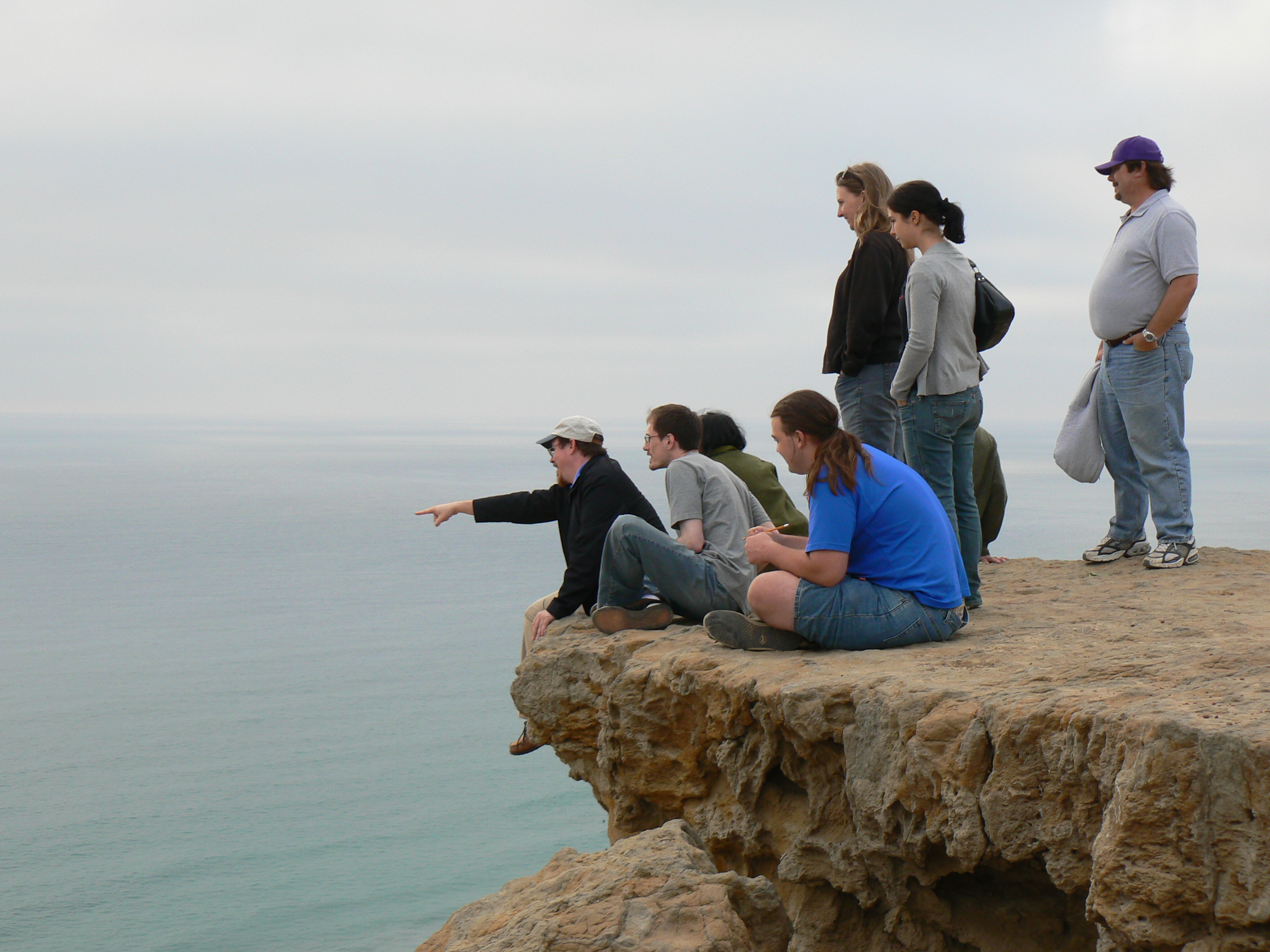
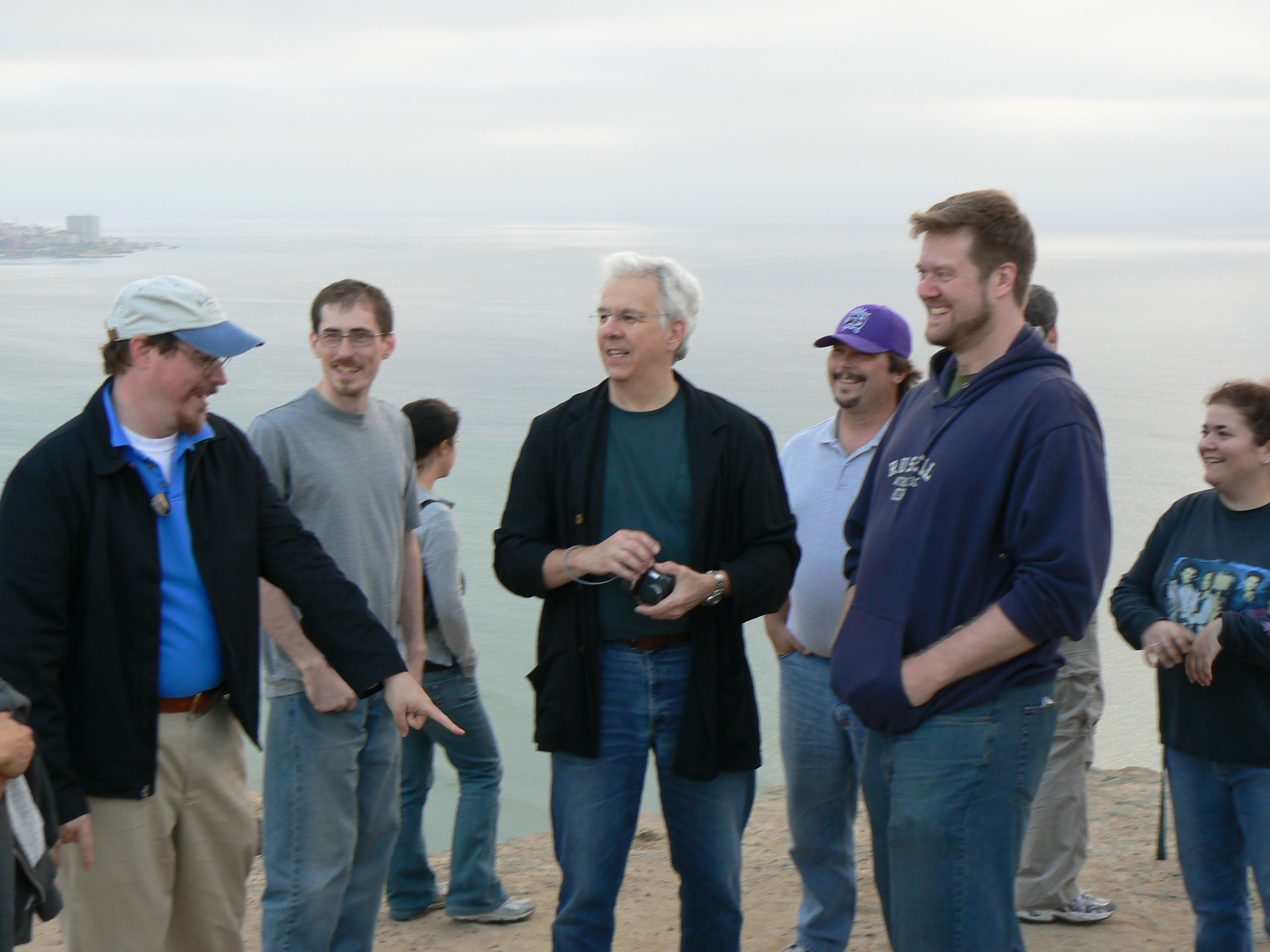
That’s us in the picture, on the bluffs outside La Jolla, near San Diego.  That’s me pointing to the future.  I say, “Hey, look, I can see a whole group of published writers!”  And then someone says, “Out to sea, huh?”  Okay, we didn’t say that.  But these people became some of my closest friends.  

  I seem to be doing more pointing.  I do that a lot.  People just stare at me like I’m one of those people.  

Clarion solidified my “calling”–not only because everyone sacrificed to get there, but because we were taken seriously.  I wrote a lot and wrote intensely.  I was challenged.  Wow, was I challenged.  And I experienced some great moments of my life.  I would love to relive this again–and really relish it this time.  You get so busy writing you sometimes forget.  

If you think it’s too much, it will be.  But I took a third of everything I had and put into this workshop financially, and I wasn’t the only one.  I love where it brought me, and where it let me stay for six weeks, and where it’s carrying me in the future.  I think you will too.  

There are a lot of workshops–Odyssey, Clarion West, etc—but I think this one is the best.  And if you respect the 18 other students there, you will get the most out of the workshop.  If you feel defensive about your work before you go, you might not get as much out of the workshop.  Because certainly the work will be up for critique–but not you.  You are up for amazing moments and good, solid career information. 

Go.  You’ll be glad you did.  

How to Read and Understand Science Fiction: Jo Walton’s Essay on Tor

Below is an excerpt and a link for the wonderful essay by Jo Walton on “SF Reading Protocols” or just how to understand Science Fiction and Fantasy when you’re reading it.   Her argument is that readers of Science Fiction actually read differently than other readers, and books in this genre require a different reading skillset.  

Genres are usually defined by their tropes—mysteries have murders and clues, romances have two people finding each other, etc. Science fiction doesn’t work well when you define it like that, because it’s not about robots and rocketships. Samuel Delany suggested that rather than try to define science fiction it’s more interesting to describe it, and of describing it more interesting to draw a broad circle around what everyone agrees is SF than to quibble about the edge conditions. (Though arguing over the borders of science fiction and fantasy is a neverending and fun exercise.) He then went on to say that one of the ways of approaching SF is to look at the way people read it—that those of us who read it have built up a set of skills for reading SF which let us enjoy it, where people who don’t have this approach to reading are left confused.

… My ex-husband once lent a friend Joe Haldeman’s The Forever War. The friend couldn’t get past chapter 2, because there was a tachyon drive mentioned, and the friend couldn’t figure out how that would work. All he wanted to talk about was the physics of tachyon drives, whereas we all know that the important thing about a tachyon drive is that it lets you go faster than light, and the important thing about the one in The Forever War is that the characters get relativistically out of sync with what’s happening on Earth because of it. The physics don’t matter—there are books about people doing physics and inventing things, and some of them are SF (The Dispossessed…) but The Forever War is about going away to fight aliens and coming back to find that home is alien, and the tachyon drive is absolutely essential to the story but the way it works—forget it, that’s not important.

This tachyon drive guy, who has stuck in my mind for years and years, got hung up on that detail because he didn’t know how to take in what was and what wasn’t important. How do I know it wasn’t important? The way it was signalled in the story. How did I learn how to recognise that? By reading half a ton of SF. How did I read half a ton of SF before I knew how to do it? I was twelve years old and used to a lot of stuff going over my head, I picked it up as I went along. That’s how we all did it. Why couldn’t this guy do that? He could have, but it would have been work, not fun…

Read More Here

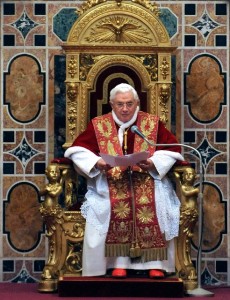
Pope Says Okay to believe in E.T., But Not In Gay Marriage

Well, the Vatican seems to be open to aliens.  I like that.  It’s heartwarming.  It’s progressive.  Though only speculative reasoning by the Vatican’s chief astronomer, the Pope threw open his arms to his “brother aliens.”    Fr. Jose Gabriel Funes is Chief Astronomer for the Vatican.  

The astronomer began the interview titled, “The Alien is my Brother,” by saying that, “Astronomy has a profound human value. It is a science that opens the heart and the mind. It helps us to put our lives, our hopes, our problems in the right perspective. In this regard, and here I speak as a priest and a Jesuit, it is an apostolic instrument that can bring us closer to God”, said Fr. Funes in the interview. 

And further on the subject of the aliens, the good astronomer had this to say:

Asked is he sees a contradiction between the Catholic faith and believing in aliens, he said, “I think there isn’t (a contradiction). Just as there is a multiplicity of creatures over the earth, so there could be other beings, even intelligent (beings), created by God. This is not in contradiction with our faith, because we cannot establish limits to God’s creative freedom. To say it with St. Francis, if we can consider some earthly creatures as ‘brothers’ or ‘sisters’, why could we not speak of a ‘brother alien’? He would also belong to the creation.”

Alas this brings up lots of interesting questions and contradictions in the Vatican’s positional stance on other issues closer to home.  This excellent post from the Guardian sums up the contradiction nicely.

That the Catholic church isn’t freaking out at the possibility of alien existence for one thing gives me hope that they might stop freaking out about other things that really do exist. Contraception, perhaps, or homosexuality. The Vatican might become open to the possibility of married priests, or female ones. And that would be super.

But, yeah, no.

E.T. ain’t heavy, he’s my brother.  But the gay couple, we won’t carry them.

They’re now a threat to Creation itself. (Step back, Climate Change!).  Says the Pope in his address to world diplomats–a plea for the environment and creation:

“Creatures differ from one another and can be protected, or endangered, in different ways, as we know from daily experience. One such attack comes from laws or proposals which, in the name of fighting discrimination, strike at the biological basis of the difference between the sexes,” he said.

“I am thinking, for example, of certain countries in Europe or North and South America,” he said.

Well, this speech, January 5 2010, came just after Mexico City declared gay marriage legal, and as Portugese Parliament was doing the same.  Hmm.  

I love that the Vatican embraces Aliens and what had been only science fiction before, but I hope they turn their attention to more immediate matters: the millions of gays and lesbians who want equality, and would like just a little of that love the church wants to dole out on Extraterrestrials they’ve never seen.  Irony seems a paltry word to describe this kind of injustice.  It’s cruelty inscribed in Jesus’ name.   This would make Jesus weep a second time.  

God is not science fiction, and probably aliens are not science fiction (I’ll give the Pope two points there).  Pope Benedict, gays aren’t monsters, gay marriage no threat to reproduction or creation in the world.  But the Church, unfortunately, is fast scripting themselves as Fantasy–out of touch with their own directives, mandates and missions, even their own Author.  Instead of walking away from the Church, I challenge people to go back in and help fix it.  Update it.  Teach it.  Vote out the bad policies.  Uncover God where He’s been shrouded.  Shake the dust off people’s shoulders who have been sitting there comatose for years.  Tell them there’s more than singing, more than preaching, more than baptizing, more than dinners and potlucks—there is a host of things to do work on, a host of people to reach out to, a host of folks in need.  

This plot is slumping.  Cut to the action again.  Bring in new characters, better dialogue.  

This novel idea, Christianity, has more potential, and could be a bestseller–could even change the world— but it’s gonna take a lot of work.

Rocketfuel Ignites Imaginations, the Yukon News story on my class


Photo by Ian Stewart for the Yukon News

My most excellent class of writers is the subject of a Yukon News article below.  These writers are an awesome group of imaginateurs.  I’m impressed, especially, with how they conducted themselves in an interview–thoughtful, insightful, well-read, interesting and interested in each other.  Love to start a book club with them!  

Article is by James Munson for the Yukon News.

_________________________________________

Zeb Berryman has some demons he’d like to share.

The 18-year-old scribe is an aficionado of the “dark side” in his literary circle, a dozen Whitehorse high school students known as Rocket Fuel.

“The darkness and violence is what makes it beautiful,” says Zeb, referring to one of his current anime reads.

Zeb’s comment elicits a few nods from his fellow science fiction enthusiasts sitting around the table in the FH Collins library.

These young adults have an encyclopedic knowledge of the fantasy genre, and can discuss the intricacies of alchemists, monsters, gods and goblins at length.

“It’s like literature discussion about a whole bunch of books you never get to hear literature discussions about,” says Jerome Stueart, a science fiction writer who started Rocket Fuel two years ago.

But more impressively, it’s their own literary creations they’re the most familiar with.

Ask any one of these students about their works, and it won’t be long before another interjects.

Franz Krabel, 12, tends to kill off his characters a lot, says Santana Berryman, Zeb’s 14-year-old sister.

Santana, for her part, has an obsession with the afterlife, says Stueart.

These writers know each other inside out.

Read the rest of the article

Fantasy-Filled Young Readers Give the Season Imagination

Rocketfuel, the youngest group of science fiction and fantasy writers in the Yukon, showcased their own writing (and art and music) Dec 4th at the Frank Slim’s Building at Shipyard’s Park.  It’s a nice venue with a roaring fireplace.  Makes it cozy.  Snacks were had, parents were entertained.  Must have been about twenty people there.  

About the readings–wow.  Okay, I know, I’m biased, but even I was blown away that night.  My boss, Mia Lee, was also amazed.  And the parents were too.  The writing was great, and fun.  We had readings about a day in the life of one of the heads of Cerberus, an alien abduction, a psychiatrist who knows a bit too much about Hell, an amulet that everyone wants, and other writings of imagination. 

Even the parents got to play when we brought out Justin Whitney’s patented Story Seeds, guaranteed to jump start a story, and starting playing the game around the room.  

I’d like to thank all those students in our Rocketfuel afterschool writing program–Franz, Hal, Santana, Zeb, Kylie, Erica, Kalyna, Renyka, Aubrey–and our emeritus writers Ashley, Bailey and Victoria.  We really do believe that writing contributes to the well-being of a young adult, and that fantasy and science fiction are part of our culture–a vivid part–that contributes to our cultural identity.  It can also change the way we see our world.  

Every culture holds dear a story that has supernatural elements in it, and this story defines and contributes to that culture.  Someone had to write about the dragon, Grendel and his mother, chomping on knights in the King’s Hall, or a Monkey to bring back the wisdom from the West, or captured a Djinn in a lamp, or brought a people across a sea split by the hand of God, and someone defined vampires, werewolves, ghosts and the Devil for a culture that enjoyed hearing the dark stories as much as the light ones….  Fiction even changed the way we celebrate Christmas. When our young writers write fantasy they are contributing to a long line of fantastical stories–to explain their world, even as they live in ours.  

The Young Author’s Conference understands this, and every summer, when the writers gather with our high schoolers, those writers read the works of our kids and at least half of them are fantasy and science fiction.  It’s important to develop a vivid and detailed imagination.  This is how adults solve problems—by imagining the solutions AND how to get there.  

Watch for the Yukon News article on Rocketfuel on Dec 23rd!  Woo-hoo!  

In January, TWO Rocketfuels start back up after school.  One at Porter Creek on Tuesdays and one at FH on Wednesdays.  If you think someone in your family might enjoy this, sign up through the Parks and Recreation, City of Whitehorse Leisure Guide or by calling Mia Lee at 668-8327.