Treats, Beverages, and a bit of Fantasy, Shipyards Park, Fri. Dec 4

Students who are a part of Rocketfuel, the science fiction and fantasy writing group afterschool program–sponsored by the City of Whitehorse–will have a reading Friday night–TOMORROW–at Shipyards Park.  They’ll be reading from some of their current work.  There might actually be a story of Santa Claus meeting the Reaper…you never know.  

THE DETAILS:

Shipyards Park

Friday Dec 4, 7-9 pm.  

Treats, goodies, beverages like tea and coffee, and a bit of Fantasy to go home with and share with your season….

If you’re free tomorrow night, come by.  We’d love to have you.

The Thrill of Deadlines, and How to Meet Them Alive.

(Corrected: eliminated all the bad advice about the two week story)

That race to a deadline is fun and satisfying.  It’s a test to see if you can pull it off, get that story done and out by the time that clock strikes.  But you have to plan ahead, or else you’ll be turning in bad stuff, or stressed so much you miss the deadline.  

Douglas Adams loved deadlines too.  “I love deadlines.  I love the whooshing sound as they shoot past.”  

New Scientist says your heart attack risk rises six times normal at the approach of a stressful deadline.  

(But they also list sexual activity as a precursor to heart attack, and who wants to cut that out??)

My history has been spotty on deadlines.  I’ll admit, like Adams, I let them reluctantly whoosh past me, relieved at the amount of stress reduction they can have when they do leave—or when the professor gives you another day, or another hour—but this has not been good for me in the long run.  Always hoping that I’ll get an extension on a deadline has made me think that anyone will give an extension.  And this is not the case.  

I remember when I got my story in to an anthology Claude Lalumiere was editing at like 12:40, forty minutes past the deadline.  He said, no!  Holy cow.  I thought that he was a stickler, but I’ve learned this is standard practice.  Not everyone will give you an extension, and no one is obligated to.  There has to be a cutoff time.  Chaos can ensue.

And really, it’s bad form (Jerome!) to ask for extension on deadlines outside of real emergencies.  I’ve done that once in awhile, and I’m very happy for those who accommodate me.  But that puts them at risk.  An editor I know once had a rule about her deadlines: “Never tell the author the REAL deadline.”  She always told me a false deadline, in advance, knowing I would push it.  She actually had three false deadlines (one day I pushed through nearly all of them! eek).  But this was a magazine deadline, not a submission one.  

Submission deadlines are part of life.  They should be hard.  They make you plan better, and I think, increases the thrill without increasing bad stress if you aim accurately for the deadline.  

I can’t wake up two hours before a story deadline and think I’ll be able to pull off a winner: I’ve tried writing stories too close to the deadline, and I get bad stories.   But when I’ve had a story go through revision about six times and then I spot an anthology deadline, it really makes me polish well.  And a polished story, even if you send it in 17 minutes before midnight, still feels great!   

My heartfelt applause goes out to all those who made it by Tesseracts 14’s deadline, and the man who made it by the stroke of midnight!  WOO-HOO!  

How to plan ahead for deadlines.  Okay, I should preface this with the following disclaimer: I don’t write stories in two weeks, not normally.  And so I can’t tell anyone to write a story in two weeks.  A lot of my stories have been through lots of drafts, some over years, to figure out what the dang things are about.  But there are a few tips I have to think about when I’m writing towards a deadline.  

I go backwards from the last thing I have to do and count that as time I need.  So I save enough time for the spell-checking, the last minute editing, the spit-polishing.

I also try to save enough time for multiple drafts.  My worst writing comes out in the first draft, usually.  Bad, stinky writing.  So, you have to save time for yourself to redraft and rethink your story.  How long? I don’t know.  Sometimes, if I’m doing nothing but writing, a few days.  But this doesn’t count the thinking time in between a first draft and the multiple drafts that come after.  I’m working on a story right now that started life in 2002 as a 2500 word short story.   Then it had another incarnation in my dissertation as a 7000 word short story and now, in 2009, well, it’s getting another draft.  Not everything takes this long—but some of ’em do.

A week is only enough time for me to get an adrenaline draft—that first idea that you run on a pretend course to get to some conclusion.  Like a pace car.  But that isn’t time to see all the layers, the themes, etc.  It’s barely time to get the first draft out of your fingers.  

The ideas take longer:  you’ve been mulling over a cool idea, or have a vision of a great scene, so you’ve been jotting notes…this can take as long as it takes before it gels enough into a story.  Normally I won’t count this in the time I need.  If it hasn’t gelled, it’s not ready for a story.  

Your timeline will be different, but know where you are in the course of your writing, and what your normal speed to write your best story, in order to know how to plan for a deadline.  I remember a story not too long ago that I planned too short a time for….. and all I got was a nice first draft out of the story.  Yikes!  So, now I get to go back and give it work and it will shine!  

Thomas Jefferson had his deadlines too.   This quote from the Independence Visitor Center in Philadelphia:  “Thomas Jefferson wrote the rough draft of the Declaration in only a few days? He spent a period of two weeks refining it and even gave a copy to John Adams and Benjamin Franklin for their review.”  I’m no Thomas Jefferson, but I’m imagining he was under a tough deadline and had to get it right.  

Know your writing speed, and count backwards from the deadline.  Then you’ll be alive when you cross it.  Really, really alive!

Tesseracts 14: Canadian Sci-fi/Fantasy Anthology Open for Submissions

2508955112_7a2d3e3312

Canadian authors of science fiction and fantasy, get your stories ready.  Tesseracts 14, is open for business.


Tesseracts Fourteen:
OPEN FOR SUBMISSIONS (Sept. 1, 2009 – Nov. 30, 2009)


Submissions are now open (from September 1, 2009 to November 30, 2009) for volume 14 of the Tesseracts anthology. If you are a Canadian author and write speculative fiction, we want to see your stories, poetry, radio plays, flash fiction etc. [SEE GUIDELINES BELOW]

The editors for this antholgy are:

John Robert Colombo and Brett Alexander Savory.    


GUIDELINES 


  • This anthology is open to Canadians, landed immigrants, long-time residents, and expatriates.


  • Open to submissions in either English or French. (Francophone stories must be translated into English for publication if accepted.) Canadian authors who write in languages other than French or English are welcome to submit an English translation of their work, provided it otherwise falls within the parameters of this anthology. Please supply details of original publication for any submission that originally appeared in a language other than English.


  • Translation into English is the sole responsibility of the authors.


  • Genres: all the genres of imaginative literature, including but not limited to magic realism, science fiction, fantasy, dark fantasy, slipstream, supernatural horror, weird tales, alternate history, space opera, planetary adventure, surrealism, superheroes, mythic fantasy, etc.


  • The Tesseracts anthology series is open to both short fiction and poetry.


  • Payment is $20 for poetry, $50 for stories under 1,500 words, rising to a maximum of $100 for stories of over 5,000 words (longer stories are paid a slightly higher fee, but in order to exceed the word length limit of 7,500 words, the editors must judge a story to be of surpassing excellence.)


  • Deadline: 30 November 2009.


  • Do not query before submitting.


  • Email submissions: tess14@hadespublications.com


  • Emails MUST contain the word “submission” in the subject line, or they will be deleted automatically by the server. Please also include the story title in the subject line.


  • Submissions MUST come as an attachment: RTF is the only acceptable format.


  • Emails MUST contain a cover letter in the body of the email; for security reasons, email attachments with no cover letter will be deleted unread and unanswered.


  • Cover letter: include your name, the title of your story, your full contact information (address, phone, email), and a brief bio. Do not describe or summarize the story.


  • If your address is not within Canada, please indicate in the cover letter your status vis-à-vis Canada.


  • Reprints (stories having previously appeared in English in ANY format, print or electronic, including but not limited to any form of web publication) can be considered but will be a hard sell; reprints must come from a source not easily available in Canada. If your submission is a reprint, please supply full publication history of the story. If your story appeared previously, including but not limited to anywhere on the web, and you do not disclose this information to the editor upon submission, you will be disqualified from consideration.


  • Submission format: no strange formatting, colour fonts, changing fonts, borders, backgrounds, etc. Leave italics in italics, NOT underlined. Put your full contact information on the first page (name, address, email address, phone). No headers, no footers, no page numbering. DO NOT leave a blank line between paragraphs. Indent paragraphs. ALWAYS put a # to indicate scene breaks (a blank line is NOT enough).


  • ALWAYS include your full contact information (name/address/email/phone number) on the first page of the attached submission.


  • Rights: for original fiction, first World English publication, with a two-month exclusive from publication date; for all, non-exclusive anthology rights; all other rights remain with the author. (DO NOT INDICATE WHICH RIGHTS YOU ARE OFFERING; SUBMISSIONS MARKED WITH RESTRICTIVE RIGHTS WILL BE DELETED WITH NO REPLY.)


  • Spelling: please use Canadian spelling, as per the Canadian Oxford Dictionary.


  • Response time: initial responses (no / rewrite request / hold for further consideration) will be made within thirty days after the close of submissions. Final responses no later than 31 December 2009.


  • Submit up to three stories at the same time, butUNDER SEPARATE COVER (only one submission per email).


  • Simsubs are not encouraged but are acceptable. Should you receive a “rewrite request” or “hold for further consideration” response, please indicate immediately whether your story is under consideration anywhere else.


  • Two After-School Fantasy/Sci-fi Writing Classes for Teens: PC and FH

    Starting Sept 16 at FH and Oct 1 at PC, I will be offering science fiction and fantasy writing to interested secondary students.  

    The Little Girl and her Giant Crocodile, Mauro Lira
    The Little Girl and her Giant Crocodile, Mauro Lira

    Are you attending Vanier, FH or PC this year?  Do you like to read science fiction or fantasy, and do you like to write your own?  Come join a group of dedicated young fantasy/sci fi writers like yourself on Wednesdays at FH Collins, or on Thursdays at PC, after school.  Snacks will be provided for the hungry.  Bring your own notebook paper and pen.  A journal is best.  We’ll play some writing games and get you pulling stuff out of your imagination–and then writing stories.  

    After two successful years of running the first group–which last year landed at FH Collins–I’m starting a group up at PC.  If you think you’re interested or know someone who might be, get in contact with the Parks and Recreation folks at 668-8325 and register for either the FH or PC version.  Registration begins on Sept 8–one week from today.  Classes begin earlier at FH Collins—and their program is 13 weeks; PC, since we’re just starting out, has an 8 week run.  

    FH Collins begins: Sept 16

    PC begins: Oct 1

    Crocodiles will not be provided.  Please bring your own.

    Science Fiction and Fantasy Writing–at FH Collins and PC


    Artist: C. Gerber
    Artist: C. Gerber

    Starting in the fall, I’m going to be doing the afterschool programs for teen writers at FH Collins (our second year!) and now, at Porter Creek.  It’s for science fiction and fantasy writers, and everyone’s welcome.  There is a fee.  We do serve food.  


    It’s through the City of Whitehorse.  You can contact Mia Lee at 668-8327 or mia.lee@whitehorse.ca to be a participant.  More information to come.  Programs will start up in late September or early October.  The guide comes out in two weeks so we’ll have more info then.

    Internet before Coffee? How does it affect your family?

    laptop and coffeeHey, I just read a great NYT article that I think will ring true in your family as well.  Read this:

    Coffee Can Wait.  Day’s First Stop is Online

    Excerpt:

    Karl and Dorsey Gude of East Lansing, Mich., can remember simpler mornings, not too long ago. They sat together and chatted as they ate breakfast. They read the newspaper and competed only with the television for the attention of their two teenage sons.

    That was so last century. Today, Mr. Gude wakes at around 6 a.m. to check his work e-mail and his Facebook and Twitter accounts. The two boys, Cole and Erik, start each morning with text messages, video games and Facebook.

    The new routine quickly became a source of conflict in the family, with Ms. Gude complaining that technology was eating into family time. But ultimately even she partially succumbed, cracking open her laptop after breakfast.”

    I’ve noticed that I’m online first thing.  I do manage to get coffee started and an english muffin in the toaster, but I’m there at the computer licketysplit.  

    How much of this is part of internet addiction–or communication addiction?  I don’t know.  

    Read this very funny, and poignant post in the same issue of the NYT today:

    I’ve Got Mail–by Verlyn Klinkenborg

    Excerpt

    I wish my memory worked differently. I’d like to be able to conjure up an accurate image of my consciousness from, say, 25 years ago. You know what 25 years means: No cellphones, no e-mail, no Internet, no social networking (except with an actual drink in hand), and only the most primitive of personal computers. What I want to answer is a single question: Was I as addicted to the future then as I seem to be now?”

    Care to share your experiences?  What were you like 25 years ago before all this technology gave us such instant access?

    For science fiction writers this should be a good exercise to think through.  Whenever you are designing the future, think about the implications of one change, and see the effects ripple through society and culture.  Life 25 years ago is very different from the way it is now.  And for every good piece of technology there are consequences.  It’s just an interesting thought problem that might be fun to fuel a writing exercise: what small change in the world could bring about major cultural changes?

    Bringing Star Wars to the Research Station: Part I

    Part I:  A New Thought

    And now you will witness the full power of this        
             station….” General Tarkington, Star Wars: Episode   
             IV, A New Hope


    Bronwyn Goodwin shows the power of the X-Wing Fighter kite at KLRS
    Bronwyn Goodwin shows the power of the X-Wing Fighter kite at KLRS

    As a science fiction writer embedded now as a science writer at a northern research station, I thought my job was pretty clear: bring northern science to a larger audience through whatever means were at my disposal.  Blogs, Facebook, press releases, radio series.  But then I found out that a few people there had not seen Star Wars.   Suddenly, my best, natural personality came to the fore.  I had a new mission: Bring science fiction to scientists.


    While science fiction might be easily dismissed by those working in scientific fields, it is often the first place that the average person learns about scientific concepts like graviton waves, geodesic folds, Dyson spheres, and quantum mechanics.  It can also be a first introduction to Shakespeare, to history, to world cultures, and to understanding the alien—those different than us.  But it is also a huge asset when it comes to igniting the imagination about science and about the future.  In this way, fiction about science, or even science writing, aids the cause of science—by compelling the average person to both think about science now, and think about science as part of our future.

    Star Wars: a New Hope was aptly named.   In 1977, it transformed the movie industry, making possible special effects that matched our imaginations.  And it also introduced science fiction to the masses of non-science fiction readers—making science fiction mainstream.  Star Wars was nominated for 10 academy awards, and won six of them, including Best Musical Score.  Of course, everyone reading this knows this.  We grew up with Star Wars.

    But Bronwyn Goodwin, age 8, did not, and neither did her mother, Sian Goodwin, both raised at a Research Station.

    This is hardly to their disadvantage—imagine having brilliant scientists traipsing through your living room on their way to amazing science exploits, and having your dad be the pilot that takes them up to many of the highest peaks in North America.  But they missed what turned out to be a seminal cultural event in Western Culture.  Star Wars entered into our collective psyche in the eighties and has re-emerged in many forms—whether it’s Reagan’s Star Wars defense system, or the idea of being “turned to the dark side” as a reference for negative behavior.  The characters are well known to us—Han Solo, Luke Skywalker, Princess Leia, Chewbacca, R2-D2. 

    But there was a certain glee in bringing Star Wars to two people who had never been exposed to it.  And eventually, the audience at the research station grew…

    Continued in Part II….

    Interviewing Scientists for the Arctic Institute of North America


    Just down from my cabin, Kluane Lake
    Just down from my cabin, Kluane Lake

    My new gig. This summer, as part of the International Polar Year, the Arctic Institute of North America is embedding a journalist/communications specialist at the Kluane Lake Research Station to report on the tons of research being done this summer in the Yukon and beyond. That’s me.


    I feel privileged to have this opportunity. I came up in 2001 specifically to interview and talk to biologists, learn about the arctic from a firsthand point of view, in order to write a novel about a young college student trapped with arctic researchers on the tundra. While I am not on the tundra, and there are no talking polar bears around, this fulfills a dream and gives me an opportunity to research and understand the science behind the science fiction, and to write about real scientists hard at work in the Yukon.  It puts me in the middle of it too–which no amount of reading can quite convey.  Still, I’ll do my best to convey it to you.

    It may seem unusual to pick a science fiction author to be a science reporter, but in fact science fiction authors endeavor to make science ready for popular media, and we’re interested in the people involved in science research. I think there are times when some take the easy road of creating the “mad” scientist who will take the science to it’s nth degree–thereby accidentally villainizing science, instead of showing the complexity and adventure inside of real science.   But the more fiction writers handle the science both physically and communicationally, the better the writing and understanding for everyone.


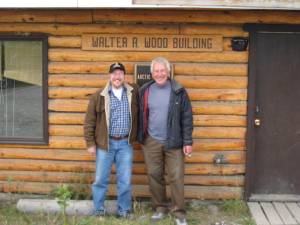
    Me and Andy Williams, Camp Manager and Head Pilot, Kluane Lake Research Station
    Me and Andy Williams, Camp Manager and Head Pilot, Kluane Lake Research Station

    Scientists do brave the wild to collect information that helps people understand our world. They are adventuresome, smart, crafty folks–and I hope to capture some of that in the blogs, podcasts, radio series, etc that comes out of this project. And perhaps, on the side, it will make my own writing about scientists more accurate.


    Watch here for more information on the new WordPress blog that will accompany this job. For now, just think of all the science going on in the Yukon and what you would like to know about it, or how you would like to interact with it….

    Yes, Captain Kirk has a Character Arc

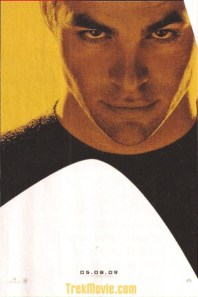
    chris-pine-as-captain-kirkI don’t want anyone to miss this great discussion that Dave Wesley mentioned as a response to my earlier post.  He said that we ought to check out the discussion of character arcs in the new reboot of Star Trek

    Frankly it’s a great discussion about writing.  Here’s KFM (Rogers) initial premise (SPOILERS):

    “Captain James T. Kirk, the protagonist of the movie, does not have the development executive’s beloved “character arc.” He has no arc at all.

    He starts as an arrogant sonovabitch, and becomes a slightly more motivated arrogant sonovabitch. He does not learn to sacrifice, he does not learn to work well with others — he takes over the goddam ship. He’s right all the time, he never doubts he’s right, and the only obstacle he occasionally faces is when other people aren’t sharp enough to see how frikkin’ awesome — and right — he is as quickly as they should.”

    But read the responses and you’ll see a lot of varied ideas on character arcs.  Me, I think Kirk has a character arc.  (And I actually posted it on the responses to his post)–but in a nutshell:

    Yes, he’s a sunovabitch through the whole movie, but he is a listless, aimless SOB at first, and he has to find purpose. He never thought his fighting, his rebelling, his go after the baddies ideas fit in well with tight-shirt Starfleet, ultra PC. And yet, it is a Kirk who transforms Starfleet.

    Starfleet needs a person who thinks with his gut, and Kirk jumps into that role.  Both old Spock and Pike serve as catalysts to transform brawler Kirk into Captain Kirk.

    I like Pike’s speech to him early in the movie:  “Have you ever felt you could be something more?”

    I think this is one of the lines that resonates for the viewer.  Don’t we all wonder who we could be if we had the opportunity?  And the line from Spock’s past:  “You will always be a child of two worlds, fully capable of living in either one. “ And Spock has to make the decision where to be fully, and which side of himself to favor–Human or Vulcan.

    The movie is about Destiny, and it screws around with time travel to ask the larger question about whether destiny is fixed or fixable.  I think the movie promotes fixable.

    The whole discussion is worth reading, but here’s a great later post:

    Both have arcs, and the arcs are definitely related because they are almost mirror images of each other. Even Kirk’s dead father is a mirror image of Spock’s dead mother.

    Their arcs also cross each other when Kirk tries to gain control of the starship by picking a fight with Spock. Except this time, he doesn’t try to stage mutiny, but rather talks to Spock to get him to resign his post. Following this fight, Spock realizes that he has emotions and he can’t control them. At the end of the scene, Kirk realizes that if he is to be Captain, he has to stop being impulsive and Spock realizes that he can not be Captain with his spasms of rage, and that he will never be able to ignore his emotions.

    The movie is good, but I think there’s a lot to discuss about how the movie moved towards good through the writing of characters we thought we already knew.  And character arc is important.  I don’t think that Abrams achieved his great story by NOT giving Kirk an arc–because Kirk is not static.  Kirk learns.  He learns how to adapt t0 and also transform Starfleet protocol to fit him–thereby creating the James T. Kirk of the TOS that we know, and the Starfleet that surrounds him.

    In some ways, we learn a lot about how Kirk and Starfleet function with each other, and in spite of each other.

    Wolverine: You can’t hurt him, so you can’t hurt us

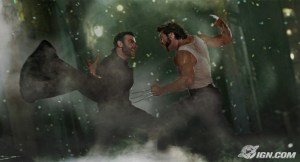
    x-men-origins-wolverine-20090212020925195While Wolverine looked promising, it was a confusing mess of action with never a moment of tension. The problem was established early–in the credits–and this hindered us from caring about the characters.

    If you make your characters indestructible, then you eliminate us from caring. It was the problem with Superman many years ago–he had no real vulnerability. So the writers rewrote him. Here with Wolverine and Sabertooth, they are given nearly immortal status at the beginning of the film. They don’t age slowly–they just don’t age once they hit their thirties. And they go through the Civil War, WW1, WW2, and the Vietnam War all in about ten minutes of screen time. They are always frontline, get shot at over and over, get hit, but never get hurt. There is no danger for these guys. None. That is established up front. So why would there be any tension in the film?

    The film goes on to try and make Wolverine truly indestructible by giving him admantium bones. But since he was already invulnerable (yeah, he could get slightly bruised in a fight with his brother), the admantium claws gave him no discernible advantage. Ah, yes, in fights with Sabertooth, Sabe’s face was a bit more pained–but he was still walking tall after the fights. Spare me the argument that they can heal. 1) An ability to heal that quickly means there are no consequences. No consequences eliminate plot and choice–both essential to story. 2) Wolverine never healed that quickly in the comics. The point of Wolverine’s healing ability was to protect him in the long run, but he got beat up bad in the comics. Often, it would take him days and weeks to heal. And that’s good—it made him vulnerable, but gave him a slight advantage in the ICU. It made me care. But in this film, immediate healing meant that two shadows were boxing each other. I thought–so what?

    The fights were scripted so that either Wolvie or his opponent should fall down so there could be a bit of dialogue, or a change of scene. If Sabertooth met up with any other character, that character was toast. It was just a matter of time. Because Sabertooth was established as indestructible.  Worse yet, I am now not sure what Sabertooth is really responsible for–since his main kill comes back to life.  The body count might have been high–but a viewer can’t care if the bodies spring back to life or never had much life to begin with.

    Working against it too–the movie was a prequel. And if the survival of the main characters is the plot of a prequel, you’ve doomed yourself. The plot of a prequel needs to be another mystery–because their survival is assured. Here, we were told that we were going to learn the mystery of Wolverine’s origins–but there was no central goal for the main character, no puzzle to solve; just event after event happening to the main characters. No choices, no consequences, no mystery.

    I was looking forward to Cyclops, to Gambit, Blob, etc. These characters were used more for the trailer than the movie. This movie had no arc, no plot, and characters who needed to wade through two hours of special effects to return them to X-Men 1, where they began.