The Other “Hijacked Airliner” Story: Whitehorse, Yukon 9/11

It was the only airplane to emit a hijacked signal on 9/11/2001.  It was heading to New York City, from Seoul, via Anchorage Alaska.  Fighter jets were scrambled.   A whole city, Whitehorse, was given 15 minutes warning that a hijacked plane was heading to their small airport, an airport just above the center of town.  Every school was evacuated, parents were told to pick up their kids, and a giant 747 escorted by jets whose missiles were locked on target came into view.

Max Fraser, local Whitehorse filmmaker, has put together one of the most intriguing “untold” stories of 9/11 in his documentary, Never Happen Here: the Whitehorse 9/11 story.  Only a few hours after four planes crashed into the World Trade Center towers, the Pentagon, and in Western Pennsylvania, Whitehorse is told that a hijacked plane is on its way to their city.  They have 15 minutes to get ready.

Imagine the panic, after watching everything happen in New York that day, hearing that it’s coming to your town in 15 minutes.  No one else got any warning that planes would be falling from the sky.  The morning of 9/11 was a surprise–there was no anticipation, no expectation.  While nothing can take away from the horror of 9/11 in the United States, or can compare to the tragedy of that event, Whitehorse’s story has an interesting angle no other story has.  It is because of the horror of 9/11 that Whitehorse had something to fear.  A disaster of 9/11 proportions was coming our way, only a few hours after we’d been shocked watching the panic and destruction hit New York City.   What would you do if you knew a 9/11 was coming to your city?

Continue reading

Is there no Sincerity in a Marketing Director?

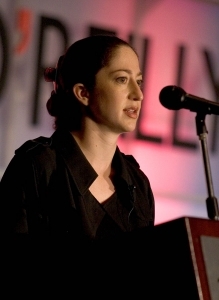
Do you trust this man?

I was lucky enough to get a dream job: being a marketing director for the Yukon Arts Centre.  The Arts Centre is a venue for a lot of non-local acts (and does host lots of local acts and artists as well) that come through Whitehorse, and into the communities.  It encompasses not only the actual Arts Centre, up on the hill, but the Old Fire Hall, the Yukon Arts Gallery (adjacent to the mainstage), and various venues for workshops and talks around town.

Before I got the job I was a Waterfront Trolley interpreter, a guide for the Beringia Centre (our ice age/mammoth museum), and a vaudevillian.  I told you about some of these jobs.  Mostly, I talk about writing, and I talk about the cool things that happen in Whitehorse.  I always have.  Most of those arts centered events happened at the Yukon Arts Centre.  And I raved about them because I thought they were good.  I wanted to share what I’d found.

As it happens, I now get paid to promote the Arts Centre.  Does that change my sincerity?  Not in the least.  If you got paid for what you love to do would it change the way I view what you say or do?  No.  I just happen to love what I do.

For the purposes of this blog, my thoughts are still my thoughts.  I intend to still tell you about all the cool things that I find, and I don’t think that should stop suddenly because I get paid to promote one organization.   I’ll critique movies, talk about writing.  I’ll still promote good local plays, from local playwrights.  And I’ll still find great things from the Yukon Arts Centre too.  I probably won’t be negative about a Yukon Arts Centre event, but you would expect that.  I’m not really into being negative anyway.  There’s too many good things happening here–I want you to see them.

Continue reading

The Observer Observed: Kelly Richardson’s Twilight Avenger

I got a sneak peek at the opening of the Yukon Arts Gallery show today.   I wanted to see what was happening…the ad my predecessor had put together for the show was intriguing.  It had a green stag in the forest looking at you.  It’s Kelly Richardson’s installation.  I went into the room where the seven minute video plays, where the stag moves onto the screen, and keeps looking up at the viewer.  It’s magical.  It had a little Harry Potter feel to it–it glows green with a green fire and smoke coming off it.  Check out this Vimeo 50 second excerpt.  Imagine it across a full wall.

I once had an encounter with a deer in the forest.  I was in New Mexico.  I’d just had a very disturbing moment with friends–it doesn’t matter what.  I was emotionally upset, and I ran out of the hotel we were all staying in.  And I ran right into this deer.  The deer just turned to me and looked at me.  Just being looked at by something wild, as it takes you in, is mesmerizing.  I remember that the whole encounter probably took only five minutes, but it felt like an eternity.  It felt like the deer knew me–or could see something in me that I couldn’t see myself.  It calmed me down.  I know that much.

Continue reading

Characters with Something On Their Minds: the brilliant writing inside Deep Impact

Recently, I re-watched Deep Impact, one of two “asteroids-going-to-hit-Earth” movies that came out simultaneously (the other being, the poor-in-comparison, Armageddon).  Deep Impact builds slowly, and has amazingly drawn characters.  It’s worth it to watch just to pick up some tips on character development.  These are my thoughts after watching it.

1.  Every character in the movie has their own worries or concerns BEFORE their first scenes.  Jenny Lerner (Tea Leoni) wants to make a name for herself as a reporter and move up faster than the news organization’s corporate ladder will allow.  Leo Biederman (Elijah Wood) is falling in love.  Jenny’s mother (Vanessa Redgrave) is achingly going through the news of the marriage of her ex-husband to a younger woman; and the ex-husband has just married, and in the process, estranged his daughter.  Others are having babies, concerned about parties coming, or debts, or something.

It’s very easy for me as a writer to create characters who come into my scenes to do my bidding and then exit, stage left.  This makes them one-dimensional and cardboard–it also makes them a bit robotic, there to get my plot done for me.  BETTER are characters who have had something JUST happen to them when they come into your story, in other words, they are recovering from a cold, they are dealing with bills, parents passing, daycare that’s too expensive–something.  These scenes were really short, but they helped me care about the characters quicker because they had outside interests, outside agendas besides the imminent needs of the PLOT.

2.  They make CHOICES based on their previous problems or worries.  I was very surprised to see what kinds of choices they made, choices bound by the plot, yes, but could only have happened because of the natural cause-and-effect of the plot.  Someone chooses not to be saved; someone chooses to rescue someone else; someone kills themselves; each new choice brings about other choices–but choices that build on one another.

Sometimes writers (like me) create plots that are heavily structured because of what we want to see but we don’t quite take into consideration the kinds of choices  the characters would make—we make their choices from who they are in the beginning, not who they are BECOMING as the story progresses.  Events change us, and I was reminded that characters in the movies could not have made certain choices without having gone through the events in the movies. It’s a good thing to remember that the events of your story change your characters–and they do it gradually.

Change doesn’t happen because of one event, usually.  It happens because we are exposed again and again with events and choices.

Continue reading

Have You Met Liz? —the Importance of Meeting Your Candidates

I haven’t been to a political rally before.  I went to the NDP rally just to see what they were like, and because I had met Liz Hanson.

Meeting a candidate makes a difference.  Perhaps you, candidate, wonder what all that door knocking is for—or you, a citizen, are annoyed by all the door knocking that happens around an election.  You both wonder why anyone really does it.  Don’t all the commercials, all the posters, all the op-ed pieces help you know a candidate?  Doesn’t it make you likely to know how to vote?  Nope.  (Ok, sometimes it has to.  Not every person can meet the Presidential or Prime Minsterial candidate.  I voted for Obama from what I read, what I saw on TV, watching him at rallies, in speeches, at town halls.)

Meeting someone changes our minds.  Most of us cannot be changed purely by intellectual discovery—some a-ha moment that gives us the clarity to change our minds about an issue.  Most of us recall an event—a moment that has another person in it—that made us feel the way we do about that person, about their race, issue, belief, etc.

Encounters.  We change because of encounters.

Liz Hanson, NDP candidate, was canvassing somewhere between 7th and Strickland—and I was housesitting for a friend.  She knocked on my door and told me who she was and what she was doing.  I politely told her that I was an immigrant and therefore not allowed to vote in the election.  Seriously, I’m not proud of that:  immigrants should be involved in politics, in understanding and learning about their new country, even if they currently don’t have a vote.  But, frankly, I probably felt a little indignant about the irony of being canvassed when I don’t have a vote—I probably thought that she would just go away if I showed my political impotence.

I mean, really.  Why would she spend her time on an immigrant without a vote?  She couldn’t reap any immediate benefit from spending time with me.

Continue reading

“Amina” Acid and the Ballad of Bill of Tom: deception in the pursuit of activism

What to make of the sudden revelation that two prominent lesbian bloggers, both activists, were really men?

Tom MacMaster, an American student studying in Scotland, his subject Middle Eastern Studies, created the blog “Gay Girl in Damascus” as a way to give himself a voice in the debates about what was going on in Syria, a voice others would believe.  Well, he got more than he bargained for.  The new found fame–when other people started reading the blog—went to his head, he admits, and he took the opportunity to start pushing his opinions, through Amina Arraf, on all sorts of things related to Syria.  He wanted to make a difference and claimed that no one would listen to him as a white American male.  His blog seemed to be recording life during the “Arab Spring”–a time that’s exciting everyone all over the world.  Oddly, instead of a male protagonist, in Syria, he made his “character” a lesbian:

“It was part of the challenge of being someone who wasn’t me. It was a way of also drawing attention to things, I do think there is a certain orientalism, where we in the West tend to pay more attention to people that are like us, people we can relate to, someone marginalized is more interesting.

I also think I wanted to show that in Syria, too, there are people who are all different, gay, straight, people of every possible permutation.” (from the Washington Post)

When, in a dramatic turn of events in “Amina’s” life, MacMaster writes that she’s kidnapped, he suddenly got the world’s attention.  People were noticeably upset about what was happening to this lesbian blogger in Syria.  They wanted to help. The Post says that this is the moment when a blog that might have remained believable took a misstep.  It was that Amina had so many supporters, so many people “she” had talked to, that they wanted to help her.

Continue reading

How to Run Your Life as a Creative Professional–JC Herz’s Wisdom and Advice

Found this at Boing Boing (a site that’s like the proverbial treasure chest in your attic, full of both good and whimsical stuff). 

J. C. Herz (photo from the Speakers Bureau International website)

On May 6 2011, J.C. Herz gave the commencement speech at Ringling College of Art and Design, in her words, “the #1 art school in the country for computer animation and game art and design (grads go to Pixar, ILM, and EA)”.  The speech is something every creative professional needs to take to heart.  (I know I do.)

From the Ringling College site.  “J. C. Herz is a technologist with a background in biological systems and computer game design. Her specialty is massively multiplayer systems that leverage social network effects, whether on the web, mobile devices, or more exotic high-end or grubby low-end hardware. She currently runs an analytics company, Batchtags LLC, which sells a next-generation graph database and information visualization to enterprise customers, predominantly in the high tech and health care sectors. The Batchtags team has experience in algorithm and software development for large financial flows (e.g. Wall Street, cybersecurity), elegant visual presentation of complex, multidimensional information, and the development of intuitive game-like interfaces and interaction design.”

The speech is full of basic, down-to-earth advice about functioning as a creative professional in the world.  I can’t summarize it.  So here is the first couple of paragraphs and then a link to the speech itself.  I did save the speech for myself—and I wish I could turn it into a little grad book you could buy at a flower shop or a gift card store.  The advice she gives is what I needed to hear.

Continue reading

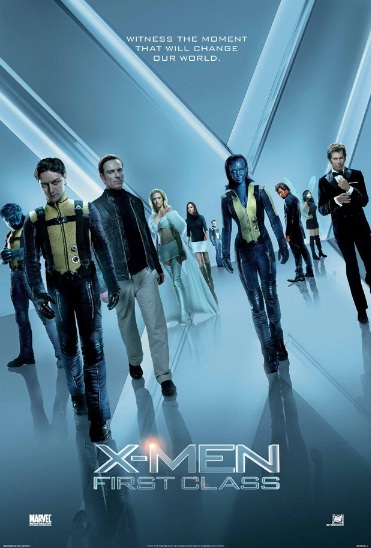
X-Men vs. X-Men: First Class

Okay, I just had to re-watch Brian Singer’s original X-Men (2000) after seeing X-Men: First Class.  I wanted to see how these two movies played off each other.  Call XM:FC what you want–origin story, prequel–it still has to be a good movie.  And I think Singer’s original X-Men is a much better movie than X-Men: First Class.  Here’s why.

1.  XM: So much more character development of several characters–Rogue, Wolverine, Magneto, Xavier, Jean Grey.  This movie takes time with its characters and keeps focus on Wolverine as the “schill” or the “new guy” who gets to experience all the Xavier School like we do, for the first time.  He operates “as us” so other characters tell him things we need to know.  Their world is well-developed already and intricate and we get the idea that it’s solid and has been this way for awhile, and has stuff that we haven’t seen yet.

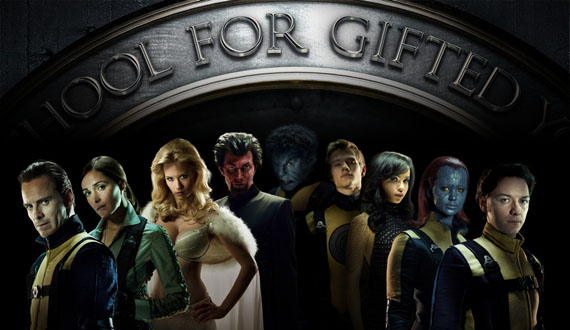
XM:FC barely develops Eric as a tragic, one-note, revenge-minded character, and Charles as a privileged fop whose compassion comes because of his blindness to others hardships (though occasionally, his mind-link helps him “understand” your pain).  FC Xavier comes by his compassion too easily; original Xavier seems much kinder, empathetic, a person I’d admire.

None of the minor characters in XM:FC are even developed.  They barely get screen time except to fight.  Sure XM has its share of background/throwaway characters who simply run through a door, or make an ice rose, but we don’t need to know who they are.  They aren’t pivotal to the plot.  XM:FC characters are, and it’s a shame they are never really developed.

Continue reading

Mob Rules and the Art of the Team Movie— a review of X-Men: First Class

I saw X-Men: First Class last night.  It was a good, solid action movie with stunning special effects.  It moves and kept me interested.  It never had me on the edge of my seat.  It’s an origin story– it has to go through certain details to collect them all–but it doesn’t do it very interestingly, in my opinion.  It also has trouble with multiple characters, having a hard time giving them much development.  I thought the original X-Men did a better job at giving each character a moment.  While Wolverine, Rogue, Dr Jean Grey, et al have their moments to shine as characters pre-Xavier, we don’t have that in this movie.  Here, we barely know anything about Banshee, Beast, Raven, Angel, Darwin, Havoc.  They are more about what they can do than who they are–though they hint at something deeper.  In all, it’s a pretty good film, but not an amazing one.  Enjoy it as an action flick.

Continue reading

There Are Stories You’ve Never Heard, Brilliantly Told: a review of The River

I went Saturday night to The River, a Nakai production, with Michael Greyeyes directing a play written by David Skelton, Judith Rudakoff and Joseph Tisiga.  To be frank, I wasn’t sure if I was interested in what I thought would be a sermon on homelessness.  I just didn’t want the guilt.  (And yes, I’m ashamed I actually said that—but I’m human and honest, and homelessness seems so much larger than I can comprehend–and I don’t know how to react “properly” or have any effect on the problem.  I suspect avoiding the issue is part of that problem–and yet, it’s the easiest thing to do.)

But local playwright David Skelton co-wrote the play, and I’m a huge fan of David and Nakai.  So I went.

I was blown away.   It wasn’t a sermon.  It wasn’t a guilt trip.  It was eye-opening, and it was riveting, and it was brilliant.  

For more of my review of The River at What’s Up Yukon

In a nutshell, brilliant writing, directing and acting take you into the vulnerable world of the homeless in Whitehorse.  Inspired by first person stories, collected by the writers through interviews over several years, that interviewing technique gives this play a realistic quality you won’t find in stories about homeless people.  You want to catch this play fast.  It’s here for a limited time, limited seating.  You won’t be disappointed.  I predict a long life for this play, and many, many performances across Canada.

(For more stunning photos of The River by photographer Richard Legner, visit this page.)