The Photography of Amanda Graham

While many of us know Amanda Graham as both an editor of the Northern Review, a professor in the University of the Arctic and at Yukon College, she is fast becoming, IMHO, one of the best photographers around. She calls it a hobby. I think her work is fascinating. I have borrowed a couple of her photographs for advertising classes at the college, but you really must see her collection on Flickr.

What I love about Amanda’s photos is that she has a great eye for quiet moments. These are photographs that deserve to be much bigger, hanging inside a room where you want to feel peace. Sometimes, I think they bring me solace–that maybe if I look for it in the real world, I’ll find the peace in the chaos. She finds the arrangement, the composition, that brings out the peace in discarded carts, peeling paint, arranged fruit, abandoned rags–and makes them beautiful.

She’s also quick to take advantage of a moment of light, an odd juxtaposition that’s there for a second, revealing something I may not catch if I wait for it to happen. I mean, most of these subjects are in Whitehorse. Can you find them?

I’m reminded of the waltz of the bag in American Beauty. It takes the right eye to see the beauty. But that eye can be trained. And thank goodness, that beauty can also be shared.

Sometimes there’s so much beauty in the world I feel like I can’t take it, and my heart’s just going to cave in.”–American Beauty.

Please take a moment and wander through her Flickr collection. You’ll be glad you did.

Leaving America is playing in Edmonton

Just heard some good news.  My 7 part radio series “Leaving America,” about my immigration journey from Texas to the Yukon, is now playing on CBC in Edmonton!!  (Thanks Diane Walton and Marcelle Dubé for letting me know).  For more thoughts on the similarities between being an Alien and being an alien see my post on “Immigration and Aliens“.

Very happy to be here.  And parts 6 and 7 are set completely in Canada.  Part Six is with my good friends in Calgary and includes romping through Vulcan, Alberta, nights of Battlestar Galactica, viewing the William Shatner Show, and the Glenbow.  Thanks to Kirstin Morrell for making the transition to Canada so filled with good memories!  She knows how to show aliens around.  The rest of the series talks about Canada through the eyes of someone heading there and what I love about the place I’m going.  As well as adventurous moments in travel through the States.

The First Draft is the Hardest, or my reasons for using NaNoWriMo

Hey Potential Participants of Introduction to Novel Writing,

We all know that we can research and plan a novel to death, but that the difference between a great idea and a great novel is writing it.

I should know.

While I pumped out a novel first draft when I was 19, and finished another first draft of another novel when I was 29, I had plenty of problems along the way–especially on the second one.

When I was 17, I had a teacher in Bledsoe, Texas who taught me creative writing for the first time. She was dedicated and I was her only student–outside of the two junior high students she taught Math, English, social studies, etc, the rest of the school day. We worked on my novel. I wrote like crazy every day one summer and every week we would meet and discuss two chapters and I would give her two chapters to review. I finished that novel. It was not a pretty novel: 6 main characters who meet their 6 adult selves–so 12 main characters in a convoluted plot that would have taken a team of cave rescue people to pull a reader out of. But that’s okay. It got a finished draft.

The second novel I worked on for three or four years. I returned again and again to the first few chapters, always tinkering with them. That is, until a good friend of mine set up a system where we each turned in chapters to each other, and through her, I nearly finished that novel—only to discover that I had some major problems.

The third novel–which I haven’t mentioned–has been a wonderful idea. I wrote 52 first chapters. I got as far as chapter three, but I did have it nearly completely plotted out. I felt like there was so much more research I needed to do before I finished it. Blah, blah, blah (the excuses, you’ve heard them, you may have made them. )

Barb Dunlop, a successful romance novelist with many, many books to her credit, told me and others that the main ingredient to writing was “getting your butt in the chair” and writing. I feel like this is the MAIN point to learning how to write. It is a skill. It is a craft. But it is not about knowledge, anymore than cooking is about reading a good cookbook and memorizing recipes. It is about cooking and screwing up and throwing away what you cooked, or eating what you cooked and realizing–hmmm, I forgot salt. It is developing a skill and craft, and that can only be accomplished by doing it.

National Novel Writing Month (aka NaNoWriMo) is a tool whereby people can push out of them a novel that’s been waiting to be finished, that you’ve piddled around on for years, that you’ve researched and researched, outlined and developed. It exists as a set of notes–not a novel. NaNoWriMo–if used well–can get that novel born. The “used well” part is what I’m adding in this course: instruction on how to write a novel, planning the novel, analyzing successful novels, and creating a supportive group.

My succesful writing experiences had three things in common: a supportive person waiting for the next chapter, reading it, ready for it; very little criticism in the first draft stages; deadlines.

The first semester of Introduction to Novel Writing is a semester where you are encouraged to write your novel, given everything you need to write–tool wise–and set in front of a computer and allowed to write. The first semester is low on criticism of your first draft, high on criticism of successful novels (and some stinkers–wait till I show you the Nazi Werewolf novel I once read), and focused on method and productivity.

NEXT semester, we’ll begin workshopping your novel, if you want, and continuing to hone your craft. But you can’t really critique much in the first draft…. the first draft you must self-critique AFTER it is out of you. Because before it comes out, you don’t know what you have. You just have to write and write.

So, I ask you to come to class excited that this will be the year that you finish a complete draft of your novel. It may be ugly, broken up, unruly and wild, but it will be a finished draft and then you can see what you have. I am so proud of my broken, ugly first drafts because–in the end–I know I completed an idea and got a product. I get to choose what happens now, but at least I know what I have.

Come join us this semester and come home with your “idea” on paper!
Pop Art: When Comic Book Art met 80s Music

Continuing my absolute wave of nostalgia for music I grew up with, here’s my excuse to post three more videos: they all play with animation that imitates comic book art. They are also GREAT songs, and I hope you enjoy them. But you can also notice how directors in the mid-eighties, still connecting story with song, started stealing from comic books (which were having their own revival in the mid-eighties!) for structure. Danny Wilson experiments with what looks like paper cuttings and French-styled comics; Alan Parsons Project with old 1940s comics; A-Ha with transforming live action into comic style (anyone remember the The Lord of the Rings movie back in the 80s?–animation overlay on live action). Anyway, enjoy the nostalgia if you remember these songs, and if you don’t remember them, enjoy the style of art.

We used to gather around the TV for Friday Night Videos, and MTV was born to house these videos, all day, all the time. Videos were the new mini-movie–a mini storyline set to a popular song. I guess we still have videos, but we don’t flock to them like we used to. We do still have the best hair, though!

Enjoy.

_____________________________________

Danny Wilson, “Mary’s Prayer”

Alan Parsons Project, “Don’t Answer Me”

A-Ha, “Take on Me”

Novel Writing Course Texts for Fall 2008

In case you were wondering what we were reading for the Novel Writing course, here are a list of texts.

We have two “How to Write” books:

Plot and Structure by James Scott Bell

No Plot? No Problem by Chris Baty (to be used during the NaNoWriMo experience)

and one novel: Jurassic Park by Michael Crichton

and two texts available online:

“The Bear Went Over the Mountain”–Alice Munro, a novella that became Away from Her, the movie

The Great Gatsby by F. Scott Fitzgerald

Don’t worry about Bell’s text being from a suspense/thriller author’s point of view.  A) his points are valid and tips useful for whatever you might be writing and B) I’ll be supplementing his tips with advice from a literary standpoint too.  This class is approachable then from both a popular and literary fiction standpoint.  Storytelling is basically the same in either camp–it’s just whether you want to take a canoe down the river or shoot the rapids in a kayak.

Most of the novel/novella reading we’ll do in September and October, leaving you November to write the first draft. If you want to read ahead, feel free. The Munro piece is small, and the Fitzgerald novel is thin. But they balance out the types of novels/novellas we’re looking at closely, so that students can choose the type of novel they want to write knowing that we’ve looked closely at several types.

Please contact me at jstueart@yahoo.com if you have any questions about the course.

Hoping for Narrative at a Funeral

I recently attended a funeral where the pastor was not acquainted with the deceased, or the family.  Beforehand, he’d been in touch with the family via email to learn something about the woman who was to be buried.  He asked for stories.

At the graveside, he recounted stories, wove them into his funeral services–sometimes the whole story, sometimes just a reference.  I could tell these stories made a difference.

I wonder how many of us hope for a narrative that makes sense at a funeral.  That the person who died had a story of their life–one that seemed to have an arc, a climax, a purpose.  While we often choose a minister who personally knew the deceased or at least the family, I can understand how much more a family who doesn’t know the minister might be yearning for him/her to speak a narrative of a life they knew, even if he didn’t.  And what pressure on a minister to create that from stories and testimonies.

But still I was awed by the feeling that he successfully gave back to them a story of their mother–a life they recognized, complete with purpose and narrative arc, as if it had been written by her, or by God himself.  And how they seemed satisfied by that story–as if the completion of a story gives us closure.

Certainly those of us who are living hope that our lives are creating a story with a narrative arc.  I’m thinking I should jot down some notes for a minister here about what my story was–just in case he needs some pointers.

Rocket Men: “Lonely” Astronauts in Popular Music

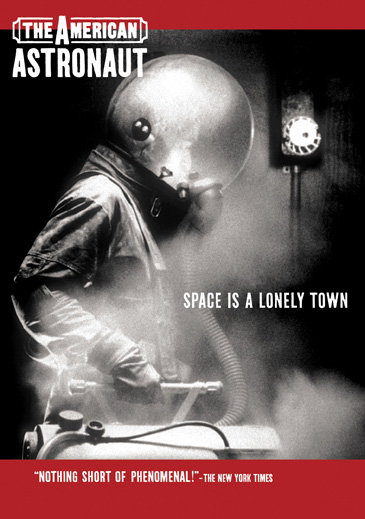
Hey, The American Astronaut, a film-noir musical about a steampunk astronaut, isn’t the most widely known astronaut in music. I got to feeling nostalgic about Major Tom and other Musical Odes to Astronauts and found a few that I thought you might enjoy.

Most of these songs characterize the astronaut as lonely and eventually disconnected–disconnected from family as he leaves, disconnected from Earth, and in a few of the songs, disconnected from the spaceship as well, as he floats out into the nothing of space. Bowie’s song was in 1969, timed to coincide with the first moon landing; Elton John’s in 1972 and Peter Schilling’s in 1983. I add Duran Duran’s Astronaut as a contrast–he’s “leaving with an astronaut” which makes the song much more about coupling than de-coupling. And then, the opening to “Enterprise”–“Faith of the Heart” that celebrates astronauts as parts of teams.

I think the lonely/together idea is interesting when you talk about astronauts. Are we starting to see astronauts not as those who leave community, but those who are creating community? The first three songs are about leaving, about separating, and about not trusting Ground Control and where they might be sending humans. The other two, perhaps, are seeing the adventurous side of being an astronaut again, certainly about being part of a larger community which connects all the aviation pioneers in a long line of exploration and pushing out into space–which according to Star Trek– is densely populated.

Welcome, “lonely” astronaut!

Below: David Bowie “Space Oddity”; Elton John, “Rocket Man”; Peter Schilling “Major Tom”; Duran Duran “Astronaut” and Russell Watson’s “Faith of the Heart,” the opening to the TV series “Enterprise.”

For more on the story of Major Tom and the first three songs, try this link to the Straight Dope on Was there really a Major Tom?

The Science Fiction Western Musical You Might Have Missed

It was 2001, and a lot was going on in the world, so you might have missed this movie. I bought American Astronaut because I heard great reviews. It was a Sundance Festival Official Selection, and in Toronto as well. It’s won numerous awards. Black and white, some great cinematography moments. See the trailer here.

http://www.americanastronaut.com/video/AmericanAstronaut-trailer.m4v

But for a sample of this bizarre movie, check out this Youtube moment:

As a movie, it’s stunning visually in an episodic way. Film noir-like, each scene seems to have been thought of as a separate selection–as if in a university film class– and so they don’t all weave together well. The plot is hard to follow–until a moment in the bar when the plot is explained–but afterwards, every moment that you believe you will identify with this story and these characters, you are shoved out into the cold on your own. I did get through the whole thing, but wished there was more time spent on Venus–the focus of the mission–and in the showdown between Curtis and Hess–the focus of the movie.

You can’t say the dialogue is bad, only that it is weird. My friends and I laughed a lot. You have to experience it for yourselves, though I can’t recommend it. Entertainment Weekly says, “Imagine a Laurel and Hardy skit directed by Salvador Dali.” And that sums it up. It’s surreal.

If you are looking for a coherent plot, you won’t find it. Sympathetic, understandable characters, nope. Believable motivations, or a world with certain rules–nope.

But you will find a dance contest on an asteroid, a locomotive and barn in space, a planet full of Victorian women, and that great dance scene in the men’s bathroom…and great camera angles and solid cinematography. Good music–yep, it’s fun.

I think that my friends will probably make me pay for many years to come for subjecting them to the film…but I told them it gave us good bonding time. Like going through a car wreck, with a good soundtrack.

Cell Phones, Brain Tumours and the Future of Communication

Just finished reading a great article by Melinda Wenner in Walrus Magazine about the connection between Cell Phones and Brain Tumours.  What it does isn’t so much confirm the connection, but confirm the complete avoidance by cell phone companies on confirming compelling evidence.  It was enough to make me want to limit use.  Check out the article for yourself on Walrus, the magazine.  You make the call–or not.

Cellphone Games

I’m tired of there not being more sound, comprehensive studies done, and that science is being curbed by companies.  If we can get phen-phen off the market, why can’t we do some substantial studies on technology–something that affects millions and millions of people?

If I were iPhone, I would make Skype standard on the device, elimate the phone itself and just make it a video phone–we’re heading there anyway.  Vidphones are about to catch up to Science Fiction.   And having to see a screen in your hand would keep the radiation away from your brain.

My Prediction: Whoever makes Skype universal on their Blackberry/iphone/Palm Pilot/cellphone wins the communication wars.  Period.

Edward Gorey on Writing a Novel: The Unstrung Harp

My friend and fellow Clarionite, Nick Wolven, posted this link to Edward Gorey’s beautiful, wrenching depiction of a novelist at work. I’d like to say this doesn’t often happen, but that part about wandering around doing everything else but writing—uh–that happens. Going to places or events to “improve the novel”, thinking that everyhing you attend and experience will aid the writing—uh—that happens. But it is funny. See how much this resonates with you:

The Unstrung Harp; or, Mr. Earbrass Writes a Novel