Write with Me at The BRAINERY workshop!

brainerybanner-800x253

Would you like to write a few stories this summer and work with me for ten weeks?  The Brainery Workshop has several spots still open to work with me or Valerie Valdes in times that are convenient for you!

EVERYTHING IS ONLINE.  So you can participate no matter WHERE you are in the world, as long as you have a good internet connection.

We get together once a week and work on your stories.  We also go through Ursula K. LeGuin’s workshop guide, Steering the Craft, and we use the Jeff VanderMeer and Jeremey Zerfoss’ Wonderbook.  We’ll also be reading stories from Lightspeed and other magazines.

Come join a small group online—using GoToMeeting and WetInk–to create a great place for writing!

Want to know more?:  Follow this link to the BRAINERY WORKSHOP.

Jesus in Science Fiction

I started teaching a course that looks at the character of Jesus when he shows up in SJombsfcience Fiction.  Currently the course is only 6 weeks long and only taught at the UDLLI, the University of Dayton’s Lifelong Learning Centre for Senior Adults.  We are using the following short stories and novels in the course, and I will be placing the blogposts of the course over on Wrestling With Gods website because it’s become a great place to talk about religion and faith as it appears in science fiction and fantasy.

What happens to Biblical Jesus when the narrative is continued into the future?  Is it subverted?  Are writers appropriating Christianity to rewrite it and rob the narrative of its miracle, or do they instead seek to expand the notion of Jesus to its infinite possibility?  How does Jesus fare in science fiction and what can we learn about faith when science fiction writers write about him?  We look first at the life of Jesus in the Gospels to ground us in the ur-text, try to gather the importance of him as a character and iconic figure in history, culture and religion.  How is Jesus relevant in the future?  Then we look at how authors extrapolate the future of faith, or seek to tweak history, just a bit, to get the savior they want, and perhaps we can better see what kind of culture we are in the face of our chosen Saviour.

Come follow along over on the Wrestling with Gods site.  Already the class has been exciting as these students know a lot about religion, specifically Judaism and Christianity (UD is a Catholic institution) and many retired professors attend these classes for fun (they also can be quite mischievous).

The works we’re going to explore, and I will detail in blogposts are these:

To get us oriented on Jesus the character in the Bible:

Jesus: the Face of God    Jay Parini

“The Man”     Ray Bradbury from The Illustrated Man

“Mecha-Jesus”     Derwin Mak from Wrestling With Gods

“So Loved”           Matt Hughes from Wrestling With Gods

“The Rescuer”      Arthur Porges

“The Traveler”          Richard Matheson

“The Real Thing”       Carolyn Ives Gilman

 “Let’s Go to Golgotha!”      Garry Kilworth

“The Gospel According to Gamaliel Crucis”   Michael Bishop (a longer work I may not use)

“Jesus Christ in Texas” W.E.B Dubois  (which isn’t exactly Science Fiction, but may prove useful in this study)

Then two novels:

Behold the Man, Michael Moorcock, 

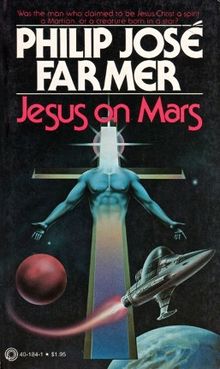
Jesus on Mars   Philip Jose Farmer

 If we have time, “Farewell to the Master,” Harry Bates—Which becomes The Day the Earth Stood Still.  This would be delightful to show to students in a longer class.  To read the short story and then watch both films.  

I can also see adding these works to the syllabus for a longer class:

The Man Who Died         DH Lawrence

Jesus Christ, Animator   Ken MacLeod

All Star Superman       Grant Morrison

Jesus Christs                AJ Langguth

Only Begotten Daughter     James Morrow

If you have suggestions on stories, poems, or novels to add to this list, let me know. Specifically we are NOT covering characters who merely have a “savior-esque” quality to them, or those that have a martyr motif.  I want to look at places where characters are for all intents and purposes supposed to BE Jesus.


Jerome in the Yukon Writers Festival

20130422-154228.jpg

A really nice article by Dan Davidson appeared in the Whitehorse Star on Friday, April 19. Alistair Maitland did the photo. I appreciate them both. I think this Festival will be a lot of fun. It’s always good to get to teach Yukon high school students as part of the Young Authors Conference as well.

The Festival starts with a big reading at the Kwanlin Dun Cultural Centre Tuesday night at 7pm. The Young Authors Conference is held the next two days after that in FH Collins Library and then we head off Friday to Haines Junction for a reading.

Organizer Sara Davidson has done a great job at gathering diverse writers together. Yukoner Dennis Allen, as well as Drew Hayden Taylor and Carrie Mac and Beverley Brenna.

If you can, come and enjoy the readings with us.

Speculating Canada reviews my story, “One Nation Under Gods”

Really thrilled that Speculating Canada reviewed my short story, “One Nation Under Gods” which appeared in Tesseracts 14. It’s hard to get short fiction reviews and they are so valuable.  The SF/F/H community should hold tight and nurture as many reviewers as we can. With a growing market of books, the discerning reader looks to reviews to help choose what to read.  And reviewers who choose short fiction, new authors, and anthologies help support beginning writers who are starting their careers, hoping that someone notices.  So we can’t fete reviewers enough–we need them, we love them, we should be very kind to them.

I’d say this for any thoughtful reviewer, even if Derek had NOT liked my work.  It’s the way he liked my work that makes me happy. 

Speculating Canada has a really great aim:

This site has been created in response to the overwhelming number of people who are surprised that Canadian literature includes the fantastic. Canadian SF, fantasy, and horror have been cast into a literary ghetto under the power structure of CanLit, and cast as either inferior literatures, or literatures that are not ‘of here’, i.e. from abroad. Yet, Canadian speculative fiction has a long history in Canada and engages with ideas of Canadian identity, belonging, and concepts of nationhood, place and space (both ‘the final frontier’ type, and the geographical).

Realist fiction is often seen as the only ‘truly’ Canadian fiction, but even realist fiction speculates, postulates and creates a fantastic idea, just one that is based more closely on the normative world around us than most SF authors are inclined to do.

Canadian SF allows for the engagement with ideas such as What is Canada? What does belonging mean? What is the nature of ‘human’? Why are things the way they are? How do we change things? Can things change?

The appeal of Canadian SF is not just regional, but has implications for a wider audience. Canadians, long un/comfortable with our identity as a hybrid of the American and English, Francophones and Anglophones, Aboriginal and settlers, and the multicultural mix that is embedded in our philosophy, means that we are comfortable with questions of identity and the exploration of our place, ideas that naturally lend themselves to science fiction, fantasy, and horror. We live in a world that is unsure of itself, and uncomfortable with ideas of belonging, and Canadian SF plays with ideas of belonging, disrupts the normal (or what has come to be seen as normal) and allows for a new way of experiencing the world.

As for the review–well, I’ll let you read most of it as his site, but here’s a nice chunk:

Continue reading

Clarion Write-a-Thon: Join Team Bears Discover Fire

Wanna light a fire under your writer’s bum and do a good deed?

Clarion Science Fiction and Fantasy Workshop has developed the Write-a-Thon to help YOU and to help THEM.

You might be in a place in your life where you haven’t been writing much, but you wish, wish, wish, that you could–or that you had the time.  What we need, rarely, is the time—we need encouragement. The time will magically appear when we feel people in our life actually WANT us to write.

So Clarion has developed teams of writers to help you reach your writing goal—AND help Clarion reach their fundraising goals.

Here’s how it works:

1.  You say to yourself, I give myself permission to write for six weeks as much as I can.  I don’t have to take off from work, but I will find some time–with the help of my spouse, my significant other, my parents–to cordon off even a smidgen of time a day to write.

2.  You sign up with Clarion Write-A-Thon by clicking on those words.

3. (from the Clarion write-a-thon website)

  • First, sign up to write! Fill out as many of the fields as you can. It’s especially important to include a bio and excerpts. A link to your website and/or personal blog helps, too. Your name and a link to your new writer’s page will appear automatically on the Browse Writers page of the Write-a-Thon site.
  • Be sure to upload a recent photo of yourself. A .jpg that is a maximum of 200 pixels in width is ideal. But our software can resize it for you if necessary.
  • Post frequent updates everywhere. Refresh your Write-a-Thon writer’s page often with new excerpts. Post writing progress reports on your personal website, your blog, your Facebook page, and your Twitter feed. Make sure all of your efforts link to your Clarion Write-a-Thon writer’s page.
  • Line up your sponsors. Contact friends, family and fans to let them know you’re raising money for Clarion while nurturing your writing life. Your writer page comes complete with personalized donation buttons to make it easy for your supporters. Feel awkward about asking? Here’s a model letter to use as a starting point.
  • Participate as both a Writer and a Sponsor. When you support others, they’ll support you in return.
  • Join a team and get a mentor. Once you have $20 in donations, you’ll have the option of joining a small group of eight Write-a-Thon writers. Each group is mentored by a Clarion Workshop instructor or graduate, ready and waiting with advice and encouragement. To join a team, wait for your emailed invitation, or write to treasurer@theclarionfoundation.org.
  • Get Write-a-Thon badges for your blog and your website.
  • Remember, there are prizes! We’re giving away iTunes, Amazon, or B&N gift cards to our top earners, along with Write-a-Thon keepsakes. And each writer who brings in $250 or more gets a free story critique from a Clarion author!
  • You can also earn Write-a-Thon merit badges. You can begin writing any time. But beginning on the June 24, the official start of the Write-a-Thon, we have a special treat for you. On your Write-a-Thon writer’s page, you’ll see a grid with a question mark in each square. You can earn a maximum of one merit point every 24 hours by clicking the “I WROTE TODAY” button that will soon appear near the grid. As your merit point total passes certain milestones, merit badges will appear in your grid. We’re keeping the formula secret, so you never know when a badge will appear or what it will be. It’s all part of the motivational fun. We’re also trusting you to be honest. Only click the button if you really did some writing!
  • Sign up for the Clarion E-bulletin mailing list. It’s the best way to keep up with the latest Write-a-Thon news

See that part about “JOIN A TEAM”— that’s where I come in.  I’ve volunteered to be a mentor–with advice and encouragement!  My team is called TEAM BEARS DISCOVER FIRE after Terry Bisson’s story, “Bears Discover Fire.”  You’re going to discover fire in this group–as I’ll encourage you to write every day.  I’ll give prompts for those who want them, and encouraging little notes as we go along.  You’ll be in a group of people just like you who are pushing themselves for six weeks!  It’s just six weeks.  I wonder what YOU could do in six weeks if you had the encouragement from family and friends to do a little writing.

MY goal is to churn out six stories—they’re trunk stories, for the most part, but I need to get them finished.  And Clarion is the way to do it!

You might have a book that needs more chapters.  You might have some stories that need to get out.  You might have an idea that needs a story!

This Write-a-Thon is Write Up Your Alley.

Join my team and light the fire you need to get some stories and writing done.

BEARS!  Go light that fire!

[Visit the TEAM BEARS DISCOVER FIRE on WordPress and see what we’re up to!]

Bless You, Ray Bradbury

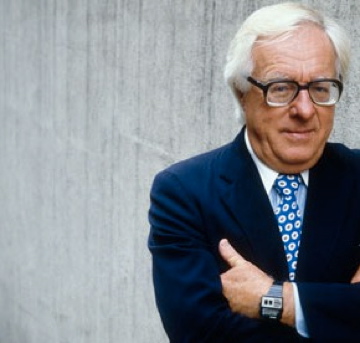
I was sad to hear of the passing of Ray Bradbury, a giant in my life.  He was 91, so he lived a good long life, and he gave us amazing writing like Something Wicked This Way Comes and Fahrenheit 451.  But I will always remember him for his collections of short stories, The Illustrated Man, Martian Chronicles, R is for Rocket, S is for Space, Medicine for Melancholy, and others.  They fueled my imagination–as I’m sure they did many people.  But I can truthfully say that Ray Bradbury–with his lyrical writing, his vivid description and interesting stories–shaped me as a writer. I heard he was one of those bridge writers–the ones that transcended genre.  But that didn’t matter.  What mattered was that he took me places, expanded my imagination, urged me to tell stories.

We met once.

I was in Lubbock, working, I think, on my last year at a degree at Wayland Baptist University.  It was 1992.  Ray was speaking at a Young Author’s conference, but also as a public speaker.  I was there to meet my hero.  I brought a copy of Martian Chronicles with me, and the picture of him in the paper.

He talked about his time working for the Smithsonian, designing famous garages of inventors; his work on the Moby Dick screenplay for John Huston.  He didn’t talk much about making science fiction…  but I was rapt nonetheless.  This man had produced so much.  His imagination was so vivid.

Afterwards, there was of course a line up to get signatures. Ray sat behind a small table, and I worked my way up to him.  While I was still a couple of people away, a woman came out of nowhere and jumped the line–with a stack of ten books, all open to the front page.  These she plunked down in front of Ray, saying “These won’t take you but a minute.”  Then she grabbed him by the shoulders and turned him sideways so her daughter could snap a picture.  I think Ray was a bit miffed–a whole line of people trailed out in front of him.

After quickly signing all her books, while she babbled, he turned back to the line with a huge amount of graciousness for our patience.  When I got up there, I put my newspaper and book in front of him, and said, “You’re the reason I started writing.”

He looked up.  “Are you sending stuff out?”

“Well, I’m trying to…I mean…” I stammered.  I wasn’t a very confident writer in 1992, with no sales to my name, but thirty bad stories completed and sitting around somewhere.

“You have to send them out.  Send one out a week.  That’s what I did.  I wrote one story a week–started on Sunday and mailed it on Saturday.  I did this for years.  That way I had 52 stories in the mail and some of them had to sell!”

He laughed.  He shook my hand.  I assured him I would do that. I didn’t keep that promise.  I went on to college, studied writing, but never writing one story a week–until I got to Clarion Writing Workshop and had to write one story a week–(I got five out of six weeks!)

That day back in 1992 I felt blessed by Ray Bradbury.  My hero took time with me, gave me advice.  Perhaps he was fueled by the woman who had taken the time he wanted to give us–maybe he felt an extra special need to be encouraging to me.  I don’t know, but I’ll never forget it.

Bless you, Ray Bradbury.  Bless you for blessing me that day.  And bless you for all the wonderful stories and novels and essays you left us.  And how you crafted magic out of an ordinary day.

Writing Faith Workshop begins, Feb 10, 5-8pm, Whitehorse United Church

  How do you write about your “faith”?  How do you describe the indescribable, the ineffable, the otherworldly? the grief or joy or miracle or peace or disappointment that you have because of your faith?  Everyone can argue about the value or lack of value in “religion”–and it’s an easy connect-the-dots to create your own pictures of what organized religion has done in the world.  It’s harder to write about personal faith or your personal interactions with religion–what keeps you going, what happened to you that you know no one would believe, about the anguish of trying to live in a real, faulty, fragile world, when others ask you to strive for peace, patience, happiness, even joy.

This writing workshop will explore how people write about these very personal experiences, or their thoughts about faith and religion and its very real presence in their lives, or the lives of those around them.  We’ve had students write about their relationships with their parents, their children, their grandchildren, experiences in nature, in confronting others who aren’t on the same page.  We have had students who are believers, non-believers, unsure, people of various faiths.  All faiths are welcome–come with what’s important to you, open to what is important to others. This isn’t a dogma class.  It’s not a class to teach you from the top down.  It’s for you to teach us from the ground up through your experiences, your writing.

Continue reading

The Truth and the Narrative in Beauty: Compagnie Marie Chouinard’s “The Golden Mean”

To the slow, pounding, pulsing kettledrum, its waves of sound hitting the audience, the two sheen-fabric wrapped shapes on the stage slowly writhe and discard their stiff shimmering sheaths.  So begins Marie Chouinard’s The Golden Mean, restaged for another amazing tour.  I would have a hard time describing what happens.  It’s modern dance, but the performers are all wearing golden wigs, masks, and tassles that run down their legs, at first.  They resemble fauns.  But this isn’t Prelude to “the Afternoon of a Faun”—the music sounds a bit like a science fiction chorale, voices, drums, chorus, building, sustaining, crashing, wincing and dodging, always aching with long-note beauty.

There are maybe twelve dances in the 80 minutes, and each one provides a chance for the viewer, the audience, to participate by bringing their own meaning to the dance.  Perhaps this was intentional; perhaps not.

The dancers, part ballet-part something deeply, bodily organic–they tiptoe, launch, lurch across the stage, always flowing in rhythm to the music.  They are all lovely to watch.  For the first few numbers we feel as if we’re seeing the birth of a civilization, a whole society; toddlers walk across the stage, learn to laugh and cry together, have first few sleeps; ensemble pieces involving the whole company break up the solo, duo and trio dances.  I was most captivated by the two dancers who seemed to be acting out a first relationship—a man who dates the pliable woman, the one he fits into any shape he wants; he is aggressive, demanding, sexual, and she is passive, not quite even awake in the dance.  He discovers how wonderful it is to slide her hand down his face, his chest, his groin; and she starts to fight him, pushing away, and they twist each other back and forth, as she starts finding her own inner aggressor.  They have tortuous sex, or the dance version of it, always moving, stretching, twisting and flexing those dancers’ bodies.  I was captivated too by the narrative I was creating out of the dance–the story I gave that dance, that I’m even giving that dance now in this essay.

We can’t help it.  Human beings, when we see two or more humans interacting with another, we come up with a narrative, a voice over, maybe, but at least a set of actions, reactions, motivations, based on the expressions, the movements that we see in front of us.   Try it at your local mall.  Watch people for any length of time and you give them a narrative.  You can’t help it.

Continue reading

“Amina” Acid and the Ballad of Bill of Tom: deception in the pursuit of activism

What to make of the sudden revelation that two prominent lesbian bloggers, both activists, were really men?

Tom MacMaster, an American student studying in Scotland, his subject Middle Eastern Studies, created the blog “Gay Girl in Damascus” as a way to give himself a voice in the debates about what was going on in Syria, a voice others would believe.  Well, he got more than he bargained for.  The new found fame–when other people started reading the blog—went to his head, he admits, and he took the opportunity to start pushing his opinions, through Amina Arraf, on all sorts of things related to Syria.  He wanted to make a difference and claimed that no one would listen to him as a white American male.  His blog seemed to be recording life during the “Arab Spring”–a time that’s exciting everyone all over the world.  Oddly, instead of a male protagonist, in Syria, he made his “character” a lesbian:

“It was part of the challenge of being someone who wasn’t me. It was a way of also drawing attention to things, I do think there is a certain orientalism, where we in the West tend to pay more attention to people that are like us, people we can relate to, someone marginalized is more interesting.

I also think I wanted to show that in Syria, too, there are people who are all different, gay, straight, people of every possible permutation.” (from the Washington Post)

When, in a dramatic turn of events in “Amina’s” life, MacMaster writes that she’s kidnapped, he suddenly got the world’s attention.  People were noticeably upset about what was happening to this lesbian blogger in Syria.  They wanted to help. The Post says that this is the moment when a blog that might have remained believable took a misstep.  It was that Amina had so many supporters, so many people “she” had talked to, that they wanted to help her.

Continue reading

The Nudge, The Monument, and The Fan Base: thoughts about the endurance of writers

Roger Ebert responded recently to an article by Cynthia Ozick written in the New Republic.  So goes my reading.  I get my Ozick from Ebert, but that’s ’cause I’m reading where Ebert is writing.  I don’t have a subscription to the New Republic (but, alas, I should).  Anyway, he quotes from her a lengthy passage about writers no one reads anymore.

Death disports with writers more cruelly than with the rest of humankind,” Cynthia Ozick wrote in a recent issue of The New Republic.

“The grave can hardly make more mute those who were voiceless when alive–dust to dust, muteness to muteness. But the silence that dogs the established writer’s noisy obituary, with its boisterous shock and busy regret, is more profound than any other.

“Oblivion comes more cuttingly to the writer whose presence has been felt, argued over, championed, disparaged–the writer who is seen to be what Lionel Trilling calls a Figure. Lionel Trilling?
“Consider: who at this hour (apart from some professorial specialist currying his “field”) is reading Mary McCarthy, James T. Farrell, John Berryman, Allan Bloom, Irving Howe, Alfred Kazin, Edmund Wilson, Anne Sexton, Alice Adams, Robert Lowell, Grace Paley, Owen Barfield, Stanley Elkin, Robert Penn Warren, Norman Mailer, Leslie Fiedler, R.P. Blackmur, Paul Goodman, Susan Sontag, Lillian Hellman, John Crowe Ransom, Stephen Spender, Daniel Fuchs, Hugh Kenner, Seymour Krim, J.F. Powers, Allen Ginsberg, Philip Rahv, Jack Richardson, John Auerbach, Harvey Swados–or Trilling himself?”

Ebert goes on to talk about whether he’s read these authors, and he’s read all but two.  Ozick goes on to ask the question of whose writing will endure?  I’m not sure that’s the question to ask.  After the Library of Alexandria debacle, who can say anything will endure?  But can we say that we affected the minds of those who lived?  Yes.

Ozick determines that Saul Bellow will endure, most because of the Adventures of Augie March, a book I know few of my friends will have read.  I haven’t read it, and I should.  But it did affect a whole generation.  Ebert makes a comment about Hemingway, that we will know him for The Sun Also Rises and his stories, but little else (he’s quoting and agreeing with another friend).  And true, Old Man and the Sea, though the Pulitzer winner, isn’t the book that endures.  It’s his first book of stories, I think, and The Sun Also Rises that continue to be read.

The Fan Base

I will say that in Science Fiction and Fantasy they have developed the concept of the FAN BASE.  And this actually keeps writing, and writers, alive.  JRR Tolkien will endure for a very long time.  So will Stephen R. Donaldson, Isaac Asimov, Ray Bradbury, etc.  The classics of Science Fiction are still being read by the fan base, by those who love science fiction and fantasy.  They are suggesting them to their friends.  They are voracious readers and they claim, quite knowledgeably, that you can’t know science fiction and fantasy without reading this set of writers, or that book, and at the conventions these writers are celebrated.  Even ComicCon has such a large science fiction and fantasy base that these 30,000 people will all know a large set of names, not just the celebrities of the moment, but the masters and grandmasters of the genre.

It could be that you might dismiss the FAN BASE as those who feed on pulp, but I would argue that they know what they like, and they are assisting in the endurance of writers and writing and that cultivating a fan base is not a bad idea.  Further, these “genre writers” are introducing them to many of the great works of literature, by quoting from, giving allusions to, works by other authors.  Many of our first introductions to literature–Shakespeare even–was in a comic book, or in a science fiction novel.  I’m not going to give too much more a spirited defense to the importance of Fantastic Literature, or say too much longer that, before Hemingway, authors had their science fiction novels and their literary novels and no one thought of the books differently: London, James, Twain, Poe, Hawthorne, all had a novel where time travel or science fiction played a large role.  Anyway, I have a larger point to make. Still, hold onto the idea that developing a fan base is important–because a fan base has been enthused by your writing, has been affected by your writing, and seeks to market you to their friends.

Continue reading