Clarion Write-a-Thon: Join Team Bears Discover Fire

Wanna light a fire under your writer’s bum and do a good deed?

Clarion Science Fiction and Fantasy Workshop has developed the Write-a-Thon to help YOU and to help THEM.

You might be in a place in your life where you haven’t been writing much, but you wish, wish, wish, that you could–or that you had the time.  What we need, rarely, is the time—we need encouragement. The time will magically appear when we feel people in our life actually WANT us to write.

So Clarion has developed teams of writers to help you reach your writing goal—AND help Clarion reach their fundraising goals.

Here’s how it works:

1.  You say to yourself, I give myself permission to write for six weeks as much as I can.  I don’t have to take off from work, but I will find some time–with the help of my spouse, my significant other, my parents–to cordon off even a smidgen of time a day to write.

2.  You sign up with Clarion Write-A-Thon by clicking on those words.

3. (from the Clarion write-a-thon website)

  • First, sign up to write! Fill out as many of the fields as you can. It’s especially important to include a bio and excerpts. A link to your website and/or personal blog helps, too. Your name and a link to your new writer’s page will appear automatically on the Browse Writers page of the Write-a-Thon site.
  • Be sure to upload a recent photo of yourself. A .jpg that is a maximum of 200 pixels in width is ideal. But our software can resize it for you if necessary.
  • Post frequent updates everywhere. Refresh your Write-a-Thon writer’s page often with new excerpts. Post writing progress reports on your personal website, your blog, your Facebook page, and your Twitter feed. Make sure all of your efforts link to your Clarion Write-a-Thon writer’s page.
  • Line up your sponsors. Contact friends, family and fans to let them know you’re raising money for Clarion while nurturing your writing life. Your writer page comes complete with personalized donation buttons to make it easy for your supporters. Feel awkward about asking? Here’s a model letter to use as a starting point.
  • Participate as both a Writer and a Sponsor. When you support others, they’ll support you in return.
  • Join a team and get a mentor. Once you have $20 in donations, you’ll have the option of joining a small group of eight Write-a-Thon writers. Each group is mentored by a Clarion Workshop instructor or graduate, ready and waiting with advice and encouragement. To join a team, wait for your emailed invitation, or write to treasurer@theclarionfoundation.org.
  • Get Write-a-Thon badges for your blog and your website.
  • Remember, there are prizes! We’re giving away iTunes, Amazon, or B&N gift cards to our top earners, along with Write-a-Thon keepsakes. And each writer who brings in $250 or more gets a free story critique from a Clarion author!
  • You can also earn Write-a-Thon merit badges. You can begin writing any time. But beginning on the June 24, the official start of the Write-a-Thon, we have a special treat for you. On your Write-a-Thon writer’s page, you’ll see a grid with a question mark in each square. You can earn a maximum of one merit point every 24 hours by clicking the “I WROTE TODAY” button that will soon appear near the grid. As your merit point total passes certain milestones, merit badges will appear in your grid. We’re keeping the formula secret, so you never know when a badge will appear or what it will be. It’s all part of the motivational fun. We’re also trusting you to be honest. Only click the button if you really did some writing!
  • Sign up for the Clarion E-bulletin mailing list. It’s the best way to keep up with the latest Write-a-Thon news

See that part about “JOIN A TEAM”— that’s where I come in.  I’ve volunteered to be a mentor–with advice and encouragement!  My team is called TEAM BEARS DISCOVER FIRE after Terry Bisson’s story, “Bears Discover Fire.”  You’re going to discover fire in this group–as I’ll encourage you to write every day.  I’ll give prompts for those who want them, and encouraging little notes as we go along.  You’ll be in a group of people just like you who are pushing themselves for six weeks!  It’s just six weeks.  I wonder what YOU could do in six weeks if you had the encouragement from family and friends to do a little writing.

MY goal is to churn out six stories—they’re trunk stories, for the most part, but I need to get them finished.  And Clarion is the way to do it!

You might have a book that needs more chapters.  You might have some stories that need to get out.  You might have an idea that needs a story!

This Write-a-Thon is Write Up Your Alley.

Join my team and light the fire you need to get some stories and writing done.

BEARS!  Go light that fire!

[Visit the TEAM BEARS DISCOVER FIRE on WordPress and see what we’re up to!]
Bless You, Ray Bradbury

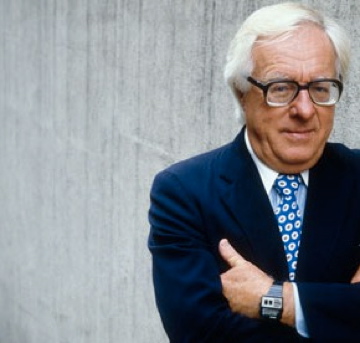
I was sad to hear of the passing of Ray Bradbury, a giant in my life.  He was 91, so he lived a good long life, and he gave us amazing writing like Something Wicked This Way Comes and Fahrenheit 451.  But I will always remember him for his collections of short stories, The Illustrated Man, Martian Chronicles, R is for Rocket, S is for Space, Medicine for Melancholy, and others.  They fueled my imagination–as I’m sure they did many people.  But I can truthfully say that Ray Bradbury–with his lyrical writing, his vivid description and interesting stories–shaped me as a writer. I heard he was one of those bridge writers–the ones that transcended genre.  But that didn’t matter.  What mattered was that he took me places, expanded my imagination, urged me to tell stories.

We met once.

I was in Lubbock, working, I think, on my last year at a degree at Wayland Baptist University.  It was 1992.  Ray was speaking at a Young Author’s conference, but also as a public speaker.  I was there to meet my hero.  I brought a copy of Martian Chronicles with me, and the picture of him in the paper.

He talked about his time working for the Smithsonian, designing famous garages of inventors; his work on the Moby Dick screenplay for John Huston.  He didn’t talk much about making science fiction…  but I was rapt nonetheless.  This man had produced so much.  His imagination was so vivid.

Afterwards, there was of course a line up to get signatures. Ray sat behind a small table, and I worked my way up to him.  While I was still a couple of people away, a woman came out of nowhere and jumped the line–with a stack of ten books, all open to the front page.  These she plunked down in front of Ray, saying “These won’t take you but a minute.”  Then she grabbed him by the shoulders and turned him sideways so her daughter could snap a picture.  I think Ray was a bit miffed–a whole line of people trailed out in front of him.

After quickly signing all her books, while she babbled, he turned back to the line with a huge amount of graciousness for our patience.  When I got up there, I put my newspaper and book in front of him, and said, “You’re the reason I started writing.”

He looked up.  “Are you sending stuff out?”

“Well, I’m trying to…I mean…” I stammered.  I wasn’t a very confident writer in 1992, with no sales to my name, but thirty bad stories completed and sitting around somewhere.

“You have to send them out.  Send one out a week.  That’s what I did.  I wrote one story a week–started on Sunday and mailed it on Saturday.  I did this for years.  That way I had 52 stories in the mail and some of them had to sell!”

He laughed.  He shook my hand.  I assured him I would do that. I didn’t keep that promise.  I went on to college, studied writing, but never writing one story a week–until I got to Clarion Writing Workshop and had to write one story a week–(I got five out of six weeks!)

That day back in 1992 I felt blessed by Ray Bradbury.  My hero took time with me, gave me advice.  Perhaps he was fueled by the woman who had taken the time he wanted to give us–maybe he felt an extra special need to be encouraging to me.  I don’t know, but I’ll never forget it.

Bless you, Ray Bradbury.  Bless you for blessing me that day.  And bless you for all the wonderful stories and novels and essays you left us.  And how you crafted magic out of an ordinary day.

Which do you want? Love or Power: Wagner’s Der Ring des Nibelungen

I was living with my folks the last time I saw the Ring Cycle on PBS in the US.  I made my parents endure several hours of it before they said, enough!  After all I had hi-jacked the TV for several nights.  And I was in the middle of Siegfried, and well, maybe…..  actually my mother came to me and said, “Are you really enjoying this?” with a hint that she’d probably prefer something else.  And actually, then, without the absence of distraction–I was inside the living room of an active six person house with dog–I don’t remember much of the Ring Cycle at all.  I do remember telling my mom that we could change the channel.

I know, high recommendation eh?  But it was a small tv, on a fuzzy station, in a mad house of six people and dog— it wasn’t the Yukon Arts Centre, with its HD and surround sound.  It’s giant screen.  And it wasn’t hunky Bryn Terfel, the Wotan of this Ring Cycle.  I’m unabashedly crushing on Bryn Terfel.

Needless to say, I am looking forward to going through my first RING CYCLE in its entirety!  As a fully realized, aware, culturally-interested adult (without a dog).  I want the t-shirt that says I got through it.  I may ask Triple J’s to make some!

Anyway, a FREE movie begins the cycle–it’s Wagner’s Dream: the Making of the Ring Cycle at 7pm on Saturday, May 12.

________________________

Because we are offering the Ring Cycle and because I’m kind of the defacto host of these Met Opera’s, I needed to know more about it–so I looked up the story.  It’s freakin’ amazing!

It might sound familiar: A ring forged that will let the wearer rule the world, dwarves fighting for the ring, dragons that guard it, doomed lovers— seems like Wagner’s Ring Cycle might be  The Lord of the Rings with music.  It’s not true.

Though there is a strong case that Wagner and Tolkien both got their source material from the same places–German and Norse mythology and sagas–what they crafted is very different.  And with all proper credit to Tolkien, Wagner’s opera has just as much amazing storytelling as the tale of hobbits and wizards.

Tolkien’s Trilogy of books starts off with a prelude book, The Hobbit, just as Wagner’s trilogy of operas starts off with Das Rheingold.

Continue reading

Characters with Something On Their Minds: the brilliant writing inside Deep Impact

Recently, I re-watched Deep Impact, one of two “asteroids-going-to-hit-Earth” movies that came out simultaneously (the other being, the poor-in-comparison, Armageddon).  Deep Impact builds slowly, and has amazingly drawn characters.  It’s worth it to watch just to pick up some tips on character development.  These are my thoughts after watching it.

1.  Every character in the movie has their own worries or concerns BEFORE their first scenes.  Jenny Lerner (Tea Leoni) wants to make a name for herself as a reporter and move up faster than the news organization’s corporate ladder will allow.  Leo Biederman (Elijah Wood) is falling in love.  Jenny’s mother (Vanessa Redgrave) is achingly going through the news of the marriage of her ex-husband to a younger woman; and the ex-husband has just married, and in the process, estranged his daughter.  Others are having babies, concerned about parties coming, or debts, or something.

It’s very easy for me as a writer to create characters who come into my scenes to do my bidding and then exit, stage left.  This makes them one-dimensional and cardboard–it also makes them a bit robotic, there to get my plot done for me.  BETTER are characters who have had something JUST happen to them when they come into your story, in other words, they are recovering from a cold, they are dealing with bills, parents passing, daycare that’s too expensive–something.  These scenes were really short, but they helped me care about the characters quicker because they had outside interests, outside agendas besides the imminent needs of the PLOT.

2.  They make CHOICES based on their previous problems or worries.  I was very surprised to see what kinds of choices they made, choices bound by the plot, yes, but could only have happened because of the natural cause-and-effect of the plot.  Someone chooses not to be saved; someone chooses to rescue someone else; someone kills themselves; each new choice brings about other choices–but choices that build on one another.

Sometimes writers (like me) create plots that are heavily structured because of what we want to see but we don’t quite take into consideration the kinds of choices  the characters would make—we make their choices from who they are in the beginning, not who they are BECOMING as the story progresses.  Events change us, and I was reminded that characters in the movies could not have made certain choices without having gone through the events in the movies. It’s a good thing to remember that the events of your story change your characters–and they do it gradually.

Change doesn’t happen because of one event, usually.  It happens because we are exposed again and again with events and choices.

Continue reading

“Amina” Acid and the Ballad of Bill of Tom: deception in the pursuit of activism

What to make of the sudden revelation that two prominent lesbian bloggers, both activists, were really men?

Tom MacMaster, an American student studying in Scotland, his subject Middle Eastern Studies, created the blog “Gay Girl in Damascus” as a way to give himself a voice in the debates about what was going on in Syria, a voice others would believe.  Well, he got more than he bargained for.  The new found fame–when other people started reading the blog—went to his head, he admits, and he took the opportunity to start pushing his opinions, through Amina Arraf, on all sorts of things related to Syria.  He wanted to make a difference and claimed that no one would listen to him as a white American male.  His blog seemed to be recording life during the “Arab Spring”–a time that’s exciting everyone all over the world.  Oddly, instead of a male protagonist, in Syria, he made his “character” a lesbian:

“It was part of the challenge of being someone who wasn’t me. It was a way of also drawing attention to things, I do think there is a certain orientalism, where we in the West tend to pay more attention to people that are like us, people we can relate to, someone marginalized is more interesting.

I also think I wanted to show that in Syria, too, there are people who are all different, gay, straight, people of every possible permutation.” (from the Washington Post)

When, in a dramatic turn of events in “Amina’s” life, MacMaster writes that she’s kidnapped, he suddenly got the world’s attention.  People were noticeably upset about what was happening to this lesbian blogger in Syria.  They wanted to help. The Post says that this is the moment when a blog that might have remained believable took a misstep.  It was that Amina had so many supporters, so many people “she” had talked to, that they wanted to help her.

Continue reading

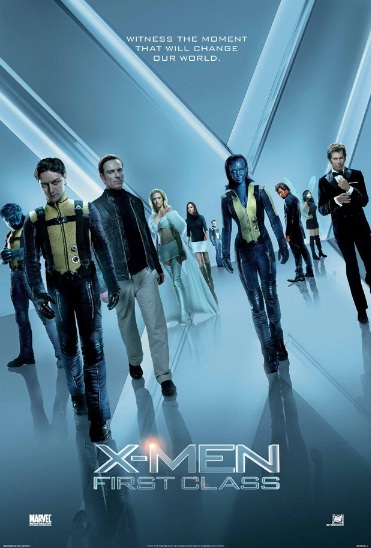
X-Men vs. X-Men: First Class

Okay, I just had to re-watch Brian Singer’s original X-Men (2000) after seeing X-Men: First Class.  I wanted to see how these two movies played off each other.  Call XM:FC what you want–origin story, prequel–it still has to be a good movie.  And I think Singer’s original X-Men is a much better movie than X-Men: First Class.  Here’s why.

1.  XM: So much more character development of several characters–Rogue, Wolverine, Magneto, Xavier, Jean Grey.  This movie takes time with its characters and keeps focus on Wolverine as the “schill” or the “new guy” who gets to experience all the Xavier School like we do, for the first time.  He operates “as us” so other characters tell him things we need to know.  Their world is well-developed already and intricate and we get the idea that it’s solid and has been this way for awhile, and has stuff that we haven’t seen yet.

XM:FC barely develops Eric as a tragic, one-note, revenge-minded character, and Charles as a privileged fop whose compassion comes because of his blindness to others hardships (though occasionally, his mind-link helps him “understand” your pain).  FC Xavier comes by his compassion too easily; original Xavier seems much kinder, empathetic, a person I’d admire.

None of the minor characters in XM:FC are even developed.  They barely get screen time except to fight.  Sure XM has its share of background/throwaway characters who simply run through a door, or make an ice rose, but we don’t need to know who they are.  They aren’t pivotal to the plot.  XM:FC characters are, and it’s a shame they are never really developed.

Continue reading

Mob Rules and the Art of the Team Movie— a review of X-Men: First Class

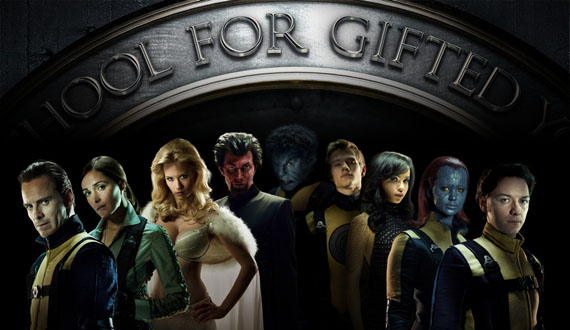
I saw X-Men: First Class last night.  It was a good, solid action movie with stunning special effects.  It moves and kept me interested.  It never had me on the edge of my seat.  It’s an origin story– it has to go through certain details to collect them all–but it doesn’t do it very interestingly, in my opinion.  It also has trouble with multiple characters, having a hard time giving them much development.  I thought the original X-Men did a better job at giving each character a moment.  While Wolverine, Rogue, Dr Jean Grey, et al have their moments to shine as characters pre-Xavier, we don’t have that in this movie.  Here, we barely know anything about Banshee, Beast, Raven, Angel, Darwin, Havoc.  They are more about what they can do than who they are–though they hint at something deeper.  In all, it’s a pretty good film, but not an amazing one.  Enjoy it as an action flick.

Continue reading

Janelle Monáe and Science Fiction: Metropolis, Freedom, and the Other

I like finding science fiction in odd places.   Janelle Monáe is a genius.  Think if the Archies had been a ska band with a funk lead singer.  But she’s more than that.  She’s also a brilliant storyteller.  Her “Many Moons” reimagines the beginnings of science fiction cinema, Metropolis.  She gives the silent film Metropolis the soundtrack it needed.  For Janelle, Metropolis is about many androids now…and there are comments on slave auctions, blaxploitation, and the lack of freedom–for anyone.  For women, for minorities, for humans in a world overcome by technology.  There is no fear of androids in “Many Moons”—but even I would think that at the corners of the movie Monae makes, there is jealousy at the perfection of the androids, and even a bit of jealousy when Cindy Mayweather erupts in a spasm of freedom, or is it a spasm of realization that she is not free…. all I know is that she breaks loose and begins to dance, dance so high, that she short circuits.  But the crowd is in ecstasy with her.

Monae has certainly looked here at humanity as commodity.  She’s done it with brass.  And artistry.  She’s even mixed in a bit of Sesame Street.

I like finding science fiction in odd places.  And this small film is beautiful.    It’s got solid worldbuilding where she’s imagined, in one scene, the state of society.  The characters all have the hint of well-developed backstories; they have desires, weaknesses, past confrontations.  Cindy Mayweather grows as an android/character.  Her growth, perhaps, comes from her realizations–of the names that keep her as Other.  The names are not androidish—they are names leveled at minorities.  Check out the Cybernetic Chantdown after the break.

Continue reading

The Nudge, The Monument, and The Fan Base: thoughts about the endurance of writers

Roger Ebert responded recently to an article by Cynthia Ozick written in the New Republic.  So goes my reading.  I get my Ozick from Ebert, but that’s ’cause I’m reading where Ebert is writing.  I don’t have a subscription to the New Republic (but, alas, I should).  Anyway, he quotes from her a lengthy passage about writers no one reads anymore.

Death disports with writers more cruelly than with the rest of humankind,” Cynthia Ozick wrote in a recent issue of The New Republic.

“The grave can hardly make more mute those who were voiceless when alive–dust to dust, muteness to muteness. But the silence that dogs the established writer’s noisy obituary, with its boisterous shock and busy regret, is more profound than any other.

“Oblivion comes more cuttingly to the writer whose presence has been felt, argued over, championed, disparaged–the writer who is seen to be what Lionel Trilling calls a Figure. Lionel Trilling?
“Consider: who at this hour (apart from some professorial specialist currying his “field”) is reading Mary McCarthy, James T. Farrell, John Berryman, Allan Bloom, Irving Howe, Alfred Kazin, Edmund Wilson, Anne Sexton, Alice Adams, Robert Lowell, Grace Paley, Owen Barfield, Stanley Elkin, Robert Penn Warren, Norman Mailer, Leslie Fiedler, R.P. Blackmur, Paul Goodman, Susan Sontag, Lillian Hellman, John Crowe Ransom, Stephen Spender, Daniel Fuchs, Hugh Kenner, Seymour Krim, J.F. Powers, Allen Ginsberg, Philip Rahv, Jack Richardson, John Auerbach, Harvey Swados–or Trilling himself?”

Ebert goes on to talk about whether he’s read these authors, and he’s read all but two.  Ozick goes on to ask the question of whose writing will endure?  I’m not sure that’s the question to ask.  After the Library of Alexandria debacle, who can say anything will endure?  But can we say that we affected the minds of those who lived?  Yes.

Ozick determines that Saul Bellow will endure, most because of the Adventures of Augie March, a book I know few of my friends will have read.  I haven’t read it, and I should.  But it did affect a whole generation.  Ebert makes a comment about Hemingway, that we will know him for The Sun Also Rises and his stories, but little else (he’s quoting and agreeing with another friend).  And true, Old Man and the Sea, though the Pulitzer winner, isn’t the book that endures.  It’s his first book of stories, I think, and The Sun Also Rises that continue to be read.

The Fan Base

I will say that in Science Fiction and Fantasy they have developed the concept of the FAN BASE.  And this actually keeps writing, and writers, alive.  JRR Tolkien will endure for a very long time.  So will Stephen R. Donaldson, Isaac Asimov, Ray Bradbury, etc.  The classics of Science Fiction are still being read by the fan base, by those who love science fiction and fantasy.  They are suggesting them to their friends.  They are voracious readers and they claim, quite knowledgeably, that you can’t know science fiction and fantasy without reading this set of writers, or that book, and at the conventions these writers are celebrated.  Even ComicCon has such a large science fiction and fantasy base that these 30,000 people will all know a large set of names, not just the celebrities of the moment, but the masters and grandmasters of the genre.

It could be that you might dismiss the FAN BASE as those who feed on pulp, but I would argue that they know what they like, and they are assisting in the endurance of writers and writing and that cultivating a fan base is not a bad idea.  Further, these “genre writers” are introducing them to many of the great works of literature, by quoting from, giving allusions to, works by other authors.  Many of our first introductions to literature–Shakespeare even–was in a comic book, or in a science fiction novel.  I’m not going to give too much more a spirited defense to the importance of Fantastic Literature, or say too much longer that, before Hemingway, authors had their science fiction novels and their literary novels and no one thought of the books differently: London, James, Twain, Poe, Hawthorne, all had a novel where time travel or science fiction played a large role.  Anyway, I have a larger point to make. Still, hold onto the idea that developing a fan base is important–because a fan base has been enthused by your writing, has been affected by your writing, and seeks to market you to their friends.

Continue reading

“…his cultivation of genuine menace…”: a review of “One Nation Under Gods” at Portal

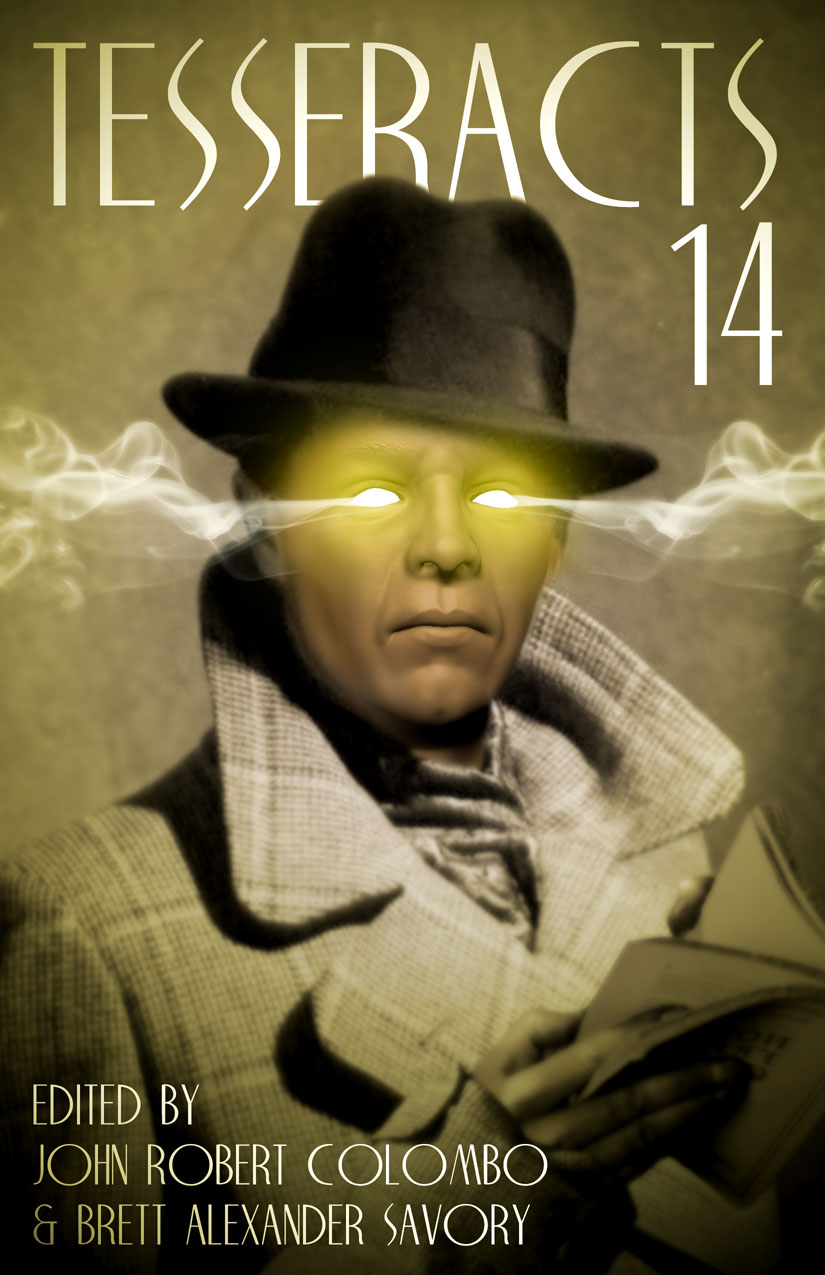
Val Grimm, over at the Portal, gave me a good review for my short story, “One Nation Under Gods”!  Thanks, Val.  I’m always thrilled that there are people who will review short fiction, and anthologies.  Thank you, Val!  Val reviews the whole anthology, Tesseracts 14, story by story.  Here is his review of mine:

The author of “One Nation Under Gods”, Jerome Stueart, emigrated to Yukon from the States in 2007, and his former citizenship is evident in the themes and content of his story. I’m not biased in its favor because of my nationality, nor simply because its dark vision seems in concord with my fears. This story succeeds, in my eyes, because of his detailed worldbuilding, the realistic relationship between the narrator and his sister, and his cultivation of genuine menace, an evocation of the way people can be treated as things. In the world of this story (which in outlook and some tropes puts me a bit in mind of Steve Darnall and Alex Ross’ 1997 comic Uncle Sam) concepts like Freedom and Patriot are incarnate as deities, administered by priests and priestesses, and the Statue of Liberty herself is known to walk abroad. The history of the gods is the history of the country, and its people are required to memorize that catechism or pay with their lives in particularly grotesque ways; if a child fails the standardized test which is a mandated rite of passage, he or she is transformed into a public object, anything from a soda shop to a garbage can. Stueart skillfully incorporates the conflict between individuality and vested religious and political powers; the way those powers can intertwine and what that merging means; the clash between idealism or perception cultivated through propaganda and reality, between history as the study of people in power versus the study of the people’s past; and the transformation of people into instruments, people into numbers.—Val Grimm at the Portal.