Treats, Beverages, and a bit of Fantasy, Shipyards Park, Fri. Dec 4

Students who are a part of Rocketfuel, the science fiction and fantasy writing group afterschool program–sponsored by the City of Whitehorse–will have a reading Friday night–TOMORROW–at Shipyards Park.  They’ll be reading from some of their current work.  There might actually be a story of Santa Claus meeting the Reaper…you never know.  

THE DETAILS:

Shipyards Park

Friday Dec 4, 7-9 pm.  

Treats, goodies, beverages like tea and coffee, and a bit of Fantasy to go home with and share with your season….

If you’re free tomorrow night, come by.  We’d love to have you.

MAD goes into Outer Space for Halloween

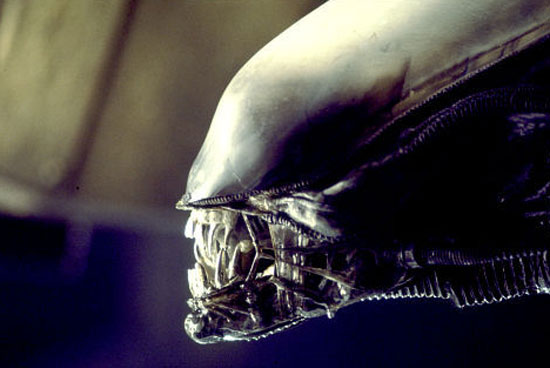
alien1Kudos to the kids of MAD (Music Art Drama) for their Haunted House this year, with its, yes, SCIENCE FICTION theme.  I won’t give anything away, but it’s a lot of fun.  

I didn’t know what to expect, but I was pleasantly shocked.  I really enjoyed the opening number with their rendition of “Science Fiction/Double Feature” and the old movie posters and clips through that number!  Brought back a lot of good memories.  

My advice is not to come too early because you’ll be sitting for a bit.  Come closer to the times they let people in: 1:00 and 2:30 on Halloween.  

You have a hard choice–whether to go through the line and into the haunted house, or sit and watch some cute homemade films from the kids.  I say, stay and enjoy the films at first; the haunted house will be there, so you don’t need to be in line up front.  

I won’t tell you what’s in the rooms, but they’ve done a good job at recreating some of the frights of space travel that have been highly “documented” in science fiction…and playing them for all their worth in front of people.  

I just want to tell the kids: You got me back for scaring you.  The rooms are excellent.  I left wanting more rooms.  There’s some nice originality in these scenes.  I love the Observatory!  But it was the room with the synchronized bodies in it that freaked me out….  The use of the scrim on the stairs was a nice, scary touch, too.  What the MAD kids seem to know is that it doesn’t matter if you show all the details…they leave a lot un-shown, and that’s what frightens you.

Five Dollars will get you a good scare!  Go out and support these high schoolers from MAD.  They’ve done an awesome job. 

And thank you, Jeff and Mary, for thinking of Science Fiction when you think of scary…

Flashforward: the Excellence that “Knowing” could have been

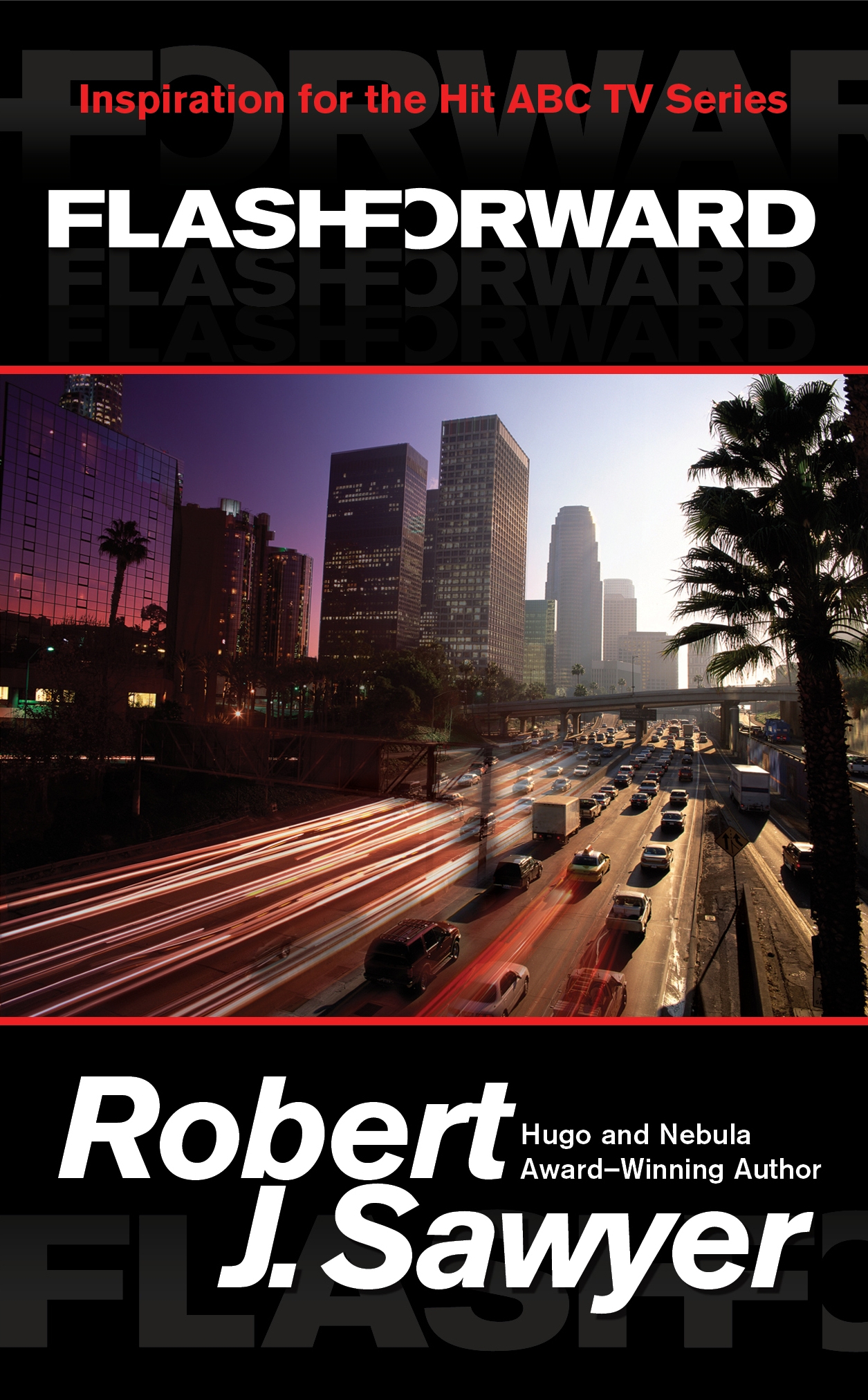
flashforward Watch Flashforward, Episode One

Robert Sawyer’s Flashforward has been made into an ABC miniseries. It is a masterpiece. I haven’t read the book, so I don’t know how faithful the series is to the original book, but the book won an Aurora Award.

The premise is that everyone blacks out at the same moment for 2 min and 17 seconds. In that time, they glimpse their futures. When they return to the present, mass chaos has already happened. Planes fell from the sky, cars crashed, trains derailed. People died, lots of people died. Everyone had blacked out, so no one was in control of all those vehicles.

The main characters, and there are several, include two FBI agents, a surgeon, a man who lost a daughter in Afghanistan, a doctor about to commit suicide, and several others. The series will be about them either trying to avoid their futures, or trying to get to them, depending on what they saw.

Oddly enough, the date they jump to, April 29, 2010, will be the season finale of the show–and at that moment you get to see if they reenact their futures or not.

Obviously, I don’t know how they can carry this through after that episode…BUT, I’m thoroughly pleased with watching till they get there. After this first episode I know that we have a great team of writers involved.

Now, this is what “Knowing” should have been. In my original review of “Knowing” I talked about how the movie, though predicting disasters, left very few for the main characters to experience, and I was troubled by the fact that it seemed the directors had determined that no one could change anything, so why bother.  That movie dripped with errant theology and left no doubt that everything was predetermined.  I don’t mind that fate or God may be a part of my life, but free-will is a human trait,and makes movies much more palatable.  To see someone struggle against their fate, to see them try.  It is what makes those who are given two weeks to live all the more heroic for skydiving or organizing a political rally.  How we react to what seems to be inevitable–THAT is interesting.

Already, I can tell that the show has set up five or six different beliefs about pre-determinism.  Some believe God gave them a gift, others that He gave them a punishment.  Some want to avoid the future, some to run to it.  For some it predicted a horrible mistake they will make.  

“Knowing” passed up all opportunities for real drama with real people, skidded ahead with bad dialogue and coincidence, to an ending which tried to justify the movie.  

Flashforward is like Mozart taking hold of the Salieri “Knowing” and actually making a great movie out of it.  Yes, I know, Knowing only had two hours…but still, this series is good solid writing.

1.  The characters are individuals, who walk onto the scene with their own problems, their own pasts.  They are well drawn and WHAT they do will determine the plot, not what others do.  Now that the big blackout is done, the characters guide the series.  They will push things forward accidentally or on purpose to meet up to April 29th.  They will determine their plots!

2.  Great dialogue, great stuff that isn’t about “the plot”— that Dimitri has to dance at his wedding to “Islands in the Stream.”  That the chief of the FBI has to lie about his vision because he’s embarrassed.  

3.  The plot starts with the action.  I can imagine this series beginning without the crash first.  But who would have waited the whole episode to have the blackout?  Nope, have the crash first, back up, and then take it slow.  Maybe this is just the difference between TV and reading….but I think starting as fast as you can into the action gets people involved with you.  I noticed in Robert’s book, first chapter, that he has a description of each character first…but within a page, he gets to the blackout.  He knows the blackout is a great hook, and that everything of importance happens afterwards.  

4.  I like the music in this series, already, the building, the back and forth between plots so quickly so that you know they are happening simultaneously–the music and this choice to flash around gives you a sense that everything is tied together.  In some sense it is like a trailer—when the trailer starts shuffling between images so fast that you get excited: all trailers seem to end this way these days.  The director took the music and that shuffling sequence to build suspense.  

I hope Robert Sawyer makes a huge amount of cash from this.  This is brilliant stuff.  And I’m glad to see a Canadian Science Fiction Writer land such an opportunity.  I hope they do more interviews with Robert Sawyer in the States.  

Well, I will keep watching the series.  I’ve already become a HUGE fan.

Fantasy Magazine Interviews Me: Writing the Other

DSC_0360_255Fantasy Magazine, which published my short story,  “The Moon Over Tokyo Through Leaves in the Fall,” did a companion interview, which I thought was incredibly thoughtful.  When you write a story, you always hope for questions like this–that someone will ask what you meant when a character said this or that, or ask how you go about writing the story.  

And secretly too, you hope you don’t sound like a dork.  

I appreciate the interviewer, TJ McIntyre, and the work he put into the questions.  Thank you.  


An excerpt

There have been many controversies over the years relating to writing the “Other” or writing with a voice outside of one’s own natural experience. “The Moon Over Tokyo Through Leaves in the Fall” is written from the point of view of a modern Asian-American female. Did this create a challenge for you? What steps, if any, did you take to verify the authenticity of your voice in this piece? What tips do you have for other writers out there working on pieces where they are writing from the perspective of the “Other?”

Hmmm . . . This is a hard question for me because I think every character you write about is an “Other.” I do understand the argument, that writing something completely different from you is more challenging. But unless you are writing memoir, the characters have completely different childhoods, desires, relationships — all the characters, not just the POV one. So they all take a lot of work to understand and “get right,” so to speak.

But if someone wants to write a character which is “other” I wouldn’t stop them. Instead, I would encourage them to stretch themselves. I certainly don’t immediately identify with, or always find accurate to my experiences, the white, rural, college-educated, religious gay male characters I find. And I don’t always want to write that character. I would hate to stop someone else from writing them though.

So I think that’s my first tip: Feel free to be whoever you need to be for the story, without holding yourself hostage to criteria. Criteria can turn into stereotype. I remember once writing a poem about Theodore Roosevelt surviving the Amazon River. A fellow writer said that I had no albino catfish in the poem and that it was a weakness. If I didn’t mention them, I would be called on the authenticity of place. Even worse may be the authenticity of race or gender or sexual orientation — since we are multi-faceted people. I go back to my first statement: Everyone in your story that isn’t yourself is an “Other” . . . and you are required to be careful with all of them.

Saying that, though, I think writing a nasty, mean, selfish gay character might be an accurate representation of one particular person, and might make a funny character, but I would trust that character more in the hands of a gay man who knows the consequences of pushing a bad stereotype in a culture that seems to want to believe the stereotype, than in someone else’s hands. I tried hard to be sympathetic to both Matsui and Yumi equally — showing their flaws, their desires, and hopefully helping a reader side with both at different times.

So, not that you have to always treat your Other characters with kid gloves, but that you make everyone understandable and as authentic as a human being as you possibly can through research, and through infusing them with your own flaws/desires. I infused Yumi with some of my own doubts about my relevancy/impact on the world, my own relationship experiences, the sometimes clash of cultures I find with people older than me. The story doesn’t have my exact experiences, but the shades of feelings are right, the tone is right, the need to be loved and validated is right, I think.

Run the draft through a close set of writerly friends to check for bias. I did run this through Clarion 2007 in San Diego, past a rigorous group of fellow writers, half of them women, who had some questions about the way I wrote Yumi, and I followed their advice. Not that a character can’t make bad decisions, or have perceptible flaws, only that they should be unique, individually motivated and free from OBVIOUS bias.

Be open to learning what it’s like to be someone other than you. It’s really difficult to shed Jerome in order to take on Yumi or Matsui, but I try. Like an actor taking a role.

I think if we only wrote within our experience we’d really limit our stories, and ourselves. I remember once writing from the perspective of my brother, and I learned a lot about what it felt like to have to make some of his decisions. The story moved radically away from my brother’s actual deeds, but the writing process allowed me to feel empathy and understanding for him in a way I had never felt before writing about him.

The process allows a writer to “put themselves in someone else’s shoes” and that’s good, both for the writer — who learns something outside him/herself — and the reader — who doesn’t have to put up with a bunch of main characters who are sci-fi movie buffs. Viva l’Other!

______________________________________________

Read the whole interview on the Fantasy Magazine Website here.

Tesseracts 14: Canadian Sci-fi/Fantasy Anthology Open for Submissions

2508955112_7a2d3e3312

Canadian authors of science fiction and fantasy, get your stories ready.  Tesseracts 14, is open for business.


Tesseracts Fourteen:
OPEN FOR SUBMISSIONS (Sept. 1, 2009 – Nov. 30, 2009)


Submissions are now open (from September 1, 2009 to November 30, 2009) for volume 14 of the Tesseracts anthology. If you are a Canadian author and write speculative fiction, we want to see your stories, poetry, radio plays, flash fiction etc. [SEE GUIDELINES BELOW]

The editors for this antholgy are:

John Robert Colombo and Brett Alexander Savory.    


GUIDELINES 


  • This anthology is open to Canadians, landed immigrants, long-time residents, and expatriates.


  • Open to submissions in either English or French. (Francophone stories must be translated into English for publication if accepted.) Canadian authors who write in languages other than French or English are welcome to submit an English translation of their work, provided it otherwise falls within the parameters of this anthology. Please supply details of original publication for any submission that originally appeared in a language other than English.


  • Translation into English is the sole responsibility of the authors.


  • Genres: all the genres of imaginative literature, including but not limited to magic realism, science fiction, fantasy, dark fantasy, slipstream, supernatural horror, weird tales, alternate history, space opera, planetary adventure, surrealism, superheroes, mythic fantasy, etc.


  • The Tesseracts anthology series is open to both short fiction and poetry.


  • Payment is $20 for poetry, $50 for stories under 1,500 words, rising to a maximum of $100 for stories of over 5,000 words (longer stories are paid a slightly higher fee, but in order to exceed the word length limit of 7,500 words, the editors must judge a story to be of surpassing excellence.)


  • Deadline: 30 November 2009.


  • Do not query before submitting.


  • Email submissions: tess14@hadespublications.com


  • Emails MUST contain the word “submission” in the subject line, or they will be deleted automatically by the server. Please also include the story title in the subject line.


  • Submissions MUST come as an attachment: RTF is the only acceptable format.


  • Emails MUST contain a cover letter in the body of the email; for security reasons, email attachments with no cover letter will be deleted unread and unanswered.


  • Cover letter: include your name, the title of your story, your full contact information (address, phone, email), and a brief bio. Do not describe or summarize the story.


  • If your address is not within Canada, please indicate in the cover letter your status vis-à-vis Canada.


  • Reprints (stories having previously appeared in English in ANY format, print or electronic, including but not limited to any form of web publication) can be considered but will be a hard sell; reprints must come from a source not easily available in Canada. If your submission is a reprint, please supply full publication history of the story. If your story appeared previously, including but not limited to anywhere on the web, and you do not disclose this information to the editor upon submission, you will be disqualified from consideration.


  • Submission format: no strange formatting, colour fonts, changing fonts, borders, backgrounds, etc. Leave italics in italics, NOT underlined. Put your full contact information on the first page (name, address, email address, phone). No headers, no footers, no page numbering. DO NOT leave a blank line between paragraphs. Indent paragraphs. ALWAYS put a # to indicate scene breaks (a blank line is NOT enough).


  • ALWAYS include your full contact information (name/address/email/phone number) on the first page of the attached submission.


  • Rights: for original fiction, first World English publication, with a two-month exclusive from publication date; for all, non-exclusive anthology rights; all other rights remain with the author. (DO NOT INDICATE WHICH RIGHTS YOU ARE OFFERING; SUBMISSIONS MARKED WITH RESTRICTIVE RIGHTS WILL BE DELETED WITH NO REPLY.)


  • Spelling: please use Canadian spelling, as per the Canadian Oxford Dictionary.


  • Response time: initial responses (no / rewrite request / hold for further consideration) will be made within thirty days after the close of submissions. Final responses no later than 31 December 2009.


  • Submit up to three stories at the same time, butUNDER SEPARATE COVER (only one submission per email).


  • Simsubs are not encouraged but are acceptable. Should you receive a “rewrite request” or “hold for further consideration” response, please indicate immediately whether your story is under consideration anywhere else.


  • The Moon Over Marsh Lake (and Tokyo) through Leaves in the Fall

     My new story is up at Fantasy Magazine.  In honor of that, I took this footage out at Family Camp this weekend, a time where our church goes out and camps together.  A spectacular full moon found us there, and I took this footage through spruce and pine and poplar there at Marsh Lake.  It’s quiet at first, but wait for the screams at the end.  

    The story, “Moon Over Tokyo through Leaves in the Fall,” which is up at Fantasy Magazine, is ready for your reading.  

    Enjoy the peace of the full moon over Marsh Lake (and the screams).  Sorry it’s so black except for the moon….usually the moon lights up much more.  And enjoy the story.  Thanks!

    Two After-School Fantasy/Sci-fi Writing Classes for Teens: PC and FH

    Starting Sept 16 at FH and Oct 1 at PC, I will be offering science fiction and fantasy writing to interested secondary students.  

    The Little Girl and her Giant Crocodile, Mauro Lira
    The Little Girl and her Giant Crocodile, Mauro Lira

    Are you attending Vanier, FH or PC this year?  Do you like to read science fiction or fantasy, and do you like to write your own?  Come join a group of dedicated young fantasy/sci fi writers like yourself on Wednesdays at FH Collins, or on Thursdays at PC, after school.  Snacks will be provided for the hungry.  Bring your own notebook paper and pen.  A journal is best.  We’ll play some writing games and get you pulling stuff out of your imagination–and then writing stories.  

    After two successful years of running the first group–which last year landed at FH Collins–I’m starting a group up at PC.  If you think you’re interested or know someone who might be, get in contact with the Parks and Recreation folks at 668-8325 and register for either the FH or PC version.  Registration begins on Sept 8–one week from today.  Classes begin earlier at FH Collins—and their program is 13 weeks; PC, since we’re just starting out, has an 8 week run.  

    FH Collins begins: Sept 16

    PC begins: Oct 1

    Crocodiles will not be provided.  Please bring your own.

    Stories of Intergalactic and Fantastical Hoochies wanted for Anthology


    Looks like the cast of Best Little Whorehouse in Texas
    Looks like the cast of Best Little Whorehouse in Texas

    Yep, you heard it right.  An anthology about the “World’s Oldest Profession” is looking for submissions.  Stories need to have a genre twist to them—science fiction, fantasy, something that makes them a bit different.  The anthology is “Ladies of Trade Town” and the Press is a good one.  


    For more info, go HERE   According to the Website:

    The stories selected for this anthology will build on that varied background to tell well-crafted tales of the women and men – and other sentient beings – who “ply the trade” in a variety of times and settings. I’m looking for original science fiction, fantasy, and related genre short stories that entertain and play to the imagination of the reader. Show me something I haven’t seen, read, or written. (For examples of that last, see “Lady Blaze” in Roby James’ Warrior Wisewoman 2  and the title cut of the filk CD that gives this volume its name.) Humor, characters of all orientations and gender-identities, and new writers all welcome.

    Despite the theme, I am *not* looking for porn, erotica, or gore-soaked horror. Absolutely no child abuse, incest, or non-consensual situations. Also not looking for poetry, fanfic or proselytizing either for or against the theme.Vekma

    STORY LENGTH:: between 3,000 – 10,000 words. Mostly looking for stories in the 5,000 – 6,000 word range, but I’d like to have a few stories on the upper and lower ends in the mix. The upper limit is firm for unsolicited stories.

    PAYMENT: $0.02 a word on acceptance of completed anthology manuscript by the Publisher, as an advance against pro-rata share of the royalties after earnout, plus one contributor copy.

    READING PERIOD: Opens January 5, 2010, closes June 9, 2010. Manuscripts received before or after this period will be discarded unread, unless prior arrangements have been made otherwise.

    Science Fiction and Fantasy Writing–at FH Collins and PC


    Artist: C. Gerber
    Artist: C. Gerber

    Starting in the fall, I’m going to be doing the afterschool programs for teen writers at FH Collins (our second year!) and now, at Porter Creek.  It’s for science fiction and fantasy writers, and everyone’s welcome.  There is a fee.  We do serve food.  


    It’s through the City of Whitehorse.  You can contact Mia Lee at 668-8327 or mia.lee@whitehorse.ca to be a participant.  More information to come.  Programs will start up in late September or early October.  The guide comes out in two weeks so we’ll have more info then.

    Internet before Coffee? How does it affect your family?

    laptop and coffeeHey, I just read a great NYT article that I think will ring true in your family as well.  Read this:

    Coffee Can Wait.  Day’s First Stop is Online

    Excerpt:

    Karl and Dorsey Gude of East Lansing, Mich., can remember simpler mornings, not too long ago. They sat together and chatted as they ate breakfast. They read the newspaper and competed only with the television for the attention of their two teenage sons.

    That was so last century. Today, Mr. Gude wakes at around 6 a.m. to check his work e-mail and his Facebook and Twitter accounts. The two boys, Cole and Erik, start each morning with text messages, video games and Facebook.

    The new routine quickly became a source of conflict in the family, with Ms. Gude complaining that technology was eating into family time. But ultimately even she partially succumbed, cracking open her laptop after breakfast.”

    I’ve noticed that I’m online first thing.  I do manage to get coffee started and an english muffin in the toaster, but I’m there at the computer licketysplit.  

    How much of this is part of internet addiction–or communication addiction?  I don’t know.  

    Read this very funny, and poignant post in the same issue of the NYT today:

    I’ve Got Mail–by Verlyn Klinkenborg

    Excerpt

    I wish my memory worked differently. I’d like to be able to conjure up an accurate image of my consciousness from, say, 25 years ago. You know what 25 years means: No cellphones, no e-mail, no Internet, no social networking (except with an actual drink in hand), and only the most primitive of personal computers. What I want to answer is a single question: Was I as addicted to the future then as I seem to be now?”

    Care to share your experiences?  What were you like 25 years ago before all this technology gave us such instant access?

    For science fiction writers this should be a good exercise to think through.  Whenever you are designing the future, think about the implications of one change, and see the effects ripple through society and culture.  Life 25 years ago is very different from the way it is now.  And for every good piece of technology there are consequences.  It’s just an interesting thought problem that might be fun to fuel a writing exercise: what small change in the world could bring about major cultural changes?