Flashforward: the Excellence that “Knowing” could have been

flashforward Watch Flashforward, Episode One

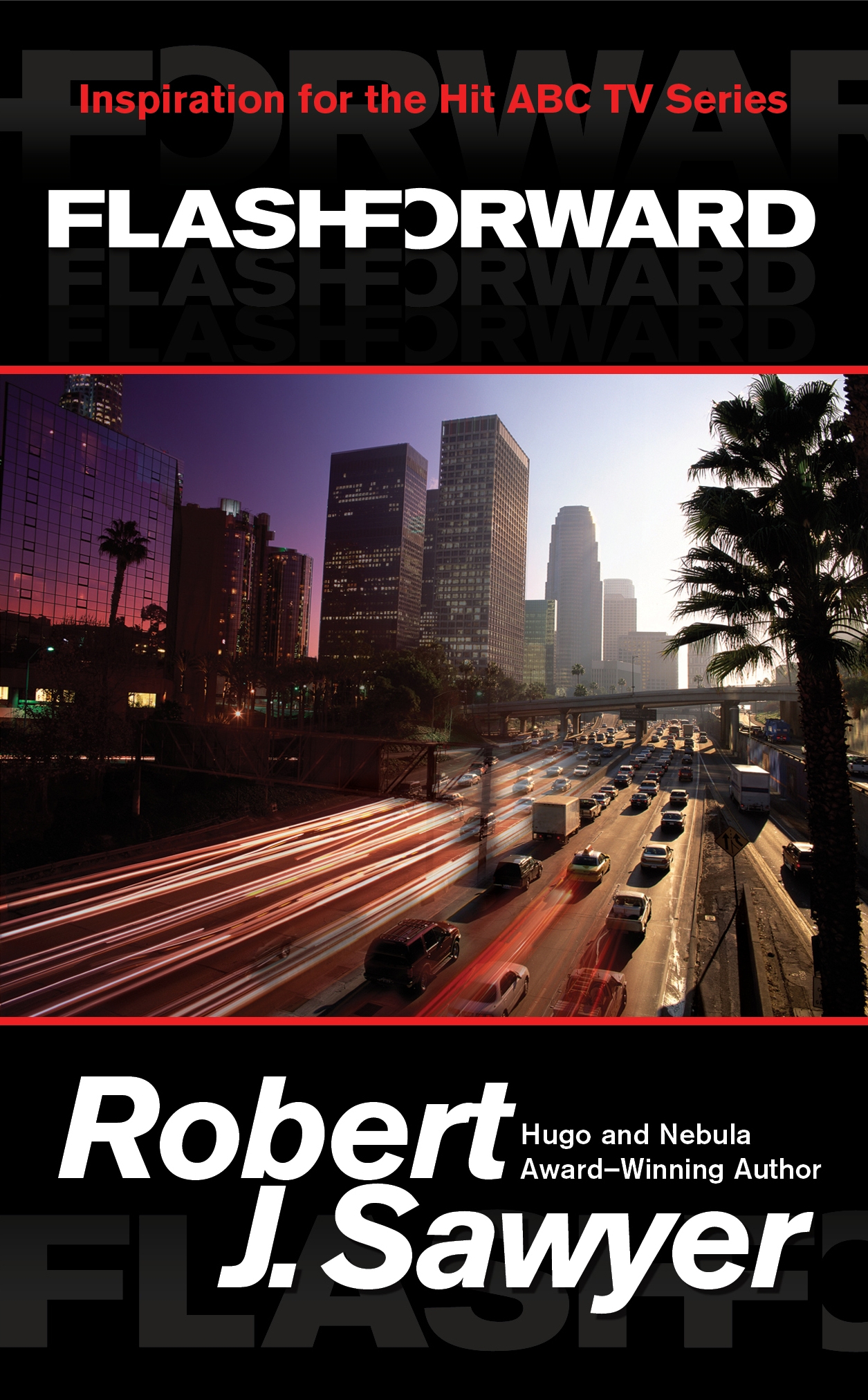
Robert Sawyer’s Flashforward has been made into an ABC miniseries. It is a masterpiece. I haven’t read the book, so I don’t know how faithful the series is to the original book, but the book won an Aurora Award.

The premise is that everyone blacks out at the same moment for 2 min and 17 seconds. In that time, they glimpse their futures. When they return to the present, mass chaos has already happened. Planes fell from the sky, cars crashed, trains derailed. People died, lots of people died. Everyone had blacked out, so no one was in control of all those vehicles.

The main characters, and there are several, include two FBI agents, a surgeon, a man who lost a daughter in Afghanistan, a doctor about to commit suicide, and several others. The series will be about them either trying to avoid their futures, or trying to get to them, depending on what they saw.

Oddly enough, the date they jump to, April 29, 2010, will be the season finale of the show–and at that moment you get to see if they reenact their futures or not.

Obviously, I don’t know how they can carry this through after that episode…BUT, I’m thoroughly pleased with watching till they get there. After this first episode I know that we have a great team of writers involved.

Now, this is what “Knowing” should have been. In my original review of “Knowing” I talked about how the movie, though predicting disasters, left very few for the main characters to experience, and I was troubled by the fact that it seemed the directors had determined that no one could change anything, so why bother.  That movie dripped with errant theology and left no doubt that everything was predetermined.  I don’t mind that fate or God may be a part of my life, but free-will is a human trait,and makes movies much more palatable.  To see someone struggle against their fate, to see them try.  It is what makes those who are given two weeks to live all the more heroic for skydiving or organizing a political rally.  How we react to what seems to be inevitable–THAT is interesting.

Already, I can tell that the show has set up five or six different beliefs about pre-determinism.  Some believe God gave them a gift, others that He gave them a punishment.  Some want to avoid the future, some to run to it.  For some it predicted a horrible mistake they will make.  

“Knowing” passed up all opportunities for real drama with real people, skidded ahead with bad dialogue and coincidence, to an ending which tried to justify the movie.  

Flashforward is like Mozart taking hold of the Salieri “Knowing” and actually making a great movie out of it.  Yes, I know, Knowing only had two hours…but still, this series is good solid writing.

1.  The characters are individuals, who walk onto the scene with their own problems, their own pasts.  They are well drawn and WHAT they do will determine the plot, not what others do.  Now that the big blackout is done, the characters guide the series.  They will push things forward accidentally or on purpose to meet up to April 29th.  They will determine their plots!

2.  Great dialogue, great stuff that isn’t about “the plot”— that Dimitri has to dance at his wedding to “Islands in the Stream.”  That the chief of the FBI has to lie about his vision because he’s embarrassed.  

3.  The plot starts with the action.  I can imagine this series beginning without the crash first.  But who would have waited the whole episode to have the blackout?  Nope, have the crash first, back up, and then take it slow.  Maybe this is just the difference between TV and reading….but I think starting as fast as you can into the action gets people involved with you.  I noticed in Robert’s book, first chapter, that he has a description of each character first…but within a page, he gets to the blackout.  He knows the blackout is a great hook, and that everything of importance happens afterwards.  

4.  I like the music in this series, already, the building, the back and forth between plots so quickly so that you know they are happening simultaneously–the music and this choice to flash around gives you a sense that everything is tied together.  In some sense it is like a trailer—when the trailer starts shuffling between images so fast that you get excited: all trailers seem to end this way these days.  The director took the music and that shuffling sequence to build suspense.  

I hope Robert Sawyer makes a huge amount of cash from this.  This is brilliant stuff.  And I’m glad to see a Canadian Science Fiction Writer land such an opportunity.  I hope they do more interviews with Robert Sawyer in the States.  

Well, I will keep watching the series.  I’ve already become a HUGE fan.
How to fix the Rural Brain Drain: link to article


IMG_0674Authors and Husband-and-wife sociologists Patrick J. Carr (Rutgers University at New Brunswick) and Maria J. Kefalas (Saint Joseph’s University, Philadelphia) have written a new book on the Hollowing Out of the Middle: the Rural Brain Drain and What It Means For America, due out next month.  They’ve written an article in the Chronicle Review summarizing their results and providing tips for how to stop this from happening.

While this article is about the States, it applies to any North American small town, many that are at risk to rolling away.  

First of all, I hadn’t realized how important it was NOT to push people to go far away from their homes to succeed.  We’re always telling kids who have the knack for college to move far away and go to college and fly—become more than their small town roots.  It seems so logical to get the talented, creative, smart ones out of the “rut” and the “lack of opportunity” of a small town.  But the unintended message that those who stay receive is that their lives are smaller, more secondary, second-class.  In fact, however, if small towns are to survive, Carr and Kefalas suggest we boost our opportunities to those who will stay.  Rather than settling with the idea that the small town has no opportunity, Carr and Kefalas suggest we provide local links to opportunity and think ahead for the town.  In some ways, they seem to be thinking about the town first, and the individual second— but definitely using the creative energy produced by the town to create a better town.  It’s not unlike exporting Americans to foreign countries.  If we constantly say our country is declining—Johnny, you go over to France where you’ll do better, then we’re creating an immigration that will doom small town America.  

I like their ideas.  I love small towns–I grew up in them: Braymer, Caruthersville, Bledsoe, Plainview, Edmonson, and all their surrounding towns.  And I want to save small towns.  I think Carr and Kefalas have a lot to offer. Here’s a bit of that article, and afterwards, a place for you to read the whole thing.  This is the end section though, so if you want how they came to these tips, you need to read the beginning:

What can be done to plug the brain drain?

Though the problem is daunting, we believe that it is not intractable, but that any set of solutions must combine changes at micro and macro levels.

Small towns need to equalize their investments across different groups of young people. While it would be impractical, and downright wrong, to abort students’ ambitions, there must be a radical rethinking of the goals of high-school education. The single-minded focus on pushing the most motivated students into four-year colleges must be balanced by efforts to match young people not headed for bachelor’s degrees with training, vocational, and assorted associate-degree programs. Those programs fill the needs of a postindustrial economy but acknowledge that not every student wants to, or will, pursue a more traditional college path.

Also, school officials, parents, educators, and students must resist the temptation to think the noncollege bound will just get a job if a degree is not in the cards. Gone are the days of plentiful, well-paying blue-collar factory jobs that provided a 19-year-old with a living wage. Thinking that working the line at John Deere or Winnebago will vault you into the middle class makes about as much sense as buying eight-track tapes in the iPod age. All the planning and investments have been geared to collegebound students, while the reality is that students not earning a college degree need as much, if not more, intensive preparation for today’s labor market.

The next step is to build better links between high-school and postsecondary education, and map existing opportunities onto regional economic goals. Most of the job growth within Iowa is expected to come from computer, biotech, wind energy, and health care. Matching high-school students not headed for university with vocational or community-college programs, nurturing their interests while in high school through internships and training, will prepare them for the new economic growth areas. Such partnerships require close collaborations among business and civic leaders, elected officials, and secondary and community-college administrators who are accustomed to working in their own bureaucracies. Moreover, the growing distance-learning technology should not cater only to older, returning students. If students are interested in wind technology or nursing, rather than making them take social studies senior year, how about connecting them with a distance-learning class at Iowa Lakes Community College in Introduction to Computers?

Third, small towns should seek to embrace immigration whenever possible. The phenomenon of Hispanic boomtowns, a common occurrence in the Midwest, has the potential to transform moribund local economies. Such transformations will be possible only if there is careful planning to ensure that immigrants are integrated into the community in such as way as to increase contact between natives and immigrants and with attendant labor-law reform that curbs abuses and ensures sufficient wages and benefits for workers in agribusiness and manufacturing. Ph.D.’s from India or China and less-skilled immigrants from Mexico or Central America should all be recruited and supported in an effort to make the heartland an immigrant enterprise zone. The region is in critical need of professional-class workers, and bringing in Hispanic workers for the food industry will not be enough to rejuvenate the region.

And the article keeps going here, The Rural Brain Drain, in the Chronicle Review.

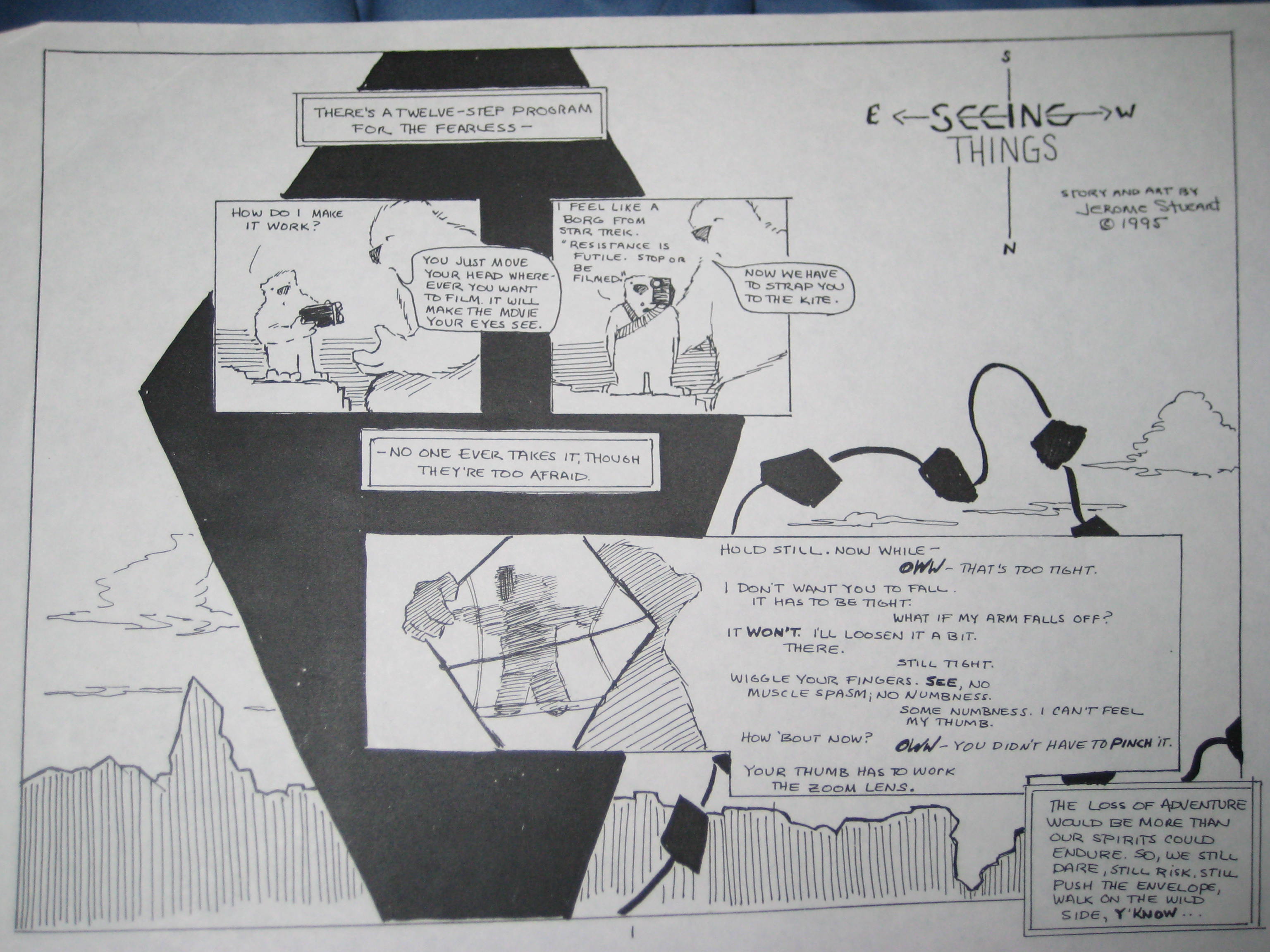
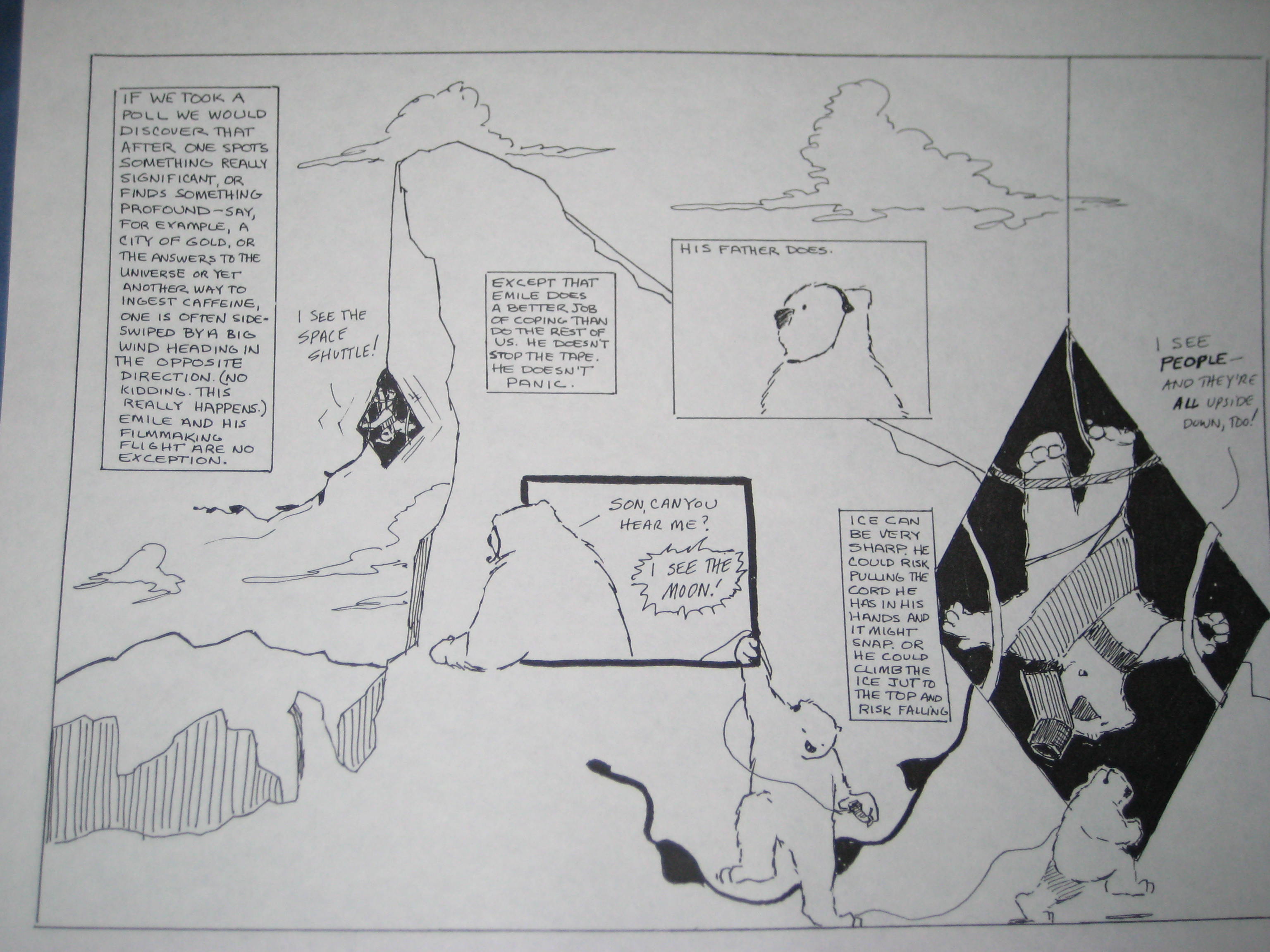
Seeing Things: a Captain Bly cartoon story of polar bears uploaded

IMG_0677I used to be a cartoonist.  I had a comic strip for 4 years in the local student paper, The Maneater, at the University of Missouri.  I found that a visitor to Whitehorse had kindly uploaded some of my strips from a book called Captain Bly, 1994, as a way to show off my nifty book.  Thanks, Aniko!  So I decided to upload a short 6 page story not included in the book.   (The pic on the left is actually a pastel of the same bears–these bears are reciting Shakespeare’s The Tempest)

I’m still working on those bears.  They appeared a little in my short story “Lemmings in the Third Year” and I’m trying to work on a novel about them. 

Below is a short story I did for a Comic Strip 101 class I had with Frank Stack, an artist and cartoonist teaching there.  He is credited with the first underground comic book, The Adventures of Jesus.  He was a great teacher.  Had us draw comic strips and pin them to the wall for critique and then he would go about busting us!  He thought we were a great class though.  Full of potential.  I’ve been playing with my cartooning roots, and working around in some other mediums.  But here is that short story.


Seeing Things, Page 1, Jerome Stueart, 1995
Seeing Things, Page 2, Jerome Stueart, 1995
Seeing Things, Page 3, Jerome Stueart, 1995
Seeing Things, Page 4, Jerome Stueart, 1995
Seeing Things, Page 5, Jerome Stueart, 1995
Seeing Things, Page 6, Jerome Stueart, 1995

Fantasy Magazine Interviews Me: Writing the Other

DSC_0360_255Fantasy Magazine, which published my short story,  “The Moon Over Tokyo Through Leaves in the Fall,” did a companion interview, which I thought was incredibly thoughtful.  When you write a story, you always hope for questions like this–that someone will ask what you meant when a character said this or that, or ask how you go about writing the story.  

And secretly too, you hope you don’t sound like a dork.  

I appreciate the interviewer, TJ McIntyre, and the work he put into the questions.  Thank you.  


An excerpt

There have been many controversies over the years relating to writing the “Other” or writing with a voice outside of one’s own natural experience. “The Moon Over Tokyo Through Leaves in the Fall” is written from the point of view of a modern Asian-American female. Did this create a challenge for you? What steps, if any, did you take to verify the authenticity of your voice in this piece? What tips do you have for other writers out there working on pieces where they are writing from the perspective of the “Other?”

Hmmm . . . This is a hard question for me because I think every character you write about is an “Other.” I do understand the argument, that writing something completely different from you is more challenging. But unless you are writing memoir, the characters have completely different childhoods, desires, relationships — all the characters, not just the POV one. So they all take a lot of work to understand and “get right,” so to speak.

But if someone wants to write a character which is “other” I wouldn’t stop them. Instead, I would encourage them to stretch themselves. I certainly don’t immediately identify with, or always find accurate to my experiences, the white, rural, college-educated, religious gay male characters I find. And I don’t always want to write that character. I would hate to stop someone else from writing them though.

So I think that’s my first tip: Feel free to be whoever you need to be for the story, without holding yourself hostage to criteria. Criteria can turn into stereotype. I remember once writing a poem about Theodore Roosevelt surviving the Amazon River. A fellow writer said that I had no albino catfish in the poem and that it was a weakness. If I didn’t mention them, I would be called on the authenticity of place. Even worse may be the authenticity of race or gender or sexual orientation — since we are multi-faceted people. I go back to my first statement: Everyone in your story that isn’t yourself is an “Other” . . . and you are required to be careful with all of them.

Saying that, though, I think writing a nasty, mean, selfish gay character might be an accurate representation of one particular person, and might make a funny character, but I would trust that character more in the hands of a gay man who knows the consequences of pushing a bad stereotype in a culture that seems to want to believe the stereotype, than in someone else’s hands. I tried hard to be sympathetic to both Matsui and Yumi equally — showing their flaws, their desires, and hopefully helping a reader side with both at different times.

So, not that you have to always treat your Other characters with kid gloves, but that you make everyone understandable and as authentic as a human being as you possibly can through research, and through infusing them with your own flaws/desires. I infused Yumi with some of my own doubts about my relevancy/impact on the world, my own relationship experiences, the sometimes clash of cultures I find with people older than me. The story doesn’t have my exact experiences, but the shades of feelings are right, the tone is right, the need to be loved and validated is right, I think.

Run the draft through a close set of writerly friends to check for bias. I did run this through Clarion 2007 in San Diego, past a rigorous group of fellow writers, half of them women, who had some questions about the way I wrote Yumi, and I followed their advice. Not that a character can’t make bad decisions, or have perceptible flaws, only that they should be unique, individually motivated and free from OBVIOUS bias.

Be open to learning what it’s like to be someone other than you. It’s really difficult to shed Jerome in order to take on Yumi or Matsui, but I try. Like an actor taking a role.

I think if we only wrote within our experience we’d really limit our stories, and ourselves. I remember once writing from the perspective of my brother, and I learned a lot about what it felt like to have to make some of his decisions. The story moved radically away from my brother’s actual deeds, but the writing process allowed me to feel empathy and understanding for him in a way I had never felt before writing about him.

The process allows a writer to “put themselves in someone else’s shoes” and that’s good, both for the writer — who learns something outside him/herself — and the reader — who doesn’t have to put up with a bunch of main characters who are sci-fi movie buffs. Viva l’Other!

______________________________________________

Read the whole interview on the Fantasy Magazine Website here.

How to Keep Garden Veggies Fresh All Winter: The Pedersen Method

IMG_0637If you’re like me, you harvested a lot of vegetables this Fall.  Gardening in the Yukon is amazing!  With long hours of sunlight, a crop of vegetables can be yours in 10 weeks.  But then you have a huge harvest.  You can’t possibly eat them all in a few weeks.  Outside of freezing, how do you store vegetables?  Can someone store vegetables all winter and keep them as fresh as if they were still in the ground?  Well, I know a way.  Bruce Pedersen, local chiropractor, has been using a method that keeps tons of vegetables from his garden fresh all winter long.  Try his method and see if it works for you.

1.  For carrots, beets, turnips:  get a large paint bucket and place an ordinary kitchen trash bag inside the bucket as a liner.  Don’t use the drawstring, get the ones with those flaps you have to tie with.

2.  Pull up your vegetables from the ground.  Don’t wash them.  Just shake the dirt off.  Don’t wipe or try to clean them.  “When people scrub a vegetable clean, they damage the skin and then they have to eat it right away or it will rot faster,” Dr. Pedersen says.  So, don’t clean these.

3.  Right at the truck, he had a cutting board and a knife.  Take the knife and cut off the greens, slicing just at the top ofIMG_0650 the carrot, or beet.  For carrots and beets, you only make one cut–to take off the greens.  With beets, you leave on the long root if it has one.  For turnips, you’re going to make two cuts: one to clear off the greens, and the second to cut off the roots, so it’s a round ball.

IMG_06464. These headless carrots all go in the trash-bag lined bucket, all on top of each other.  Don’t worry if you get dirt in there.  Be careful putting them in the bucket.  If they’re long and break off on impact, then you have to dispose of them (eat them right there!)   They’ll rot if they go in the bucket broken.

This bucket actually needs more carrots in it first.

5.  Fill the bucket till it’s 3/4 full or 4/5.  Then shake the bucket a bit to settle the carrots.  Then take ordinary peat moss and fill the bucket with peat moss till it is full.

6.  Then take the trashbag flaps and nearly cover the peat moss, leaving a hole showing the peat that’s about the size of a tennis ball.  “This is to help the peat moss breathe.  You don’t want it all completely covered–but you don’t want more than a small hole either.”  You’ll tape down the bag in place.

IMG_0647Notice the small hole where the peat moss still shows through.  Tape the bag down around it.

7.  Store the buckets of vegetables in your garage over the winter, or a cool, dry place.  Not a freezing place.  And not in your house where it will be too warm.  Maybe an entryway, or a back porch.

8.  Over the winter, just dig out your carrots, beets, turnips, etc.  from the buckets when you need them.

9.  For potatoes, put the bunch of potatoes in a large styrofoam cooler, the kind you get at Canadian Tire.  Fill that with peat moss too.  Cover with a trashbag, stretched out over the top, taped down in places, but with enough space in other places to let the peat moss breathe.  And just dig up a potato when you need it.

Why peat moss?  Peat is a moisture regulator.  It seems to draw in the extra moisture from the newly harvested vegetables and then gives it back to the vegetables when they get dry.  It seems also to slow the decay of the vegetables, almost holding them in a stasis for a longer period of time.  Sand doesn’t regulate moisture and is a lot messier to work with.  Also you need more sand to cover the vegetables because it will sink down to the bottom.  The peat mostly rests on top as a barrier to the cold dry air.

Bruce Pedersen has done this for several years and has had fresh vegetables all winter long.  Hopefully, the method will work for you too.

If you found this information helpful, please consider donating just .99 cents.  It keeps us writers fed.

Donate Button

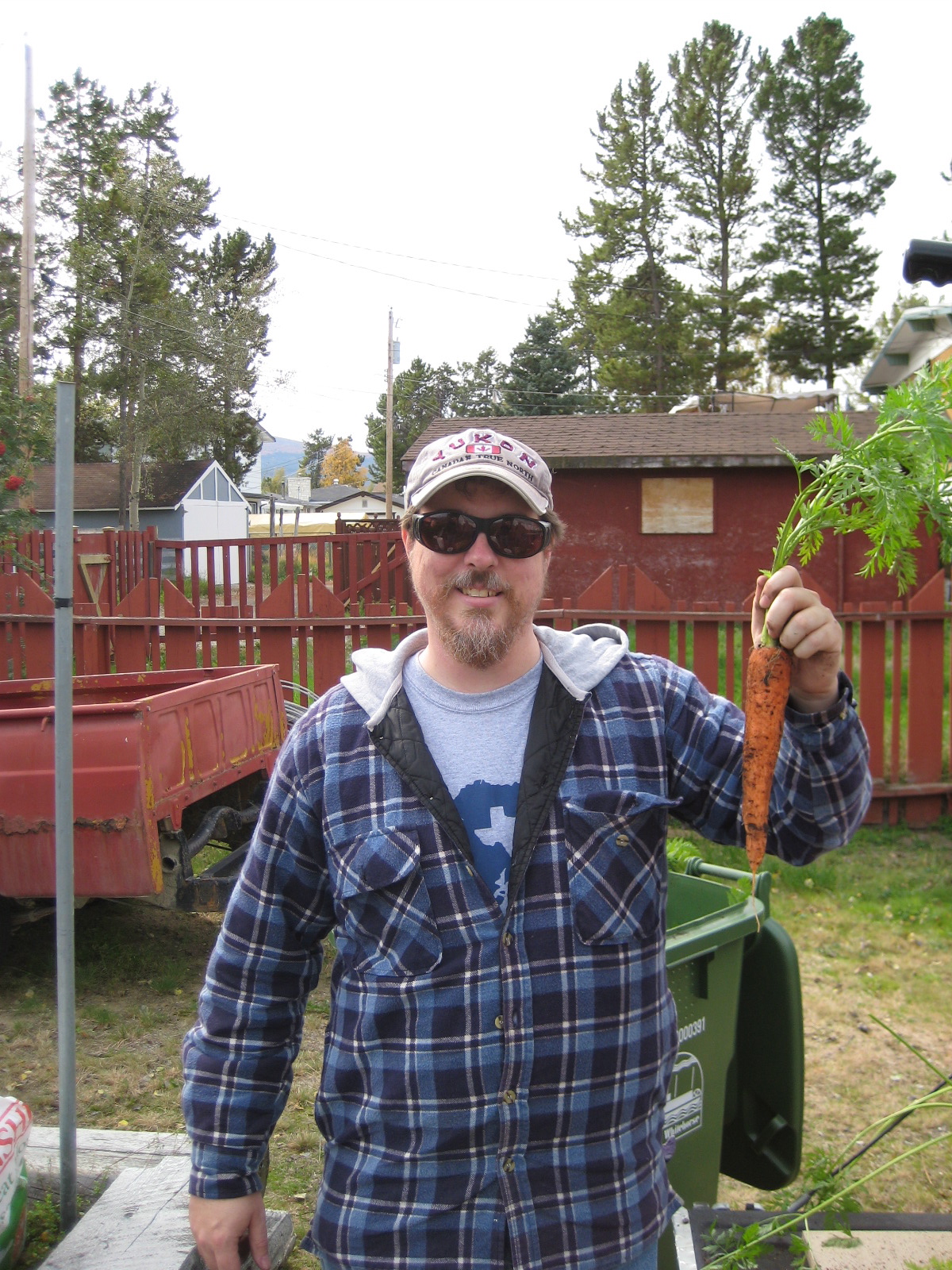
One of our regular-size carrots!
One of his regular-size carrots!

Why I Love the Yukon in the Fall: Kluane Lake

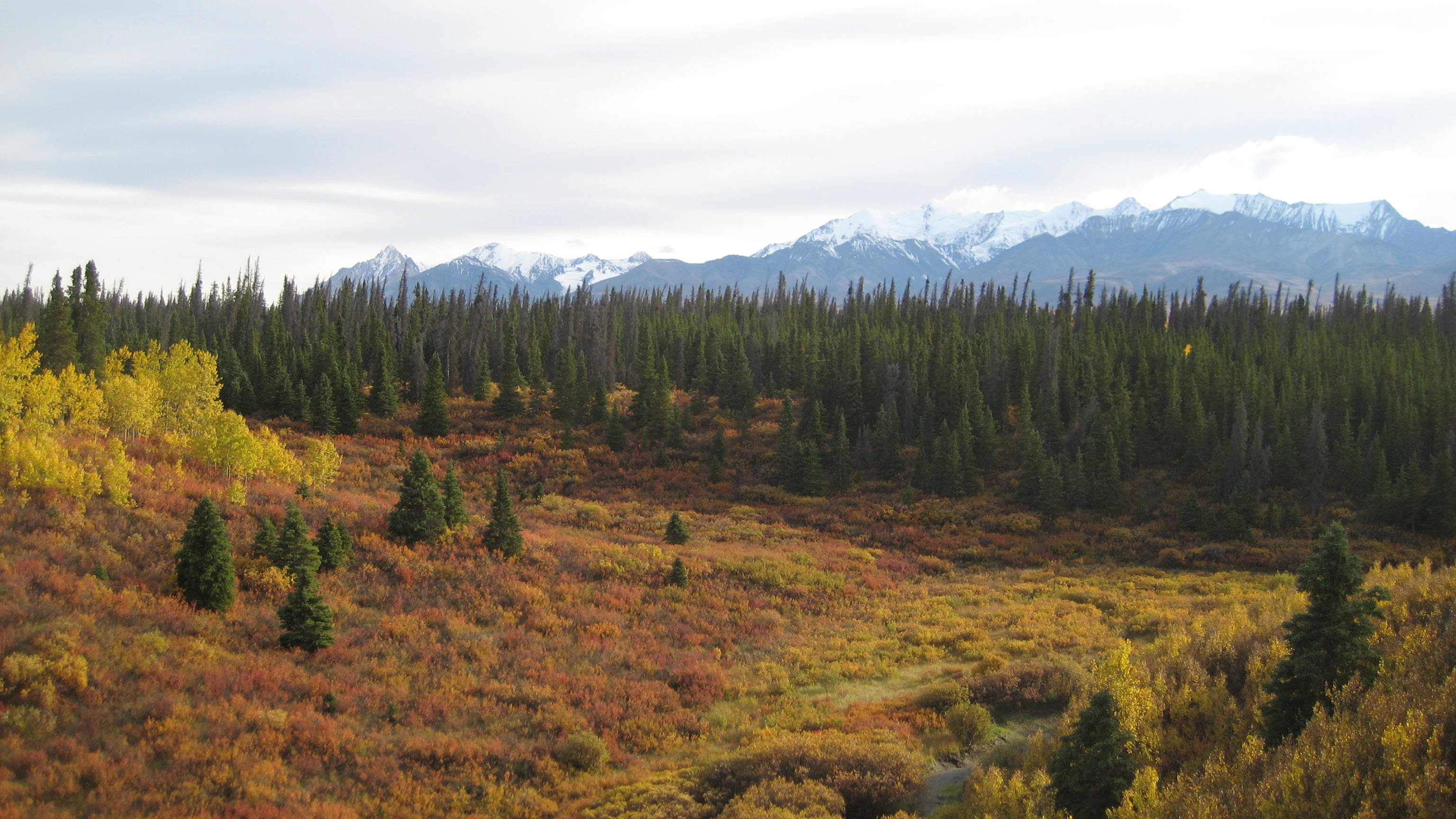
I had the chance of a lifetime this summer to work out at Kluane Lake.  The drive from Haines Junction to Kluane Lake has to be one of the most beautiful drives ever, but it really glows in the fall.  Holy Cow.  I took 92 pictures and movies.  This was my drive to work every week.  Today it looked like everything had turned to gold in the Yukon.  

IMG_0583

IMG_0584

IMG_0586

IMG_0612Me looking adventurous and small.

IMG_0626

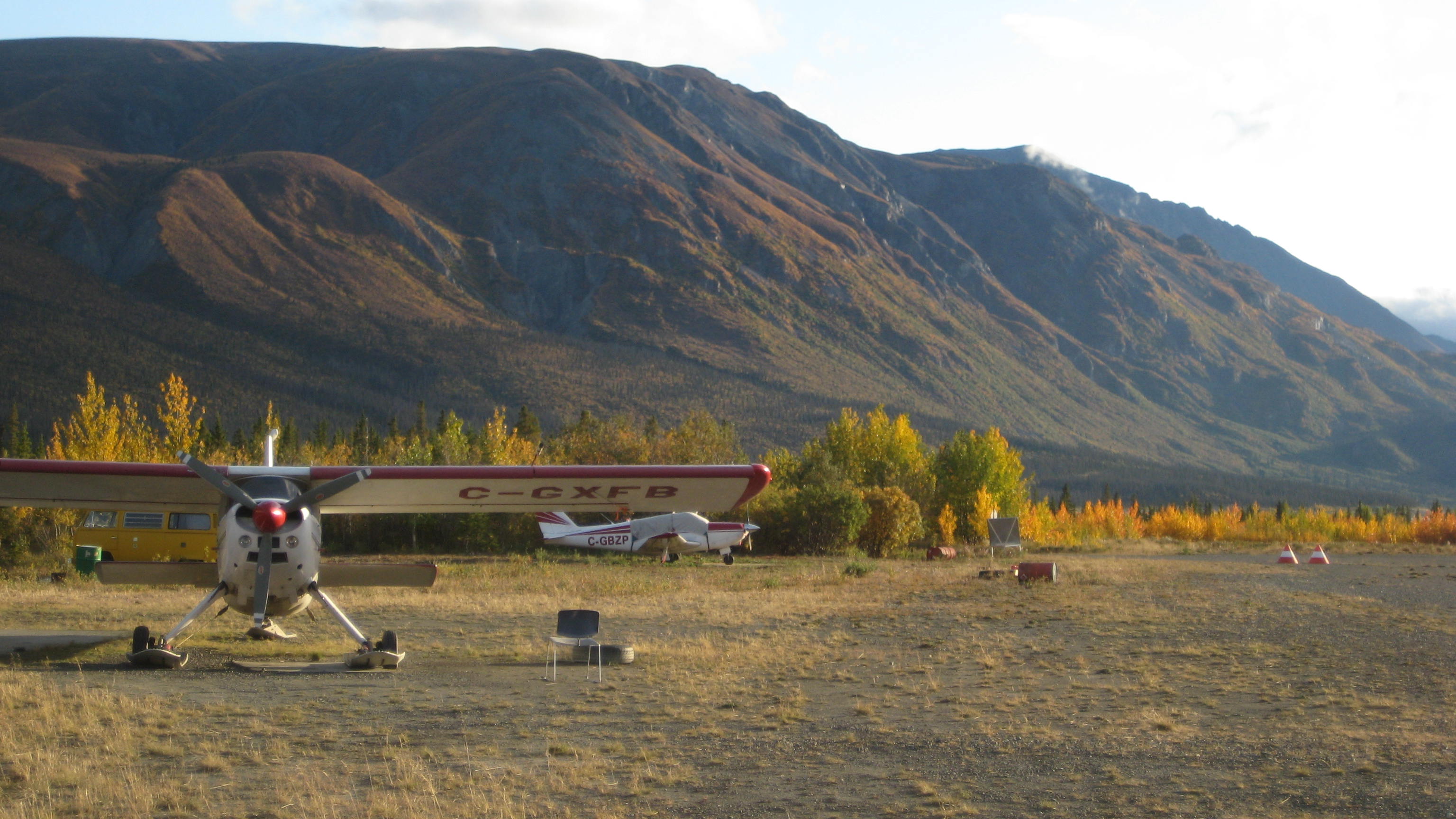
At the airport at the Kluane Lake Research Station.


The fall is brief here, but it sings.  Go outside and see the music.

Tesseracts 14: Canadian Sci-fi/Fantasy Anthology Open for Submissions

2508955112_7a2d3e3312

Canadian authors of science fiction and fantasy, get your stories ready.  Tesseracts 14, is open for business.


Tesseracts Fourteen:
OPEN FOR SUBMISSIONS (Sept. 1, 2009 – Nov. 30, 2009)


Submissions are now open (from September 1, 2009 to November 30, 2009) for volume 14 of the Tesseracts anthology. If you are a Canadian author and write speculative fiction, we want to see your stories, poetry, radio plays, flash fiction etc. [SEE GUIDELINES BELOW]

The editors for this antholgy are:

John Robert Colombo and Brett Alexander Savory.    


GUIDELINES 


  • This anthology is open to Canadians, landed immigrants, long-time residents, and expatriates.


  • Open to submissions in either English or French. (Francophone stories must be translated into English for publication if accepted.) Canadian authors who write in languages other than French or English are welcome to submit an English translation of their work, provided it otherwise falls within the parameters of this anthology. Please supply details of original publication for any submission that originally appeared in a language other than English.


  • Translation into English is the sole responsibility of the authors.


  • Genres: all the genres of imaginative literature, including but not limited to magic realism, science fiction, fantasy, dark fantasy, slipstream, supernatural horror, weird tales, alternate history, space opera, planetary adventure, surrealism, superheroes, mythic fantasy, etc.


  • The Tesseracts anthology series is open to both short fiction and poetry.


  • Payment is $20 for poetry, $50 for stories under 1,500 words, rising to a maximum of $100 for stories of over 5,000 words (longer stories are paid a slightly higher fee, but in order to exceed the word length limit of 7,500 words, the editors must judge a story to be of surpassing excellence.)


  • Deadline: 30 November 2009.


  • Do not query before submitting.


  • Email submissions: tess14@hadespublications.com


  • Emails MUST contain the word “submission” in the subject line, or they will be deleted automatically by the server. Please also include the story title in the subject line.


  • Submissions MUST come as an attachment: RTF is the only acceptable format.


  • Emails MUST contain a cover letter in the body of the email; for security reasons, email attachments with no cover letter will be deleted unread and unanswered.


  • Cover letter: include your name, the title of your story, your full contact information (address, phone, email), and a brief bio. Do not describe or summarize the story.


  • If your address is not within Canada, please indicate in the cover letter your status vis-à-vis Canada.


  • Reprints (stories having previously appeared in English in ANY format, print or electronic, including but not limited to any form of web publication) can be considered but will be a hard sell; reprints must come from a source not easily available in Canada. If your submission is a reprint, please supply full publication history of the story. If your story appeared previously, including but not limited to anywhere on the web, and you do not disclose this information to the editor upon submission, you will be disqualified from consideration.


  • Submission format: no strange formatting, colour fonts, changing fonts, borders, backgrounds, etc. Leave italics in italics, NOT underlined. Put your full contact information on the first page (name, address, email address, phone). No headers, no footers, no page numbering. DO NOT leave a blank line between paragraphs. Indent paragraphs. ALWAYS put a # to indicate scene breaks (a blank line is NOT enough).


  • ALWAYS include your full contact information (name/address/email/phone number) on the first page of the attached submission.


  • Rights: for original fiction, first World English publication, with a two-month exclusive from publication date; for all, non-exclusive anthology rights; all other rights remain with the author. (DO NOT INDICATE WHICH RIGHTS YOU ARE OFFERING; SUBMISSIONS MARKED WITH RESTRICTIVE RIGHTS WILL BE DELETED WITH NO REPLY.)


  • Spelling: please use Canadian spelling, as per the Canadian Oxford Dictionary.


  • Response time: initial responses (no / rewrite request / hold for further consideration) will be made within thirty days after the close of submissions. Final responses no later than 31 December 2009.


  • Submit up to three stories at the same time, butUNDER SEPARATE COVER (only one submission per email).


  • Simsubs are not encouraged but are acceptable. Should you receive a “rewrite request” or “hold for further consideration” response, please indicate immediately whether your story is under consideration anywhere else.


  • The Moon Over Marsh Lake (and Tokyo) through Leaves in the Fall

     My new story is up at Fantasy Magazine.  In honor of that, I took this footage out at Family Camp this weekend, a time where our church goes out and camps together.  A spectacular full moon found us there, and I took this footage through spruce and pine and poplar there at Marsh Lake.  It’s quiet at first, but wait for the screams at the end.  

    The story, “Moon Over Tokyo through Leaves in the Fall,” which is up at Fantasy Magazine, is ready for your reading.  

    Enjoy the peace of the full moon over Marsh Lake (and the screams).  Sorry it’s so black except for the moon….usually the moon lights up much more.  And enjoy the story.  Thanks!

    Two After-School Fantasy/Sci-fi Writing Classes for Teens: PC and FH

    Starting Sept 16 at FH and Oct 1 at PC, I will be offering science fiction and fantasy writing to interested secondary students.  

    The Little Girl and her Giant Crocodile, Mauro Lira
    The Little Girl and her Giant Crocodile, Mauro Lira

    Are you attending Vanier, FH or PC this year?  Do you like to read science fiction or fantasy, and do you like to write your own?  Come join a group of dedicated young fantasy/sci fi writers like yourself on Wednesdays at FH Collins, or on Thursdays at PC, after school.  Snacks will be provided for the hungry.  Bring your own notebook paper and pen.  A journal is best.  We’ll play some writing games and get you pulling stuff out of your imagination–and then writing stories.  

    After two successful years of running the first group–which last year landed at FH Collins–I’m starting a group up at PC.  If you think you’re interested or know someone who might be, get in contact with the Parks and Recreation folks at 668-8325 and register for either the FH or PC version.  Registration begins on Sept 8–one week from today.  Classes begin earlier at FH Collins—and their program is 13 weeks; PC, since we’re just starting out, has an 8 week run.  

    FH Collins begins: Sept 16

    PC begins: Oct 1

    Crocodiles will not be provided.  Please bring your own.