Morgan Whibley Shot Me in the Alley and All I Could Say Was This: An Essay on Writing Genre

Morgan Whibley, Alley Series #44Some stunning work by Morgan Whibley, a Whitehorse based photographer.  The Alley Series.  (Yes, it was stunning and fun even before I was a subject.)  His rules are simple:

One alley from sidewalk to sidewalk.
Ambient light only.
A different person everyday.
Seven days a week.

He’d been doing this for 43 days in a row when he ran into me.  Follow the link, get stunned by his work.  All Yukoners, all beautiful pictures, wonderful, fun people.  They are our stories.

______________________________

But my story got me to thinking about being a writer of genre.

Morgan tells me to come into his shop, Photovision, and when I get there he cuts a piece of cardboard from a box, slaps down two markers and says, Draw.  What do I draw?  He’s made a speech bubble.  “Whatever you want to.”  I have NO idea what to put there.  He wants the first things I think of.  I hem and haw a bit.  Suddenly, I just sketch out a design and draw Mr. Spock with a latte from Baked Cafe there.  We shoot the photo in the alley.

And then, it’s over, so I think.  And I’m halfway back to my truck and I think–“You fool!  You could have said something important about the value of words.  That words can be healing, or words can be explosive and destructive.  And what did you do?  You did something frivolous.  And stupid–and highly derivative.  Are you just a Trekkie? Is that all you are?”  These were the voices in my head.

So I ran back to Morgan, grabbed him by the shirt collar.  “We have to do it again!” I said.  Okay, maybe I didn’t grab his shirt collar, but I was insistent that we do it again because I’ve thought of something more important to “say.”  So he patiently carves out another speech bubble for me, and I draw out the symbol for Medicine (you know, the two snakes wrapped around the staff with wings–started by Moses, so long ago)–cause I’m going for “Healing Words”….

Yeah.

So, we go out into the alley so I can get shot again.  And we’re both thinking the same thing, and we’re talking…maybe we’re overanalyzing, we both say.

And we take the shots.  And they are highly thought out…  and they say the “right thing.”  But they seem orchestrated, forced.

I think, later, that THIS is the argument that every writer has with him/herself.  Especially writers of any genre: humor, science fiction, romance, fantasy, western, children’s, young adult, gay, hairy monster, etc.

We think that we must say something IMPORTANT with what we write.  That we have to use our considerable talent, and all writers have “considerable talent” with words, and say something like “WORLD PEACE, IDIOTS!”  or “Stop oppressing us!!” or “Global Warming is REAL!”  or “Whales don’t deserve to be SHOT!”  And who can argue with these messages?  Certainly they are important.  We all know that.  And certainly other people will consider you a much weightier writer, a writer with HEFT, if you can tackle Global Warming, or Teen Pregnancy, or something important, in your writing.  They often give awards in that direction (and they do it in film too….).

But who’s to say that the person who laughs at my first photograph won’t be healed?  Who’s to say that you can’t heal someone with words without broadcasting that you are HEALING them?  Who wants to be hit over the head with a message?  And why can’t REALLY good genre do everything that you need it to do–be a damn good story, with a subtle message and a lot of entertainment?

I think, as writers, we all balance between these two photos: the need to say something important, and the need to say something fun and frivolous.  And we see them as two different categories.  That we can’t be fun and important.  We see this in many other areas too (religion, politics, leadership), but for me it resonates as the battle I fight every day:  What value, I think, is Fantasy writing? How does it help the world?   Shouldn’t I turn my skills to Environmental Literature?

No.  You should only do that if you are called to do that.  If you try to write Environmental Literature and you were born to write Children’s Books about Rockets and Squid–then you will be a very frustrated Environmental Literary Writer.  Where is your passion?  If you find your passion, I think you get the package deal.  You will affect people in important ways by being yourself.

There is no real dichotomy between writings—there is only being true and not being true to yourself.  The truth is–we need comedy, romance, westerns, mysteries, radio dramas, children’s picture books with gorillas in them–we need to laugh to fight the absurdity, we need to feel hope in the face of injustice, and we need to fantasize about escape.  We need it All.

Write your part of the All.

How to Pass Healthcare Legislation

Call me brazen for even suggesting that I know better than anyone else how to do politics–but that’s what blogs are for.  While this blog usually focuses on science fiction and fantasy writing, it has, on occasion, gone off the cuff.  

I have a way to pass Healthcare legislation.  

If a Representative or Senator votes against the Healthcare legislation and it passes, those districts they represent do not benefit from that Healthcare.  Let them OPT OUT their district and see how long it takes for folks to MOVE from that district, or elect someone else to represent them.  

It’s been proven that Republicans are only after ousting President Obama and the Democrats from power.  They no longer care about policy.  If you don’t believe me, watch this clip from MSNBC where Rachel Maddow proves that the Republicans are trashing the Stimulus bill and voting against it, while accepting the money generated from it and taking credit for it.  

With Healthcare, I think their constituents should pay the price of their vote.  If they vote against Healthcare, they don’t get it.  No one in their district will get it.  Let’s see how long it takes for people to say—“Oh, I SHOULD HAVE HAD this Healthcare that these other people are enjoying.  But my STUPID REPUBLICAN REPRESENTATIVE voted against it.  He’s outta there!!”

In fact, why not make it a place by place vote—skip trying to “make it pass” through votes.  Tell anyone who votes for it, that they can have it.  If it’s so bad, it will fail.  But if it’s good, then people will scream if they DON’T get it.

Vincent Chong Launches New Blog and Art Book

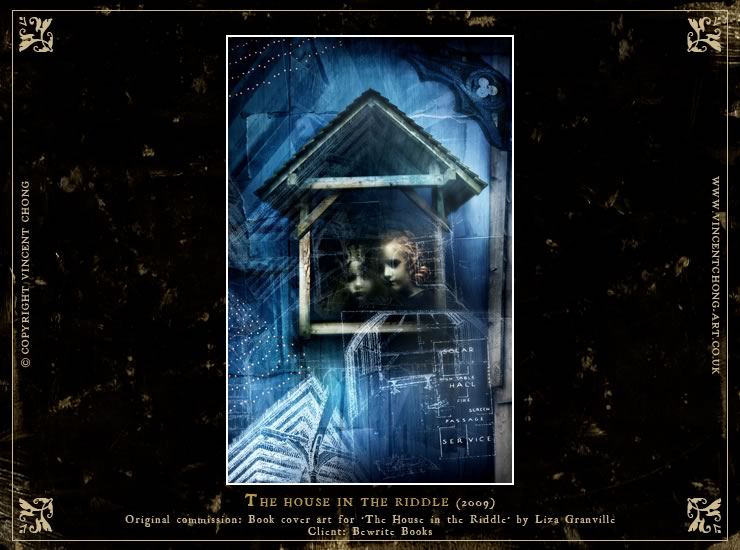
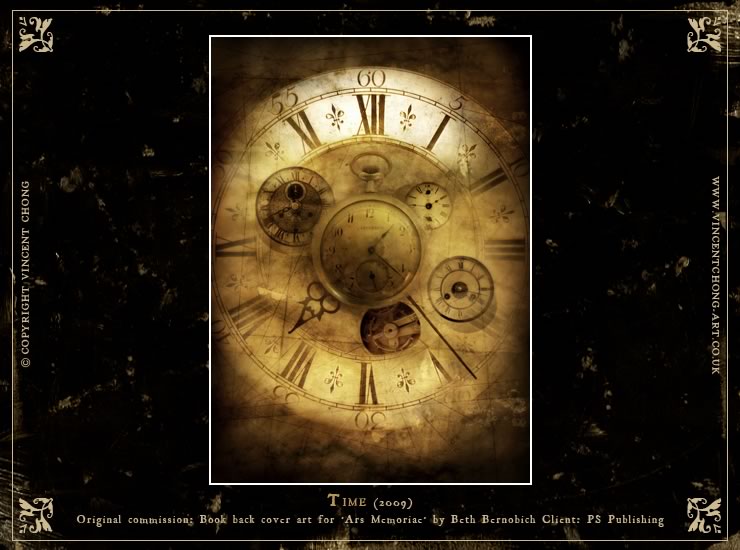
If you’re a fan of Vincent Chong, and you’ve seen my post on him, you’ll be delighted to know he has a new blog and he has a new Art Book coming out.  The details are below.  

Vincent was commissioned to redesign covers for all of Stephen King’s books, and they’re stunning.  I’ve picked out a few designs I like.  I’m waiting still for the really cool werewolf one.  (But there aren’t really any good werewolf novels yet…gonna have to write one)

My new blog http://vincentchongart.wordpress.com is now online.  The blog will be updated regularly and feature posts including news updates, artwork, behind-the-scenes material such as sketches, insights into my working methods/inspirations, tips and info on life as a freelancer and much more.  There’s also free downloads including desktop wallpapers, so please stop by for a visit and check it out.  

I’m also excited to announce that the first art book collecting my work will be published by Telos Publishing.  Entitled ALTERED VISIONS: THE ART OF VINCENT CHONG, the book will be a 48 page, A5, full colour hardback edition. Further details can be found on my blog.

The book will be published 25th March and launched at the World Horror Convention 2010 but you can pre-order a copy now direct from the publisher’s website http://www.telos.co.uk under the ‘Original and Classic Fiction’ section.  Copies are expected to be limited so place your order now to avoid disappointment.

If you know of anyone else who may be interested in my blog or art book, please pass this information onto them.

Thanks!

Best
Vincent

“One Nation Under Gods” finds home in Tesseracts 14

My story, “One Nation Under Gods,” was selected to be part of the Canadian Science Fiction and Fantasy anthology, Tesseracts 14, edited by Brett Savory and John Robert Colombo, due out in September 2010.  The Tesseracts series is devoted to Canadian Science Fiction and Fantasy and Horror, and has had, as you might have guessed, 14 other volumes (a Tesseracts Q was for Quebec, and the requisite 1-13 which came before). 

You might have caught me reading a portion of this at the Yukon Writers Festival a couple of years back.  It involves two kids and a history test, and a complete restructuring of the United States based on values Americans, like me, hold sacred: patriotism, freedom, the just war, independence, religion.  I just personified them a bit.  I’m very pleased it found a home.  I’m now going to start work on the novel version of this story.  

The picture on the left is the construction of the Statue of Liberty, a figure which looms large on the landscape at the beginning of my story.  And as I was now an immigrant to Canada, the Statue of Liberty loomed large on my new immigrant’s mind…what a dramatic beginning to a new life for those coming to America.  For me, I saw her on my way out.  On my drive from Texas to the Yukon, I parked my red truck in Calgary for one month, flew to Vermont to be part of a writer’s colony, and in that time, snuck down to see her.  Like some mistress I was breaking up with.  

How do you explain to her that you are leaving?   

I put her in my story, though, and so in this way, she haunts me.

Etiquette: Let Yourself Be Part of the Play

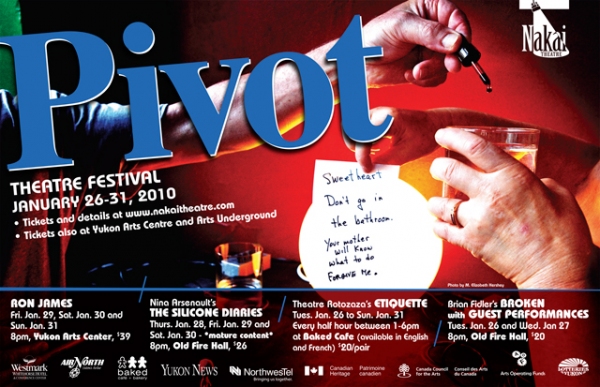
I was able to be a part of Etiquette, the new play by Theatre Rotozaza from the UK now set up at Baked Cafe, at First and Main.  It is unlike anything you’ve ever experienced.  

Yep, you’re sitting down, yep there are actors and a stage, and lines, and things are acted out, but you are the participants and no one in the cafe knows you are doing it.  It’s visceral and you feel as if you are being used, a bit, by the play.  After all, the voice tells you what to say and what to do.  You will be talking about it for awhile.  

You participate with one other person sitting across from you.  You wear headphones and whatever the voice says to you on the headphones to say or do, you say or do.  But it’s not so loud that anyone will ever hear you.  It’s not embarrassing.  It’s a conversation you are having with another person who is also wearing headphones.  

The play is called Etiquette because it seems to want to examine the whole idea of proper things to say.  Here you are, being the actor, being fed lines, much like you go to a Book of Etiquette to know how to say appropriate things at a wedding, funeral, dinner party.  You are handed lines in those situations.  But there are some situations you won’t have words for…

In the course of the play, you are directed to pick up small objects and figurines, place them on the table, do things with them.  The play uses you to get itself acted.  It’s really clever that way.  

It references at one point Henrik Ibsen’s play, The Doll’s House, and you witness the last scene of that play, where Nora does something that no woman in theatre was ever allowed to do, until then.  She leaves her husband.  He is left nearly speechless.  There’s nothing he can say–nothing that makes any sense.  This is the crux of the play Etiquette, not Ibsen’s scene, but the idea that we need words to understand how to act or feel at certain times.  

There will come a moment when you have to read a note while looking through a glass of water.  Hold the note close to the glass and move it sideways.  It will be clearer if you do that.  If you can’t, just flip it over and read the note outloud.  The rest of the directions are pretty easy to follow–you pick things up and place them on the table in front of you, you turn, look around, look at each other.  

I can’t tell you much more about the play—you have to live it to know what it is.  And whichever character you are, you will only know the play from that perspective.  This challenged a lot of what I think about theatre–about the audience’s ability to stay as observers to the play.  Here, you are forced to BE the play, and you don’t know what the other character will say, or what you will say, until you’ve said it.  But all the elements of theatre are there.  They are on the table, in your hands, out of your mouth.  It’s unique and visceral, and if you get a chance to sign up at Baked Cafe to do it, do it.  It takes 30 minutes, and there are only two tables in the room to use (so only four people can participate at a time).  No one really sees you or thinks about what you are doing.  It just looks like you are having a conversation.  But you are really deep inside a play, while the rest of the world drinks coffee around you. 

Etiquette is brought to you through the 2010 Pivot Theatre Festival arranged by Nakai Theatre.  For more information, see their website.  

Etiquette happens Tuesday January 26 to Sunday January 31,

Baked Cafe, every half hour between 1 and 6 pm, $20/pair

Tickets available at Baked Cafe starting Jan. 26 at noon.

Clarion San Diego accepting applications till March 1st

If you want to write science fiction and fantasy there is no better crucible and proving ground, classroom and community, than Clarion San Diego.  I have already written a whole page on it, and updated the writers for 2010.  It looks to be awesome.  You have about six weeks to turn in applications to go.  If you want a career in writing science fiction and fantasy, this is the right investment.  After this, you don’t have to invest in another writer’s workshop for more… this is all you need.  The writers are some you know and some you might not yet:  Samuel R. Delany, George R.R. Martin, Ann and Jeff VanderMeer, Delia Sherman and Dale Bailey.  The opportunities you get to move your work around and let people see it are great.  

See more information here.

Go to their website here. 

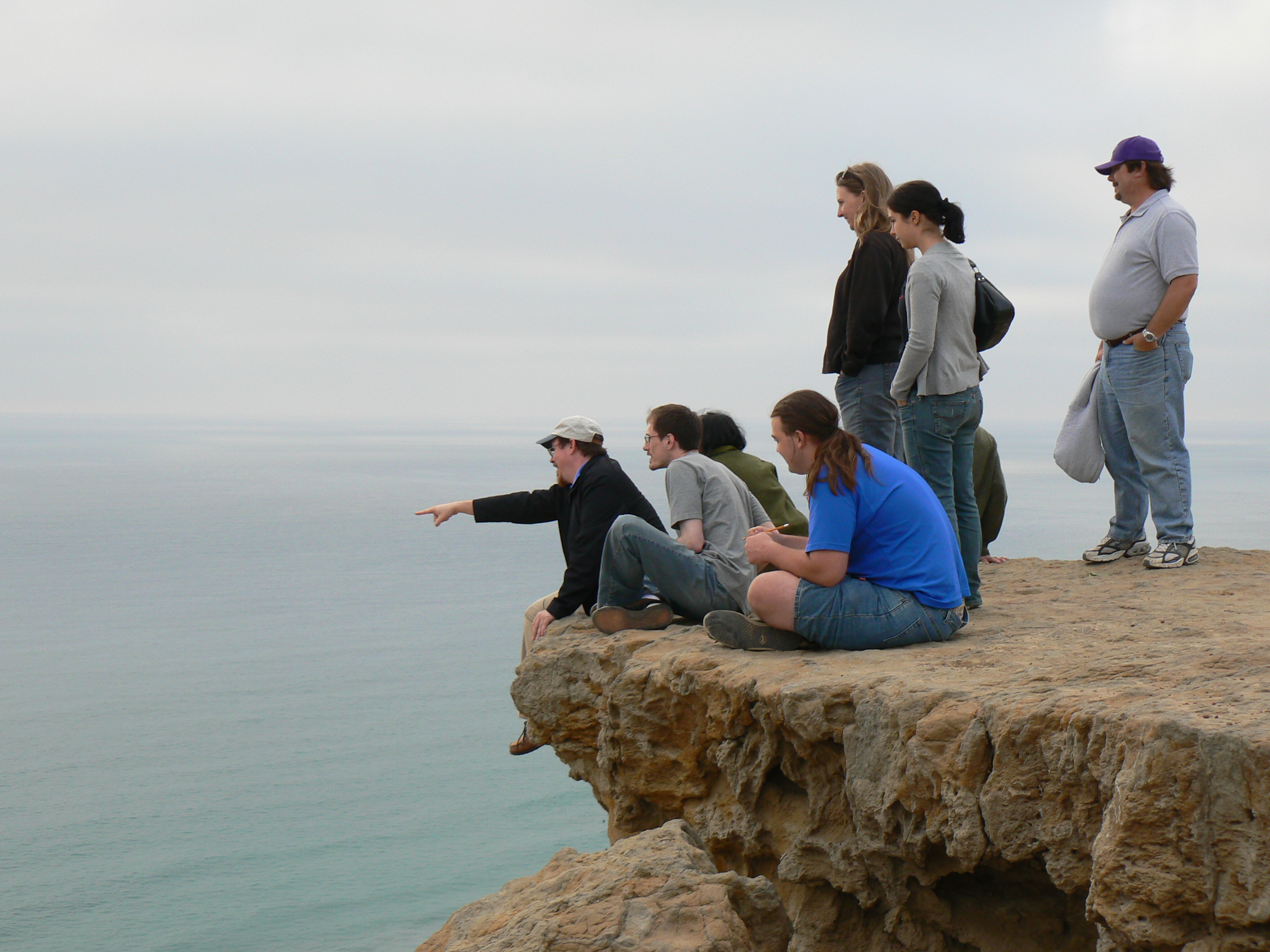
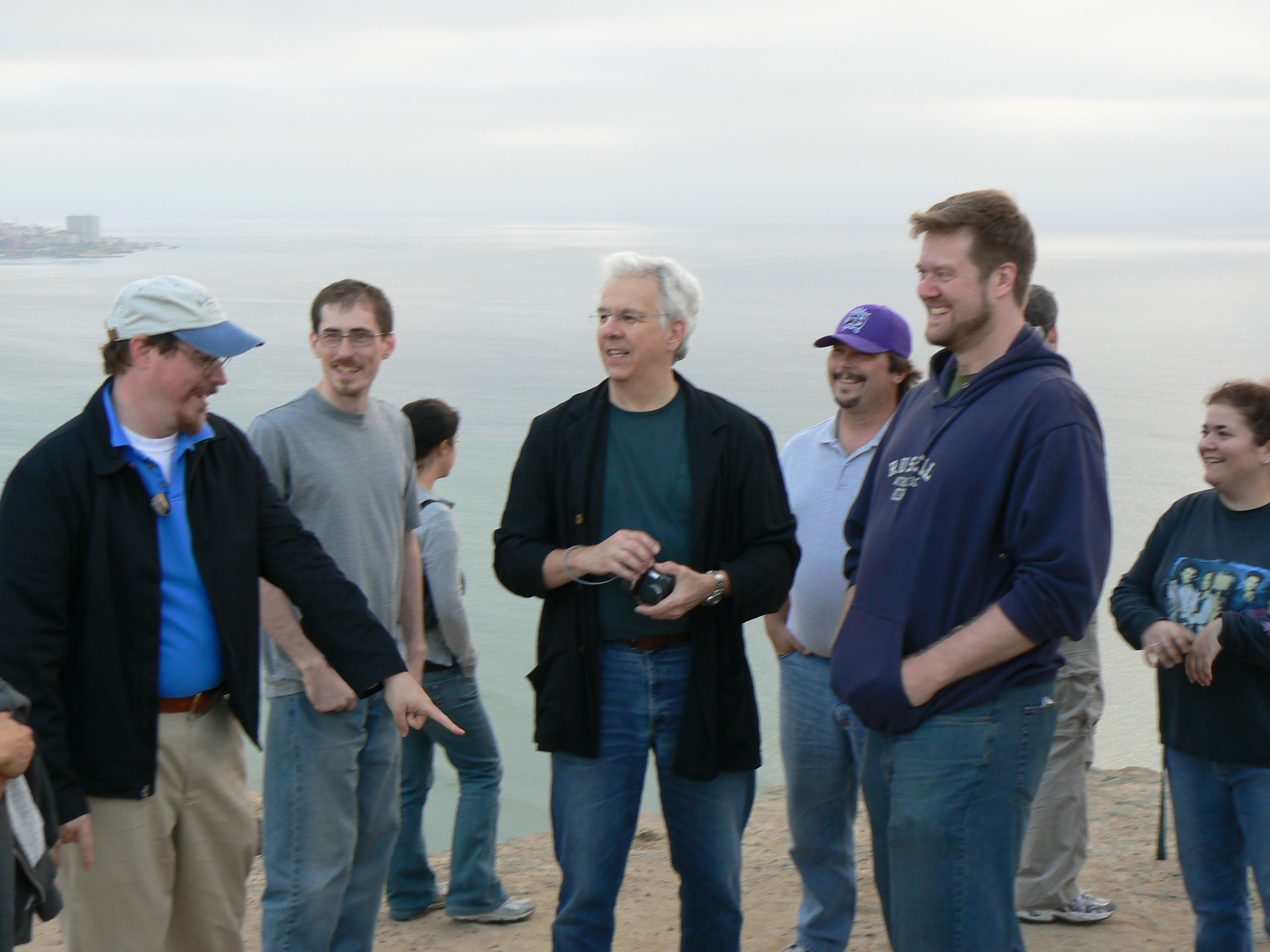
That’s us in the picture, on the bluffs outside La Jolla, near San Diego.  That’s me pointing to the future.  I say, “Hey, look, I can see a whole group of published writers!”  And then someone says, “Out to sea, huh?”  Okay, we didn’t say that.  But these people became some of my closest friends.  

  I seem to be doing more pointing.  I do that a lot.  People just stare at me like I’m one of those people.  

Clarion solidified my “calling”–not only because everyone sacrificed to get there, but because we were taken seriously.  I wrote a lot and wrote intensely.  I was challenged.  Wow, was I challenged.  And I experienced some great moments of my life.  I would love to relive this again–and really relish it this time.  You get so busy writing you sometimes forget.  

If you think it’s too much, it will be.  But I took a third of everything I had and put into this workshop financially, and I wasn’t the only one.  I love where it brought me, and where it let me stay for six weeks, and where it’s carrying me in the future.  I think you will too.  

There are a lot of workshops–Odyssey, Clarion West, etc—but I think this one is the best.  And if you respect the 18 other students there, you will get the most out of the workshop.  If you feel defensive about your work before you go, you might not get as much out of the workshop.  Because certainly the work will be up for critique–but not you.  You are up for amazing moments and good, solid career information. 

Go.  You’ll be glad you did.  

A Biologist’s Ecstasy: ‘Avatar’ Awakens Joy of Seeing the World Again

This essay over at the New York Times explains ‘Avatar‘ from a Biologist’s point of view.  Carol Kaesuk Yoon  is encouraging everyone who ever loved biology to go see Avatar purely for the wonder of seeing Life.  

Please excuse me if I seem a bit breathless, but the experience I had when I first saw the film (in 2-D, no less) shocked me. I felt as if someone had filmed my favorite dreams from those best nights of sleep where I wander and play through a landscape of familiar yet strange creatures, taking a swim and noticing dinosaurs paddling by, going out for a walk and spying several entirely new species of penguins, going sledding with giant tortoises. Less than the details of the movie, it was, I realized, the same feeling of elation, of wonder at life.

Perhaps that kind of potent joy is now the only way to fire up a vision of order in life. Many biologists of my generation (I will be 47 this month) were inspired to careers in science by the now quaint Time-Life series of illustrated books on animals or by the television program “Wild Kingdom,” rugged on-screen stuff for its time (“Now my assistant Jim will attempt to sedate the cheetah”). But maybe that isn’t enough anymore.

Maybe it takes a dreamlike ecstasy to break through to a world so jaded, to reach people who have seen David Attenborough here, there and everywhere, who have clicked — bored — past the Animal Planet channel hundreds of times without ever really seeing the animals. Maybe it takes a lizard that can glow like fire and hover like a helicopter and a staring troop of iridescent blue lemurs to wake us up. Maybe “Avatar” is what we need to bring our inner taxonomist back to life, to get us to really see.

Read the whole essay here.

If you are a science fiction/Fantasy writer, you’ll want to pay attention to the world-building done here.  Rarely have I seen world building done so well at the biological level, in a movie.  The plant and animal life here make sense together.  It’s not an anything goes style—if you check out the movie purely from that biological angle, you see a world that fits together well.  

And that’s something to take notes from.  


Erasing The Fiction: Telling the Good News about the Prop 8 Trial

Occasionally, I stray from talking about science fiction and fantasy because something is important to say, or some event is happening that means a lot.  

The Prop 8 trial is happening in California right now, under the expert guidance of trial lawyers Olsen and Boies, best known for being on opposite sides during the Gore v. Bush Supreme Court moment in 2000.  Now they are together, and they are laying out the case for overturning Proposition 8, the nefarious way conservative folks ended marriage for the GLBT community in California.  

Thousands and thousands of people are watching this trial on liveblogging.  The Supreme Court has denied cameras and videotaping of the proceedings, with a ruling that happened only hours before the actual trial began last week.  Instead, we have had to follow some fantastic transcription of the trial.  

What we are learning is that we have been fed FICTION for a long long time.  And while it has been successful fiction, it’s not very good, and can’t really hold up to textual analysis, or any kind of scrutiny.  When you shine a light on it, it just because hatred, bigotry and discrimination, and very, very unchristian. 

The joy of reading the transcription—and please think of selling this as a book to people (I’d love a book of this trial for a donation to Courage Campaign Institute)–the joy of reading that transcription is the slow erasure of the lies that we’ve been told all our lives: that we will harm children, that we are living in direct violation to God and the scriptures, that we will hurt straight marriages, that we will bring destruction on America if allowed to marry (that last one has a Pat Robertson spin).  

Denying American citizens the right to marry each other is denying them the protections and promises of the Constitution.  First, we live as Americans and that document is our bible–it is what we rule by, live by, act by.  Second, there are countless, wonderful books—by theologians–that map out how the Bible is being used to discriminate, and that God loves everyone–including gay and lesbian people–and wants them, if they so choose, to find someone and love them as Christ loves people.  Christians who believe that gay people are not acceptable to God are treading a path away from God, away from Christ, and, unfortunately, away from the rest of us.  Just as they were some of the last holdouts on repealing slavery, and on granting the rights of women, so they are the last holdouts on accepting gay and lesbian people.  

It is so bad for the Church because many are walking away from God and Christ when they turn their backs on the church.  This goes against all that Christians stand for–they want no one to walk away from them empty-handed.  And yet….  I know they will be really upset when they figure this out.  It makes me sad.  What a horrible representation of God’s love.  

The trial is exposing those lies.  Though we have been blocked from seeing the trial ourselves, the truth is getting out there.  I am so proud of the people who are liveblogging this.  I am so proud to be a gay man right now, to see the truth unveiled, to see everyone slowly realize that we are not the scourge you made us believe we were.  

I encourage everyone to read the transcripts of each of the daily summaries.  You will be amazed.  And then, for folks who are still struggling with religion or faith and sexuality, this uncommonly simple, but thorough book, Jesus, the Bible and Homosexuality by Jack Rogers.  

To my fellow GLBT, God is not “theirs”—he is Ours.  They do not own Jesus, or the words of Jesus, and they cannot block you from his love.  There are plenty of churches now who accept us, and know that accepting us is perfectly good in the eyes of God.  You can go through those doors and receive love from everyone.  

Thank you, Olsen, Boies, and the rest of you for erasing the fiction that has been fooling us.  May everyone get the truth.

How to Read and Understand Science Fiction: Jo Walton’s Essay on Tor

Below is an excerpt and a link for the wonderful essay by Jo Walton on “SF Reading Protocols” or just how to understand Science Fiction and Fantasy when you’re reading it.   Her argument is that readers of Science Fiction actually read differently than other readers, and books in this genre require a different reading skillset.  

Genres are usually defined by their tropes—mysteries have murders and clues, romances have two people finding each other, etc. Science fiction doesn’t work well when you define it like that, because it’s not about robots and rocketships. Samuel Delany suggested that rather than try to define science fiction it’s more interesting to describe it, and of describing it more interesting to draw a broad circle around what everyone agrees is SF than to quibble about the edge conditions. (Though arguing over the borders of science fiction and fantasy is a neverending and fun exercise.) He then went on to say that one of the ways of approaching SF is to look at the way people read it—that those of us who read it have built up a set of skills for reading SF which let us enjoy it, where people who don’t have this approach to reading are left confused.

… My ex-husband once lent a friend Joe Haldeman’s The Forever War. The friend couldn’t get past chapter 2, because there was a tachyon drive mentioned, and the friend couldn’t figure out how that would work. All he wanted to talk about was the physics of tachyon drives, whereas we all know that the important thing about a tachyon drive is that it lets you go faster than light, and the important thing about the one in The Forever War is that the characters get relativistically out of sync with what’s happening on Earth because of it. The physics don’t matter—there are books about people doing physics and inventing things, and some of them are SF (The Dispossessed…) but The Forever War is about going away to fight aliens and coming back to find that home is alien, and the tachyon drive is absolutely essential to the story but the way it works—forget it, that’s not important.

This tachyon drive guy, who has stuck in my mind for years and years, got hung up on that detail because he didn’t know how to take in what was and what wasn’t important. How do I know it wasn’t important? The way it was signalled in the story. How did I learn how to recognise that? By reading half a ton of SF. How did I read half a ton of SF before I knew how to do it? I was twelve years old and used to a lot of stuff going over my head, I picked it up as I went along. That’s how we all did it. Why couldn’t this guy do that? He could have, but it would have been work, not fun…

Read More Here

Avatar: A Second Chance to Get It Right

In my last post, I reacted to critics who were convinced there was a racist motif in play in Avatar.  But I’d like to talk about what Avatar is all about: Second Chances.

The movie is riddled with “seconds”— a twin who takes over for his brother when his brother is killed, a man who has his legs taken away from him getting a second chance at walking, Sully who has a second chance at being useful to the Na’vi, humankind getting a second chance to be at peace with a Planet.  

Cameron in his acceptance speech for the Golden Globes says as much:

“‘Avatar’ asks us to see that everything is connected, all human beings to each other, and us to the Earth. And if you have to go four and a half light years to another, made-up planet to appreciate this miracle of the world that we have right here, well, you know what, that’s the wonder of cinema right there, that’s the magic,” Cameron said.

I was moved by the essay on Sully that I read over at the Respectable Negro Tribe blog

Jake Sully is emasculated in a literal sense because of a combination of physical injury, financial inadequacy and family tragedy. Not only is Jake Sully a Marine who cannot walk or fight, but more tragically he knows that there is a cure for his injury, but cannot afford it. Further, Jake’s closest relative, his twin brother, has been killed in a meaningless act of violence that Jake could not prevent, and now Jake is now forced to step forward into a position that he does not feel he is smart enough to handle.

He gets that second shot, for his brother, for himself, and in a representative way, for humans.  When he is at the tree with the glowing strands, he asks the ancients to link up with him, look into his past.  He’s trying to warn Erya that his kind are bloodthirsty, and that they would destroy the planet if given the chance.  “We killed our Mother,” he tells the planet.  And the planet steps up to save itself.  

One wonders what our story would have been like if we would have had a more respectful way of listening to our planet.  Is Climate Change the consequences of not listening?  

This is the stronger message of Avatar.  Not who saves who, but of having a second chance to save things at all….