Saddam as Darth Vader: New Scientist and Tate Gallery Ponder Connections

Over at New Scientist, a fascinating article on a fascinating Tate Gallery, London, exhibition about the effect of pop culture–particularly Star Wars–on the late Saddam Hussein.  At first, you chuckle.  Then you hear some of the parallels–and you may still chuckle.

Saddam had an unpublished fantasy novel (which I’m dying to read now!  Can you imagine that hitting the market–a Fantasy novel by Saddam Hussein??) and a few more than coincidental leanings towards the dark figure.  However, from the article in New Scientist, the threads are thin.  I would have loved seeing more than a few stretches of metaphorical underpinnings to Saddam’s tactics and beliefs.  While the helmets are a nice touch; as they prove to be Vaderish, so are WW2 gasmasks….  and we aren’t making Hitler/Darth connections (though I would say that Darth was modeled after Hitler, obviously— Brown Shirts and Stormtroopers, no stretch there).  Since the Darth mask was most probably modeled on a gasmask, I think the Gallery is taking a bit of liberty to say that Saddam had a Darth-fetish.  

Consider this point the author, Jessica Griggs, makes:

Could this all be coincidence? Perhaps, but you’ll be convinced otherwise once you’ve read about Sadaam’s private militia’s uniform. Before his son, Uday, handed over control of the Fedayeen Sadaam (translation: “Saddam’s Men of Sacrifice”) to his younger brother he wanted to give his father something to remember his work by. So he presented Saddam with their new uniform: black shirt, black trousers and a ski-mask over which a strikingly Darth Vader-esque helmet was placed.

It seems more likely that Uday had a Star Wars ideal in mind for his father–since there are few other instances of Star Warsian artifacts.  The upraised swords is, at best, coincidental, made more science fiction-y by the artist who makes the swords into light sabers.  The “lurid” fantasy posters are from a different genre of literature.  The fact that the artist is a friend of the person who designed the poster for Star Wars is called a streeeeetch.  The paintings in Saddam’s “Safe House” were both by a fantasy artist.  The link here. 

It’s a stretch to see these fantasy paintings connected to Darth Vader of science fiction.  Yep, Saddam might have been a fan of fantasy/science fiction…but beyond that is the artist’s license. 

It is not unbelievable that science fiction pop culture might have an influence on dictators.  Certainly their heroes have a powerful pull on the Western World; couldn’t their powerful dictators be enamored by fellow dictators?   Since few of them survive in Science fiction past their novel series, I don’t think ANYONE would want to model an empire on them.  

Unless, of course, you can make sure that you have no plucky twins, rescued and hidden at birth, lurking somewhere in the galaxy, ready and waiting to upset your glorious domination.

Now, I want to see the article on Saddam Hussein’s fantasy novel.

Morgan Whibley Shot Me in the Alley and All I Could Say Was This: An Essay on Writing Genre

Morgan Whibley, Alley Series #44Some stunning work by Morgan Whibley, a Whitehorse based photographer.  The Alley Series.  (Yes, it was stunning and fun even before I was a subject.)  His rules are simple:

One alley from sidewalk to sidewalk.
Ambient light only.
A different person everyday.
Seven days a week.

He’d been doing this for 43 days in a row when he ran into me.  Follow the link, get stunned by his work.  All Yukoners, all beautiful pictures, wonderful, fun people.  They are our stories.

______________________________

But my story got me to thinking about being a writer of genre.

Morgan tells me to come into his shop, Photovision, and when I get there he cuts a piece of cardboard from a box, slaps down two markers and says, Draw.  What do I draw?  He’s made a speech bubble.  “Whatever you want to.”  I have NO idea what to put there.  He wants the first things I think of.  I hem and haw a bit.  Suddenly, I just sketch out a design and draw Mr. Spock with a latte from Baked Cafe there.  We shoot the photo in the alley.

And then, it’s over, so I think.  And I’m halfway back to my truck and I think–“You fool!  You could have said something important about the value of words.  That words can be healing, or words can be explosive and destructive.  And what did you do?  You did something frivolous.  And stupid–and highly derivative.  Are you just a Trekkie? Is that all you are?”  These were the voices in my head.

So I ran back to Morgan, grabbed him by the shirt collar.  “We have to do it again!” I said.  Okay, maybe I didn’t grab his shirt collar, but I was insistent that we do it again because I’ve thought of something more important to “say.”  So he patiently carves out another speech bubble for me, and I draw out the symbol for Medicine (you know, the two snakes wrapped around the staff with wings–started by Moses, so long ago)–cause I’m going for “Healing Words”….

Yeah.

So, we go out into the alley so I can get shot again.  And we’re both thinking the same thing, and we’re talking…maybe we’re overanalyzing, we both say.

And we take the shots.  And they are highly thought out…  and they say the “right thing.”  But they seem orchestrated, forced.

I think, later, that THIS is the argument that every writer has with him/herself.  Especially writers of any genre: humor, science fiction, romance, fantasy, western, children’s, young adult, gay, hairy monster, etc.

We think that we must say something IMPORTANT with what we write.  That we have to use our considerable talent, and all writers have “considerable talent” with words, and say something like “WORLD PEACE, IDIOTS!”  or “Stop oppressing us!!” or “Global Warming is REAL!”  or “Whales don’t deserve to be SHOT!”  And who can argue with these messages?  Certainly they are important.  We all know that.  And certainly other people will consider you a much weightier writer, a writer with HEFT, if you can tackle Global Warming, or Teen Pregnancy, or something important, in your writing.  They often give awards in that direction (and they do it in film too….).

But who’s to say that the person who laughs at my first photograph won’t be healed?  Who’s to say that you can’t heal someone with words without broadcasting that you are HEALING them?  Who wants to be hit over the head with a message?  And why can’t REALLY good genre do everything that you need it to do–be a damn good story, with a subtle message and a lot of entertainment?

I think, as writers, we all balance between these two photos: the need to say something important, and the need to say something fun and frivolous.  And we see them as two different categories.  That we can’t be fun and important.  We see this in many other areas too (religion, politics, leadership), but for me it resonates as the battle I fight every day:  What value, I think, is Fantasy writing? How does it help the world?   Shouldn’t I turn my skills to Environmental Literature?

No.  You should only do that if you are called to do that.  If you try to write Environmental Literature and you were born to write Children’s Books about Rockets and Squid–then you will be a very frustrated Environmental Literary Writer.  Where is your passion?  If you find your passion, I think you get the package deal.  You will affect people in important ways by being yourself.

There is no real dichotomy between writings—there is only being true and not being true to yourself.  The truth is–we need comedy, romance, westerns, mysteries, radio dramas, children’s picture books with gorillas in them–we need to laugh to fight the absurdity, we need to feel hope in the face of injustice, and we need to fantasize about escape.  We need it All.

Write your part of the All.

Clarion San Diego accepting applications till March 1st

If you want to write science fiction and fantasy there is no better crucible and proving ground, classroom and community, than Clarion San Diego.  I have already written a whole page on it, and updated the writers for 2010.  It looks to be awesome.  You have about six weeks to turn in applications to go.  If you want a career in writing science fiction and fantasy, this is the right investment.  After this, you don’t have to invest in another writer’s workshop for more… this is all you need.  The writers are some you know and some you might not yet:  Samuel R. Delany, George R.R. Martin, Ann and Jeff VanderMeer, Delia Sherman and Dale Bailey.  The opportunities you get to move your work around and let people see it are great.  

See more information here.

Go to their website here. 

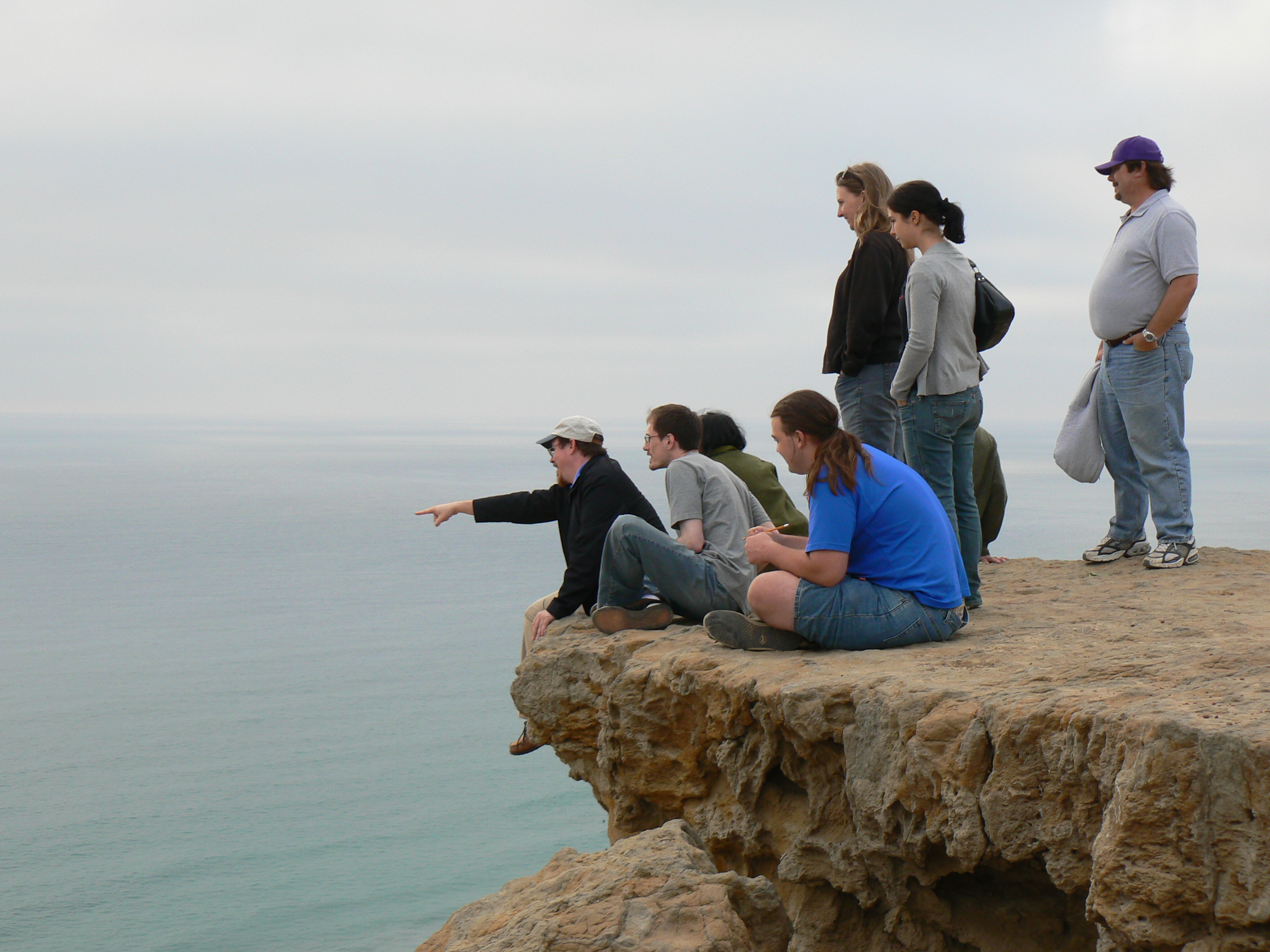
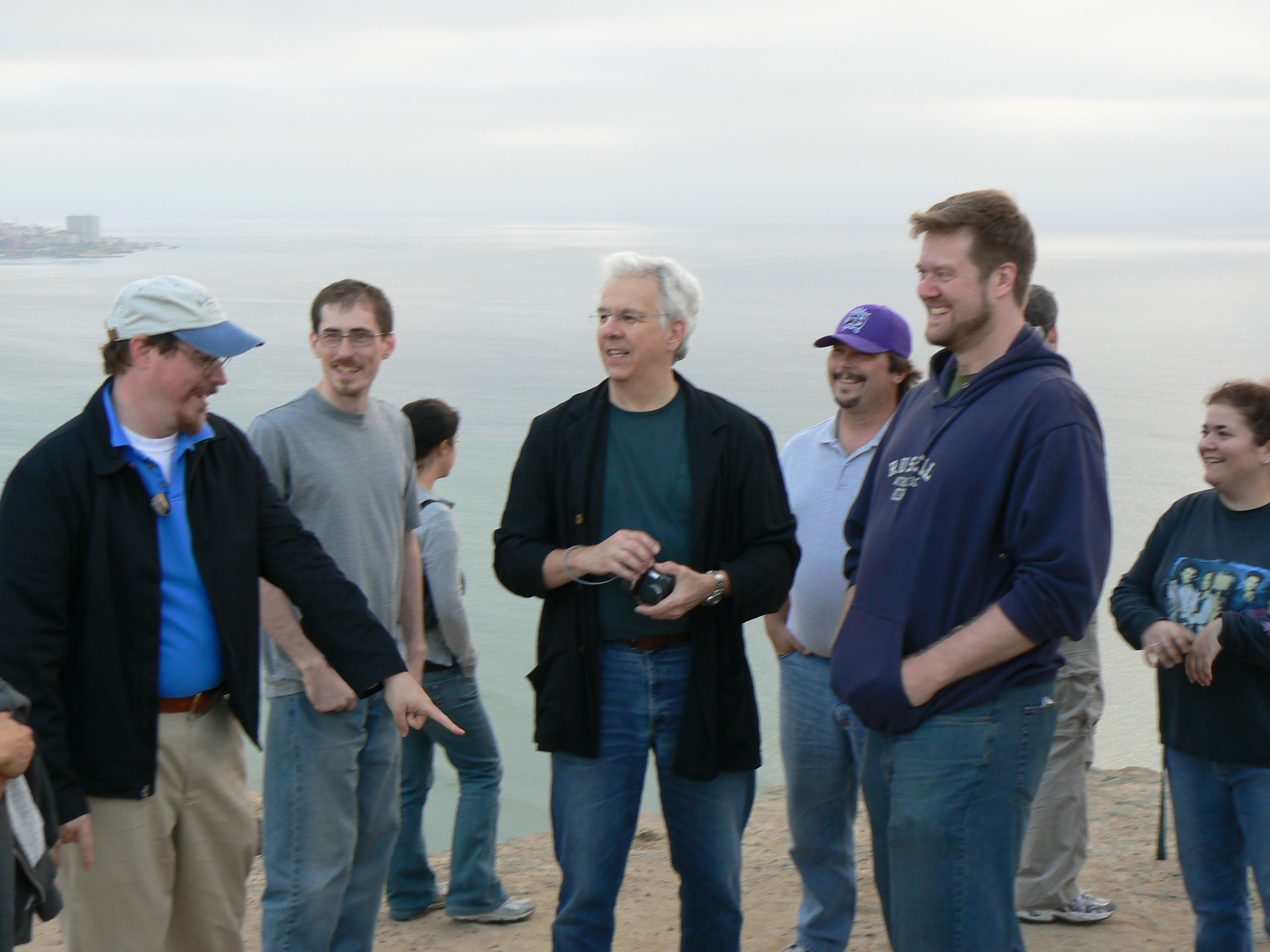
That’s us in the picture, on the bluffs outside La Jolla, near San Diego.  That’s me pointing to the future.  I say, “Hey, look, I can see a whole group of published writers!”  And then someone says, “Out to sea, huh?”  Okay, we didn’t say that.  But these people became some of my closest friends.  

  I seem to be doing more pointing.  I do that a lot.  People just stare at me like I’m one of those people.  

Clarion solidified my “calling”–not only because everyone sacrificed to get there, but because we were taken seriously.  I wrote a lot and wrote intensely.  I was challenged.  Wow, was I challenged.  And I experienced some great moments of my life.  I would love to relive this again–and really relish it this time.  You get so busy writing you sometimes forget.  

If you think it’s too much, it will be.  But I took a third of everything I had and put into this workshop financially, and I wasn’t the only one.  I love where it brought me, and where it let me stay for six weeks, and where it’s carrying me in the future.  I think you will too.  

There are a lot of workshops–Odyssey, Clarion West, etc—but I think this one is the best.  And if you respect the 18 other students there, you will get the most out of the workshop.  If you feel defensive about your work before you go, you might not get as much out of the workshop.  Because certainly the work will be up for critique–but not you.  You are up for amazing moments and good, solid career information. 

Go.  You’ll be glad you did.  

A Biologist’s Ecstasy: ‘Avatar’ Awakens Joy of Seeing the World Again

This essay over at the New York Times explains ‘Avatar‘ from a Biologist’s point of view.  Carol Kaesuk Yoon  is encouraging everyone who ever loved biology to go see Avatar purely for the wonder of seeing Life.  

Please excuse me if I seem a bit breathless, but the experience I had when I first saw the film (in 2-D, no less) shocked me. I felt as if someone had filmed my favorite dreams from those best nights of sleep where I wander and play through a landscape of familiar yet strange creatures, taking a swim and noticing dinosaurs paddling by, going out for a walk and spying several entirely new species of penguins, going sledding with giant tortoises. Less than the details of the movie, it was, I realized, the same feeling of elation, of wonder at life.

Perhaps that kind of potent joy is now the only way to fire up a vision of order in life. Many biologists of my generation (I will be 47 this month) were inspired to careers in science by the now quaint Time-Life series of illustrated books on animals or by the television program “Wild Kingdom,” rugged on-screen stuff for its time (“Now my assistant Jim will attempt to sedate the cheetah”). But maybe that isn’t enough anymore.

Maybe it takes a dreamlike ecstasy to break through to a world so jaded, to reach people who have seen David Attenborough here, there and everywhere, who have clicked — bored — past the Animal Planet channel hundreds of times without ever really seeing the animals. Maybe it takes a lizard that can glow like fire and hover like a helicopter and a staring troop of iridescent blue lemurs to wake us up. Maybe “Avatar” is what we need to bring our inner taxonomist back to life, to get us to really see.

Read the whole essay here.

If you are a science fiction/Fantasy writer, you’ll want to pay attention to the world-building done here.  Rarely have I seen world building done so well at the biological level, in a movie.  The plant and animal life here make sense together.  It’s not an anything goes style—if you check out the movie purely from that biological angle, you see a world that fits together well.  

And that’s something to take notes from.  


How to Read and Understand Science Fiction: Jo Walton’s Essay on Tor

Below is an excerpt and a link for the wonderful essay by Jo Walton on “SF Reading Protocols” or just how to understand Science Fiction and Fantasy when you’re reading it.   Her argument is that readers of Science Fiction actually read differently than other readers, and books in this genre require a different reading skillset.  

Genres are usually defined by their tropes—mysteries have murders and clues, romances have two people finding each other, etc. Science fiction doesn’t work well when you define it like that, because it’s not about robots and rocketships. Samuel Delany suggested that rather than try to define science fiction it’s more interesting to describe it, and of describing it more interesting to draw a broad circle around what everyone agrees is SF than to quibble about the edge conditions. (Though arguing over the borders of science fiction and fantasy is a neverending and fun exercise.) He then went on to say that one of the ways of approaching SF is to look at the way people read it—that those of us who read it have built up a set of skills for reading SF which let us enjoy it, where people who don’t have this approach to reading are left confused.

… My ex-husband once lent a friend Joe Haldeman’s The Forever War. The friend couldn’t get past chapter 2, because there was a tachyon drive mentioned, and the friend couldn’t figure out how that would work. All he wanted to talk about was the physics of tachyon drives, whereas we all know that the important thing about a tachyon drive is that it lets you go faster than light, and the important thing about the one in The Forever War is that the characters get relativistically out of sync with what’s happening on Earth because of it. The physics don’t matter—there are books about people doing physics and inventing things, and some of them are SF (The Dispossessed…) but The Forever War is about going away to fight aliens and coming back to find that home is alien, and the tachyon drive is absolutely essential to the story but the way it works—forget it, that’s not important.

This tachyon drive guy, who has stuck in my mind for years and years, got hung up on that detail because he didn’t know how to take in what was and what wasn’t important. How do I know it wasn’t important? The way it was signalled in the story. How did I learn how to recognise that? By reading half a ton of SF. How did I read half a ton of SF before I knew how to do it? I was twelve years old and used to a lot of stuff going over my head, I picked it up as I went along. That’s how we all did it. Why couldn’t this guy do that? He could have, but it would have been work, not fun…

Read More Here

Avatar: A Second Chance to Get It Right

In my last post, I reacted to critics who were convinced there was a racist motif in play in Avatar.  But I’d like to talk about what Avatar is all about: Second Chances.

The movie is riddled with “seconds”— a twin who takes over for his brother when his brother is killed, a man who has his legs taken away from him getting a second chance at walking, Sully who has a second chance at being useful to the Na’vi, humankind getting a second chance to be at peace with a Planet.  

Cameron in his acceptance speech for the Golden Globes says as much:

“‘Avatar’ asks us to see that everything is connected, all human beings to each other, and us to the Earth. And if you have to go four and a half light years to another, made-up planet to appreciate this miracle of the world that we have right here, well, you know what, that’s the wonder of cinema right there, that’s the magic,” Cameron said.

I was moved by the essay on Sully that I read over at the Respectable Negro Tribe blog

Jake Sully is emasculated in a literal sense because of a combination of physical injury, financial inadequacy and family tragedy. Not only is Jake Sully a Marine who cannot walk or fight, but more tragically he knows that there is a cure for his injury, but cannot afford it. Further, Jake’s closest relative, his twin brother, has been killed in a meaningless act of violence that Jake could not prevent, and now Jake is now forced to step forward into a position that he does not feel he is smart enough to handle.

He gets that second shot, for his brother, for himself, and in a representative way, for humans.  When he is at the tree with the glowing strands, he asks the ancients to link up with him, look into his past.  He’s trying to warn Erya that his kind are bloodthirsty, and that they would destroy the planet if given the chance.  “We killed our Mother,” he tells the planet.  And the planet steps up to save itself.  

One wonders what our story would have been like if we would have had a more respectful way of listening to our planet.  Is Climate Change the consequences of not listening?  

This is the stronger message of Avatar.  Not who saves who, but of having a second chance to save things at all….

Pope Says Okay to believe in E.T., But Not In Gay Marriage

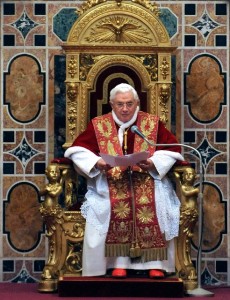
Well, the Vatican seems to be open to aliens.  I like that.  It’s heartwarming.  It’s progressive.  Though only speculative reasoning by the Vatican’s chief astronomer, the Pope threw open his arms to his “brother aliens.”    Fr. Jose Gabriel Funes is Chief Astronomer for the Vatican.  

The astronomer began the interview titled, “The Alien is my Brother,” by saying that, “Astronomy has a profound human value. It is a science that opens the heart and the mind. It helps us to put our lives, our hopes, our problems in the right perspective. In this regard, and here I speak as a priest and a Jesuit, it is an apostolic instrument that can bring us closer to God”, said Fr. Funes in the interview. 

And further on the subject of the aliens, the good astronomer had this to say:

Asked is he sees a contradiction between the Catholic faith and believing in aliens, he said, “I think there isn’t (a contradiction). Just as there is a multiplicity of creatures over the earth, so there could be other beings, even intelligent (beings), created by God. This is not in contradiction with our faith, because we cannot establish limits to God’s creative freedom. To say it with St. Francis, if we can consider some earthly creatures as ‘brothers’ or ‘sisters’, why could we not speak of a ‘brother alien’? He would also belong to the creation.”

Alas this brings up lots of interesting questions and contradictions in the Vatican’s positional stance on other issues closer to home.  This excellent post from the Guardian sums up the contradiction nicely.

That the Catholic church isn’t freaking out at the possibility of alien existence for one thing gives me hope that they might stop freaking out about other things that really do exist. Contraception, perhaps, or homosexuality. The Vatican might become open to the possibility of married priests, or female ones. And that would be super.

But, yeah, no.

E.T. ain’t heavy, he’s my brother.  But the gay couple, we won’t carry them.

They’re now a threat to Creation itself. (Step back, Climate Change!).  Says the Pope in his address to world diplomats–a plea for the environment and creation:

“Creatures differ from one another and can be protected, or endangered, in different ways, as we know from daily experience. One such attack comes from laws or proposals which, in the name of fighting discrimination, strike at the biological basis of the difference between the sexes,” he said.

“I am thinking, for example, of certain countries in Europe or North and South America,” he said.

Well, this speech, January 5 2010, came just after Mexico City declared gay marriage legal, and as Portugese Parliament was doing the same.  Hmm.  

I love that the Vatican embraces Aliens and what had been only science fiction before, but I hope they turn their attention to more immediate matters: the millions of gays and lesbians who want equality, and would like just a little of that love the church wants to dole out on Extraterrestrials they’ve never seen.  Irony seems a paltry word to describe this kind of injustice.  It’s cruelty inscribed in Jesus’ name.   This would make Jesus weep a second time.  

God is not science fiction, and probably aliens are not science fiction (I’ll give the Pope two points there).  Pope Benedict, gays aren’t monsters, gay marriage no threat to reproduction or creation in the world.  But the Church, unfortunately, is fast scripting themselves as Fantasy–out of touch with their own directives, mandates and missions, even their own Author.  Instead of walking away from the Church, I challenge people to go back in and help fix it.  Update it.  Teach it.  Vote out the bad policies.  Uncover God where He’s been shrouded.  Shake the dust off people’s shoulders who have been sitting there comatose for years.  Tell them there’s more than singing, more than preaching, more than baptizing, more than dinners and potlucks—there is a host of things to do work on, a host of people to reach out to, a host of folks in need.  

This plot is slumping.  Cut to the action again.  Bring in new characters, better dialogue.  

This novel idea, Christianity, has more potential, and could be a bestseller–could even change the world— but it’s gonna take a lot of work.

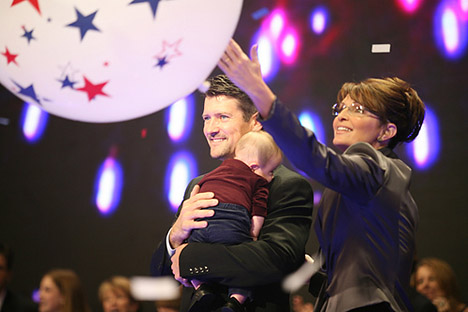
Palin Eyes Role in New Star Trek Series

Fresh from her announcement that she’s accepting a position on Fox comes bigger leaked news.  Former governor Sarah Palin is in negotiations for a lead role on a new Star Trek series, tentatively titled Star Trek: Reckoning, going into production this fall, ready to be aired on both Paramount and Fox in the Fall of 2011.  

If she accepts, Palin would play Captain Nalia Fergus of the USS Steadfast, one of the ships convinced of an upcoming battle which the Federation won’t take seriously.  Unlike past series, this series concentrates on multiple ships and the Federation–so some political intrigue.  Palin, of course, has to be a “rogue” captain! [I love it!]  

The series takes place after Voyager, with an expansive Federation, a bit more difficult to govern, a bit too relaxed.  The title, Reckoning, refers to an Armageddon-like disaster predicted by the D’mi, a culture that sees dreams as predictions of the future.  They’ve had a collective, planet-wide dream that involves the whole Federation, but very few are listening.  The show is about their attempts to convince the Federation to do something about an impending attack that could destroy multiple sectors.  In the premiere and first season, they are able to convince three ships, who will work tirelessly through the series to undermine the current administration, all while trying to create alliances with other ships through deception, manipulation and controlling the media.

The President of the Federation, a very powerfully-minded, but peaceful, Betazed, is unphased by a dreaming culture predicting doom.  Fergus, believing D’mi predictions, forms an underground alliance with two other ships (writers are arguing over names like the USS Sun Tzu, USS Pearl Harbor, and the USS Buchanan) to protect Section 001, Earth.  This show will be about a bit of infighting in the Federation.  

“They’ve done it before,” says one of the writers.  “The TNG episode, Conspiracy, the Maquis, and the Dominion, and even the threats of Species 8472–but these were mostly alien attacks, people posing as humans.  The Maquis sequence really opened up the door to talking about multiple sides within the Federation–or even political parties,” say writers who want to remain anonymous till Paramount’s April announcement. 

Still they’re excited about the series.  And about these rogue captains.  “They really distrust the President.  He’s too peaceful.  He can read their minds–which they hate.  He’s a negotiator, a diplomat, at a time when they feel like war is coming. The constant question on the table will be–are the D’mi’s dreams really accurate, do they have a political agenda, and at what moment do you take matters into your own hands?”  

One of them quipped, “It’s kind of like writing a series in the Mirror Universe, except this one is bad.”

The coolest thing is that Fergus’ first officer is Commander Nuuk, a walking, talking polar bear from some ice planet.  Earth apparently dropped off its Arctic species on this planet (yeah, climate change wiped them out on Earth) and they mixed with the indigenous life there–very similar–so you get a polar bear.  Fergus used to hunt bears.  Nuuk doesn’t know that, so this is going to be a source of tension, as she doesn’t want to admit it, but thinks of him as a trophy first officer.  She’s gonna have a D’mi onboard too–who has these waking dreams–who’s living in both reality and fantasy all the time, but can’t tell the difference.  

These are three ships full of conservatives.  I do think that a ship of conservatives gives the writers what they’ve always waited for–the ability to write in closeted gay characters.  There won’t be much open romantic intrigue because everyone’s uptight, not wanting to be revealed.  

Palin has expressed interest, according to one former aide in Alaska.  “She likes the character.  It’s so much like her–bold, aggressive hunting woman, now commanding a starship of conservatives, who move with her every command.  They fight for Earth, and they seek to protect the planet from its own bad judgment.”  

Palin is reportedly brushing up on Federation policies, which like Kirk, she will ignore and bend at will, and she’s learning Klingon–just in case.  She does have some concerns.  She’s asked to be written in as a mother, with small children on board the ship.  She wants to be assured of a four year gig (no death in season two).  She also wants to have her own ghost writer write in folksy things she would normally say, but now in a command-sort of way.”  

Paramount and Fox want to give her as much latitude as possible.  “We’ve never been able to pick up this demographic.  Usually we just get intelligent, science-oriented, techno geeks with a liberal, compassionate viewpoint.  We have the potential to scoop Red State America–the O’Reilly viewers,” says one assistant producer.  “We wouldn’t just have a fan base–we’d have an electorate!” 

McCain, a trekkie since William Shatner was a child, has said he’d always wondered how the Earth in Star Trek ever resolved pluralistic ideas.  “Never made sense to me why everyone agreed on Earth.  What happened to pluralism?”  And he has a point.  How did this series eliminate differences of opinions?  Where did the all Israeli ship go?  Or the Chinese ships?  Where were the rivals to get spaceships into space?   Did they sabotage each other?  Surely there was more fighting before we conquered space.  This series, McCain indicates, will “bring back the lipstick in realistic.”  No one knows exactly what he means.  

It does bring up interesting possibilities for the writers.  Could they keep the Star Trek fan base intact–those rooting for the Federation?  But those fans just might like a quirky, folksy rogue captain–plucky enough to cause a conservative revolution.  

Palin as Captain of her own ship?  What do you think?  She does wear red well.


 Shatner giving Palin the baton, the formal written permission to be as “rogue as she wants to be.”

____________________________

(this is, of course, a parody.  A wink to Sarah Palin.)


For more on the new Star Trek Series, don’t miss these entries:  Gingrich as D’mi, and Palin citing Star Trek to promote Gun Rights  and Red State America Wants Their Star Trek

Tesseracts 14 Submitters: Not to Worry

Eager to hear any news about Tesseracts 14?  

New Update:  The Table of Contents has been finalized and will, I hear, be revealed soon.  Brett and John are sending out emails right now.  That will take some time as I’m sure there were lots of submitters for this anthology.  But everyone should know everything in, at least, about a day or two, I’d guess.  Good luck everyone!  

_____________________________________

Everything below this is old news: dated January 9 2010.  

Brian Hades has posted this on the Tess 14 webpage:

WE ARE A BIT BEHIND 

With December holidays and more snow than one ever needs clogging up the works, we are about two weeks behind schedule. Please have patience as we catch up during the month of January. Thanks. – Brian Hades, publisher

This supersedes my other reports from SFC listserv.  Thanks Marcelle for those original tips.  I know folks were worried theirs were lost in the mail.  The snow has a way of swiping mail sometimes. Godspeed to the editors, and to us– good luck on your next projects–several deadlines approaching.  As for Tess 14, good luck to everyone!  Now back to snowfall, dogwalks and deadlines.

Rocketfuel Ignites Imaginations, the Yukon News story on my class


Photo by Ian Stewart for the Yukon News

My most excellent class of writers is the subject of a Yukon News article below.  These writers are an awesome group of imaginateurs.  I’m impressed, especially, with how they conducted themselves in an interview–thoughtful, insightful, well-read, interesting and interested in each other.  Love to start a book club with them!  

Article is by James Munson for the Yukon News.

_________________________________________

Zeb Berryman has some demons he’d like to share.

The 18-year-old scribe is an aficionado of the “dark side” in his literary circle, a dozen Whitehorse high school students known as Rocket Fuel.

“The darkness and violence is what makes it beautiful,” says Zeb, referring to one of his current anime reads.

Zeb’s comment elicits a few nods from his fellow science fiction enthusiasts sitting around the table in the FH Collins library.

These young adults have an encyclopedic knowledge of the fantasy genre, and can discuss the intricacies of alchemists, monsters, gods and goblins at length.

“It’s like literature discussion about a whole bunch of books you never get to hear literature discussions about,” says Jerome Stueart, a science fiction writer who started Rocket Fuel two years ago.

But more impressively, it’s their own literary creations they’re the most familiar with.

Ask any one of these students about their works, and it won’t be long before another interjects.

Franz Krabel, 12, tends to kill off his characters a lot, says Santana Berryman, Zeb’s 14-year-old sister.

Santana, for her part, has an obsession with the afterlife, says Stueart.

These writers know each other inside out.

Read the rest of the article