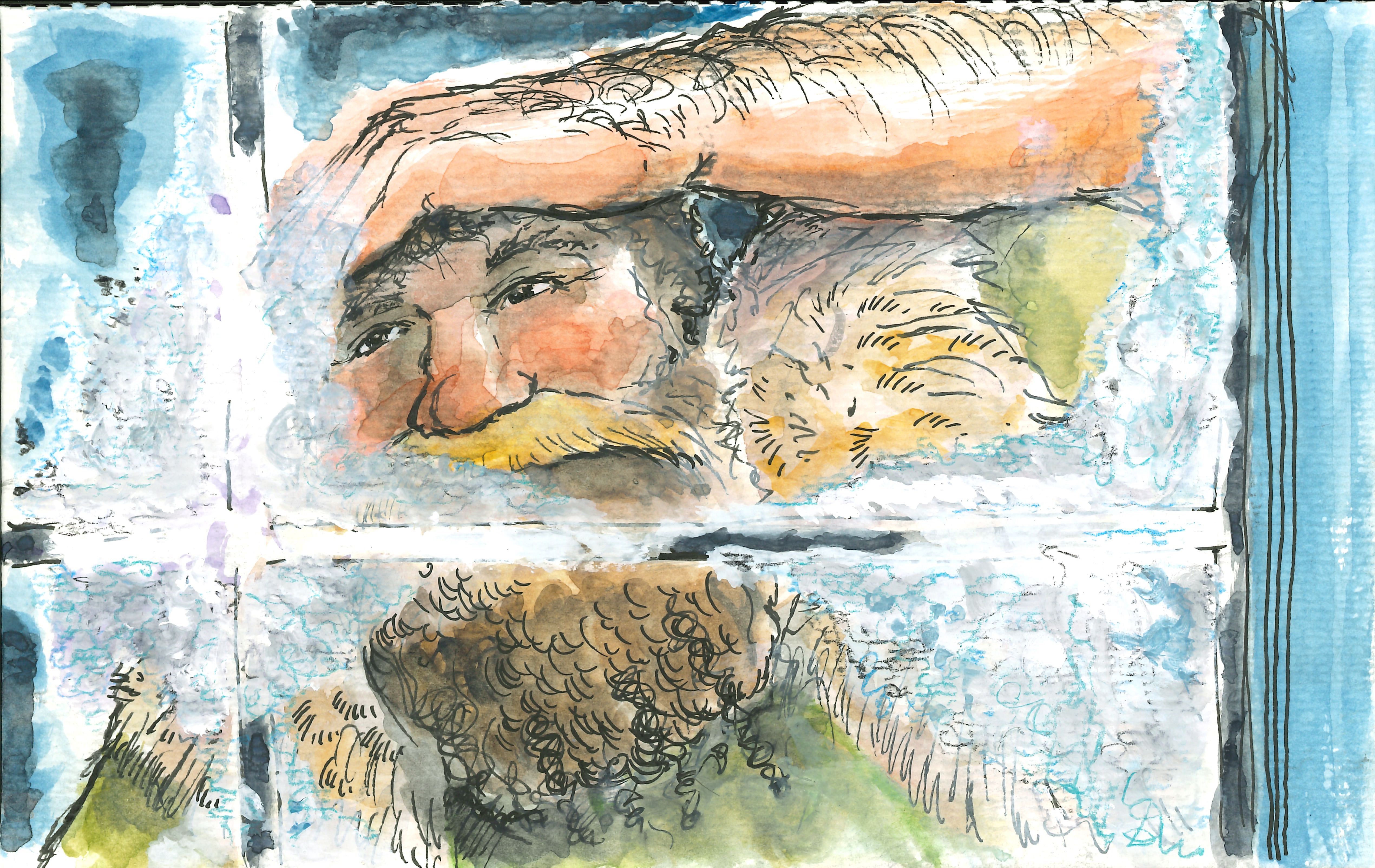
My Birthmother, Laurie, as a spiritualist on stage, listening to the dead who are trying to give her messages to relay to those in the audience. Part of the illustrations for the essay.
My essay, “The Dead Viking My Birthmother Gave Me,” is up over at GEIST Magazine online. It’s an essay about adoption, being queer, being lonely in the Yukon during Winter, and spiritual differences between a birthmother and son that include what one might do with a hunky centuries-old Viking spirit guide, and it’s all true from what I can remember.
Some of the illustrations that were published in the article that I did weren’t able to be put in the online version because of technical difficulties, so here they are:
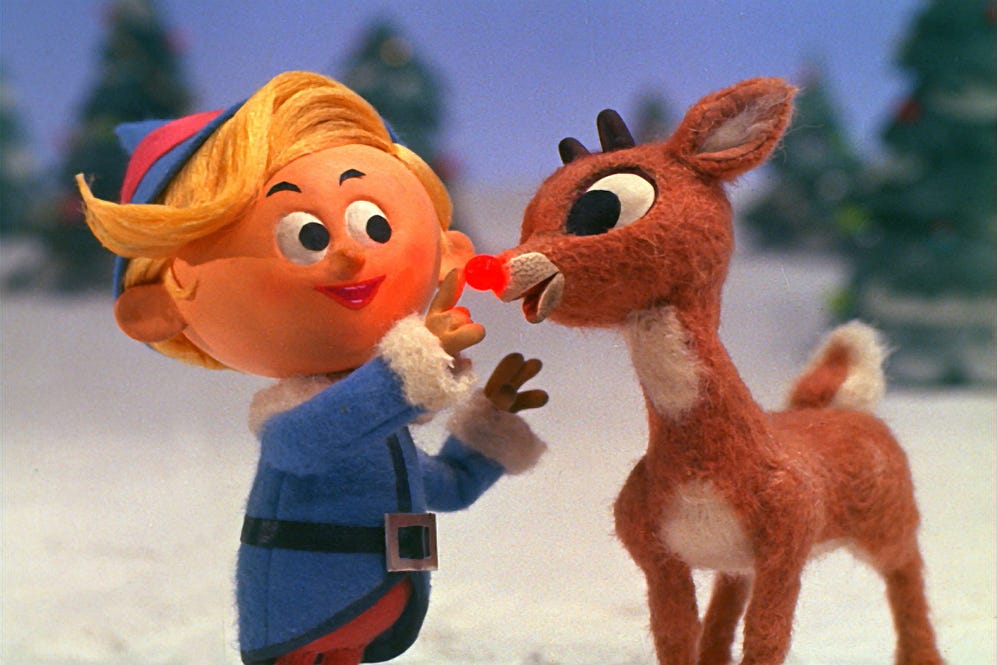
You’ve seen the 1964 Rankin/Bass stop motion Christmas special, Rudolph the Red-Nosed Reindeer, written by Romeo Muller. It’s been aired on TV every year since it was first shown. You may have wondered, though, why Santa seems to be so MEAN-spirited in this movie (probably the only anti-Santa movie we show at Christmas time). There is a better Santa in this movie, though, hiding in plain sight.
CEO Santa Rules the North with a Manufacturer’s Mindset
Santa is the boss of toy-making and toy distribution, of all the elves and reindeer. When Rudolph is born, Santa blames Donner for having a “weird” son, and makes fun of Rudolph’s nose — — and of course, all of his “employees” do too. They’re just following Santa’s lead. His meanness and prejudice gets passed down to the reindeer. How can Santa himself be so narrow-minded!? This doesn’t feel like the Santa we know.
In a tale about manufacturing and production, this glowing reindeer and fabulous, dentist-oriented elf are merely flawed products. They are a version of an elf and reindeer who don’t do what those products should do. They are misfits like the toys they will meet later. The other elves, the other reindeer, do not want to accept them, as they have been taught to reject flawed toys.
Who do you think created the misfit toys? Those toys are typical manufacturing mistakes, tossed away. Losses. Victims of Quality Control. There is no love for a flawed product in a warehouse toy factory at the north pole. The elves must be VERY AWARE of their “mistakes”, even if they aren’t aware of the Island the misfit toys all eventually run to for safety.
I believe Santa is written this way on purpose — revealing the commercialized CEO Santa that’s kinda already there. Muller just reveals more of him because he has a doppleganger to compare Santa to. If Santa is the villain, and Rudolph is the hero of the story who has to grow and learn, then he needed a role-model for Rudolph to learn from, to really accept himself and others, since Santa won’t be modeling that.
This is the role given to the OTHER sleigh-driving big bearded man in the movie, Yukon Cornelius. I think this is done on purpose.
Yukon’s a character made up by writer, Romeo Muller, to expand the story beyond the original Robert May song. Muller doesn’t let this just be a song of Rudolph waiting till he’s useful to be discovered. That’s not fair to Rudolph. He creates someone better, a guide, a guru, a model to show Rudolph how to treat others, and himself, with radical acceptance and love.
Radical acceptance and love
Members of a group, a society, a culture, may“naturally” accept people who reflect back to them the kind of group they want to be seen as. So they might accept those who are like “us”, those who stay within expectations of social and moral cultural systems. Those who stay within the lines our group has drawn.
Hermey, though, is an elf who wants to become a dentist instead of a toymaker; Rudolph can’t really hide his bright, blinking nose and that makes him targeted by bullies. They are considered “unacceptable” by the groups they find themselves in — — not what they expect in an elf or reindeer. They don’t fit in, or won’t fit in. They won’t cooperate with what is expected. Rudolph tries to over his nose with mud. That’s not a permanent or acceptable fix for anyone.
When Rudolph and Hermey meet each other, they become besties! They have a lot of common experiences, in a way, commiserating over their differences. They reject societal norms! They are Rebels! They accept each other right away because they also want to be accepted! They go off into the world to do their own things.
They are all Abominable
Rudolph and Hermey aren’t safe in the world when they don’t play by the world’s rules. The Abominable Snowmonster is there to make them fear following their dreams. Noisy! Gnashing Teeth! Roaring! Chasing! GIANT! In a sense, as personified fear, he shows they will be unacceptable everywhere they go. He will relentlessly chase them down.
Who saves them from the Snowmonster? It isn’t Santa. Santa doesn’t even seem to know it exists, though I would say he is controlled by the fear himself.
Who HAS experienced that fear before — that fear of not being acceptable — and conquered it?
Yukon Cornelius.
Oh, he knows “Bumble”! He even reduces the scary words “abominable” and “monster” to rename him with a word for awkwardness. When we “bumble” through something, we bounce from one thing to another, without direction, we screw up, mess up, blunder, stumble. Bumble is a misfit too — and his name announces that he can’t “fit” either. Cornelius calls Bumble what he is — a socially awkward creature who is badly trying to fit in. He looks scary, and Yukon acknowledges that, but Yukon knows things about Bumble. He knows that Bumbles don’t like water and he knows they can bounce. He knows the strengths and weaknesses of Bumble. He sees through the scary part and sees the real Bumble, trying to survive alone. He will eventually save Bumble by giving him what he wants most: to be accepted with all his quirks.
Yukon Cornelius sees Hermey and Rudolph too. He sees them as who they are and who they want to be and immediately accepts them. He practices “radical acceptance” of everyone. Radical acceptance is acceptance BEYOND what you are comfortable with, what you’ve known, what is advantageous to you, or what might benefit you. You accept people for where and who they are. And you loudly support those you radically accept. Yukon is very loud. He is not afraid of anyone seeing who he’s with and who he supports.
The First Misfit
Long before they go to the island of Misfit Toys, we see that Yukon is already a MISFIT himself. He is a prospector obsessed with finding, not “silver and gold” as the snowman sings, as we are all led to believe, but a peppermint mine.
He doesn’t WANT what the rest of the prospectors — — or people want. He isn’t after money. He wants peppermint. Well that isn’t valuable, you might say. Why would a prospector be searching for peppermint? Prospecting is a hard life — — and would you go through the dangers of living in the wild, being outside of cities and companions, facing harsh weather, difficult, mountainous regions and digging through the earth — — just to find peppermint? The desire that makes Yukon different from ALL other prospectors is what makes Yukon a misfit. It seems to be a flaw. But I think it’s tied to his goals.
Santa has previously been characterized as judgmental: he knows if you’ve been bad or good. He has a list of naughty and nice people. He is a moral judge! If you are GOOD, you get blessings. If you are bad, you get JUNK. He is associated with worth and value, even commercial value, but also moral value.
Yukon, on the other hand, knows your strengths, allows those strengths to surface and guides you to use those strengths, even the ones others might dismiss. He is associated with seeking bliss, helping others, and he sees their innate value without judgment.
Yukon is set up to be a direct comparison to Santa.
Look at Yukon’s dog mushing team. This is radical acceptance in action! Whereas Santa’s sleigh has to be guided by “perfect” reindeer, Yukon’s sleigh is led by a mismatched group of sled dogs, that no one would believe would be good sled dogs: a St. Bernard, a dachshund, a sheltie, a beagle and a black poodle. We could think up a lot of reasons why this team of dogs wouldn’t work — -and yet, they work! Yukon believes in them, and they believe in themselves. They are all misfits but they love running and they run well together. They don’t know the proper commands (It takes them a while to understand “Mush” and “whoa” — “Stop” is what they have to hear to stop! Good luck teaching them Gee and Haw!) But in allowing them to be themselves, he demonstrates radical acceptance and love. He accepts the dogs for what they WANT to be, for who they know they ARE. And he lets them be that. And they show that they ARE good at what they love to do.
Yukon as the Better Santa
This is why I think Yukon contrasts so powerfully with Santa. They are similarly presented men — large, bearded, loud men with sleighs pulled by animals — but who act completely differently towards others. There are rules with Santa. There are not with Yukon.
Santa has to be convinced later into being accepting and giving . His acceptance of Rudolph comes when the reindeer can prove he can be of use NOT as a reindeer but as a beacon. Bumble, similarly, must be marketed as tall enough to put the Star on the Christmas tree. Thankfully, the presents from the island of Misfit Toys don’t have to prove themselves in order to be gifted at the end of the story to kids who will love them — but Santa must still be convinced to deliver them too. In fact, in 1964, with the original broadcast, Santa makes a promise to deliver them, but is never shown doing that, to which viewers complained that they wanted to see Santa keep his promise! In 1965, a new sequence was added to show Santa delivering the Misfit Toys to their new homes.
Even if you don’t understand the parallel set up of these two men as a kid, you GET the idea that Yukon accepts people and that Santa doesn’t. Yukon is the role model of this show, not Santa.
Yukon rescues, salvages, rehabilitates, transports, and teaches. He teaches Rudolph to value himself and to value others regardless of what kinds of expectations he may have, regardless of what they can do FOR him. Rudolph teaches Santa the same thing. I believe Yukon’s save of Bumble seals the lesson that no one is above acceptance.
When WE meet Yukon Cornelius
Growing up, seeing this show for the first time, and subsequent times, I think I saw myself as Rudolph, as many kids did — — someone who was not perfect, not wanted by other kids, not what adults thought I should be as a boy, but who had an important role to play in this “plot,” I hoped. I did not have a lot of positive male role models in my life who accepted me for who I was. I always felt like most boys and men were disappointed in me for one reason or another — I did not want to play hard, play sports; did not want to be mechanical; did not love the idea of the military as a proving ground for my manhood or patriotism. I did not know I was gay, and didn’t know I had ADHD. I was artsy and geeky. I was a misfit.
My parents did a great job to meet me where I was. Dad introduced me to Star Trek, comic books, science fiction. My mother read the Chronicles of Narnia to us in the hallway. These are enormous things! They also found and gave me for Christmas some very heady and scientific books on butterflies when I was interested in butterflies. I always got great gifts for Christmas — weird ones, but ones I cherished. My parents brought me things that transformed me for the rest of my life in good ways. They also were my first introduction to spirituality, and even though we eventually disagreed about some small things (that are kinda more important now) my faith began here. They gave me enough to grow my own faith and keep it strong, even as a gay man.
But my parents, like many people in the 70s and 80s, were still subject to the “rules” of society for gender. It was very hard for anyone not to be soaked in those rules. Guidelines for girls and boys and how they were supposed to act, what and who they should love, what they should do. We still have them. They are the basis for much pain and rejection even today.
Anti-Trans laws are directly influenced by previous theories about gender; anti-lgbtq legislation is also built on the backs of outdated gender theory. Gender is a cultural construct, and while many people are more aware of this, there are still many people who are afraid of people who don’t obey those gender rules — whether that is through gender expression or sexual orientation, or any other expression of gender and sexuality.
We should know better now.
But back in the 70s, these expectations were so much a part of our culture that I can’t honestly blame my parents for believing them. All the doctors, the newscasters, the psychologists, the media, not to mention all those in office. When your access to the truth is limited, you don’t get the truth, usually.
My parents did what they could to guide. In many ways, they protected me from much of the consequences others might have wanted to give me, and in their own way, they were practicing radical acceptance — as radically as they could within our family.
We end up on the Island of Misfit Toys
These misfit toys in the movie were rejected only because they didn’t DO what was expected of them. They were still of value and still interesting (as we come to see in the movie). Moonracer, the winged lion, comes across as God protecting the misfits from others — -but unable to, himself, fix their situation. It takes Yukon with Rudolph and Hermey to help bridge the distance between these undervalued people and those who could help them find their home.
I think we unconsciously gravitate to those who accept us. Perhaps, while the kids were enjoying the animation, the adults were learning a lesson about which sled-musher to follow, about how to accept others.
Me, I was looking for a Yukon Cornelius to see my value and worth, as many of us do.
I eventually found a way to bring Yukon to me.
In 2019, I created a set of 10 paintings of Yukon Cornelius in the style of NC Wyeth — a style of boy’s adventure books popular in the early 20th Century, to explore what a gay hero might look like to me — the kind of gay hero I wish I could have had growing up. In 2022, I completed a show of about 50 paintings, acrylic and watercolor, with stories to go with them, titled, “The Further (Queer) Adventures of Yukon Cornelius,” where he went out to help other cryptids sometimes with his partner, Bumble. It gave me a gay hero that I would have loved to have read more about. We only got 10 min of Yukon Cornelius in “Rudolph” but it made me want to see what might happen if we had more time with him. Who else could he radically accept?
The Queer Connections
Yukon is the Santa we want to believe Santa is. Inclusive, accepting, encouraging, helpful, transformational. I think Romeo must have put this in here intentionally. As a writer, I can’t see this parallel as anything but intentional. Especially regarding the themes, and knowing Romeo made up the whole plot himself outside of Rudolph’s original rejection. I know you’ve probably come across a couple of articles that look at the gay themes in this show — -but wow, they certainly hit LGBTQ people strongly, whether or not they were intended to.
ALL people can identify with being rejected at one point in their lives for not being what other people thought they should be, which is why this movie has lasted for 59 years, being shown every year (I think it’s considered the longest running annual show on TV). It tapped into something universal. Rejection is HUGE for kids, and the fear of rejection is paralyzing. We are all, in some ways, a misfit.
But I do believe there is a specificity of rejection present here. Something queer kids know too well. When Donner is blamed for his son’s behavior, that Rudolph is not what his father wants him to be, and that this gets Rudolph banned from a place in society, that really hits so hard for queer people I think. To me there is a strong queer undertone for the KIND of rejection Rudolph goes through and the KIND of rejection that Hermey faces. They face shame for their different desires, their different aspirations, and their families are shamed too.
In this film, I believe Yukon Cornelius is a model for a better version of Santa. I think Romeo Muller wrote that on purpose, writing parallels to Santa into the DNA of Yukon Cornelius, in order to highlight their similarities and differences. I think he wanted us to rethink the way we “gift” others with our friendship and our acceptance. Are we here to judge them, to find out if they are naughty or nice, and then decide whether they are acceptable, or misfits?
No, I think we’re here to be more Yukon Cornelius. We are here to befriend, belove, rescue, support, transport, help, and accept people where they are, and for who they are. We all need a little more openness in our sleigh, to carry people, and not just our things, our job. We need to be able to detour away from our agendas at times and help out others with their agendas.
Perhaps today, Santa could learn some tips and could shed the “nice” and “naughty” criteria, allowing universal access to benefits and beneficence by practicing a little radical acceptance of his own.
Jerome Stueart (2007 Clarion Workshop) is an American and Canadian queer illustrator, writer, and professional tarot reader. His writing has appeared in F&SF, Tor.com, On Spec, Lightspeed, Strange Horizons, Geist, and elsewhere. He was a finalist for a 2020 World Fantasy Award in Short Fiction for “Postlude to the Afternoon of a Faun” (F&SF). His PhD in English (Texas Tech U) with specialties in Creative Writing put him forever in debt, but has allowed him to live and work as a teacher part-time for more than 25 years, running writing workshops in academia and through city programming, in schools, in churches and online. He also has a background in theatre, history, tourism, and marketing. He was the former Marketing Director of the Yukon Arts Centre in Whitehorse, Yukon. An emerging artist and illustrator in watercolor and acrylic, he lives now in Dayton, Ohio.
Today I want to share with you work that I completed while at the Columbus College of Art and Design, and which would have been part of the Columbus Arts Festival 2020 in June (but WILL be part of the festival in 2021!)
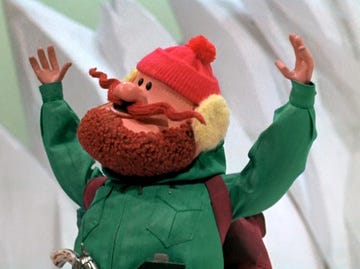
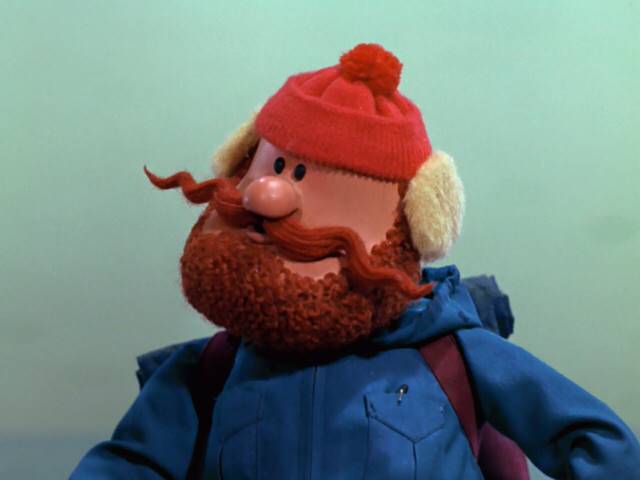
I fell in love late in life with a character from a Christmas special: Yukon Cornelius, created by Romeo Muller as part of the 1964 Rankin/Bass production of “Rudolph the Red Nosed Reindeer”–a stop motion special that is shown every Christmas. You might recognize the character:
Burly, positive, full of helpful asides “Bumbles Bounce!” and “the fog is as thick as peanut butter!”–Yukon helps our heroes realize their dreams by a) saving them from the Abominable Snowmonster, b) taking them to the Island of Misfit Toys to carry a message to Santa to come get these toys and pair them up with kids and c) reforming said Abominable Snowmonster and making him tame, and cool for Christmas Parties.
***
I don’t know why Yukon stayed with me. It might be that I went to live in the Yukon for nearly 10 years. I mushed some dogs (tbh, only as a one-day fun thing in Inuvik, NWT–though I attended and watched the Yukon Quest as much as I could), and spent time out in the wilderness. But I also lived in the great city of Whitehorse being a friend and misfit to a lot of other friends and misfits, who are also great musicians, artists, talented amazing people.
Maybe it was that Yukon was very burly, and I was attracted to him, or even attracted to the kind of man he represented–a big “bear”. He seemed like a better version of a male hero than I had previously encountered. Though he had a gun, I don’t think he ever shot it. He was practical, helpful, encouraging. He had a lot of knowledge about Abominable Snowmonsters! And he was much more interested in saving people than in killing monsters. In the end, because Bumbles bounce!–Yukon and Bumble somehow come to an understanding. Bumble is just another misfit that needs to find his right place… and he does, next to the Christmas tree.
In another post, I will tell you more about that Queering the Hero journey I made–and continue to make. But here are my paintings, extrapolating three things:
Yukon Cornelius could be gay. People have commented before on the queer undertones of the show–read the articles here from Vulture, and KQED and in 2019 The New York Times opinion page—- about themes of bullying, about being different, about being rejected, about finding acceptance for your unique qualities. Romeo Muller was himself gay. It’s not a stretch to see the queercoding in the show. Making Yukon Cornelius gay is not a stretch either, since he doesn’t make mention of a wife, and reads as what we would call a “bear” today–a burly, bearded, slightly overweight, slightly hyper-masculine man.
Yukon has a way of charming beasts. His expert past knowledge of the Abominable Snowmonster speaks to prior run-ins with “Bumble”—and then he is able to tame and speak to the Bumble (who miraculously grows back his teeth in the final few minutes of the special!)
Yukon deserved more of an adventurous life.
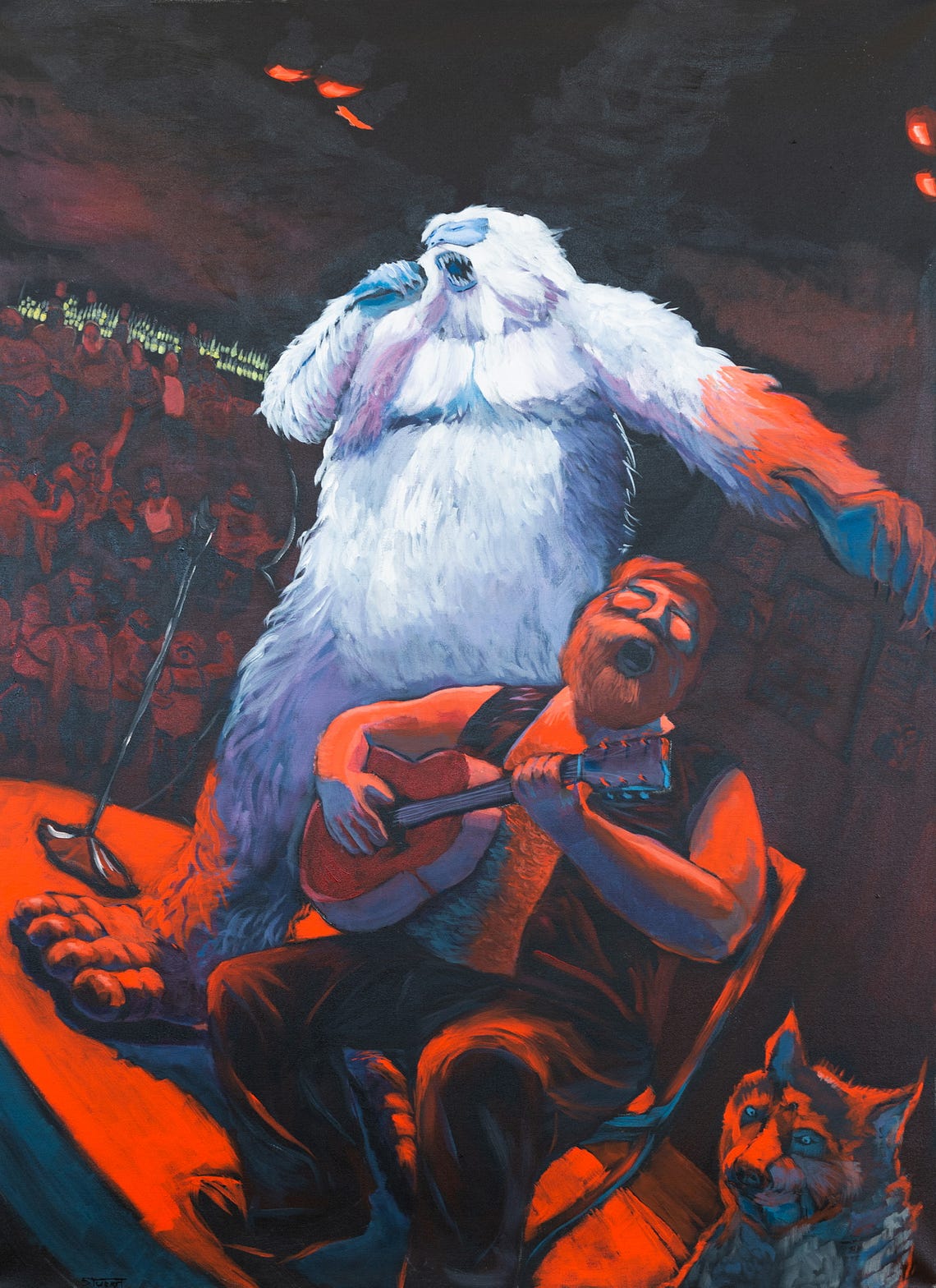
So, I created that life for him–and for me. The copyright on characters from this movie had a misprint in it, making all characters in public domain (outside of Rudolph who had prior copyright). So I adopted Yukon as my hero and gave him a life of meeting cryptids (Bigfoot, Mothman, sea monsters, etc.) Using acrylic and myself as a reluctant model–or at times a stand-in, I painted these paintings. (side note: I’d planned to have several cooler guys than me become Yukon for these paintings–but planning photo shoots was not easy.)
So if you’ve always wanted a rollicking adventuresome gay hero, I offer you Yukon Cornelius–rescuing, negotiating, protecting, singing, reading, allowing himself to be loved.
A friend of mine in Kentucky asked for any tips I might know about dealing with cold weather since I lived in the Yukon for nine years. I told him I’d share what I could. Not definitive, and many other Yukoners have great strategies too. These are just my thoughts, presented humbly from my own experience. Not a cold weather expert at all–just someone who went though ten winters, down to -50C once and made a lot of mistakes and had a lot of advice and help. Fellow Yukoners, feel free to add your advice in the comments. I know I missed important tips! And you are all awesome at cold weather living. Please add any advice for your Southern brothers and sisters.
_____________
Hey Graham. I’d be happy to share what I know. Personally I learned that cold is a game you play with the outside. Dress in layers. One cool sweater over a shirt won’t do. Better to have multilayers that will trap pockets of warm air. I suggest three. And a good down-filled coat (lots of pockets of warm air there). Gloves are important to always keep on. Hands can get really chapped and stiff very quickly. I learned that even a short walk to the car and back in -20C would chap my fingers quickly. I liked those black ninja masks with air holes that skiers sometimes wear. Allows you to cove half your face and still breathe.
Pace yourself. Don’t go so fast as to breathe hard. You don’t want -20C air in your lungs. Always breathe in your nose. Your mother was right. Your nose hairs will freeze at -20C and below. But it just feels prickly. There’s no damage. It’s actually a cool experience.
Cover as much as your face as you can–but a furry hood can set your face back far enough that it will help.
Take breaks in your shoveling. Warm up. Don’t run your cars if the temps falls below -30C. Unless you plug them in every night and a heater under your oil pan keeps your oil warm. Or you keep them in a garage. But still, Yukoners knew that operating most cars after -30C was extra wear and tear. We’d all take the bus or ski to work. Lol.
Hiking boots are fine with warm wool socks. OH long johns are priceless. I wore mine for the whole winter in the north. They make a huge difference. Polypropylene longjohns are awesome and thin by Terramar and other companies. Well worth the 30 bucks or so.
If I think of more ill let you know. I’m just planning on spending more time inside the house. If you dress warmly, in layers, you will be fine. And playing in the snow is great, but probably not below -20 unless you are used to it. And if there’s a strong wind, I’d advise hot cocoa and watching a movie.
* Just a note, many Yukoners did drive after -40C. Had to get to work. But most all would say it’s not good for your car. But Yukoners take pride in being able to function fully in cold weather. Nothing is closed because of cold weather–few events are ever canceled. I once got in trouble for canceling class when I taught at Yukon College when the temp was to drop to -50C. “We are the standard,” I was told. “If the Yukon closes things, it must be horrible.” And -50, though rare, wasnt horrible. Lol.
Good luck in the cold! It doesn’t have to stop your fun, but while the Yukon had roads cleared in an hour, because we were ready for it, and had extra crews, and because we had drivers used to winter driving with their winter tires, roads were safe for us. For everyone else, maybe think twice about going out. Your drivers aren’t used to winter driving, your road crews may be overwhelmed because your cities have more roads to clear. Your city will be doing the best it can. Stay in and watch Netflix while the world goes through the Ice Age until Wednesday. Good luck and enjoy experiencing a little bit of Yukon*.
Hope this helps.
*PS The Yukon isn’t responsible for cold weather, even though the weather people keep saying that this “cold air mass” is brought to you by Canada, or the Arctic…. they aren’t made in the Yukon. They ARE, however, first enjoyed in the Yukon.
Again: Fellow Yukoners, feel free to add your advice below. I know I missed important tips! And you are all awesome at cold weather living. Please add any advice for your Southern brothers and sisters. I titled this “Yukoners” for that reason. Thanks!
Very proud to announce the new Tesseracts 18 is open for Submissions. We’ve built a website for it at Tesseracts18.com Come check out our conversations about faith and science fiction and fantasy. This anthology is open to Canadian citizens, landed immigrants of Canada, longtime residents and, of course, Canadians living abroad. Yukoners, I hope to see you write a story and submit.
Tesseracts 18: Wrestling With Gods — Faith in Science Fiction & Fantasy
Well this is an all new topic for Tesseracts! And possibly a completely new topic for an anthology: a multi-faith, creative faith anthology of science fiction and fantasy. Who would have thought?
Here’s our thoughts on that kind of anthology:
______________
Jacob wrestled with an angel in the night, earning him the name “Israel”, which means “struggles with god.” Buddha wrestled, and the hero of the Mahabarata wrestled too. Wrestling is a part of faith. Having a faith can help immensely with struggles in our lives, but we also must struggle against the rules, the boundaries, and the very doctrine at times. We all wrestle with our cultures and our gods, whether we believe in them or not. Faith is not passive. Human progress has relied on brave souls willing to challenge convention through their beliefs. And faith is not separate from Fantasy and Science Fiction. Fantastic elements are integral to all major faiths–they have their gods, fantastic creatures, miracles, blessings, power and magic. We continue that journey into space, possibly encountering worlds with their faiths. Since our cultures all began with fantasy and struggling with faith, Tesseracts 18 will continue the Science Fiction and Fantasy tradition of wrestling with Faith, without declaring all-out war.
The anthology will include a diverse representation of both real-world religions and faiths of fictional cultures. Instead of looking to pass historical or cultural judgement, it will feature character-driven stories including faith, doubt, miracles, spiritual journeys, and diversity of opinion within a faith. It will avoid blanket stereotypes of faith-based cultures. We’d love to see faith surprise us, and surprise science fiction and fantasy readers.
________________
Some questions we think naturally come from this:
How does Faith inform a culture, change a culture? What does it mean to really believe? What kinds of religions and faiths are out there in the universe? How does faith play out already through established fantasy cultures? How can people keep believing, sometimes with very little evidence? Or is there evidence that is so personal, it is never shown to others? How does faith effect an individual, a family, a city, a society, a race, a conflict, love?
Starting soon, we’ll start posting conversations about how science fiction and fantasy has dealt with faith and religion in the past—just to be able to talk about where we’ve come from, how those representations challenge the genre or challenge readers and writers.
Mostly we just want to create a conversation about faith in fantasy and science fiction–in all its diversity! PLEASE join us. We’ll talk a blue streak with ourselves, but we’d just as soon have as many voices as possible in this conversation.
This anthology will include as diverse a representation of both real-world religions and faiths of fictional cultures as possible. Stories should not be looking to pass historical or cultural judgment, instead they should feature character-driven plots that include faith, doubt, miracles, spiritual journeys, and diversity of opinion within a faith. Please avoid blanket stereotypes of faith-based cultures. The editors want to “see faith surprise us”, as well as “surprise science fiction and fantasy readers”.
The Tesseracts Eighteen anthology will reflect as broad a spectrum of stories as possible; highlighting unique styles and manners.
Submissions must be speculative fiction: science fiction, fantasy, dark fantasy, magic realism, slipstream, supernatural horror, weird tales, alternate history, space opera, planetary adventure, surrealism, superheroes, mythic fantasy, etc.
Submissions may be either short fiction or poetry.
The maximum length for stories is 5,000 words, with shorter works preferred.
The Tesseracts anthology series is only open to submissions from Canadians, landed immigrants living in Canada, longtime residents of Canada, and Canadian expatriates living abroad.
Canadian authors who write in languages other than English are welcome to submit an English translation of their work, provided it otherwise falls within the parameters of this anthology. Translation into English is the sole responsibility of the author. Please supply details of original publication for any submission that originally appeared in a language other than English.
Emails MUST contain the word “submission” in the subject line, or they will be deleted automatically by the server. Please also include the story title in the subject line.
Submissions MUST come in an attachment: only .RTF and/or .DOC formats are acceptable.
Emails MUST contain a cover letter in the body of the email; for security reasons, email attachments with no cover letter will be deleted unread and unanswered.
Cover letter: include your name, the title of your story, your full contact information (address, phone, email), and a brief bio. If you do not live in the place where you were born, please also include your place of birth.
Do not describe or summarize the story.
If your address is not within Canada, please indicate in the cover letter your status vis-à-vis Canada.
Reprints (stories having previously appeared in English in any format, print or electronic, including but not limited to any form of web publication) can be considered but will be a hard sell; reprints must come from a source not easily available in Canada. If your submission is a reprint, please supply full publication history of the story. If your story appeared previously, including but not limited to anywhere on the web, and you do not disclose this information to the editor upon submission, you will be disqualified from consideration.
Submission format: no strange formatting, colour fonts, changing fonts, borders, backgrounds, etc. Leave italics in italics, NOT underlined. Put your full contact information on the first page (name, address, email address, phone). No headers, no footers, no page numbering. DO NOT leave a blank line between paragraphs. Indent paragraphs. ALWAYS put a # to indicate scene breaks (a blank line is NOT enough).
ALWAYS include your full contact information (name/address/email/phone number) on the first page of the attached submission.
Payment for short poetry is $20.00. Payment for short stories is prorated as follows: $50 for stories up to 1,500 words, rising to a maximum of $150 for stories up to 5,000 words (longer stories are paid a slightly higher fee, but in order to exceed the word length limit of 5,000 words, the editors must judge a story to be of surpassing excellence.)
Rights: for original fiction, first World English publication, with a two-month exclusive from publication date; for all, non-exclusive anthology rights; all other rights remain with the author.
Spelling: please use Canadian spelling, as per the Canadian Oxford Dictionary.
Response time: initial responses (no / rewrite request / hold for further consideration) will be prompt, usually within fifteen days. Please query if you’ve not heard back within 30 days. Final responses no later than 15 February 2014.
Submit only one story or poem. Multiple submissions will not be accepted.
Simultaneous submissions will not be accepted.
Publication: Fall 2014 (trade paperback & e-Book).
A really nice article by Dan Davidson appeared in the Whitehorse Star on Friday, April 19. Alistair Maitland did the photo. I appreciate them both. I think this Festival will be a lot of fun. It’s always good to get to teach Yukon high school students as part of the Young Authors Conference as well.
The Festival starts with a big reading at the Kwanlin Dun Cultural Centre Tuesday night at 7pm. The Young Authors Conference is held the next two days after that in FH Collins Library and then we head off Friday to Haines Junction for a reading.
Organizer Sara Davidson has done a great job at gathering diverse writers together. Yukoner Dennis Allen, as well as Drew Hayden Taylor and Carrie Mac and Beverley Brenna.
Buddhist, Pagan, Christian, Jewish, Muslim, Agnostic, Atheist—we all have a belief system–“faith” in something, a set of beliefs, a god, gods, guiding principles, morality. It’s hard to express sometimes WHY we believe these things, or HOW they guide us, or how we know they are TRUE. Sometimes we’ve been hurt by religion, disappointed by faith. We want to talk about that too. Maybe we want to pass our beliefs, our experiences down to our kids. We want to explain it to ourselves, sometimes. We’d like to keep a record. But pinning down the inexpressible nature of faith and belief is difficult.
WRITING FAITH SEMINAR AND WORKSHOP
Come join a writing workshop that explores how we talk about faith. Starting this Saturday, Feb 2, we’ll have a one day seminar/workshop from 10-4 that explores Writing Faith with writing tips, games, exercises, and a few readings that map out the basic writing techniques of writing about Faith. Then Feb 8-March 22, join us on Fridays from 5-8 (potluck snacks), at the Whitehorse United Church to explore more in depth how others write about their faith and get some good feedback on writings you may write about your faith. The group is always ecumenical and eclectic and supportive of new writers. It has been a successful group four times now, three in the Yukon. We teach mostly memoir, but fiction as well.
We don’t teach theology here; we teach writing. We are including writings beyond Christian writings this time around—mostly from the Best Spiritual Writing 2013 that just came out. We aim to be inclusive. We have readings from Pulitzer prize winning author, Annie Dillard, as well as Anne Lamott, Andre Dubus, E.O. Wilson, Langston Hughes, Jhumpa Lahiri, Ron Hansen, Thich Nhat Hanh, and other writers covering a broad spectrum of spirituality—for techniques. We play writing games. We’re kind of like a summer camp for writers. Only in the winter.
Deeply touched by the Arts Club Theatre Company’s production of Do You Want What I Have Got? A Craigslist Cantata. Veda Hille and Bill Richardson have written a non-linear musical that uses actual Craigslist ads for its lyrics. Craigslist, in case you’ve been in a hole, is an online one-stop-shopping for finding whatever it is you want— from someone you saw on the train that day, to an old trumpet, to homes for your cats. It’s a pared down, non-glitzy site—just text–where you have to use words to sell what it is you want to sell, or get what you want. Ads are quirky. I think with the number of them, people have to come up with newer and more outlandish ways to make their ad stand out. It’s not a Tumblr site so there’s no pics in your subject line to make you stand out–just a line of text. What is Craigslist anyway?
The musical is episodic, going from ad to ad, occasionally reverberating or repeating a motif in another ad, enough to make it stick together well. There are a number of “characters” who have very specific and ludicrous (sometimes even strange) desires and wants. It would be easy just to laugh at all of them–and we do. Audience tonight was having a great time laughing it up at the woman trying to sell her 300 stuffed penguins, singing an alphabetical list of the different species of penguins and hoping to find a special child who might want them all. Or the man who wants someone to sit in his bathtub of cooked noodles… Or the wanderers who keep missing each other–though having a brief moment with someone they fall for.
It would be easy to laugh, except Hille and Richardson don’t let us off that easy. They have found a way to make that search poignant, a statement on 21st Century technology becoming the medium for expressing our desires. There’s a song though that Hille sings in the middle–a quite surprising song about Noah and the doves he sends out into the world to find land. And this becomes the central metaphor that pulls the show together in a quite exposing, vulnerable, emotional way— that Craigslist is a collection of those doves, sent out–with no replies, really. “No one learns how the story ends. Did they find each other? We don’t know,” Hille says in the Artist talkback tonight. There are only beginning moments–story starters, if you will–but we don’t know if any of the missed connections actually connect.
Definitely Not the Opera, (DNTO) a CBC Radio One program devoted to the art of storytelling in Canada, asked me to tell my story of coming out to my church for their Nov 3 show “Lost Causes”.
I had pitched the idea to them last year for a different show called “Making Enemies” but withdrew the pitch because a) I don’t think I meant to make enemies, nor do I think I have made enemies; and 2) because I didn’t want to restir a pot that has finally calmed down.
But they remembered my pitch. And they sought me out. Which is humbling, and cool. We recorded on Friday morning and they are editing my lengthy story to 3-4 minutes. I appreciate Andrew Friesen’s belief that my story was important and needed to be told. I feel like the story is more appropriate under “Lost Causes” because trying to reason with people who don’t want to listen to you, or discuss with you–and believing that you alone have to spark change–well, it can feel like a “Lost Cause”. But in the end–and the end hasn’t come yet–who knows if the cause is lost? I think every person who says the church must look at the evidence, must consider the Christian testimonies of LGBT folks in the discussion, is a step towards change. We need more people who realize how many people have fallen away from the faith, have decided against Christ, have been repelled from the church, and who, sometimes when there is no hope left, taken their own lives, all because the Church has historically refused to consider the scriptures in an accepting light–and this causes their members to refuse to accept their children in an accepting light. This splits familes. My God and my Christ are not what I encounter when I come into a Baptist Church anymore. I daresay they wouldn’t recognize it. Churches are not all one defined Mass though–as many churches are beginning to change their minds about LGBT people. Episcopals, Lutherans, Presbyterians, United Church of Canada–all have begun seeing that this is just the next issue the church has to rethink. As it did slavery, race, and its treatment of Women. And divorce. Change comes when people inside churches decide they can’t hold false doctrine anymore. Christianity and Faith are not the problem. Interpretation is.
Wanna light a fire under your writer’s bum and do a good deed?
Clarion Science Fiction and Fantasy Workshop has developed the Write-a-Thon to help YOU and to help THEM.
You might be in a place in your life where you haven’t been writing much, but you wish, wish, wish, that you could–or that you had the time. What we need, rarely, is the time—we need encouragement. The time will magically appear when we feel people in our life actually WANT us to write.
So Clarion has developed teams of writers to help you reach your writing goal—AND help Clarion reach their fundraising goals.
Here’s how it works:
1. You say to yourself, I give myself permission to write for six weeks as much as I can. I don’t have to take off from work, but I will find some time–with the help of my spouse, my significant other, my parents–to cordon off even a smidgen of time a day to write.
First, sign up to write!Fill out as many of the fields as you can. It’s especially important to include a bio and excerpts. A link to your website and/or personal blog helps, too. Your name and a link to your new writer’s page will appear automatically on the Browse Writers page of the Write-a-Thon site.
Be sure to upload a recent photo of yourself. A .jpg that is a maximum of 200 pixels in width is ideal. But our software can resize it for you if necessary.
Post frequent updates everywhere. Refresh your Write-a-Thon writer’s page often with new excerpts. Post writing progress reports on your personal website, your blog, your Facebook page, and your Twitter feed. Make sure all of your efforts link to your Clarion Write-a-Thon writer’s page.
Line up your sponsors. Contact friends, family and fans to let them know you’re raising money for Clarion while nurturing your writing life. Your writer page comes complete with personalized donation buttons to make it easy for your supporters. Feel awkward about asking? Here’s a model letter to use as a starting point.
Participate as both a Writer and a Sponsor. When you support others, they’ll support you in return.
Join a team and get a mentor. Once you have $20 in donations, you’ll have the option of joining a small group of eight Write-a-Thon writers. Each group is mentored by a Clarion Workshop instructor or graduate, ready and waiting with advice and encouragement. To join a team, wait for your emailed invitation, or write to treasurer@theclarionfoundation.org.
Remember, there are prizes!We’re giving away iTunes, Amazon, or B&N gift cards to our top earners, along with Write-a-Thon keepsakes. And each writer who brings in $250 or more gets a free story critique from a Clarion author!
You can also earn Write-a-Thon merit badges. You can begin writing any time. But beginning on the June 24, the official start of the Write-a-Thon, we have a special treat for you. On your Write-a-Thon writer’s page, you’ll see a grid with a question mark in each square. You can earn a maximum of one merit point every 24 hours by clicking the “I WROTE TODAY” button that will soon appear near the grid. As your merit point total passes certain milestones, merit badges will appear in your grid. We’re keeping the formula secret, so you never know when a badge will appear or what it will be. It’s all part of the motivational fun. We’re also trusting you to be honest. Only click the button if you really did some writing!
See that part about “JOIN A TEAM”— that’s where I come in. I’ve volunteered to be a mentor–with advice and encouragement! My team is called TEAM BEARS DISCOVER FIRE after Terry Bisson’s story, “Bears Discover Fire.” You’re going to discover fire in this group–as I’ll encourage you to write every day. I’ll give prompts for those who want them, and encouraging little notes as we go along. You’ll be in a group of people just like you who are pushing themselves for six weeks! It’s just six weeks. I wonder what YOU could do in six weeks if you had the encouragement from family and friends to do a little writing.
MY goal is to churn out six stories—they’re trunk stories, for the most part, but I need to get them finished. And Clarion is the way to do it!
You might have a book that needs more chapters. You might have some stories that need to get out. You might have an idea that needs a story!
This Write-a-Thon is Write Up Your Alley.
Join my team and light the fire you need to get some stories and writing done.




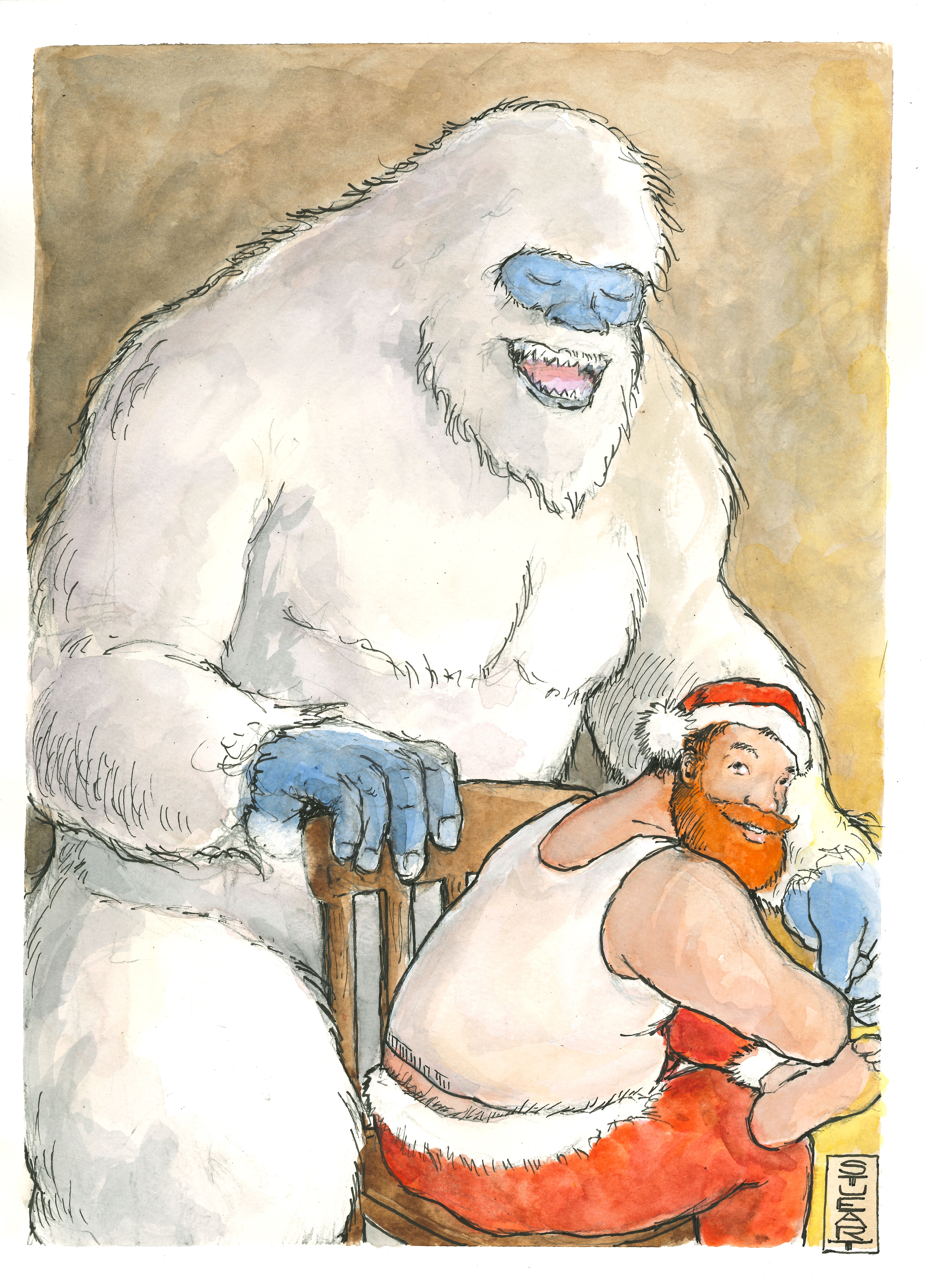




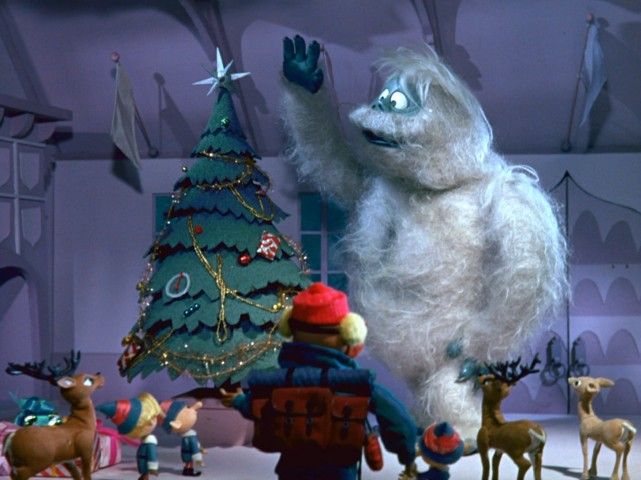
 Maybe it was that Yukon was very burly, and I was attracted to him, or even attracted to the kind of man he represented–a big “bear”. He seemed like a better version of a male hero than I had previously encountered. Though he had a gun, I don’t think he ever shot it. He was practical, helpful, encouraging. He had a lot of knowledge about Abominable Snowmonsters! And he was much more interested in saving people than in killing monsters. In the end, because Bumbles bounce!–Yukon and Bumble somehow come to an understanding. Bumble is just another misfit that needs to find his right place… and he does, next to the Christmas tree.


 Bear Witness