How to Keep Garden Veggies Fresh All Winter: The Pedersen Method

IMG_0637If you’re like me, you harvested a lot of vegetables this Fall.  Gardening in the Yukon is amazing!  With long hours of sunlight, a crop of vegetables can be yours in 10 weeks.  But then you have a huge harvest.  You can’t possibly eat them all in a few weeks.  Outside of freezing, how do you store vegetables?  Can someone store vegetables all winter and keep them as fresh as if they were still in the ground?  Well, I know a way.  Bruce Pedersen, local chiropractor, has been using a method that keeps tons of vegetables from his garden fresh all winter long.  Try his method and see if it works for you.

1.  For carrots, beets, turnips:  get a large paint bucket and place an ordinary kitchen trash bag inside the bucket as a liner.  Don’t use the drawstring, get the ones with those flaps you have to tie with.

2.  Pull up your vegetables from the ground.  Don’t wash them.  Just shake the dirt off.  Don’t wipe or try to clean them.  “When people scrub a vegetable clean, they damage the skin and then they have to eat it right away or it will rot faster,” Dr. Pedersen says.  So, don’t clean these.

3.  Right at the truck, he had a cutting board and a knife.  Take the knife and cut off the greens, slicing just at the top ofIMG_0650 the carrot, or beet.  For carrots and beets, you only make one cut–to take off the greens.  With beets, you leave on the long root if it has one.  For turnips, you’re going to make two cuts: one to clear off the greens, and the second to cut off the roots, so it’s a round ball.

IMG_06464. These headless carrots all go in the trash-bag lined bucket, all on top of each other.  Don’t worry if you get dirt in there.  Be careful putting them in the bucket.  If they’re long and break off on impact, then you have to dispose of them (eat them right there!)   They’ll rot if they go in the bucket broken.

This bucket actually needs more carrots in it first.

5.  Fill the bucket till it’s 3/4 full or 4/5.  Then shake the bucket a bit to settle the carrots.  Then take ordinary peat moss and fill the bucket with peat moss till it is full.

6.  Then take the trashbag flaps and nearly cover the peat moss, leaving a hole showing the peat that’s about the size of a tennis ball.  “This is to help the peat moss breathe.  You don’t want it all completely covered–but you don’t want more than a small hole either.”  You’ll tape down the bag in place.

IMG_0647Notice the small hole where the peat moss still shows through.  Tape the bag down around it.

7.  Store the buckets of vegetables in your garage over the winter, or a cool, dry place.  Not a freezing place.  And not in your house where it will be too warm.  Maybe an entryway, or a back porch.

8.  Over the winter, just dig out your carrots, beets, turnips, etc.  from the buckets when you need them.

9.  For potatoes, put the bunch of potatoes in a large styrofoam cooler, the kind you get at Canadian Tire.  Fill that with peat moss too.  Cover with a trashbag, stretched out over the top, taped down in places, but with enough space in other places to let the peat moss breathe.  And just dig up a potato when you need it.

Why peat moss?  Peat is a moisture regulator.  It seems to draw in the extra moisture from the newly harvested vegetables and then gives it back to the vegetables when they get dry.  It seems also to slow the decay of the vegetables, almost holding them in a stasis for a longer period of time.  Sand doesn’t regulate moisture and is a lot messier to work with.  Also you need more sand to cover the vegetables because it will sink down to the bottom.  The peat mostly rests on top as a barrier to the cold dry air.

Bruce Pedersen has done this for several years and has had fresh vegetables all winter long.  Hopefully, the method will work for you too.

If you found this information helpful, please consider donating just .99 cents.  It keeps us writers fed.

Donate Button

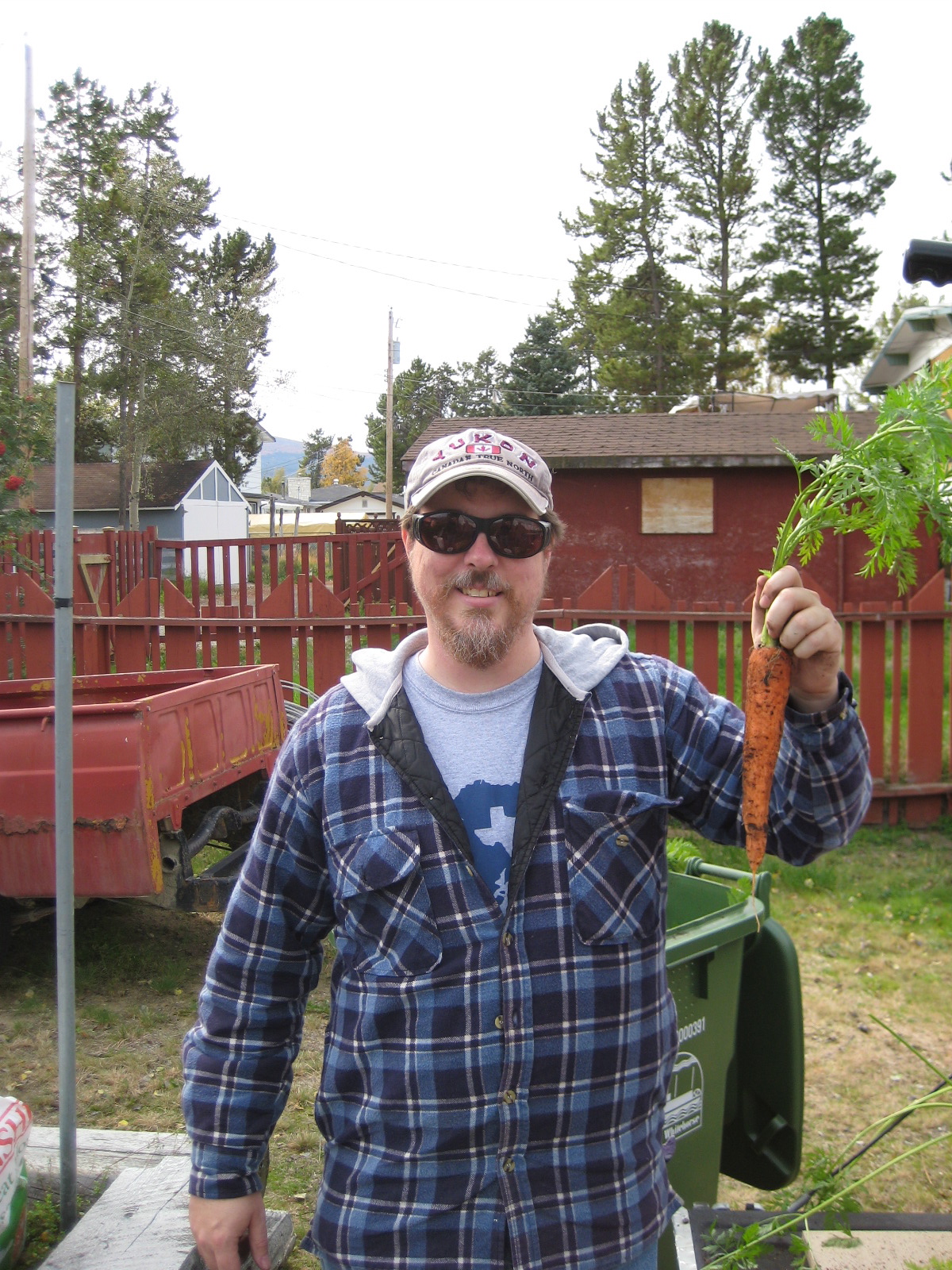
One of our regular-size carrots!
One of his regular-size carrots!

Why I Love the Yukon in the Fall: Kluane Lake

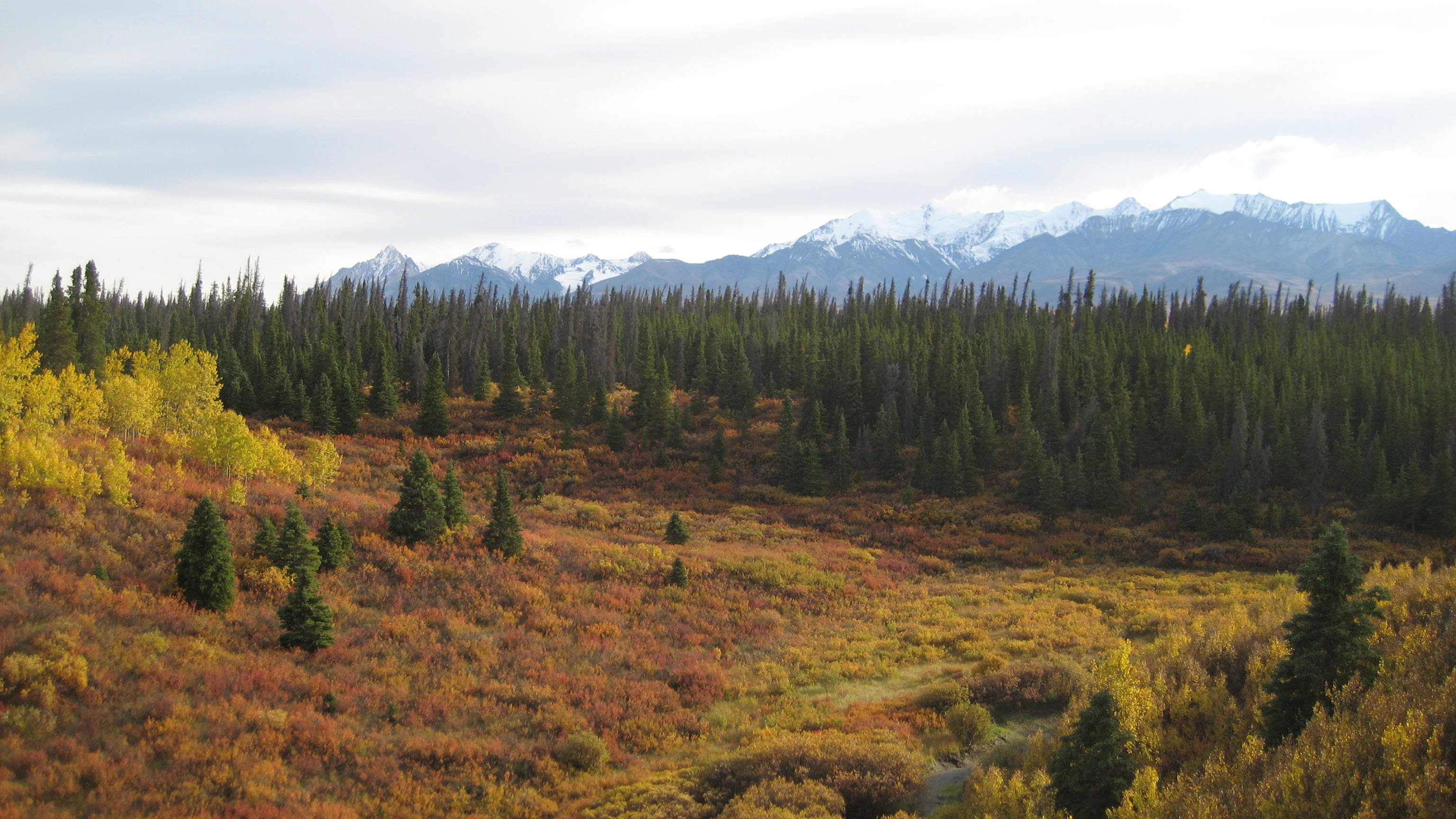
I had the chance of a lifetime this summer to work out at Kluane Lake.  The drive from Haines Junction to Kluane Lake has to be one of the most beautiful drives ever, but it really glows in the fall.  Holy Cow.  I took 92 pictures and movies.  This was my drive to work every week.  Today it looked like everything had turned to gold in the Yukon.  

IMG_0583

IMG_0584

IMG_0586

IMG_0612Me looking adventurous and small.

IMG_0626

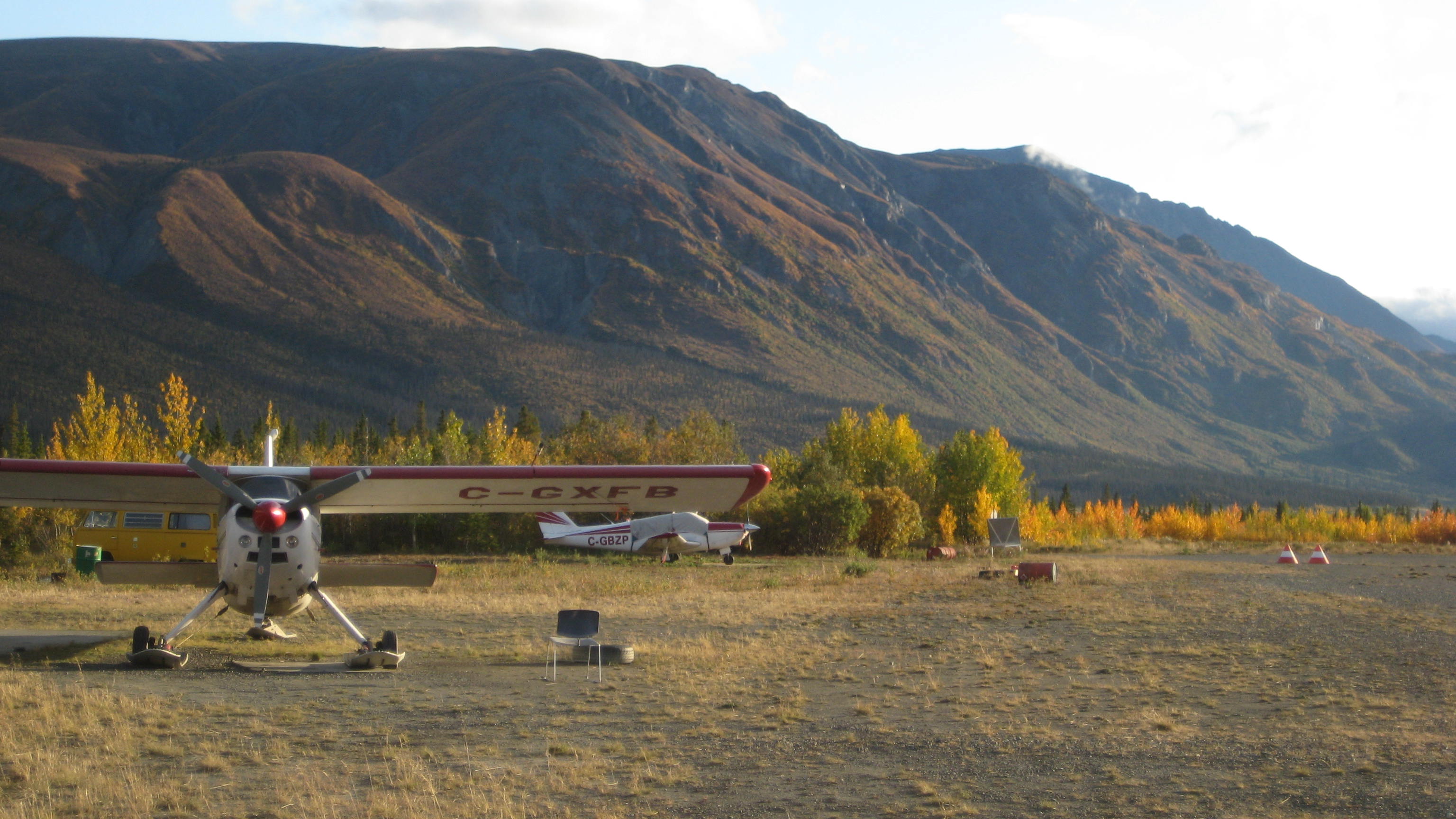
At the airport at the Kluane Lake Research Station.


The fall is brief here, but it sings.  Go outside and see the music.

Two After-School Fantasy/Sci-fi Writing Classes for Teens: PC and FH

Starting Sept 16 at FH and Oct 1 at PC, I will be offering science fiction and fantasy writing to interested secondary students.  

The Little Girl and her Giant Crocodile, Mauro Lira

Are you attending Vanier, FH or PC this year?  Do you like to read science fiction or fantasy, and do you like to write your own?  Come join a group of dedicated young fantasy/sci fi writers like yourself on Wednesdays at FH Collins, or on Thursdays at PC, after school.  Snacks will be provided for the hungry.  Bring your own notebook paper and pen.  A journal is best.  We’ll play some writing games and get you pulling stuff out of your imagination–and then writing stories.  

After two successful years of running the first group–which last year landed at FH Collins–I’m starting a group up at PC.  If you think you’re interested or know someone who might be, get in contact with the Parks and Recreation folks at 668-8325 and register for either the FH or PC version.  Registration begins on Sept 8–one week from today.  Classes begin earlier at FH Collins—and their program is 13 weeks; PC, since we’re just starting out, has an 8 week run.  

FH Collins begins: Sept 16

PC begins: Oct 1

Crocodiles will not be provided.  Please bring your own.

The Cure for What Ails Ya: Garden Harvest in the Yukon


The Pen is Mightier With Veggies

Had a great crop this year, and it’s not done.  We just started harvesting.  Wow.  The vegetables are big.  So I decided to showcase the vegetables next to objects you’d recognize….my pen, a bottle of T-3s, my truck.  


The one next to the bottle made me think about the difference between something that comes out of the ground and something that comes out of a bottle.  I like ’em both, but I think if I had more fresh garden vegetables that soon I wouldn’t need anything else. 

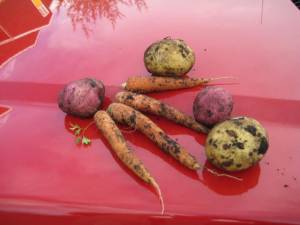
The garden was a work of art this year.  I am so proud of the labor that went into it, into weeding, into caring for it.  The carrots are big and sweet, the potatoes rich.  And the greens they grow so high…

Yes, the Greens They Grow So High


I learned a lot from growing the garden.  The patience.  The time involved on your hands and knees rooting out the chickweed.  Sweating in the Yukon sun.  These are mini-accomplishments, like trophies.  And it’s a nice thing to do in the Yukon on these long summer days inside a quick and dirty summer–10 weeks, maybe.  We had so much sun this summer.  If you were thinking about leaving the Yukon after the last three summers, this summer wooed you back.

Harvest on a Red Truck


I’m gonna fix a sheep stew tomorrow–fresh Dall Sheep that was walking around last week (I did not shoot it, but I did help cut it up)–and fresh vegetables.  A lot of work went into that stew and I’ll remember the two guys who trekked across the mountains in gale-force winds and rain to get this sheep to my kitchen.  And I’ll remember the hours I spent in the garden waiting for the vegetables to get big enough to leave the garden and enter my kitchen.  

And I’ll say to myself—hey, this cures whatever ails me–this summer stew.  

IMG_0468
Fresh Vegetables with Tylenol 3s

Positively Beaufort, the new Yukon term for “freakin’ cold”?


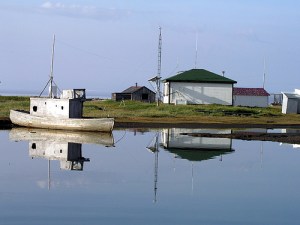
Herschel Island, a quiet pond, an old fishing boat, the old Canadian Signal Corps building--amazing photo by incredible photographer Hank Moorlag

Meagan Grabowski didn’t know she was coming up with a catch phrase, but a visit to Herschel Island for a couple of weeks, and she was a one-woman neologist.  “It started at Pika Camp,” a remote camp for researchers a few kilometres away from the Kluane Lake Research Station.  “We were coming up with an Inuvialuktan to English to Yorkshire dictionary…for fun…and the Yorkshire term for ‘it’s very cold’ turned out to be ‘positively Baltic.'”  But when she was up for two weeks studying biomass on Herschel Island, and it got really, really cold, she slipped on the ‘baltic’ and said the weather was “positively Beaufort.”   Meaning, it doesn’t get colder than that….the wet wind off the Beaufort Sea…beats everything.


Meagan was up there as part of  International Polar Year, with a team of researchers, Scott Gilbert, Charlie and Alice Krebs, Don Reed, and others, all looking at Herschel Island as an ecosystem, finding out what made it tick, and how that information could be transferred, and compared, to other northern islands and our own Yukon high alpine tundra areas.  

Meagan Grabowski is daughter to well-known taxidermist Tony Grabowski and you can hear more of her adventures up on Herschel Island, as well as how any young Yukoner can spend a summer in a such a positively Beaufort place.  The last of my two radio shows this summer, coming Tuesday at 7:50am.  

We’re hoping the weather stays warm for a long time, but in case it drops to -40 this winter, feel free to put “positively Beaufort” into circulation.

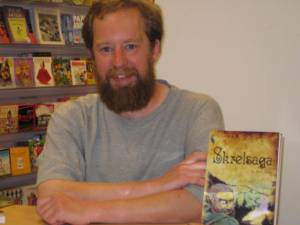
Steve Parker, Yukon Author, publishes Skrelsaga


Steve Parker looking pretty satisfied next to his book, Skrelsaga.  He lives to autograph!
Steve Parker looking pretty satisfied next to his book, Skrelsaga. He lives to autograph!

Good friend and Fantasy writer, Steve Parker, known to many of you as the man who holds the downstairs desk at Mac’s Fireweed Bookstore–ordering your books, being pleasant, being Welsh–is the proud author of a new book, Skrelsaga, now available at Mac’s.  Here are a few photographs of his signing.  


This is, I think, the first Fantasy novel published in the Yukon.  Yay, Steve!  

More on the book in a review that will come later. For now, we celebrate the achievement!


IMG_0425IMG_0434

IMG_0435IMG_0440

Science Fiction and Fantasy Writing–at FH Collins and PC


Artist: C. Gerber
Artist: C. Gerber

Starting in the fall, I’m going to be doing the afterschool programs for teen writers at FH Collins (our second year!) and now, at Porter Creek.  It’s for science fiction and fantasy writers, and everyone’s welcome.  There is a fee.  We do serve food.  


It’s through the City of Whitehorse.  You can contact Mia Lee at 668-8327 or mia.lee@whitehorse.ca to be a participant.  More information to come.  Programs will start up in late September or early October.  The guide comes out in two weeks so we’ll have more info then.

Internet before Coffee? How does it affect your family?

laptop and coffeeHey, I just read a great NYT article that I think will ring true in your family as well.  Read this:

Coffee Can Wait.  Day’s First Stop is Online

Excerpt:

Karl and Dorsey Gude of East Lansing, Mich., can remember simpler mornings, not too long ago. They sat together and chatted as they ate breakfast. They read the newspaper and competed only with the television for the attention of their two teenage sons.

That was so last century. Today, Mr. Gude wakes at around 6 a.m. to check his work e-mail and his Facebook and Twitter accounts. The two boys, Cole and Erik, start each morning with text messages, video games and Facebook.

The new routine quickly became a source of conflict in the family, with Ms. Gude complaining that technology was eating into family time. But ultimately even she partially succumbed, cracking open her laptop after breakfast.”

I’ve noticed that I’m online first thing.  I do manage to get coffee started and an english muffin in the toaster, but I’m there at the computer licketysplit.  

How much of this is part of internet addiction–or communication addiction?  I don’t know.  

Read this very funny, and poignant post in the same issue of the NYT today:

I’ve Got Mail–by Verlyn Klinkenborg

Excerpt

I wish my memory worked differently. I’d like to be able to conjure up an accurate image of my consciousness from, say, 25 years ago. You know what 25 years means: No cellphones, no e-mail, no Internet, no social networking (except with an actual drink in hand), and only the most primitive of personal computers. What I want to answer is a single question: Was I as addicted to the future then as I seem to be now?”

Care to share your experiences?  What were you like 25 years ago before all this technology gave us such instant access?

For science fiction writers this should be a good exercise to think through.  Whenever you are designing the future, think about the implications of one change, and see the effects ripple through society and culture.  Life 25 years ago is very different from the way it is now.  And for every good piece of technology there are consequences.  It’s just an interesting thought problem that might be fun to fuel a writing exercise: what small change in the world could bring about major cultural changes?

Yukon Writers Festival: Reading, 7pm, Beringia Centre

Everyone, come hear the six Yukon Writers Festival writers read on Wednesday night at 7pm at the Beringia Centre for FREE. Part of Live Words: Yukon Writers Festival and the Young Authors Conference, these six writers will be teaching young adults to write at FH Collins–and this presentation is free and open to the public.

I’ve been asked to be the MC for the evening. As I have nothing funny to say, and you can’t be a good MC without funny material–I need six words from readers of my blog–one per person please–the first six– that I have to fit into my opening short speech. And if I get all six, I should win some sort of prize. Nothing that I couldn’t say in public please–so I won’t accept vulgar expressions.

It’s fun. And if you come, you get to see if I can fit them all in.