Have You Met Liz? —the Importance of Meeting Your Candidates

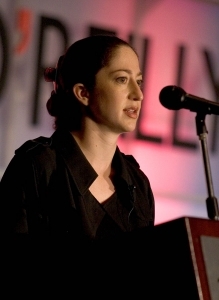
I haven’t been to a political rally before.  I went to the NDP rally just to see what they were like, and because I had met Liz Hanson.

Meeting a candidate makes a difference.  Perhaps you, candidate, wonder what all that door knocking is for—or you, a citizen, are annoyed by all the door knocking that happens around an election.  You both wonder why anyone really does it.  Don’t all the commercials, all the posters, all the op-ed pieces help you know a candidate?  Doesn’t it make you likely to know how to vote?  Nope.  (Ok, sometimes it has to.  Not every person can meet the Presidential or Prime Minsterial candidate.  I voted for Obama from what I read, what I saw on TV, watching him at rallies, in speeches, at town halls.)

Meeting someone changes our minds.  Most of us cannot be changed purely by intellectual discovery—some a-ha moment that gives us the clarity to change our minds about an issue.  Most of us recall an event—a moment that has another person in it—that made us feel the way we do about that person, about their race, issue, belief, etc.

Encounters.  We change because of encounters.

Liz Hanson, NDP candidate, was canvassing somewhere between 7th and Strickland—and I was housesitting for a friend.  She knocked on my door and told me who she was and what she was doing.  I politely told her that I was an immigrant and therefore not allowed to vote in the election.  Seriously, I’m not proud of that:  immigrants should be involved in politics, in understanding and learning about their new country, even if they currently don’t have a vote.  But, frankly, I probably felt a little indignant about the irony of being canvassed when I don’t have a vote—I probably thought that she would just go away if I showed my political impotence.

I mean, really.  Why would she spend her time on an immigrant without a vote?  She couldn’t reap any immediate benefit from spending time with me.

Continue reading

“Amina” Acid and the Ballad of Bill of Tom: deception in the pursuit of activism

What to make of the sudden revelation that two prominent lesbian bloggers, both activists, were really men?

Tom MacMaster, an American student studying in Scotland, his subject Middle Eastern Studies, created the blog “Gay Girl in Damascus” as a way to give himself a voice in the debates about what was going on in Syria, a voice others would believe.  Well, he got more than he bargained for.  The new found fame–when other people started reading the blog—went to his head, he admits, and he took the opportunity to start pushing his opinions, through Amina Arraf, on all sorts of things related to Syria.  He wanted to make a difference and claimed that no one would listen to him as a white American male.  His blog seemed to be recording life during the “Arab Spring”–a time that’s exciting everyone all over the world.  Oddly, instead of a male protagonist, in Syria, he made his “character” a lesbian:

“It was part of the challenge of being someone who wasn’t me. It was a way of also drawing attention to things, I do think there is a certain orientalism, where we in the West tend to pay more attention to people that are like us, people we can relate to, someone marginalized is more interesting.

I also think I wanted to show that in Syria, too, there are people who are all different, gay, straight, people of every possible permutation.” (from the Washington Post)

When, in a dramatic turn of events in “Amina’s” life, MacMaster writes that she’s kidnapped, he suddenly got the world’s attention.  People were noticeably upset about what was happening to this lesbian blogger in Syria.  They wanted to help. The Post says that this is the moment when a blog that might have remained believable took a misstep.  It was that Amina had so many supporters, so many people “she” had talked to, that they wanted to help her.

Continue reading

How to Run Your Life as a Creative Professional–JC Herz’s Wisdom and Advice

Found this at Boing Boing (a site that’s like the proverbial treasure chest in your attic, full of both good and whimsical stuff). 

J. C. Herz (photo from the Speakers Bureau International website)

On May 6 2011, J.C. Herz gave the commencement speech at Ringling College of Art and Design, in her words, “the #1 art school in the country for computer animation and game art and design (grads go to Pixar, ILM, and EA)”.  The speech is something every creative professional needs to take to heart.  (I know I do.)

From the Ringling College site.  “J. C. Herz is a technologist with a background in biological systems and computer game design. Her specialty is massively multiplayer systems that leverage social network effects, whether on the web, mobile devices, or more exotic high-end or grubby low-end hardware. She currently runs an analytics company, Batchtags LLC, which sells a next-generation graph database and information visualization to enterprise customers, predominantly in the high tech and health care sectors. The Batchtags team has experience in algorithm and software development for large financial flows (e.g. Wall Street, cybersecurity), elegant visual presentation of complex, multidimensional information, and the development of intuitive game-like interfaces and interaction design.”

The speech is full of basic, down-to-earth advice about functioning as a creative professional in the world.  I can’t summarize it.  So here is the first couple of paragraphs and then a link to the speech itself.  I did save the speech for myself—and I wish I could turn it into a little grad book you could buy at a flower shop or a gift card store.  The advice she gives is what I needed to hear.

Continue reading

X-Men vs. X-Men: First Class

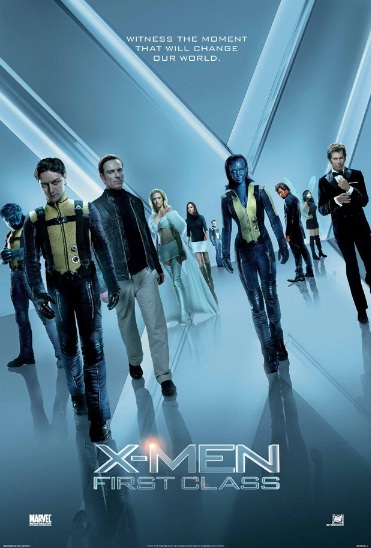
Okay, I just had to re-watch Brian Singer’s original X-Men (2000) after seeing X-Men: First Class.  I wanted to see how these two movies played off each other.  Call XM:FC what you want–origin story, prequel–it still has to be a good movie.  And I think Singer’s original X-Men is a much better movie than X-Men: First Class.  Here’s why.

1.  XM: So much more character development of several characters–Rogue, Wolverine, Magneto, Xavier, Jean Grey.  This movie takes time with its characters and keeps focus on Wolverine as the “schill” or the “new guy” who gets to experience all the Xavier School like we do, for the first time.  He operates “as us” so other characters tell him things we need to know.  Their world is well-developed already and intricate and we get the idea that it’s solid and has been this way for awhile, and has stuff that we haven’t seen yet.

XM:FC barely develops Eric as a tragic, one-note, revenge-minded character, and Charles as a privileged fop whose compassion comes because of his blindness to others hardships (though occasionally, his mind-link helps him “understand” your pain).  FC Xavier comes by his compassion too easily; original Xavier seems much kinder, empathetic, a person I’d admire.

None of the minor characters in XM:FC are even developed.  They barely get screen time except to fight.  Sure XM has its share of background/throwaway characters who simply run through a door, or make an ice rose, but we don’t need to know who they are.  They aren’t pivotal to the plot.  XM:FC characters are, and it’s a shame they are never really developed.

Continue reading

Mob Rules and the Art of the Team Movie— a review of X-Men: First Class

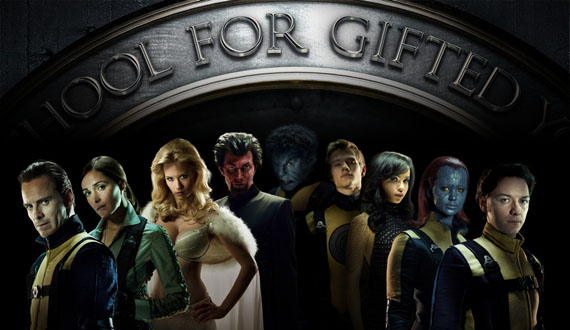
I saw X-Men: First Class last night.  It was a good, solid action movie with stunning special effects.  It moves and kept me interested.  It never had me on the edge of my seat.  It’s an origin story– it has to go through certain details to collect them all–but it doesn’t do it very interestingly, in my opinion.  It also has trouble with multiple characters, having a hard time giving them much development.  I thought the original X-Men did a better job at giving each character a moment.  While Wolverine, Rogue, Dr Jean Grey, et al have their moments to shine as characters pre-Xavier, we don’t have that in this movie.  Here, we barely know anything about Banshee, Beast, Raven, Angel, Darwin, Havoc.  They are more about what they can do than who they are–though they hint at something deeper.  In all, it’s a pretty good film, but not an amazing one.  Enjoy it as an action flick.

Continue reading

There Are Stories You’ve Never Heard, Brilliantly Told: a review of The River

I went Saturday night to The River, a Nakai production, with Michael Greyeyes directing a play written by David Skelton, Judith Rudakoff and Joseph Tisiga.  To be frank, I wasn’t sure if I was interested in what I thought would be a sermon on homelessness.  I just didn’t want the guilt.  (And yes, I’m ashamed I actually said that—but I’m human and honest, and homelessness seems so much larger than I can comprehend–and I don’t know how to react “properly” or have any effect on the problem.  I suspect avoiding the issue is part of that problem–and yet, it’s the easiest thing to do.)

But local playwright David Skelton co-wrote the play, and I’m a huge fan of David and Nakai.  So I went.

I was blown away.   It wasn’t a sermon.  It wasn’t a guilt trip.  It was eye-opening, and it was riveting, and it was brilliant.  

For more of my review of The River at What’s Up Yukon

In a nutshell, brilliant writing, directing and acting take you into the vulnerable world of the homeless in Whitehorse.  Inspired by first person stories, collected by the writers through interviews over several years, that interviewing technique gives this play a realistic quality you won’t find in stories about homeless people.  You want to catch this play fast.  It’s here for a limited time, limited seating.  You won’t be disappointed.  I predict a long life for this play, and many, many performances across Canada.

(For more stunning photos of The River by photographer Richard Legner, visit this page.)

Janelle Monáe and Science Fiction: Metropolis, Freedom, and the Other

I like finding science fiction in odd places.   Janelle Monáe is a genius.  Think if the Archies had been a ska band with a funk lead singer.  But she’s more than that.  She’s also a brilliant storyteller.  Her “Many Moons” reimagines the beginnings of science fiction cinema, Metropolis.  She gives the silent film Metropolis the soundtrack it needed.  For Janelle, Metropolis is about many androids now…and there are comments on slave auctions, blaxploitation, and the lack of freedom–for anyone.  For women, for minorities, for humans in a world overcome by technology.  There is no fear of androids in “Many Moons”—but even I would think that at the corners of the movie Monae makes, there is jealousy at the perfection of the androids, and even a bit of jealousy when Cindy Mayweather erupts in a spasm of freedom, or is it a spasm of realization that she is not free…. all I know is that she breaks loose and begins to dance, dance so high, that she short circuits.  But the crowd is in ecstasy with her.

Monae has certainly looked here at humanity as commodity.  She’s done it with brass.  And artistry.  She’s even mixed in a bit of Sesame Street.

I like finding science fiction in odd places.  And this small film is beautiful.    It’s got solid worldbuilding where she’s imagined, in one scene, the state of society.  The characters all have the hint of well-developed backstories; they have desires, weaknesses, past confrontations.  Cindy Mayweather grows as an android/character.  Her growth, perhaps, comes from her realizations–of the names that keep her as Other.  The names are not androidish—they are names leveled at minorities.  Check out the Cybernetic Chantdown after the break.

Continue reading

The Nudge, The Monument, and The Fan Base: thoughts about the endurance of writers

Roger Ebert responded recently to an article by Cynthia Ozick written in the New Republic.  So goes my reading.  I get my Ozick from Ebert, but that’s ’cause I’m reading where Ebert is writing.  I don’t have a subscription to the New Republic (but, alas, I should).  Anyway, he quotes from her a lengthy passage about writers no one reads anymore.

Death disports with writers more cruelly than with the rest of humankind,” Cynthia Ozick wrote in a recent issue of The New Republic.

“The grave can hardly make more mute those who were voiceless when alive–dust to dust, muteness to muteness. But the silence that dogs the established writer’s noisy obituary, with its boisterous shock and busy regret, is more profound than any other.

“Oblivion comes more cuttingly to the writer whose presence has been felt, argued over, championed, disparaged–the writer who is seen to be what Lionel Trilling calls a Figure. Lionel Trilling?
“Consider: who at this hour (apart from some professorial specialist currying his “field”) is reading Mary McCarthy, James T. Farrell, John Berryman, Allan Bloom, Irving Howe, Alfred Kazin, Edmund Wilson, Anne Sexton, Alice Adams, Robert Lowell, Grace Paley, Owen Barfield, Stanley Elkin, Robert Penn Warren, Norman Mailer, Leslie Fiedler, R.P. Blackmur, Paul Goodman, Susan Sontag, Lillian Hellman, John Crowe Ransom, Stephen Spender, Daniel Fuchs, Hugh Kenner, Seymour Krim, J.F. Powers, Allen Ginsberg, Philip Rahv, Jack Richardson, John Auerbach, Harvey Swados–or Trilling himself?”

Ebert goes on to talk about whether he’s read these authors, and he’s read all but two.  Ozick goes on to ask the question of whose writing will endure?  I’m not sure that’s the question to ask.  After the Library of Alexandria debacle, who can say anything will endure?  But can we say that we affected the minds of those who lived?  Yes.

Ozick determines that Saul Bellow will endure, most because of the Adventures of Augie March, a book I know few of my friends will have read.  I haven’t read it, and I should.  But it did affect a whole generation.  Ebert makes a comment about Hemingway, that we will know him for The Sun Also Rises and his stories, but little else (he’s quoting and agreeing with another friend).  And true, Old Man and the Sea, though the Pulitzer winner, isn’t the book that endures.  It’s his first book of stories, I think, and The Sun Also Rises that continue to be read.

The Fan Base

I will say that in Science Fiction and Fantasy they have developed the concept of the FAN BASE.  And this actually keeps writing, and writers, alive.  JRR Tolkien will endure for a very long time.  So will Stephen R. Donaldson, Isaac Asimov, Ray Bradbury, etc.  The classics of Science Fiction are still being read by the fan base, by those who love science fiction and fantasy.  They are suggesting them to their friends.  They are voracious readers and they claim, quite knowledgeably, that you can’t know science fiction and fantasy without reading this set of writers, or that book, and at the conventions these writers are celebrated.  Even ComicCon has such a large science fiction and fantasy base that these 30,000 people will all know a large set of names, not just the celebrities of the moment, but the masters and grandmasters of the genre.

It could be that you might dismiss the FAN BASE as those who feed on pulp, but I would argue that they know what they like, and they are assisting in the endurance of writers and writing and that cultivating a fan base is not a bad idea.  Further, these “genre writers” are introducing them to many of the great works of literature, by quoting from, giving allusions to, works by other authors.  Many of our first introductions to literature–Shakespeare even–was in a comic book, or in a science fiction novel.  I’m not going to give too much more a spirited defense to the importance of Fantastic Literature, or say too much longer that, before Hemingway, authors had their science fiction novels and their literary novels and no one thought of the books differently: London, James, Twain, Poe, Hawthorne, all had a novel where time travel or science fiction played a large role.  Anyway, I have a larger point to make. Still, hold onto the idea that developing a fan base is important–because a fan base has been enthused by your writing, has been affected by your writing, and seeks to market you to their friends.

Continue reading

“…his cultivation of genuine menace…”: a review of “One Nation Under Gods” at Portal

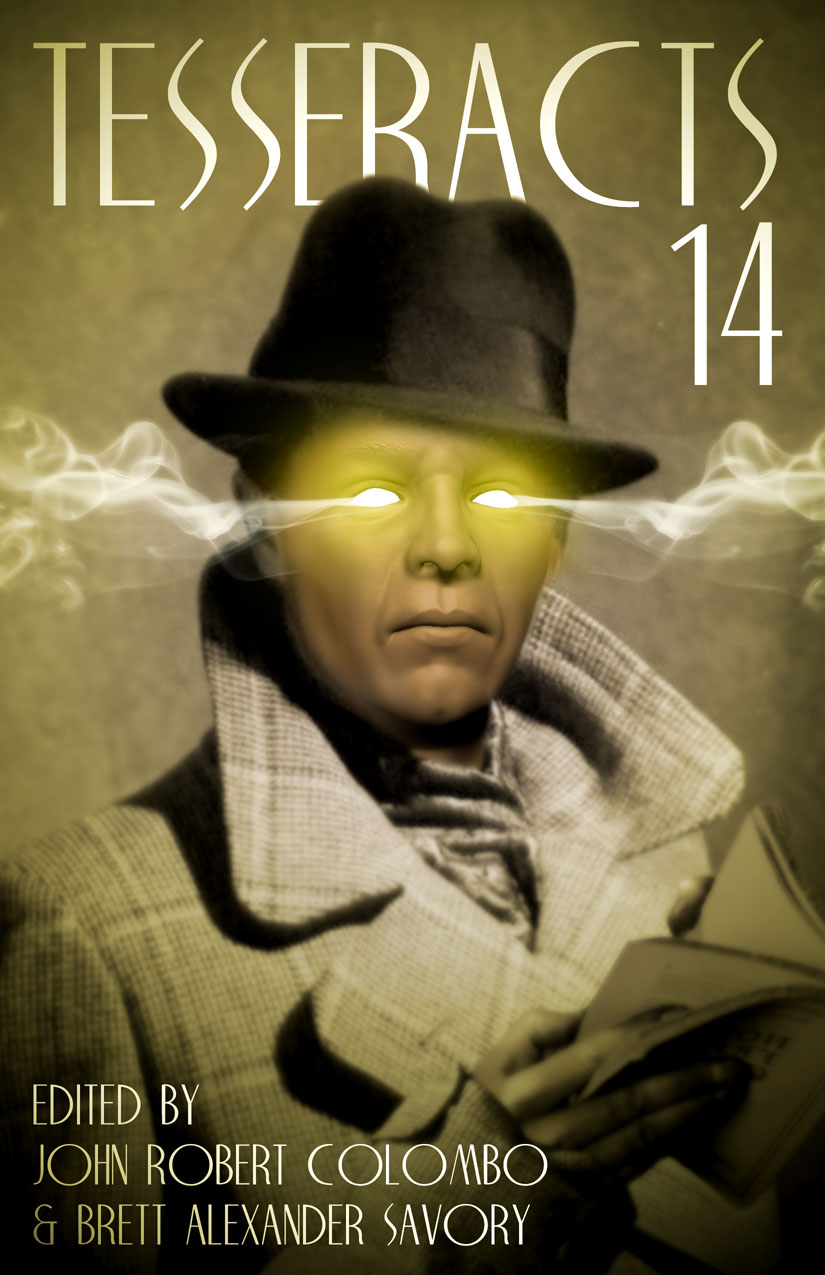
Val Grimm, over at the Portal, gave me a good review for my short story, “One Nation Under Gods”!  Thanks, Val.  I’m always thrilled that there are people who will review short fiction, and anthologies.  Thank you, Val!  Val reviews the whole anthology, Tesseracts 14, story by story.  Here is his review of mine:

The author of “One Nation Under Gods”, Jerome Stueart, emigrated to Yukon from the States in 2007, and his former citizenship is evident in the themes and content of his story. I’m not biased in its favor because of my nationality, nor simply because its dark vision seems in concord with my fears. This story succeeds, in my eyes, because of his detailed worldbuilding, the realistic relationship between the narrator and his sister, and his cultivation of genuine menace, an evocation of the way people can be treated as things. In the world of this story (which in outlook and some tropes puts me a bit in mind of Steve Darnall and Alex Ross’ 1997 comic Uncle Sam) concepts like Freedom and Patriot are incarnate as deities, administered by priests and priestesses, and the Statue of Liberty herself is known to walk abroad. The history of the gods is the history of the country, and its people are required to memorize that catechism or pay with their lives in particularly grotesque ways; if a child fails the standardized test which is a mandated rite of passage, he or she is transformed into a public object, anything from a soda shop to a garbage can. Stueart skillfully incorporates the conflict between individuality and vested religious and political powers; the way those powers can intertwine and what that merging means; the clash between idealism or perception cultivated through propaganda and reality, between history as the study of people in power versus the study of the people’s past; and the transformation of people into instruments, people into numbers.—Val Grimm at the Portal.

The Future of the Yukon (maybe): Radio Series “Yukon 2058”

We hear a lot about the future of New York, of San Francisco, of England.  Ever wondered what the NORTH would look like in 50 years? What would be happening, what kinds of trends here in the Yukon?  What kinds of possibilities?  Is it all going to be dark from climate change, or will we adapt as we go? I think it’s going to be a good Future if we can take better care of the Now.

Three years ago I created a five part series called “Yukon 2058” for the 50th anniversary of CBC.  They wanted something that celebrated their first 50 years, so I offered them a look at the next 50 years.  My theme was to eventually come back to why CBC is important, why local programming trumps National programming, why having a large staff in a small place like the Yukon is important.  I tried weave my opinions about what is good about CBC, and what is bad about the trends happening to CBC, into a narrative.  Yukon 2058 is the result.  5 parts.  The narrative of a CBC reporter wondering what his future will be, trying to find where he belongs in a rapidly competitive market.

You can go to the Radio Series page and look under YUKON 2058.

________________________________________________________________________

*image is Joyce Majiski’s “Racing Uphill.”  See more of her work on her website.