Star Trek: Playful, Exciting, Character-driven

spaceball-12947135322_30ab2b2c4fStar Trek has come a long way and just when you thought there were no surprises left, they show up.  I’ll admit, the last few Star Trek movies left me cold.  Nemesis bombed because the writer tried to copy too much from ST2 but without any of the heart.  Insurrection was a trite story line.  Abrams’ Star Trek reinvigorizes the franchise by giving us both old and new–it completely satisfies this Trekkie.

If you go, you will get a thrill ride, and you will also be reintroduced slowly to characters you thought you knew. Yes, everyone looks young and the sets look like Apple designed them, but that’s what it means to restart the series.  You will get your money’s worth from this movie.  Most people know these characters even if they aren’t fans–but they are reintroduced to us here in great detail.  And there’s lots in here for fans of the show–little touches that show that the writers know the whole series.

I’ll try to keep out all of the surprises.  But you already know that there is time travel involved, and it shows up at the very beginning.  And because of that, events are altered.  “Our destinies are not what they would have been,” says a young Spock.  This is okay.  Star Trek has thrived on the “might have been” storylines.  The Mirror Universe got a lot of play in nearly every incarnation of Star Trek; Tom Riker was a might-have-been Will Riker; Voyager had the two part episode “Year of Hell” and the Finale which changed and altered timelines.  Even ST: First Contact imagined a Borg-filled Earth.  So, it’s nothing illegal–it just gives the writers room to wiggle.  They got to play a little with the histories–legally –because a villain altered the timeline.

But that’s the premise.  The cool part of the movie is not what they changed, but what stayed the same.  We get to see some fine actors inhabit these characters and manage to put a bit of the former actor’s style into it.  You watch Chris Pine–slowly he becomes a bit of William Shatner; Quinto is a fantastic Spock.  I swear I can hear Kelley in this new McCoy!  Uhura shows her inner Nichols in a turbo-lift.  Sulu, Chekhov and Scotty all have their moments of channeling as well.  But the writers also let the actors play—play with these histories and parts.

The plot allows each character to be introduced separately. This is a brilliant maneuver.  instead of just dumping them all on the stage at once, we get to know each character in their context.  We meet Kirk and Spock as children, Uhura in a bar, McCoy on a shuttlecraft, Scotty in a Starfleet Outpost, Sulu as a pilot and in a fight, and Chekhov in a funny homage to ST4.

I wish Wolverine would have been this good.  This had just as much action as Wolvie, but ST had a unified plot, and well-developed characters we thought we knew completely.  In the same way Wolvie failed–by being a prequel with no surprises at all–Abrams managed to give us a bit of parallelism in the lives of these characters and the ones we already know.  And there are so many great and interesting surprises–what ifs–that are allowed to play out.

This is what revision should be.  The series was great, but Myth can revise a story and get to its essence, even if the details have somewhat changed.  I can accept both Roddenberry’s original and Abrams’ version–because this isn’t an arbitrary version.  It fits in with the timeline because Nero changed the timeline.  I’m cool with that.  Just as I’m cool with Janeway’s original arrival back on Earth, and “Yesterday’s Enterprise” (a fan favorite).

And J.J. Abrams, a big high-five to you and the writers from a long-time fan!  When I was seven, I took my photo with the wax figure of Mr. Spock, my dad on the other side of Spock.  I don’t have a costume–but I was once Spock at Halloween.  I don’t know Klingon, nor do I collect the series, or any of the paraphenalia, but I loved the stories, and I recognize Star Trek as American Mythos.  You’ve done a great job at bringing that to the surface.  Well done.  Do a sequel.

Wolverine: You can’t hurt him, so you can’t hurt us

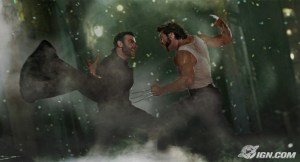
x-men-origins-wolverine-20090212020925195While Wolverine looked promising, it was a confusing mess of action with never a moment of tension. The problem was established early–in the credits–and this hindered us from caring about the characters.

If you make your characters indestructible, then you eliminate us from caring. It was the problem with Superman many years ago–he had no real vulnerability. So the writers rewrote him. Here with Wolverine and Sabertooth, they are given nearly immortal status at the beginning of the film. They don’t age slowly–they just don’t age once they hit their thirties. And they go through the Civil War, WW1, WW2, and the Vietnam War all in about ten minutes of screen time. They are always frontline, get shot at over and over, get hit, but never get hurt. There is no danger for these guys. None. That is established up front. So why would there be any tension in the film?

The film goes on to try and make Wolverine truly indestructible by giving him admantium bones. But since he was already invulnerable (yeah, he could get slightly bruised in a fight with his brother), the admantium claws gave him no discernible advantage. Ah, yes, in fights with Sabertooth, Sabe’s face was a bit more pained–but he was still walking tall after the fights. Spare me the argument that they can heal. 1) An ability to heal that quickly means there are no consequences. No consequences eliminate plot and choice–both essential to story. 2) Wolverine never healed that quickly in the comics. The point of Wolverine’s healing ability was to protect him in the long run, but he got beat up bad in the comics. Often, it would take him days and weeks to heal. And that’s good—it made him vulnerable, but gave him a slight advantage in the ICU. It made me care. But in this film, immediate healing meant that two shadows were boxing each other. I thought–so what?

The fights were scripted so that either Wolvie or his opponent should fall down so there could be a bit of dialogue, or a change of scene. If Sabertooth met up with any other character, that character was toast. It was just a matter of time. Because Sabertooth was established as indestructible.  Worse yet, I am now not sure what Sabertooth is really responsible for–since his main kill comes back to life.  The body count might have been high–but a viewer can’t care if the bodies spring back to life or never had much life to begin with.

Working against it too–the movie was a prequel. And if the survival of the main characters is the plot of a prequel, you’ve doomed yourself. The plot of a prequel needs to be another mystery–because their survival is assured. Here, we were told that we were going to learn the mystery of Wolverine’s origins–but there was no central goal for the main character, no puzzle to solve; just event after event happening to the main characters. No choices, no consequences, no mystery.

I was looking forward to Cyclops, to Gambit, Blob, etc. These characters were used more for the trailer than the movie. This movie had no arc, no plot, and characters who needed to wade through two hours of special effects to return them to X-Men 1, where they began.

Yukon Writers Festival: Reading, 7pm, Beringia Centre

Everyone, come hear the six Yukon Writers Festival writers read on Wednesday night at 7pm at the Beringia Centre for FREE. Part of Live Words: Yukon Writers Festival and the Young Authors Conference, these six writers will be teaching young adults to write at FH Collins–and this presentation is free and open to the public.

I’ve been asked to be the MC for the evening. As I have nothing funny to say, and you can’t be a good MC without funny material–I need six words from readers of my blog–one per person please–the first six– that I have to fit into my opening short speech. And if I get all six, I should win some sort of prize. Nothing that I couldn’t say in public please–so I won’t accept vulgar expressions.

It’s fun. And if you come, you get to see if I can fit them all in.

Live Words: Yukon Writers Festival, April 28-May 8

In conjunction with the Young Authors Conference, Live Words brings five authors up to the Yukon, and this year they are offering a few more appearances in Whitehorse and the communities for readings and workshops.  Yay!   I applaud Joyce Sward and other organizers for their efforts to bring these writers to the community.

Schedule as follows:

LIVE WORDS

YUKON WRITERS’ FESTIVAL: Tues Apr 28 – Fri May 8
with writers:
Shelley Hrdlitschka, Celia McBride, Arthur Slade, Shyam Selvadurai, Candace Savage, Kenneth T. Williams

WHITEHORSE EVENTS
Reading: Kenneth T. Williams, Tues Apr 28, 7 pm, Blue Feather Youth Centre, free
Reading & Reception: Guest writers, Wed Apr 29, 7 pm, Beringia Centre, free
Young Authors’ Conference: Thurs Apr 30 & Fri May 1, 8:45 – 3:15, FH Collins
Lecture: Bird Brains: Inside the Lives of Ravens and Crows, Candace Savage & Sun May 3, 7:30 pm, Beringia Centre, free
Writing Workshop: Shyam Selvadurai, Mon May 4, 7 – 9 pm, Whitehorse Public Library. 667-5239 to register (limited space), free.

COMMUNITY EVENTS
Readings & Music: Guest writers & music, Sat May 2, 7 pm, St. Elias Convention Centre, Haines Junction, $10 adults, $5 students, children 12 & under/seniors free.
Readings: Shyam Selvadurai -Tues May 5, 7 pm, Teslin Library; Wed May 6, 7 pm, Carcross Library; Thurs May 7, 7 pm; Carmacks Library; Fri May 8, 11am,
Faro Library, free
Lecture: Bird Brains: Inside the Lives of Ravens and Crows, Candace Savage, Mon May 4, 7:30 pm, Northern Lights Centre, Watson Lake, free

For more information call 667-5239.

And the Young Authors Conference website:

http://www.yesnet.yk.ca/events/youngauthors/Pages/conference2009.html

24hr Playwriting Contest: deadline for registration April 9th

color-swallow-1--catherine cheekGang of Writers!

You say you want to write a play!  Or a spoken word piece!  Come to the 24hr Playwriting Contest that happens April 18th-19th from 11am on Saturday to 11am on Sunday at the Westmark.  For 50 bucks you get a room for the night, free breakfast, free coffee and snacks, free yoga, and free dramaturges who sit around waiting to tow your plots out of the ditch, free your scenes, and otherwise encourage you.  You can’t find a sweeter deal for writers!

Deadline for sign-up is April 9th at 5pm!  Call Nakai at 667-2646 (#2) and someone will take your info off the phone call, or come by Nakai’s office in the Whitepass Station on 1st street and get a registration form.

Come and enjoy the frenzy of community writing in  a nice shwanky hotel.  Turn your play in on Sunday 11am with the rest of the writing crew!  And sign up for our later Cabaret (in May) to see a scene performed from your play.  Prizes will be awarded by our judges!  There are TONS of good prizes.

Come Play with Us!!

Jerome Stueart

Producer, 24hr Playwriting Contest!

—picture by Catherine Cheek

2 bedroom Bungalow in Indiana: $56,900

blmfld-front-good-flowers-5x7-72007Who needs a timeshare when you could have a summer home! Hey, I’m advertising for my birthmom in Indiana. She’s trying to sell this nice home. Mark, the realtor at Harrah Realty, describes it like this:

428 South Washington
$56,900.00 – #6961

SAVE ON GAS MONEY! Walk to downtown banking, shopping and restaurants from this conveniently located 2 bedroom, 1 bath bungalow. Full walk-out basement, large family room that could possibly be used as a 3rd bedroom, handicap accessible. Backyard playhouse with electric, phone and computer hook-up and window air conditioner. Great for small office. Make your appointment with Mark today.

treehouse-blmfld-72007That “backyard playhouse” is enormous and fun, two stories.

If you’re interested, contact Mark at Harrah Realty. They’d–my birthmom and her sister–would love to sell this home. With the economic situation, of course, many people were trapped in the transition: living in one home while selling another. But I’m trying this to see if I can make a difference— figure it can’t hurt to advertise in Canada, on a science fiction writer’s website. You never know–someone might be looking for the perfect little home in Bloomfield, Indiana.   Maybe Aliens!

Okay, if Canadians do buy it, technically they’ll be “aliens”… hmmm.


Knowing: People Stuck in a Plot (a movie review)

knowing4Having just seen Knowing, the film starring Nicholas Cage as a man who’s been given a sheet of numbers predicting every accident that will happen, I’m having a hard time with Ebert’s review. Ebert gave it four stars. I would give it two.

It is a movie about whether events in life are random or predetermined and wants to be a movie about what you would do if you knew the end of the world was happening.

If you want to see the answer to that, go watch Deep Impact–a better film.

Knowing doesn’t uncover the “end of the world” plot until late in the movie. This movie is about  whether all events are preordained.  And should a coded sheet of these events fall into our hands–does it  indicate that higher forces are communicating with mankind–revealing these accidents?  But alas, it’s not to actually change them.  The list is stuck in a vault for fifty years. What’s the point of revealing numbers only to hide them away? Nicholas Cage would have us believe it is to give those numbers to his son, fifty years later. For what reason–there is no reason. Since Cage cannot do anything to affect or change the events, the paper communicates nothing but “proof” that someone knew what would happen.

Knowing is saddled with a predetermined plot too. The characters only talk about the plot; when they arrive in a scene, they say only what needs to be said to move the plot along, which I always find hard to believe.  When the sister enters the movie, her reason to be there is to tell us that Cage is estranged from the family, to establish that he is running from religion, to emphasize that the family is worried. The writers even realize that there is no real interaction in this scene because they have her tell Cage that he didn’t even ask “how are you? How’s your week been?” before telling her to leave. The characters know it is an awkward scene. All of the scenes are like this–leaping from plot point to plot point.

The revelation that the numbers are actually dates is so unnatural as to be funny.  It doesn’t happen because he actually strives to figure them out–he is drunk, it’s an “accident.” This plot is so much about determinism that it tries to get away with unbelievable coincidence. The author can always say–“Well, that was my point!” But that’s just bad writing. If you need coincidence that badly, then your characters are just puppets.

Cage is a morose father, drinking himself into a stupor every night. He’s supposed to be a MIT astrophysicist. Man, where did they get this classroom? That’s MIT?? It’s small. Only twenty students are there, most look around high school age. It’s supposedly his first lecture of the year–it’s completely philosophical, cosmological, lasts for ten minutes or less, with brilliant students who repeat back knowledge to the professor, and then our brilliant professor blanks when he’s talking about whether the world is random or not, and dismisses class. I never believed him as a professor. And I didn’t believe that was MIT, or any other university.

The worst foreshadowing happens here–when he takes up the models of planets and talks about them.

SPOILER: Cage is supposed to have worked on solar flares, was an expert in the field–but he doesn’t work on them now? He doesn’t mention this fact till the end of the film, when it becomes important. But one would suspect that the scientists who have already discovered that a major solar flare is coming would want to consult with the man who has solar flare knowledge.

This movie is full of Christian references to the inevitability of mankind’s destruction. You are sledgehammered over the head with it at times. Cage as prodigal son, makes the predictable return to his pastor/father. There’s even a convenient Christian message scrawled on a van in the last sequence–so that during watching destruction you might make a decision. The kids are taken in a “rapture” which makes angels look like a$$holes because they wouldn’t take Cage with them and save him too, or anyone else in those huge ships of theirs.

Take away the thin veil of science fiction and this is mere theology. Down to the “new adam and eve” and “tree of life” in the last frame… a very tired science fiction ending (we’ve seen it so much that On Spec and other sci-fi magazines reject all stories with “adam and eve” endings). Those people left behind are riotous and murderous, not many shown as kind; as destruction swoops down, you are made to think we are all sinners, murderous thieves. The writers have stacked the deck–giving us no choice on how to read the plot. Nobody really has a believable choice.  That may be honest theology, or philosophy–but it doesn’t make a good movie.

How to do a House Party Right

bghome2I attended a house party Saturday night–sort of like the one pictured here. I’ve heard of things like this.  Anne-Louise Genest explained a bit of the history of the kind of music she was playing with Sammy Lind and Nadine Landry that evening–how it might happen in a kitchen. The intimate setting was right. Miche and Hector had opened their home–moved back the furniture, rented folding chairs, made snacks. There was a charge of $15 at the door to pay back the hosts and the musicians for what turned out to be a beautiful evening.

It was planned well–limited to 25-30 people; people brought their own drinks; and the music was a mix of bluegrass/cajun with fiddle tunes throughout. There were two 45 minute sets, with a half hour break in between for mingling and snacks. And a lovely wandering dog in the midst giving out love to whomever reached out for her.

I remember back in 2002, a night in someone’s home after a party was drifting into the evening.  Folks would bring out guitars. It was a lucky moment, but only the six of us experienced it. Kind of a convergence of good fortune, talent, a long evening to linger around guitars.

But you can create a moment and plan it well too. The only difference between that moment in 2002 and this one in 2009 was the event that was created. Saturday was a performance in an intimate setting–aimed to be the focus of the evening. They asked friends (and a sister) who were performers to perform for us, rather than all of us hoping guitars might pop out after a dinner.  The performers were spotlighted.

My grandparents used to host Bob Wills and the Texas Playboys in their home. I don’t know how my grandparents knew them—I vaguely remember that Alpha and Jeff Stueart were friends of Bob Wills. But they played music in their home in between gigs around Texas and Oklahoma in the 30s and 40s, a time of Western Swing. I don’t remember that my grandparents ever played music themselves. My grandfather dug ditches and my grandmother was a cook, but they loved music and were good hosts. They opened their home to other people who would enjoy that music as well. They were dirt poor. But they knew the value of music.

We can’t always have a convergence of singer/songwriters at our dinner parties. But we can host a House Party and bring in performers that are coming through town. I bet we can do that with small theatre too. It had great planning and Miche and Hector created an evening I won’t forget.  I’d rather go to concerts like this, I think, than sit in a large auditorium.  Here I was a few feet away, and food and drink were handy.  Like an Irish Pub, in some ways.  But in your home.

House Parties eliminate having to make the modern choice between a night at home with the family or going out to a show. It takes us back to a place where we relied on each other. They brought the show to their home, and brought us to their home too. As Laurel Parry (now known as Larry) said to open the night. “Either we’re very cutting edge or we’re reviving an old practice–or maybe a bit a both.” Blogs have talked about this new phenomenon before and websites telling you how to host a gig like Concerts in Your Home.

But I think the one at Hector and Miche’s went really well. Maybe they were cutting edge, maybe just wanting to find an intimate way to have music in their home. Maybe we only remembered something we forgot we needed. I’m just glad that, clapping and stomping our way into the night, we all remembered it together, .

To Watch or not to Watch: a review of the Watchmen

watchmen-poster-groupMy title refers not to whether or not you should watch the film, but about the dilemma of the characters–to watch over others or not.

You should see the film. It’s good to understand the gritty basics of superheroes and why they do what they do, and what kinds of mortals these heroes be.

I’ve bought the book, but I haven’t done more than skim it to see how close it comes to the movie.  I think the movie is faithful to the book.  But for those who haven’t read the book–like me–here’s the skinny on the movie:

The movie explores a history of superheroes in America–as if they really existed. The opening credits are brilliant.  All the moments of American history have as a background these groups of superheroes–mostly non-superpowered costumed vigilantes.  We won Vietnam, Nixon has won a third term as President, it is 1985.  We are in a cold war, but Andy Warhol is painting Night Owl not Marilyn Monroe.

Someone is killing off costumed superheroes who have retired.  Since an Act of Congress, superhero groups and persons have been outlawed or disbanded.  One of the superheroes has become a megamillionaire trying to create green energy; others have just retired without revealing who they were.  The threat of nuclear war is ever present.  One hero has superpowers, Dr. Manhattan, created in an accident (like all good heroes), and he is approaching godhood, barely concerned with humanity, but seeking to help find a way to help the world find an energy solution too.  He is the reason the Russians don’t attack–they are frightened of his nuclear abilities.

These heroes have mixed pasts.  They are more vigilantes, no longer asked to keep vigil.  There is no strong moral code guiding them.  Except for Night Owl, very few of them know what a moral code is.  For Rorschach, whose mask constantly changes shape–a fascinating thing to watch–humanity is disgusting, all the baser natures breeding and leaving nothing of value.  For him, he doesn’t care about humanity–they are all criminals waiting to happen.  When he searches the streets to find answers to who killed the Comedian (who dies in the first few minutes of both the film and the trailer), he beats people up to get his answers.

The movie is more complex than a whodunnit.  And this is what I love about the story.  It will complicate your ideas of justice.  And heroes.  And what responsibility is taken up when you take up a costume and “crimefighting,” and what kind of person needs to have that role, and what person doesn’t need to have it.

The movie shows us heroes who want to do something to help the world, but are filled so much with their own problems that they just don’t have the teamwork, the focus–they aren’t even on the same page.  You thought the Fantastic Four squabbled, but this is chaos.  It’s gritty real, though, at what a “real” group of heroes would be doing–all idealism, but with their own agendas.

If you liked Dark Knight, you will enjoy Watchmen.  It makes you think about vigilantism–what decisions you are allowed to make on behalf of others, and what decisions you shouldn’t make on behalf of others–even to keep them safe.

The movie is also visually stunning.  The sequences on Mars, the blue Dr. Manhattan, the fighting sequences–we’ve come a long way through the Matrix and out again.

The movie isn’t perfect.  I’ve never seen a worse Nixon–he looks plastic, as if he is wearing a mask himself; there are poor choices in music–Leonard Cohen singing “Hallelujah” during a sex scene; the sex scene itself seems a bit long.  But these are small things in a long movie that, overall, satisfies.

It has a lot of gratuitous violence–but I think the violence says a lot about these heroes.  They’ve become numb to it, to the choices they make regarding other people.  The world is something to clean up and guard.  Silk Sepctre II says that the law that disbanded superheroes was the best thing to ever happen to her–she never wanted to be a superhero.  Her mother, the first Silk Spectre, made her.  She hated the clothes. And the responsibility.

The end will keep you talking for weeks.  I promise you.  It is no easy ending and the movie leaves you wrestling with decisions.  Go see it.  Justice isn’t an easy topic.  Our conversation afterwards at Tim Horton’s involved youth who tag buildings with graffiti, but it could have been anything we were upset about.  To what ends does vigilantism aspire?  How far would you work outside of “the law” to get “justice”?  It sparks a lot of difficult conversations.  I’m sure I came across like an idiot–but i tend to let myself talk to see what I might say.  Cause only when I’ve said it, do I get to evaluate whether or not I believe it.

So, go see the movie and see what you start talking about afterwards.