Year’s Best Fantasy and Horror Ceases, Hope in the Comments

Year's Best Fantasy and HorrorLCRW announced the end of an era. The Anthology that praised the best in Horror and Fantasy published every year has ceased after 21 volumes. Year’s Best Fantasy and Horror collected two genres together, ones that complemented each other. It was good to have the cross-pollination. There’s much sadness in the Fantasy and Horror worlds, yes, but there seems to be glimmers of hope in the Comments section which has turned into a Who’s Who of Fantasy and Horror. In these comments, Ellen Datlow reveals that she has a new publisher for the Horror side of the anthology and Kathryn Cramer, publisher of Year’s Best Fantasy, reveals they have switched publishers. It’s the “narrowly dodged the bullet” reference that Cramer makes that causes me to think that the YBF&H closing might have been a publisher decision to cut costs in the rapidly diminishing American economy* (Ellen Datlow comments below that it was a combination of things, but most importantly it was an agreed-upon decision between the editors and publisher, not a sole publisher decision. My apologies for jumping to conclusions.).

Editors and authors alike send condolences in the nearly 100 comments that follow the announcement. The anthology was a huge part of the community–a way to celebrate and honor stories that represented what was happening in that community. Award shows can be fleeting celebrations–anthologies preserve and mark the year. I felt like a family gathering in the comments for a funeral or a wake. I look forward to seeing what new incarnations will arise from these decisions. And if there is a wake for the Anthology, I hope it is a big, raucous one for all the good they have done for the community!

To purchase a copy of the last volume of work, celebrating the best of 2007, follow the links above.

Stardust Shines: Character Motivation-ism

stardustSometimes it’s simply about giving everyone something to want, something realistic, and then setting them on their paths.  Stardust, the Neil Gaiman-inspired movie, does a great job of giving characters real desires and then setting them at odds with each other.

If you are writing science fiction or fantasy, even well-developed characters function at half-power until they have a goal.  Once they have a goal–man, they zip!  This is one of my favorite things to watch, as objectively as I can, that moment in my heart and interest level when the character finds a goal.  It has to be something they want, not just an interesting goal that should be “universally interesting.”  They have to want it enough to maneuver through a tangly set of obstacles.

Stardust Plot summary: To woo Victoria, poor boy Tristan promises to get her the falling star they just saw.  When he goes to get the star, he discovers Yvaine, a woman, is the star that fell.  Three witches want to eat Yvaine’s heart to make them younger, and seven scheming princes want the throne–which can only be had if they can find the necklace, which happens to be with Yvaine.  So people want Yvaine for what she can give them: eternal life, long lasting beauty, a kingdom.  Tristan wants her to impress Victoria.

Really clear goals: Tristan wants to win the heart of Victoria. When he meets up with Yvaine (Claire Danes) he doesn’t suddenly switch goals.  He could have life immortal or even Claire Danes!  But no, he wants Victoria.  He promised to have her this star and that’s what he’ll do.  Yvaine won’t budge until she sees he has a Babylon Candle which could actually get her home—so she goes with Tristan on his way to Victoria because he promises to send her back home when he gets done showing off in front of his girl.

The pirates collect lightning, the witches want beauty, the princes want the kingdom and to kill each other.  When all their plots become melded into a single objective–from different angles–it revs up into high gear.

I enjoyed this movie.  I think it’s well designed.  The narrative is strong and is propelled by the desire lines of each character.  I love how all of them use similar means to get them to where they need to go: runes.  Not a map, not a prophecy, but unpredictable magic that you have to keep checking over and over again.

It helps that the scenery–meaning the place, the occupations, the “world- building” is interesting–but without desire, it is just scenery.  With desire, it becomes charming.  There are few memorable lines in the movie–this isn’t “Princess Bride”, though I believe the plots are just as good.  The comedy isn’t as strong–too many characters for you to memorize everything.  And this is its only fault, I think, that the characters may be well-motivated, extremely well-motivated, but rarely rise above stereotype–even with all the “cool stuff” around them.  They are stock characters with bling.

Tristan IS his want.  Other than his desire, he is a bit of a goof whose entire existence seems to be winning the heart of Victoria.  No mention of what his life was like before, or his relationship with his dad and having no mom.  Yvaine has a bit more character–she has been spending her life as a star watching us (we’re so entertaining to celestial beings) so she’s always wanted to have an adventure and fall in love.  But really we can’t imagine her life as a star.  Which is why she is so much more interesting on Earth (she’s got motivation and means).   The witches seem obsessive—and we wonder how they spent their time before the star fell.  Oh, you know, the last three hundred years….  The princes are fiendish, but they have no personalities outside of good/bad/opportunistic.  They want the kingdom–they only exist to push their plotline.

So, after all is said and done: character motivation, aka desire, is essential to move characters along, but without more character work–as in WHO these people are that make them different than their archetypal roles–desire becomes plot without managing to deepen character.  I imagine that Gaiman packed more into the novel, but on screen we may only have time for one choice: character desire vs. character development.

Ebert gave this 2  1/2 stars out of 4, saying that plotlines were convoluted and that the movie never rose to the level of “Princess Bride.”  I didn’t think the plotlines were convoluted, but only that the plotlines were so well charted that it left little room for characters to grow beyond the plot necessities–but that doesn’t mean it doesn’t satisfy like the best story–especially the fairytale kind of story it represents.   I would still give it 3 out of 4 stars—it’s a great movie.  Really.  And not making it to Princess Bride Status is not necessarily a fault.  It’s a clever romp through a well-developed world.  All the pieces are in place and they interact with each other well, and you can learn a lot about the power of character motivation, and the power of character too.  Even when character shines less than character desires.

Fantasy Magazine Accepts My Story

Solar Ikon's Cheers on Flickr, creative commons license“Moon Over Tokyo Through Leaves in the Fall” found a home at Fantasy magazine, an online fantasy webzine. It’s a great webzine and I know it will be a good home for the story. They really treat their contributors well. They spotlight authors with interviews, and the website layout is very professional. It’s a solid venue for all types of fantasy and magic realism stories.

The story I submitted had to do with wine-making, hence the picture. This is from Solar Ikon’s Flickr collection. The story won’t be on the website for awhile, but it’s nice to have the acceptance. May the new year bring us all ….Acceptance. Cheers!

_____________

For guidelines to Fantasy magazine

New Anthology Market– Triangulation: Dark Glass

March 31, 2009, Deadline— From Their Website:
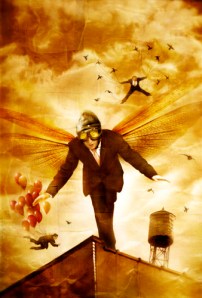
Taking Flight by Vincent ChongTriangulation is an annual 125-150+ page short fiction anthology that publishes science fiction, fantasy, horror, and any other speculative fiction that caught the editors’ fancy. Every year we have a theme: 2009’s theme is “Dark Glass”. We pay semi-pro rates and are available online at places like Amazon.com. We use Lulu.com as our printer, so if the publish-on-demand thing leaves a foul taste in your mouth, avoid us. We’re a small outfit but we work hard to produce a quality product; Asimov’s Science Fiction said we were “equal to any issue of your favorite prozine.”

No, we don’t get tired of mentioning that Asimov’s said nice things about us.

We define “short fiction” as “up to about 5,000 words or so.” We have no reason to impose hard and fast arbitrary word limits, but we are interested in publishing a wide variety of entertaining and literate stories, so the more space a story would take, the more it will need to impress us. If you have an awesome story that exceeds 5K then by all means send it; but be warned that if you’re closer to 10,000 words, it will probably need to have the editorial staff cheering and high-fiving each other so much that the senior editor’s roommate’s poodle runs into the room to see what all the commotion is about. And that dog likes his naps.

We dig flash; there is no minimum word count.

We have no interest in getting more specific about the term “speculative fiction.” Science fiction, horror, fantasy, magic realism, alternate history, whatever — if there’s a speculative element vital to your story, we’ll gladly give it a read.

We love creative interpretations of our theme, “Dark Glass”. Don’t ask us what it means — tell us what it means with a story that convinces us you’re right.

We publish both new and established writers; the level of experience for the authors gracing our pages has ranged from “first time in print” to “Hugo winner.” The majority of our stories usually wind up being from American authors, but we’ve had a number of international contributions; we’re happy to consider work from anywhere in the world, just as long as it’s written in English.

We will run mature content if we like the story. So make sure there’s an actual story in that mature content.

We will gladly consider reprints. If the story ran someplace obscure, then it’s probably new to our readers; and if it ran someplace high-profile, it’s probably really good. Either way, we win!

No poetry. Sorry.

No fanfic, even if it’s fanfic of a fictional universe that has passed into public domain. Cthulhu Mythos, I’m looking in your direction.

No thinly-disguised transcripts of roleplaying sessions, no settings obviously based on D&D or other such games. Don’t get us wrong, we love to game ourselves — which means our imaginations are probably too cluttered with elves and dwarves and orcs and the like as it is.

Submission deadline is March 31, 2009. All electronic submits must be sent by that time, all snail mail submits must be postmarked by that date.

Compensation:

We pay two cents per word (USA funds, rounded to the nearest 100 words, US$10 minimum payment) on publication and a single contributor’s copy. The anthology will be published in late July of 2009. We purchase North American Serial Rights, and Electronic Rights for the PDF downloadable version; since we’re cool with reprints, we really don’t care whether we have firsties. All subsidiary rights released upon publication. Contributors will also have the option of purchasing additional copies of the anthology at-cost, exact price TBD.

How To Submit:

Electronic submissions make our lives easier. Please send your story to editor@parsecink.org. Please put your subject line in the format of “SUBMISSION: Story Title” so we can tell you apart from the spam.

We’ll consider stories ONLY in the following formats:

  • .odt (OpenDocument Text — format used by the OpenOffice.org suite) — preferred format
  • .rtf (Rich Text Format — generic document format that most word processors can create)
  • .doc (MS Word — we’re not crazy about it, but let’s face it, it’s the one most people actually use)

Please use industry standard manuscript format. There’s disagreement on some of the exact details of the “standard” — we’re cool with that. We’re not testing you to see if you can follow each and every niggling detail, we just want a manuscript that looks professional.

If you absolutely positively can’t use email, please send the manuscript (with either a SASE or a return email address) to:

Triangulation 2008
134 Orchard Dr.
Penn Hills, PA 15235

No hand-written manuscripts. We gotta draw the line somewhere.

Please, no multiple submissions; only send us one story at a time. We’ll get back to you promptly, we promise.

For Full GUIDELINES, CLICK HERE>
Clarion 2009 open for submission Jan 2-Mar 1

Announcing the

2009 Clarion Science Fiction and Fantasy Writers’ Workshop

@ UC San Diego

June 28 to August 8, 2009

The Clarion Workshop is widely recognized as the premier training ground for aspiring writers of fantasy and science fiction short stories. Many graduates have become well-known writers, and a large number have won major awards. Instructors are among the most respected writers and editors working in the field today. The 2009 writers in residence are Holly Black, Larissa Lai, Robert Crais, Kim Stanley Robinson, Elizabeth Hand, and Paul Park. The six-week workshop is held on the beautiful beachside campus of the University of California at San Diego .

Since its inception in 1968, Clarion has been known as the “boot camp” for writers of speculative fiction. Each year 18-20 students, ranging in age from late teens to those in mid-career, are selected from applicants who have the potential for highly successful writing careers. Students are expected to write several new short stories during the six-week workshop, and to give and receive constructive criticism. Instructors and students reside together in campus apartments throughout the intensive six-week program.

The application period for the 2009 workshop is January 2 – March 1. Applicants must submit two short stories with their application. Scholarships are available. Additional information can be found here.

For my testimonial, click on Clarion Page above.

Predicting the Yukon of the Future: a new radio series

I’m excited to announce that there will be a new 5-part radio series beginning sometime in November, either next Monday, 17th, or the following Monday, lasting 5 days in a row, exploring life in the Yukon in 2058. In honour of CBC North’s 50th Anniversary, we take you flash-forward into a very positive look at the future.

Recently I read a column at Fantasy Magazine’s website entitled, Why We Need Scientist Heroes Again, and the author made a good case for thinking positive:

“Show of hands – who wants to retire to their grandchildren’s sub-prime one-room hovel in the decayed urban warzone that was once America?

Or perhaps roam the sweltering wasteland looking for gasoline while the mutants hunt you down?

Yeah, thought so.

Then let’s inspire some smart folks to get scientifical and create smart solutions to our stupid problems.”

So, in that spirit, I pitched Yukon 2058 to CBC North and they liked it. And I think things will get more and more interesting in the north over the next 50 years. Not every positive accomplishment will have positive consequences all the way round. And that too is a power science fiction has–to warn us. If everything turns out just hunky-dory we never have to change what we’re doing. But in the spirit of thinking positive– of actually dealing with climate change (cause it will happen), I hope you enjoy Yukon 2058, my own personal vision of the Yukon of the future. If you like some of the things, don’t wait 50 years to start them, or to think up things on your own. Create the place you want to live in, the place you want your kids to live in, the place you want to retire in. The world is going to turn its collective global head north very soon–let people know what you would like to see in fifty years.

Also, there’s a science fiction anthology in the works looking at optimistic near future science fiction, called Shine. Check out the website and submit your stories. I’ll write another post about Shine too.

How to talk about Plot Shapes, or Don’t tell Creative writers they aren’t creative

Well, you live and learn as a teacher. One thing I will never do again: give my high school writing students a handout on plot shapes. My goal was to tell them that if they needed to have some help in shaping a plot, that they could look to these “shapes” —forms that would give them patterns that might help them complete a plot.

Of course, I prefaced this with saying that some people believed there “are only 20 plots” and that everything boils down to these forms in some way or another.

Wake Up Call: These are teenagers. Do they want to be told that there are only 20 plots!?? NO. Do they set about trying to prove you wrong? Yes. And that’s fine. It was their ire at being told they could only have 20 choices that saved them.

At first, they looked pretty crestfallen–how could I stand there and tell them “there’s nothing new under the sun”?

I had a math and science teacher who told me that once. I hated that. I hated that he might be right. You hear it in church sometimes–I think it’s in Ecclesiastes somewhere–that there is nothing new under the sun–but we are creative people. CREATIVE writers. We do create something new. What I am writing now has never, never been written before.

I think books like 20 Master Plots are good for a person who’s ready to read about how to master certain forms in the same way that people who sing learn the 20 or so songs in one book together—to work their muscles. Or the way that autoshop kids learn to rebuild a few classic cars–at least ONE Mustang!  But the book is not for everyone.  I find it helpful —when I know which shape I’m writing— to know what reader expectations are for that shape.  But it can be diminishing…

I did much better job when I talked about Motifs–and they all loved stealing motifs from the Folklore and Fairy Tale index–they created the coolest plots using plot skeletons. And if you talk about plot skeletons, this will work. Masterplots are really plot skeletons too. DO NOT tell them that any person (sorry Ronald Tobias) ever said there were only 20.

If I had it to do again, I might offer the 20 as plot skeletons–and ask them to create a story using one plot skeleton or two. But, at all costs, no one should bust the creative impulse or dampen it by suggesting that someone else’s plot fits neatly into one of 20 formulas.

Seeing that storm clouds had entered the French library, where we meet every Wednesday for fun and writing, I instead challenged them to break the formulas with their own version of the plots–how do you subvert a Rescue plot (#17) or a Sacrifice plot (#15)? How do you masterfully up-end the Adventure plot? Then I had their hearts back into it!

Don’t do this to adults either. Just don’t. It makes you look hoity-toity, like you know what they can possibly do, and limits creativity.

Yep, I’m writing a Quest plot (plot#1) but you ain’t seen nothing like this quest! hehe.

World Building, Renewed Interest, 9 Novelists to write 9 Novels

If you were thinking about signing up for a class in
Science Fiction /Fantasy writing this fall, do it next
week.

The class was officially canceled on Tuesday, as it had only five members, but will be re-instated next week on Wednesday because of renewed interest. We now have nine people–and room for many, many more. If you are a fantasy writer or a science fiction writer in town and want to be a part of a novel-writing push, this is your chance.

Sign up with Krista Mroz at Parks and Recreation (phone  633-8505) and join us for pushing out that novel. We’re now online too at Cold Fantasy, a google Group of the writers in the class. With nine other people churning out a novel–and they have day jobs–you can do it too!

World Building: Novel writing for SciFi/Fantasy Writers begins soon

The novel writing course for Fantasy and Science Fiction writers will begin on Tuesday, Sept 23. Come join us this year to learn to write novels. If you are part way working on one, join us anyway. (If you have a draft completed of your novel, you might want to wait till January to start with us in the Workshop phase. )

World Building will cover plot structure and character arc for the novel and then join up with NaNoWriMo in November to push out a first draft. It will be fun and exciting to do this with 15 people. Come join us on Tuesday nights! Registration is now open through the City of Whitehorse, so you can sign up today!

Come build a world, spin a plot, go on a journey.

[In conjunction with this class, the City of Whitehorse will be offering a lunchtime lecture series, free and open to the public, called We All Began With Fantasy, talking about the first great epics of many cultures and their fantasy elements. More details soon…]

Rocketfuel: Sci-fi/Fantasy Writing for teens starting at FH Collins

Through the City of Whitehorse, with the cooperation of FH Collins Secondary School, we’re about to start a new afterschool program, RocketFuel Relaunched, for high school students who want to write Science Fiction and Fantasy stories. We’ll be meeting after school in FH Collins beginning September 17th, 3:30-5:00pm. The program is 13 weeks long, or about the length of the semester, from Sept 17 to Dec. 10th. Sign up through the City of Whitehorse’s Leisure Guide. Come with your imagination, pen, notebook, willingness to write a lot and encourage each other. Snacks will be provided. Participants are there to write and learn, and will be expected to work hard on their own writing. Be warned: Don’t come if you don’t enjoy the writing! But if you are already writing—come join everyone else who’s writing the same things! We have a great core group started, and we’re looking to add many more writers to our group.

Spread the word! If you know of teens who would be interested in this program, tell them to sign up with the City. We’ll have posters up in the schools soon. But we’d like to let everyone know it’s coming!

Contact Mia Lee through mia.lee@whitehorse.ca