X-Men vs. X-Men: First Class

Okay, I just had to re-watch Brian Singer’s original X-Men (2000) after seeing X-Men: First Class.  I wanted to see how these two movies played off each other.  Call XM:FC what you want–origin story, prequel–it still has to be a good movie.  And I think Singer’s original X-Men is a much better movie than X-Men: First Class.  Here’s why.
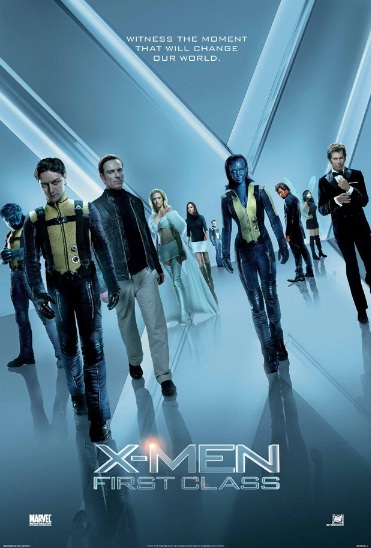
1.  XM: So much more character development of several characters–Rogue, Wolverine, Magneto, Xavier, Jean Grey.  This movie takes time with its characters and keeps focus on Wolverine as the “schill” or the “new guy” who gets to experience all the Xavier School like we do, for the first time.  He operates “as us” so other characters tell him things we need to know.  Their world is well-developed already and intricate and we get the idea that it’s solid and has been this way for awhile, and has stuff that we haven’t seen yet.

XM:FC barely develops Eric as a tragic, one-note, revenge-minded character, and Charles as a privileged fop whose compassion comes because of his blindness to others hardships (though occasionally, his mind-link helps him “understand” your pain).  FC Xavier comes by his compassion too easily; original Xavier seems much kinder, empathetic, a person I’d admire.
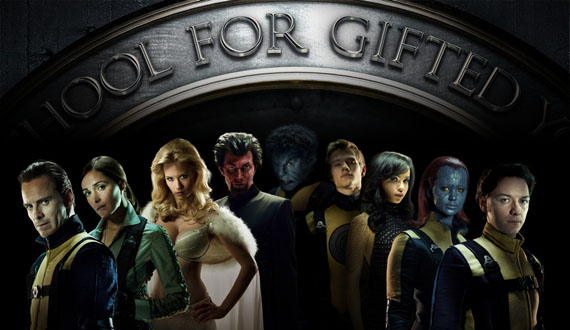

None of the minor characters in XM:FC are even developed.  They barely get screen time except to fight.  Sure XM has its share of background/throwaway characters who simply run through a door, or make an ice rose, but we don’t need to know who they are.  They aren’t pivotal to the plot.  XM:FC characters are, and it’s a shame they are never really developed.

Continue reading

Mob Rules and the Art of the Team Movie— a review of X-Men: First Class

I saw X-Men: First Class last night.  It was a good, solid action movie with stunning special effects.  It moves and kept me interested.  It never had me on the edge of my seat.  It’s an origin story– it has to go through certain details to collect them all–but it doesn’t do it very interestingly, in my opinion.  It also has trouble with multiple characters, having a hard time giving them much development.  I thought the original X-Men did a better job at giving each character a moment.  While Wolverine, Rogue, Dr Jean Grey, et al have their moments to shine as characters pre-Xavier, we don’t have that in this movie.  Here, we barely know anything about Banshee, Beast, Raven, Angel, Darwin, Havoc.  They are more about what they can do than who they are–though they hint at something deeper.  In all, it’s a pretty good film, but not an amazing one.  Enjoy it as an action flick.

Continue reading

Janelle Monáe and Science Fiction: Metropolis, Freedom, and the Other

I like finding science fiction in odd places.   Janelle Monáe is a genius.  Think if the Archies had been a ska band with a funk lead singer.  But she’s more than that.  She’s also a brilliant storyteller.  Her “Many Moons” reimagines the beginnings of science fiction cinema, Metropolis.  She gives the silent film Metropolis the soundtrack it needed.  For Janelle, Metropolis is about many androids now…and there are comments on slave auctions, blaxploitation, and the lack of freedom–for anyone.  For women, for minorities, for humans in a world overcome by technology.  There is no fear of androids in “Many Moons”—but even I would think that at the corners of the movie Monae makes, there is jealousy at the perfection of the androids, and even a bit of jealousy when Cindy Mayweather erupts in a spasm of freedom, or is it a spasm of realization that she is not free…. all I know is that she breaks loose and begins to dance, dance so high, that she short circuits.  But the crowd is in ecstasy with her.

Monae has certainly looked here at humanity as commodity.  She’s done it with brass.  And artistry.  She’s even mixed in a bit of Sesame Street.

I like finding science fiction in odd places.  And this small film is beautiful.    It’s got solid worldbuilding where she’s imagined, in one scene, the state of society.  The characters all have the hint of well-developed backstories; they have desires, weaknesses, past confrontations.  Cindy Mayweather grows as an android/character.  Her growth, perhaps, comes from her realizations–of the names that keep her as Other.  The names are not androidish—they are names leveled at minorities.  Check out the Cybernetic Chantdown after the break.

Continue reading

The Nudge, The Monument, and The Fan Base: thoughts about the endurance of writers

Roger Ebert responded recently to an article by Cynthia Ozick written in the New Republic.  So goes my reading.  I get my Ozick from Ebert, but that’s ’cause I’m reading where Ebert is writing.  I don’t have a subscription to the New Republic (but, alas, I should).  Anyway, he quotes from her a lengthy passage about writers no one reads anymore.

Death disports with writers more cruelly than with the rest of humankind,” Cynthia Ozick wrote in a recent issue of The New Republic.

“The grave can hardly make more mute those who were voiceless when alive–dust to dust, muteness to muteness. But the silence that dogs the established writer’s noisy obituary, with its boisterous shock and busy regret, is more profound than any other.

“Oblivion comes more cuttingly to the writer whose presence has been felt, argued over, championed, disparaged–the writer who is seen to be what Lionel Trilling calls a Figure. Lionel Trilling?
“Consider: who at this hour (apart from some professorial specialist currying his “field”) is reading Mary McCarthy, James T. Farrell, John Berryman, Allan Bloom, Irving Howe, Alfred Kazin, Edmund Wilson, Anne Sexton, Alice Adams, Robert Lowell, Grace Paley, Owen Barfield, Stanley Elkin, Robert Penn Warren, Norman Mailer, Leslie Fiedler, R.P. Blackmur, Paul Goodman, Susan Sontag, Lillian Hellman, John Crowe Ransom, Stephen Spender, Daniel Fuchs, Hugh Kenner, Seymour Krim, J.F. Powers, Allen Ginsberg, Philip Rahv, Jack Richardson, John Auerbach, Harvey Swados–or Trilling himself?”

Ebert goes on to talk about whether he’s read these authors, and he’s read all but two.  Ozick goes on to ask the question of whose writing will endure?  I’m not sure that’s the question to ask.  After the Library of Alexandria debacle, who can say anything will endure?  But can we say that we affected the minds of those who lived?  Yes.

Ozick determines that Saul Bellow will endure, most because of the Adventures of Augie March, a book I know few of my friends will have read.  I haven’t read it, and I should.  But it did affect a whole generation.  Ebert makes a comment about Hemingway, that we will know him for The Sun Also Rises and his stories, but little else (he’s quoting and agreeing with another friend).  And true, Old Man and the Sea, though the Pulitzer winner, isn’t the book that endures.  It’s his first book of stories, I think, and The Sun Also Rises that continue to be read.

The Fan Base

I will say that in Science Fiction and Fantasy they have developed the concept of the FAN BASE.  And this actually keeps writing, and writers, alive.  JRR Tolkien will endure for a very long time.  So will Stephen R. Donaldson, Isaac Asimov, Ray Bradbury, etc.  The classics of Science Fiction are still being read by the fan base, by those who love science fiction and fantasy.  They are suggesting them to their friends.  They are voracious readers and they claim, quite knowledgeably, that you can’t know science fiction and fantasy without reading this set of writers, or that book, and at the conventions these writers are celebrated.  Even ComicCon has such a large science fiction and fantasy base that these 30,000 people will all know a large set of names, not just the celebrities of the moment, but the masters and grandmasters of the genre.

It could be that you might dismiss the FAN BASE as those who feed on pulp, but I would argue that they know what they like, and they are assisting in the endurance of writers and writing and that cultivating a fan base is not a bad idea.  Further, these “genre writers” are introducing them to many of the great works of literature, by quoting from, giving allusions to, works by other authors.  Many of our first introductions to literature–Shakespeare even–was in a comic book, or in a science fiction novel.  I’m not going to give too much more a spirited defense to the importance of Fantastic Literature, or say too much longer that, before Hemingway, authors had their science fiction novels and their literary novels and no one thought of the books differently: London, James, Twain, Poe, Hawthorne, all had a novel where time travel or science fiction played a large role.  Anyway, I have a larger point to make. Still, hold onto the idea that developing a fan base is important–because a fan base has been enthused by your writing, has been affected by your writing, and seeks to market you to their friends.

Continue reading

“…his cultivation of genuine menace…”: a review of “One Nation Under Gods” at Portal

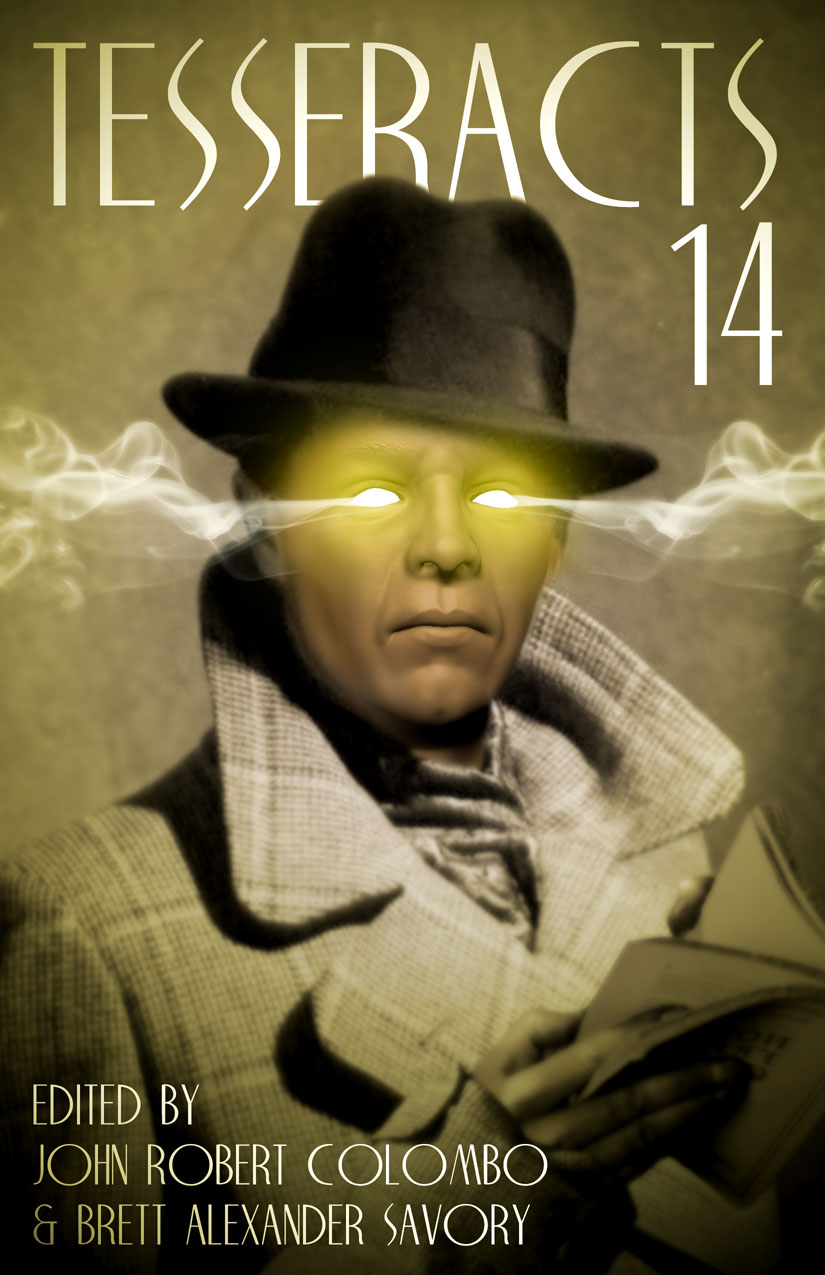
Val Grimm, over at the Portal, gave me a good review for my short story, “One Nation Under Gods”!  Thanks, Val.  I’m always thrilled that there are people who will review short fiction, and anthologies.  Thank you, Val!  Val reviews the whole anthology, Tesseracts 14, story by story.  Here is his review of mine:

The author of “One Nation Under Gods”, Jerome Stueart, emigrated to Yukon from the States in 2007, and his former citizenship is evident in the themes and content of his story. I’m not biased in its favor because of my nationality, nor simply because its dark vision seems in concord with my fears. This story succeeds, in my eyes, because of his detailed worldbuilding, the realistic relationship between the narrator and his sister, and his cultivation of genuine menace, an evocation of the way people can be treated as things. In the world of this story (which in outlook and some tropes puts me a bit in mind of Steve Darnall and Alex Ross’ 1997 comic Uncle Sam) concepts like Freedom and Patriot are incarnate as deities, administered by priests and priestesses, and the Statue of Liberty herself is known to walk abroad. The history of the gods is the history of the country, and its people are required to memorize that catechism or pay with their lives in particularly grotesque ways; if a child fails the standardized test which is a mandated rite of passage, he or she is transformed into a public object, anything from a soda shop to a garbage can. Stueart skillfully incorporates the conflict between individuality and vested religious and political powers; the way those powers can intertwine and what that merging means; the clash between idealism or perception cultivated through propaganda and reality, between history as the study of people in power versus the study of the people’s past; and the transformation of people into instruments, people into numbers.—Val Grimm at the Portal.

Mac’s Fireweed, Noon, Saturday, signing with me and Dave Strachan

Thanks everyone for coming out and being a part of our signing at Mac’s Fireweed!  Two anthologies I’m a part of: Tesseracts 14 and Inhuman, and Dave Strachan, who has the lead story in Inhuman, was signing too!  The Fantasy/Science Fiction community in Whitehorse is doing great!  More and more of our group are stretching their talents and skills, and turning out great stories and sending them off to publishers!  So happy that this is happening in Whitehorse!  The Yukon is building a presence in Canadian Science Fiction and Fantasy.  Oh YEAH!

Tesseracts 14 and Inhuman are both published by Hades Publications and Edge Science Fiction and Fantasy Publishing (for Inhuman, through their imprint Absolute XPress).

Here’s photos of us at Mac’s Fireweed, Saturday March 12.  See if you can recognize all the campadres who helped make it a great event…


What is Realms of Fantasy looking for?

The Clarion Foundation (parent of Clarion Science Fiction and Fantasy Workshop) has a wonderful blog.  Douglas Cohen, an editor from Realms of Fantasy, recently wrote a guest post there talking about the view from Realms of Fantasy, from its long run in the industry, including its two recent revivals with new publishers.  There is some great insight here for those who are submitting stories and poems (yes, they have started publishing poems).  Here’s just a snippet, but the rest you can read on the Clarion blog.

1)     Fantasy is a broad genre, and it’s yet to stop expanding.  In addition to writers, editors are playing a crucial role in defining what fantasy is.  I’ve read a number of stories in our pages that I consider science fiction.  Obviously Shawna felt otherwise, or at least saw enough fantasy-related elements to justify publishing these tales in RoF.  Too often, I hear about authors rejecting themselves from certain markets because their stories are “not a good fit.”  Now, if you’re writing a hard science fiction piece in the vein of Gregory Benford or Isaac Asimov, it’s true that your story most likely isn’t right for us.  But if there is an element that could be considered fantastical in your sf story, who knows?  We just might buy it.  Did you know John Joseph Adam’s recent dystopian sf reprint anthology has a story from RoF in there?  Did you know we published a story with robots that were clearly inspired by Transformers?  Did you know we had a story about molecule memory that was reprinted in Rich Horton’s Science Fiction, Best of the Year, 2008?  I could go on.  The point—and this is something to keep in mind for all markets—is that it’s not your job to reject your stories for our magazines.  It sounds like a basic thing, but too often I see authors—including experienced ones—overanalyzing their prospective writing markets.  This is not a phenomenon unique to RoF.  It’s good to know your markets, because that might help you land a sale sooner rather than later.  But don’t be the editor for them.  I can’t stress this enough.  When in doubt, submit.  Let us decide what’s right for the magazine.  The worst that happens is that we say no.  To borrow (and probably mangle) a phrase from John W. Campbell: “How dare you reject your story for my magazine?”

2)     Shawna and I have different tastes.  Yes, there is definite overlap, and these similarities (and the differences for that matter) are why we work well together.  But I hear too many authors saying things like, “Realms of Fantasy is not a market for sword & sorcery.”  Ahem.  I love sword & sorcery.  I also unquestionably enjoy this sub-genre more than Shawna does, meaning I’m likelier to enjoy an S&S tale than she is.  But since I’ve been with the magazine, we’re publishing more in this area than we ever have before.  Not an overwhelming amount, but definitely more.  The point is that magazines change over time.  Too many people stop reading a certain venue for whatever reason, and five or ten years later, when they’re telling you their problems with this magazine, what they’re saying is no longer relevant.  Again, I see this happen with experienced writers too, so I feel I should mention it here.  So not only should you never reject yourself, but it’s also a terrible idea letting others do your market research for you.  Sharing ideas is fine, but make sure your friends are up to date on what they’re saying.  If the information is coming secondhand, make sure it’s coming from a reliable source.

There are eight more points Mr. Cohen makes–equally insightful. It behooves you (I like ‘behooves’) to run over there and check them out.  Happy submitting.

Mr. Cohen also makes a strong point about Clarion graduates supplying the magazine with quality stuff.  See that top name on the February cover of Realms of Fantasy—Desirina Boskovich?  One of my Clarion buddies.  Awesome, Desirina!

Writing Your Faith: Workshop offered in January at the United Church

Olya telling me the Russian Faith and Light Movement StoryWhat is Faith to you?  How do you think about it?  How do you put it into words–to tell someone else what it means to you?  Does it only appear when you are going through struggles?  Is it constant like gravity?  I like this photograph by Grigory Kravchenko.  The woman looks up, but it looks as if she’s giving God a good talking to.  Faith seems to take place over coffee, and in a gritty real-world setting.

Starting January 21st (it was the 14th, but we canceled the first class due to extreme temps, -38C), the Whitehorse United Church and I have teamed up to offer a class in Writing Your Faith.  How do we put into words what is ineffable?

We’ll be looking at a lot of writers who have done just that.   Some you will find more effective for your style of writing than others.

While the majority of works that we look at will be of the Christian variety, they will not be texts that marginalize you.   They will be authors who struggle with the same kinds of questions that most people do when they are talking about a greater being in the world and how they interact with that being.  We’re not reading the selections to pick up content—it’s not an evangelical endeavor.  What we’re doing is looking at how people talk about their Faith, whatever their Faith might be.  So we’re picking up tips.  And those tips are good to use whether you are writing about yourself as a Christian or Muslim or Buddhist or Jewish or Agnostic.

Continue reading

Ten Ways To (Seriously) Improve Your Writing (via Broadside)

An awesome post for writers who are at any stage in the game–but especially those who want to take it seriously. Her advice for dealing with rejection, listening to feedback, and doing things to improve yourself, really ring true to me. Maybe they will for you too.

Ten Ways To (Seriously) Improve Your Writing It’s commonly said, (among writers who do it for their living), that blood to a surgeon is like rejection to a writer — a necessary part of every day’s work. Whether a surgeon likes blood is irrelevant. Do professional writers — and ambitious amateurs — enjoy rejection? Irrelevant. It’s not a game for d … Read More

via Broadside

Tesseracts 15: Young Adult Science Fiction, Fantasy and Horror


Tesseracts 15 is open for submissions with a call for young adult science fiction, fantasy and horror.  NOVEMBER 30 is the deadline.  Below is the call.  

NOW OPEN FOR SUBMISSIONS

(Calgary, Alberta) EDGE Science Fiction and Fantasy Publishing is delighted to announce that Tesseracts Fifteen: A Case of Quite Curious Tales, is now open for submissions.

Submissions open September 1, 2010 thru November 30, 2010.

This edition of the award winning series of original Canadian Speculative Fiction comes with a twist and touch of whimsy.

“We’ve decided to do something different with Tesseracts Fifteen.” said Brian Hades, owner of the EDGE Science Fiction and Fantasy Publishing imprint. “This volume will focus on Young Adult Speculative Fiction – which can include science fiction, fantasy, and horror. However submissions must appeal to the YA audience and be PG-14 in content. As usual, Tesseracts Fifteen is open to both short fiction and poetry submissions.”

Each Tesseracts anthology since volume one (1985) has featured editors hand picked for each particular volume. For this volume,Julie Czerneda and Susan MacGregor have agreed to co-edit.

“We seek wonder and astonishment.” said the editors. “Stories that engage the imagination, inspire dreams, and leave hope in their wake.” Both Czerneda and MacGregor want all Canadian speculative fiction writers to “write what will become the classics for a new generation of readers, to be remembered, fondly, for years to come.”


SUBMISSION DETAILS:

  Continue reading