Is Star Trek Reckoning Real?

This question “Is Star Trek Reckoning Real?” was googled by someone and led to my website.   There’s really another question that’s implicit, I think and that is “Would the Creators Really Want to Screw Up Star Trek by letting Conservatives wreak havoc in the Star Trek Universe?”  

Yes.

We love it when our favorite stories take a turn for the worse–where our complacency is shaken, our values are threatened, adversity gets the upper hand, only to show us how much we truly have taken things for granted.  

Fiction is all about making it bad for your heroes.  And making them fight hard–because it gives us strength to fight hard.

We need to see a few seasons where the “good” of Star Trek has to fight to regain balance.  The Federation has gotten the upper hand.  Chances with Enterprise were lost to play with a universe without the Federation.  Oh, in Star Trek series, we had a few episodes from the Mirror Universe, but even that slowly spoiled because each episode in the  Mirror Universe actually redeemed a character or two who were going to be pivotal in turning the “dark” parts–the disorder– to order once again.  And then the mirror universe would be just like us…ho hum.  What if we lingered in that disorder?  This is what Reckoning explores.

Oh there have been times when good guys rebel against the Federation.  Why is it that the “good” Star Trek characters sneak around and are able to commandeer vessels (Kirk, Scotty, Picard), disobey orders (everyone), grab things they aren’t supposed to have (Chakotay, Riker, Janeway) and go off and do something illegal for a greater good (which no one in the Federation knows about)?  Why is Starfleet so easy to outwit?

The “order” in Star Trek relies on the shared concept of the “honor system”— but when good characters want to steal things, disobey, etc. they seem to be able to do it because no one in Star Trek is ready for that.  And secondly, because the plot calls for it.  We need Janeway to steal the time machine doo-hickey, or Kirk to steal the Enterprise….  because otherwise we don’t have an episode.  

Fergus, the D’Mi, the whole grouping of conservative captains who no longer have faith in the Federation’s president–who see themselves as vigilantes, or martyrs, or heroes—determined to save the Universe, or their values, at any cost— these people are interesting.  Villains are far more interesting, at times, than heroes who can be painted too “good.”   Next Generation characters weren’t very complex, or if they were unstable, they were restored by episode’s end (except DS9–which was by far the riskiest ST)  Star Trek hit the reset button every episode (or at the very least, at the end of every two -parter).  Star Trek, by JJ Abrams, did us a favor and did not hit the reset button, thank God.  

Now we have a series that shows that the “values” of Star Trek can be hijacked by well-meaning people who believe they are on a mission.  I think this is a logical next step for Star Trek.  Reckoning will show how easy it is to believe what you have been told, it would give a believable “other side” to all the issues.  Instead of showing us what is right by demonstration— it would show us what is right by having to fight for it, and failing.  

Captains modeled on Palin, Gingrich, Limbaugh, Beck would be interesting–if only to see what they would do with something like the Federation.  How would they operate within it?  When would they dismantle it?  When would they circumvent it?  Would the Federation be able to squelch them?  The Maquis was a great subplot, and I wish they had done more there… certainly Tom Riker (one of my favorite characters) would have been interesting to follow.  But the Maquis had one goal–not a whole different ideology.  I want to see that people in the Federation don’t all think alike….  they don’t all get along.  

Think of what happened to the West Wing when the Republicans got in power….  

So, creators of Star Trek, when will we have a Reckoning?  When will we see what we loved threatened? Will you create people who will fight to re-balance it?  In the same vein as BSG—a show that allowed characters to be less than perfect, and which allowed the bad guys to have the upper hand–can you show us a universe where it will take us seven seasons to get it back on track again?  

Please, finally, let the Dragon out and let us see what the Federation will do!  🙂

Is Star Trek Reckoning for real or not?  Confirm this series.
Harry Potter Diary: Outside the Demographic Looking Inside Hogwarts

I decided to read the Harry Potter Series this summer, for the first time.  After 10 billion people were happily served by the boy wizard and his pals, after the series was put to rest by JK Rowling years ago, and just as the film franchise explodes to a close, I decided to read the books.

Some questions immediately pop to mind: Why didn’t I read the books years ago?  

1.  I’m not a fad kind of guy, so having millions of people read the books actually made me feel less like becoming part of the phenomenon.  

2.  I actually loved the movies.  I did read HP 2 after the first movie came out, and before the second movie.  And loved it.  But when I watched the film, I was terribly disappointed that a whole mess of story was eliminated as if it didn’t count.  I vowed then and there to see the movies first, and then I would read the books to add in parts that the movies had left out.  This is actually a decent strategy.  

And why now??

Well, the end of the era is around the corner…. by summer 2011, the films will be done.  But I think it’s more because I really want to read the books.  I want to see how Rowling built the arcs, how she developed series characters, and how she managed to maintain the hook for so long.  It’s okay to admire the books on a “how are they written?” sort of way.  

I want the magic too.  Even though, now, I know at least where the movies have taken me.  Now I want to see where the books take me.  

I’m not the demographic JK Rowling was aiming for.  Her 9-17 age bracket probably resonated with the idea that children can have power too; that magic exists under adult noses; that the world doesn’t have to be like their parents told them it would be–office buildings, stock markets and 2 hour commutes.  

So what would a 41 year old, single, gay writer and English teacher living in the Yukon Territory–with no children– get from reading the Harry Potter series–besides how to create a blockbuster series?  It’s a good question to think about.  How does a book transcend its ideal market, appeal across the board to adults and children alike?  What will be the pull of the series for me?  (I already loved the movies—but why.)  

I’m keeping a Harry Potter Diary as I go to ponder things about the series along the way.   Just reactions to, thoughts about, resonances with the series.  

There’s a spot at Hogwarts for me–and I’m going to find it.

Palin cites New Star Trek Series in Gun Rights Decision: “Everyone Had a Phaser”

Star Trek is enough reason for justifying the Supreme Court decision today, according to once VP nominee Sarah Palin.  Poised to become the new captain of the USS Steadfast (in UPN and Fox’s new Star Trek Series–see past entries here and here), Palin gave a speech today where she cited as precedent the popular science fiction series, aired between 1966-1969.  “Sidearms protected everyone.  Everyone had a phaser.  This is the future.  So, we thank the judges for remembering not only where we’ve been but where we’re heading,” she said today outside her Alaska home.  She showed the crowd her own handgun, which she claims has stopped fourteen robberies, six alone by her next door neighbor, writer Joe McGinniss.

Palin excited the gun rights lobby (which is near frothing already for Palin) by endorsing the Supreme Court decision and by linking it to popular culture.  Seventeen unidentified men and women held up their iPhone 4s after having googled “shooting death” to show how many gun death entries are in the news for just today, June 28th.   “Those really effective background checks keep guns out of the hands of crazy people!” one of them shouted at Palin’s abrupt press conference.  [The Brady Campaign to Prevent Gun Violence, an advocate for sensible gun laws, cite more than 100,000 people a year are the victims of a shooting]

Palin countered, “If it’s good enough for Star Trek, it’s good enough for the country that will be Star Trek one day.  After all, these are Americans in space.”

Bloggers have tried to explain the Federation of Planets to Ms. Palin (as she’s about to become a captain on the new series).   She twitters politely, “All captains of the series were American, everyone spoke English, and the military was in charge of ‘exploration.’  This makes it an American ship in space.  How much more American can you get than U.S.S.?”

The writers, once thrilled at writing the conservative adventures of rogue captains, were shocked at Ms. Palin’s link-up between Roddenberry’s vision of peace and her own gun-toting agenda.  “She’s obviously not familiar with the ‘Yesterday’s Enterprise’ alternate timeline.  Sidearms on the bridge crew were a sign that things had gone bad—not good.”

Palin is certainly a rogue Trek actor for the writers.  She has cajoled the writers into scripting outright sedition on the bridge.  “This is how real, honest people would talk if their President was a weak-kneed, educated liberal facing this kind of disaster.”  She refers to the Reckoning–that portentious, ominous, apocalyptic thing hurtling towards Earth–that is the tension backbone of the new series, Star Trek: Reckoning.

Writers have committed to one season.  My inside man in this writing group says, “I don’t think the fans could sustain the series past one season.  Just seeing how a conservative rogue group would f**k up the whole Federation would make them cry out for the Reckoning just to clean house.”

Another writer says, “We’re treating it as comedy.  And the best thing is that Sarah [Palin] is taking it dead seriously.”

The team of producers and the director, Chris Berman, want it that way.  “I think Palin, Gingrich, Cheney, Limbaugh–they’ll be able to pull it off because they believe in their beliefs so much.  It won’t even have to be acting.  And yeah, I agree with the sentiment of the writers— fans will be torn between which is worse for the Federation–conservatives or a giant meteor, wave, whatever coming to wipe out human civilization.  Both alternatives wipe out civilization.  It’s really the lady or the tiger, isn’t it?”

About the Trek reference in today’s speech, Berman says, “Any reference to Trek in popular culture helps the show.  When we air this series, Palin and the others will have done a huge favor to us by just being themselves and by mentioning the series.  We’re trying to give them as much creative control in this as possible.  Since we know nothing about what conservatives would actually DO with a starship, we’re learning from them how to go about creating these characters.  We’re looking at this as a cultural and creative exchange.”

He added, “Nothing is more alien to us than the Tea Party.”

Note: all content is intended as parody.  That said, Star Trek: Reckoning would be very interesting indeed.  References to Joe McGinniss in no way implies he is guilty of robbery, only implying that Sarah Palin would think he was.  

For NY Times editorial on how wrong the courts were.  

Clarion Write-A-Thon: Helping Writers Reach their Dreams


Writers Andrew Emmott, myself, Desirina Boskovich and Matthew Cody at Clarion


I signed up for the Clarion Write-A-Thon, a fundraiser that puts a whole bunch of writers into a sensory deprivation tank while they write for six weeks.  

Oh wait, there’s no sensory deprivation tank….

But still, the writers are joining together to keep Clarion San Diego alive and well for years to come by raising money to provide scholarships.  I’ve already written a whole essay about how life-changing my Clarion experience was.  I know it has been for my whole group of cohort writers–all 18 of them.  

The Link to My Writer’s Page lets you know what I’ll be doing for six weeks, and encourages you to donate a bit of money–maybe per day, per word, or just a small sum ($20, $50, $100) in total.  All proceeds go to Clarion for scholarships, helping more people like me get to attend.  Most of us who attend a six week workshop make sacrifices to be there, and certainly the costs can be high to spend six weeks anywhere in the world (even my apartment is $1050 just in rent for six weeks), but the benefit each student receives from that time is ginormous.  

Each Student gets:

  • individual instruction from 6 major writers in the field
  • connections to agents, publishers, editors
  • advice on how to create a writerly business
  • a cohort, band of writers that encourages during the long haul
  • a lifetime of mentoring
  • six weeks of time free to write, concentrate on their art

It’s very difficult to shave off time for writing, and this six weeks is a huge jumpstart.  I have sold 4 out of the 5 stories I wrote for Clarion, and frequently I take out that notebook that I kept during Clarion to record what the teachers/writers said, and I go through it again.  You can’t GET this kind of instruction anywhere else but with publishing writers, established in their fields.  

Enjoying the 4th of July: Jeff and Ann VanderMeer, Matthew Cody and myself


If you have trouble imagining what this would be like (maybe you don’t write science fiction), imagine a workshop of six weeks where each week you got to spend with these people: Margaret Atwood, Michael Chabon, John Updike, John Irving, Kazuo Ishiguro and Alice Munro.  And then editors from Harper Collins, Random House, etc came by to chat with you and take your pitches, and agents came by, and you went to a giant convention where all the big writers hung out.  You got to eat and drink with people who were doing your career— like job-shadowing, except they became your friends–for SIX WEEKS.  It’s just like that but with the big names of Science Fiction and Fantasy!

In the Golden Age of Science Fiction, a writer learned by joining up with a pulp magazine and writing stories every week to push into those magazines–they trained with writers around them, doing the same thing, encouraging each other.  

Nowadays, we’re all trying to get stories into those “pulp” magazines, Asimov’s, Fantasy and Science Fiction, Realms of Fantasy–but we’re not in a room full of other writers writing together–we’re strung out across the world.  The only places we get that kind of training are these workshops–they stand in for the kind of on-the-job writing/training you would get at a magazine.  The intensity is the same.  I think the quality is higher.  But without Clarions, writers wouldn’t have that avenue for training, and many who might not figure out how to write for the magazines, or their novels by osmosis, wouldn’t get published. 

For the six weeks, I will be working on chapters of my first novel, chapters a publisher is expecting and has asked for.  

Please consider donating even a small amount to the cause of helping writers in the Science Fiction and Fantasy field.  We brought you space shuttles and cell phones, fax machines and computers, rockets and really great entertainment.  

If you talked on your cell phone today, hug a science fiction writer for imagining it!  

And consider a small donation to the workshop that helps the visionaries think up such an interesting future.

“The Song of Sasquatch” up at Joyland

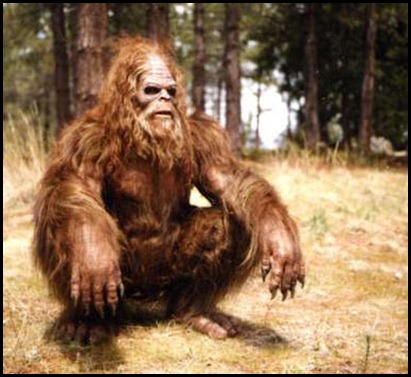
“The Song of Sasquatch,”my poem/story of bigfoot romance in the style of Song of Solomon, is up at Joyland: a hub for short fiction.  Joyland is unique as an online fiction magazine. It has editors associated with a certain geographical place and all the stories come from writers associated with that place. Occasionally, editor Kevin Chong says, they like to pull a few writers from outside.  Thanks, Kevin, for pulling me in!  Enjoy!

_________________________________________________


Flash Fiction Challenge: Inhuman

INHUMAN:  Absolute Xpress, owned by Edge Books (the makers and owners of the Tesseracts series of science fiction and fantasy anthologies), have announced their fourth flash fiction challenge:  1000 words on what humans are like from a non-earth based, non-human perspective.  The title of the anthology is called “Inhuman” and details are here

In their words:

The Theme: InHuman

There are other beings out there. Demons, fae, aliens, robots and more. Creatures that have been watching us for a long time. They know us. For this challenge, write from the point of view of something “Inhuman”; an exterior point of view that is able to see what it really means to be Human.

You now have 6 weeks to answer this challenge. Flex your fingers and get typing. This challenge closes on May 15th at Midnight Pacific Standard Time (PST). For more details on how to submit check out the Flash Fiction Challenge page.

So what are we really looking for?

We want you to write from the point of view of a sentient, intelligent life form (no earth-based animals please (pets, birds, fish, etc.)). Perhaps they have been impacted by humanity, or visa versa. Or maybe they’ve been watching us from a distance. The big thing is that who ever these beings are, they have an insight into what it means to be human. This perspective is the key thing to highlight in your stories. It doesn’t have to be profound but these inhuman persons should notice something about what makes humanity human.


1000 words, one week left.  You can do it.

Mac’s Fireweed signing of EVOLVE, Canadian Vampire Anthology, Friday, 4-6pm

I’ll be at Mac’s Fireweed, Friday April 23rd from 4-6pm signing copies of EVOLVE: Vampire stories of the new undead–an anthology edited by Nancy Kilpatrick, where I have a story, “How Magnificent is the Universal Donor.”  It’s all-Canadian (or in my case, landed immigrant), all vampire and the theme is the evolution of vampires.  As far as I know, this has never been done.  Shaking up the old rules.  These are new kinds of vampires.

Come and find out how vampires have evolved and what they’ve become.  Or just come and say hi.  I’ll be behind a lonely desk, and will want company.  

This is the YUKON launch of the book–and we’re planning a reading in Tagish–sometime soon.  It’s been launched now in Brighton, UK at the World Horror Convention in front of other horror writers; it’s been launched in Toronto in front of fantasy, science fiction and horror enthusiasts; and it’s being launched in Winnipeg, Montreal and Vancouver as well.  

YUKON launch: Mac’s Fireweed, 4-6pm, Friday, April 23rd.  

See Reviews here at Innsmouth Free Press

Bitten by Books

Blog with Bite

Scifiguy.ca

The Librarian’s News Wire–an interview with Nancy Kilpatrick, editor

Young Yukon Writers Think About the Evolution of Vampires

Wouldn’t you know that 11-18 year olds have plenty of reasonable, thoughtful ideas about the evolution of vampires?  Because of the anthology I’m a part of that comes out next week (Evolve: Vampire Stories of the New Undead) I threw out the question —where do you think Vampires are going–or should go?— to my writing students.  They are all voluntary writers who stay after school to work on their own writing (which usually has a horror-tinge to it) and they were freakin’ brilliant.  I LOVE these guys.

Imagine them sitting around a grouping of four tables shoved together, in the French library of FH Collins.[Just gonna use their first names–they’re cooler that way]  I didn’t do any editing to this dialogue.  I have some pretty smart high school kids.

Here are their thoughts:

Santana:  I’m looking for more variety in vampires.  I think vampires have to move away from being either completely evil or sparkly good.  

Franz:  They used to be the icon of horror.  I think people forget that vampires used to turn into bats.  

Erin: They’re vampires.  They have to eat.  They’re not going to drag the carcass of a deer into the forest so they can revive it.  They aren’t going to be helpful.

Zeb:  They need to go back to the basics.  They’ve moved from Dracula to whiny good guys, and I think they need to swing back to Dracula.  I’ve seen quite a few vampires in between good and evil:  Dresden Files has multiple “courts” of vampires.  Some of them bad and some of them really bad.  

Franz:  Yes, I’m tired of angsty vampires.  I read about this one vampire who was all angsty and then he was bloodthirsty and killed people, but he was a lot more interesting when he got older and more complex.  He wasn’t as angsty and he wasn’t as bloodthirsty.  He was light hearted and pretty hilarious.

Santana:  Authors shouldn’t be afraid to expand the genre–to have vampires that are neither good nor evil, but neutral.  I want them as complex as real people.  I want them in modern day settings dealing with our own vampire crazy culture.  

Zeb:  Terry Pratchett had some really cheerful vampires called Magpires who wore bright clothing but they were really evil people!  

We all started citing some places that vampires still haven’t gone yet….

______________

And then …. they started to come up with ideas about what THEY would write about these vampires.  And they were such fantastic ideas, I can’t write them here… I have to let these kids tell them.   But they are brilliant.

I’m hoping that they read Evolve: Vampire Stories of the New Undead and give us a review of the book–to see if authors were able to “expand the genre” as Santana mentioned.  I’d like to see how this meets their expectations of where Vampires should be going…

Toronto Launch of Evolve: the all-Canadian Vampire anthology, April 9-10

Coming up, Evolve: Vampire Stories of the New Undead will be launched in Toronto at Ad Astra, the science fiction convention there.  It happens April 9-10 in two separate events: one is a the Canadian Launch on Friday night, 7pm at the World’s Biggest Bookstore.  And the other is a reading on Saturday at Toronto Don Valley Hotel and Suites which is hosting Ad Astra.  

You can read more about it here.

What is Evolve?  Evolve is really 24 authors tackling the premise–what would happen if Vampires evolved? What would the new versions look like?  When you have a history of Vampires that takes you from the ghoulish looking Nosferatu to the sexy, sparkling Edward, then you already have an evolution of vampires from their horrific beastial state–where being bitten was a life sentence–to teen girls hoping and praying they’ll be bitten by Edward…  Where have we come to?  What have vampires already become?  And where will they evolve next?

As Nancy tells me, this is the first ever all Canadian effort to tackle contemporary vampire stories–and I think we have an exciting premise.  If anyone is wondering if Vampires have lost their direction post-Meyers, here’s 24 things to think about for future reference.  

Evolve: Vampire Stories of the New Undead includes writing from Kelley Armstrong, Tanya Huff, Claude Lalumière, Mary E. Choo, Sandra Kasturi, Bradley Somer, Kevin Cockle, Rebecca Bradley, Heather Clitheroe, Colleen Anderson, Sandra Wickham, Rhea Rose, Ronald Hore, Bev Vincent, Jennifer Greylyn, Steve Vernon, Michael Skeet, Kevin Nunn, Victoria Fisher, Rio Youers, Gemma Files, Natasha Beaulieu, Claude Bolduc, and Jerome Stueart.

If you’re in Toronto and want to stop by the World’s Largest Bookstore, or by Ad Astra for the readings, you’ll enjoy it.  

Is There No Wonder in Wonderland? A Review of Burton’s Alice in Wonderland

What do you want when you get down the rabbit hole?  Burton begs this question in his version of Alice in Wonderland.  Folks will probably enjoy the visuals–they are delightful to watch.  But in this age of CGI, there’s not as much fanfare left for special effects.  It’s coming down quickly to who tells a good story, and I want to examine Burton’s story here.

What I like about the story of Alice in Burton’s Wonderland is that we get a detailed look at Alice’s life before the rabbit hole–especially her cloying debutante-shuffling world, where so little was expected from women, and so much was expected from their cooperation.  I like the summer dance on the lawn, the hordes who like to watch when she’s proposed to.  I like Alice.  I liked that narrative so much that I was expecting more of it when we got to Wonderland and it wasn’t there, not immediately anyway.    When I realized that Wonderland was reflecting her own re-vision of a forced duty, then it got more interesting–but that time in Wonderland feels off.

Two things happened when she got into Wonderland.  I got confused, and Wonderland was reduced to a strip of land between two kingdoms.  The premise of this movie is that Alice has been here before.  In fact, she has recurring nightmares throughout her childhood and young adulthood, and yet nothing in Wonderland sparks her memory?  Even a memory of the dream?  I don’t buy it.  If I was haunted by something, I would start recognizing people and things.  She acts like she’s never even SEEN the place.  Why doesn’t anyone try to jar her memory when they pull out the Calendria?  (When we do see her previous journey in montages it looks vaguely like the same plot…and boring)

This plot seems very focused on the end of the movie.   It’s like one big long foreshadowing.  She has to fight the Jabberwocky–everyone tells her this.  All the beautiful weird dialogue of Lewis Carroll is gone, pared away to focus on an ending that’s so inevitable we might as well have just skipped to the end.  All the characters are focussed on Alice.  This is so unlike Carroll’s version where everyone was focussed on themselves.  Alice was merely observant.  Here she does only what we expect her to do; she goes through the motions of the Eat Me/Drink Me sequence, a moment with the Mad Hatter, a second with the Cheshire cat.  She’s not even curious anymore.  Where’s Alice–Carroll’s Alice?  

Wonderland really takes on the rivalry between Elizabeth and Mary, two queens that duked it out after Henry VIII died.  I didn’t buy the petty rivalry of sisters.  What’s there to fight over?  Two courts, fully intact.  The flashback involving the Jabberwocky smoking a White Queen party—well, there weren’t any consequences.  The White Queen had a new castle, attendants, and enough white to choke the Arctic.  I didn’t get the queens at all.  There’s no reason for them to be upset, and in fact, the White Queen seems devoid of any will to fight–she has to be saved.  Her court resembled the starchy-white English party Alice just left.  And we hated that.  

Remakes where characters revisit their original stories can be good.  Hook is an excellent version of the grown up Peter Pan visiting Never Never Land.  The script was brilliant.  Burton’s Wonderland has very little wonder left–even for the characters involved.  

Yes, Carroll’s original story is obtuse and playful–it isn’t easily figured out.  But Burton scrapped the multiplicity of places in Wonderland, the depth of odd characters, and Alice’s curiosity in favor of a plot.  If you’re going to put all your money on a plot, it better work.  This one is so muddly in the middle, I just waited for there to be a reason for Alice to do something….until we see her realize that everyone is telling her what to do–in both worlds, and then she goes and does something else.  But it’s not enough.  She hurries through the epilogue in the world’s longest/shortest “I need a moment to think.” 

I liked Burton’s rescuing of Alice’s real world experiences—though she doesn’t talk about them much in Wonderland any more.  I like the ending, I like the beginning, but her time in Wonderland plays like nobody wants to be distracted by wonder anymore–they want the big battle.  Carroll’s Wonderland was about the wandering, about the figuring things out, about the wonder— but this one had few choices for Alice, a lot of inevitably and no wonder.