The Future of the Yukon (maybe): Radio Series “Yukon 2058”

We hear a lot about the future of New York, of San Francisco, of England.  Ever wondered what the NORTH would look like in 50 years? What would be happening, what kinds of trends here in the Yukon?  What kinds of possibilities?  Is it all going to be dark from climate change, or will we adapt as we go? I think it’s going to be a good Future if we can take better care of the Now.

Three years ago I created a five part series called “Yukon 2058” for the 50th anniversary of CBC.  They wanted something that celebrated their first 50 years, so I offered them a look at the next 50 years.  My theme was to eventually come back to why CBC is important, why local programming trumps National programming, why having a large staff in a small place like the Yukon is important.  I tried weave my opinions about what is good about CBC, and what is bad about the trends happening to CBC, into a narrative.  Yukon 2058 is the result.  5 parts.  The narrative of a CBC reporter wondering what his future will be, trying to find where he belongs in a rapidly competitive market.

You can go to the Radio Series page and look under YUKON 2058.

________________________________________________________________________

*image is Joyce Majiski’s “Racing Uphill.”  See more of her work on her website.

What if you knew the Internet would be gone next week?

I was thinking about how much I live a web-life–the articles I read online from newspapers I subscribe to online, the contact I keep with people online, the deals I make online, the shopping I do, the uploading, the downloading.  We already have virtual lives.  We don’t need Second Life to show us how to be an avatar; we are already avatars in our own online worlds.

But what if by next week you knew there would be no more Internet? No more Facebook.  No more Amazon.  No more NY Times on the web.  No more getting your news there.  No more Youtube.  No more buying on iTunes.  No more Skype.  No more sharing lives this way.  No more information.  No more wikipedia to answer questions, or health sites to give you info.  You were restricted to the former ways of staying in contact with others, the former ways of looking up info, the former ways of living.  Welcome to LudLife.  You would still have a computer–it just wouldn’t be connected to a network.  You would still have a phone, but not a smart one.  There would be no texting.  You would have to talk.

If you knew this internet shutdown would happen on March 31st, what would you do between now and then?

Continue reading

Mac’s Fireweed, Noon, Saturday, signing with me and Dave Strachan

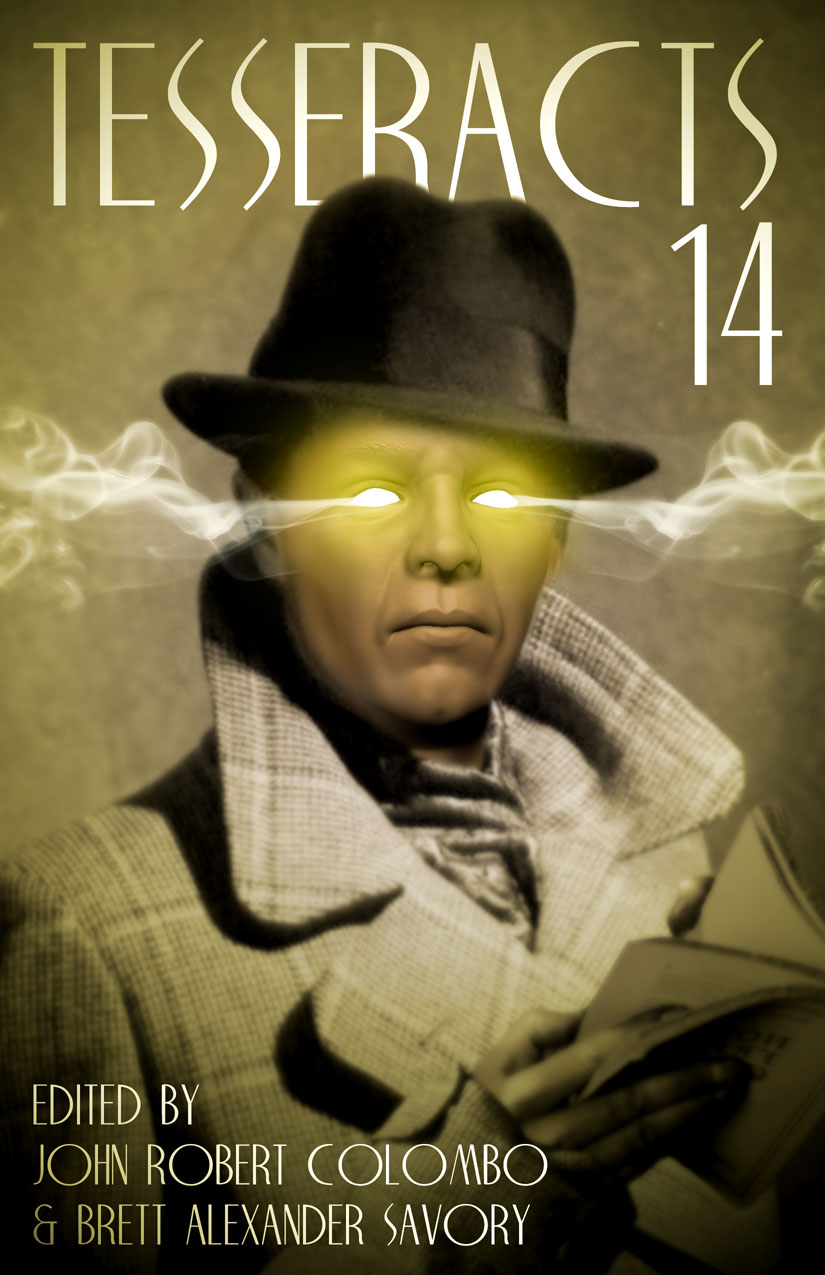
Thanks everyone for coming out and being a part of our signing at Mac’s Fireweed!  Two anthologies I’m a part of: Tesseracts 14 and Inhuman, and Dave Strachan, who has the lead story in Inhuman, was signing too!  The Fantasy/Science Fiction community in Whitehorse is doing great!  More and more of our group are stretching their talents and skills, and turning out great stories and sending them off to publishers!  So happy that this is happening in Whitehorse!  The Yukon is building a presence in Canadian Science Fiction and Fantasy.  Oh YEAH!

Tesseracts 14 and Inhuman are both published by Hades Publications and Edge Science Fiction and Fantasy Publishing (for Inhuman, through their imprint Absolute XPress).

Here’s photos of us at Mac’s Fireweed, Saturday March 12.  See if you can recognize all the campadres who helped make it a great event…


Clarion 2011 taking Applications: Science Fiction and Fantasy Writing Workshop

Announcing the 2011 Clarion Science Fiction and Fantasy Writers’ Workshop  @ UC San Diego

June 26 to August 6, 2011

Clarion is widely recognized as a premier training ground for aspiring writers of fantasy and science fiction short stories.

The 2011 writers in residence are

Nina Kiriki Hoffman    John Scalzi

Elizabeth Bear                David Anthony Durham

John Kessel                     Kij Johnson


Since its inception in 1968, Clarion has been known as the “boot camp” for writers of speculative fiction. Each year 18-20 students, ranging in age from late teens to those in mid-career, are selected from applicants who have the potential for highly successful writing careers. Students are expected to write several new short stories during the six-week workshop, and to give and receive constructive criticism. Instructors and students reside together in campus apartments throughout the intensive six-week program.

The application period for the 2011 workshop is December 1 – March 1. Applicants must submit two short stories with their application. Scholarships are available. Additional information can be found at http://clarion.ucsd.edu.

See my Page on CLARION 2011 for more info on what a Clarion can do for you.

Personally, I have to say that the chance to work with Kij Johnson would be enough to make me put on a disguise and go again, though, like Narnia, former Clarion grads can’t go home again….  Kij’s story, “26 Monkeys, Also the Abyss” won the World Fantasy award and was on the final ballot for both the Nebula and the Hugo.  It’s an AMAZING story and just the kind of story I hope to write when I grow up.

What is Realms of Fantasy looking for?

The Clarion Foundation (parent of Clarion Science Fiction and Fantasy Workshop) has a wonderful blog.  Douglas Cohen, an editor from Realms of Fantasy, recently wrote a guest post there talking about the view from Realms of Fantasy, from its long run in the industry, including its two recent revivals with new publishers.  There is some great insight here for those who are submitting stories and poems (yes, they have started publishing poems).  Here’s just a snippet, but the rest you can read on the Clarion blog.

1)     Fantasy is a broad genre, and it’s yet to stop expanding.  In addition to writers, editors are playing a crucial role in defining what fantasy is.  I’ve read a number of stories in our pages that I consider science fiction.  Obviously Shawna felt otherwise, or at least saw enough fantasy-related elements to justify publishing these tales in RoF.  Too often, I hear about authors rejecting themselves from certain markets because their stories are “not a good fit.”  Now, if you’re writing a hard science fiction piece in the vein of Gregory Benford or Isaac Asimov, it’s true that your story most likely isn’t right for us.  But if there is an element that could be considered fantastical in your sf story, who knows?  We just might buy it.  Did you know John Joseph Adam’s recent dystopian sf reprint anthology has a story from RoF in there?  Did you know we published a story with robots that were clearly inspired by Transformers?  Did you know we had a story about molecule memory that was reprinted in Rich Horton’s Science Fiction, Best of the Year, 2008?  I could go on.  The point—and this is something to keep in mind for all markets—is that it’s not your job to reject your stories for our magazines.  It sounds like a basic thing, but too often I see authors—including experienced ones—overanalyzing their prospective writing markets.  This is not a phenomenon unique to RoF.  It’s good to know your markets, because that might help you land a sale sooner rather than later.  But don’t be the editor for them.  I can’t stress this enough.  When in doubt, submit.  Let us decide what’s right for the magazine.  The worst that happens is that we say no.  To borrow (and probably mangle) a phrase from John W. Campbell: “How dare you reject your story for my magazine?”

2)     Shawna and I have different tastes.  Yes, there is definite overlap, and these similarities (and the differences for that matter) are why we work well together.  But I hear too many authors saying things like, “Realms of Fantasy is not a market for sword & sorcery.”  Ahem.  I love sword & sorcery.  I also unquestionably enjoy this sub-genre more than Shawna does, meaning I’m likelier to enjoy an S&S tale than she is.  But since I’ve been with the magazine, we’re publishing more in this area than we ever have before.  Not an overwhelming amount, but definitely more.  The point is that magazines change over time.  Too many people stop reading a certain venue for whatever reason, and five or ten years later, when they’re telling you their problems with this magazine, what they’re saying is no longer relevant.  Again, I see this happen with experienced writers too, so I feel I should mention it here.  So not only should you never reject yourself, but it’s also a terrible idea letting others do your market research for you.  Sharing ideas is fine, but make sure your friends are up to date on what they’re saying.  If the information is coming secondhand, make sure it’s coming from a reliable source.

There are eight more points Mr. Cohen makes–equally insightful. It behooves you (I like ‘behooves’) to run over there and check them out.  Happy submitting.

Mr. Cohen also makes a strong point about Clarion graduates supplying the magazine with quality stuff.  See that top name on the February cover of Realms of Fantasy—Desirina Boskovich?  One of my Clarion buddies.  Awesome, Desirina!

Martin Luther King Jr, Nichelle Nichols, and Building a Positive Future Through Fiction, on NPR

Monday, the day the US celebrates Martin Luther King, Jr. day, there will be a special segment highlighting MLK’s conversation with Nichelle Nichols, the actress who played Lt. Uhura in Star Trek for both the first series and a majority of the movies.  While Trek fans are familiar with the story, most people aren’t aware that Nichols almost left the show after the first season.  She was tired of her very limited role on the series and wanted to return to the musical stage.

King said something very profound to her and I’d like to just comment on it.  When Nichols met King, he told her that he was a fan of the show.  When she said she was thinking about leaving the show, he had this to say:

Star Trek creator Gene Roddenberry, Nichols says King told her, was showing the nation a universe where  “‘for the first time, we [African-Americans] are being seen the world over … as we should be seen’.” And ” ‘you have created a character’ ” that is critical to that, he said.

King’s assertion that imagining a future, even in fiction, was powerful enough to create that future is a concept Science Fiction writers need to take to heart. If they see it, they can make it happen.  Yes, we made cell-phones to look like Trek communicators, and named our shuttle after the Enterprise, but more importantly, we modeled peaceful relationships with different races and different nationalities.  We saw Russians, Japanese, Scottish, American midwest, American Southern, Vulcan, and African-American all working together as a team.  King thought that this image of peace was as important as the peace itself–and that an image could lead us there.  It’s natural to imagine dystopia after dystopia, and even, sadly, Star Trek, seems to mess with every Utopia it showcases.  But I think we can imagine a better place, a better us.

Writers have the ability to model the future we want.  While stories must have conflict, we can guide people towards something positive by helping them imagine it.  Blueprinting.  King thought we could too.  And his inspirational talk with Nichols kept her on the show at a time when we needed to see that we could work together.  (I wish someone would design a show with an American and North Korean working side by side.)

You can hear snippets of Nichols’ interview with NPR on their site, and listen in Monday, on the show Tell Me More.  The link has listening times.

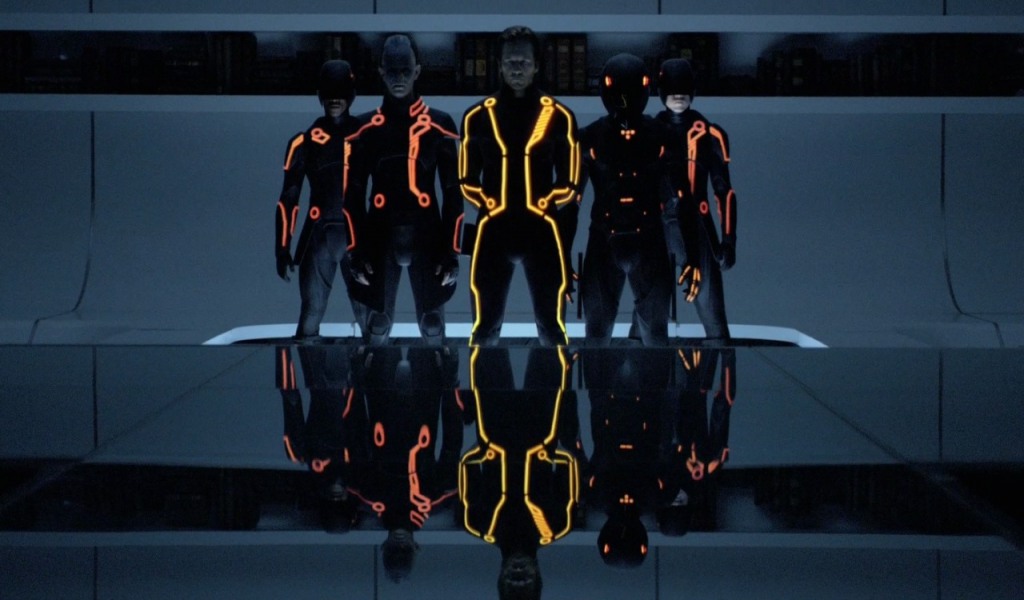
TRON: Legacy needs a CLU, gets a “journey without a goal”

I wanted to like this movie.  I have such fond memories of the original TRON.  It was ahead of its time in many ways back then, and probably a little cheesy too…  It was wrapped up in religion a bit, which wasn’t bad— it gave programs a “culture,” a “faith.”  TRON: Legacy has kept up with the digital explosion in movies and taken it to grand heights, but it abandoned good writing and good characters along the way.  I found it hard not to roll my eyes, and even with such great visuals, found myself bored during the last quarter of the film.  How did they fumble such a beautiful opportunity?  I don’t know, but I have some ideas.  I offer these up for consideration.  I’m no Roger Ebert (but I’m a huge fan, Roger) but I think most critics have already agreed that the plot lacks something. The original TRON received 69% on the tomatometer from Rotten Tomatoes, the new Tron 49%.  Though, oddly the audience seems to like the second one more.  Critics agreed the light show and “glitter” are fun, and who can beat that soundtrack?  I loved the light show, the competitions, the music, but the plot is an epic fail.

Continue reading

Longest Night features aliens, musicians, wacky fun, and lunar eclipse

Alien love songs, alien films, dances with aliens, UFO sighting highlights over the last fifty years, not to mention the sounds of the Longest Night Ensemble with Peggy Lee, Mary Margaret O’Hara and Daniel Janke (with a couple of Christmas songs in the mix)… I am truly thrilled to be a part of such an eclectic group of artists who have taken “alien” to new heights.  This is fun, light-hearted, and thought-provoking.

I really love it when folks outside the science fiction genre take on the theme artistically—they see things I never thought of, things I’ve never seen anyone else do!  They create ideas of “alien” that are truly alien.  They invigorate the genre.  I’m so honoured to be working with Celia McBride, Moira Sauer and Brian Fidler as they literally re-create the alien.

And as a science fiction writer forced to present only the facts of UFO sightings–without trying to convince–I too am stretching out of my comfort zone: embracing the real, putting on the skeptical hat, being a reporter not a missionary.  Sticking with the facts, ma’am, and leaving the fiction at home.  It made me do as much research as a term paper, and put it in such a way that a listener gets to choose what they want to believe.

At first I fought it, then I embraced it.

Continue reading

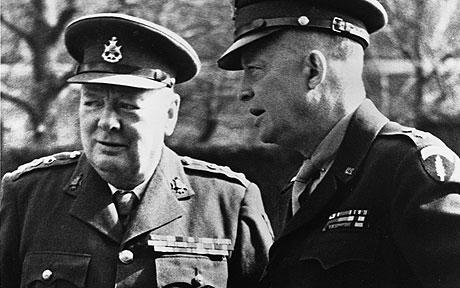
Eisenhower and Churchill: UFO cover up?

Released in a wave of declassified UFO documents in England comes this gem: that Eisenhower and Churchill purposely covered up UFOs.  There was a short time in US history where talking about UFOs wasn’t censored–especially the military.  People in the military left and right were commenting on “saucers” and technology from “Mars”–and then, it’s said that Eisenhower decided to hush the whole thing down.

This New York Daily News article talks about a letter declassified in England:

A letter sent in 1999 by an unnamed person from Leicester, England, relays a story he was told by his mother, which came from his grandfather, who claimed to have witnessed the alleged cover-up.

“It is claimed that my grandfather, [REDACTED] was present during a debate between Winston Churchill and Mr. Eisenhower during World War II involving making a decision about an unexpected incident,” the letter states, dated Sept. 20, 1999.

The incident in question took place off the English coast and involved a Royal Air Force bomber crew, which was returning from a “photographic mission” in either Germany or France.

“The aircraft was intercepted by an object of unknown origin,” the letter explains, “which matched course and speed with the aircraft for a time and then underwent an extremely rapid acceleration away.”

Photos and/or film were supposedly captured of the object, which “hovered noiselessly” and seemed metallic.

The incident sparked a discussion between Churchill and General Eisenhower, presumably via telephone, who commanded the Allied forces during the later period of the war.

According to the letter, the grandfather who witnessed the conversation heard Churchill state: “This event should be immediately classified since it would create mass panic amongst the general population and destroy one’s belief in the Church.”

Read more: http://www.nydailynews.com/news/world/2010/08/05/2010-08-05_winston_churchill_dwight_d_eisenhower_covered_up_ufo_sighting_in_england_letter_.html#ixzz18FjARGfF


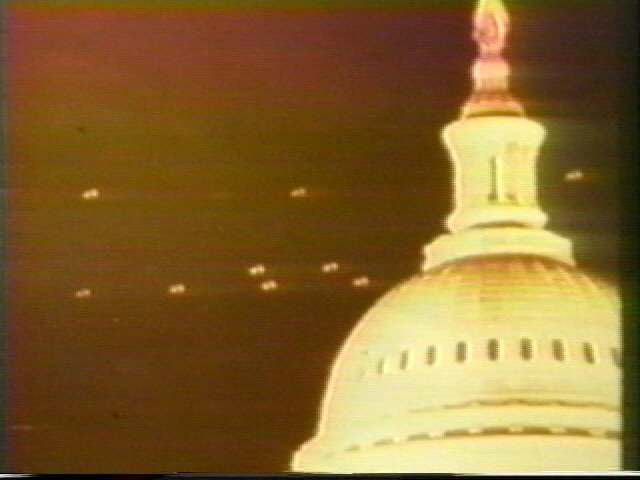
The story is backed up in several other newspapers–the document is real.  Now if the story is real, that’s another matter.  But if it is, then it will go well with this 1952 UFO buzz of the White House.


You want the truth?  We’ll get as close as we can.  Come to Longest Night, Dec 20, 21, 8pm, Yukon Arts Centre.

We’ll be talking about visitation…. aliens, UFOs, and the sightings that started them all.


Researching for Longest Night (Dec 20, 21): We Are Not Alone

Researching for Longest Night, I was told that Daniel Janke wanted real reports of UFOs during my segments.  Over the last week of researching,  I’ve become a bit jittery.  There’s a lot more than I really want to think about.  Check out this footage from NASA.


Don’t know about you.  But when I come across video footage from NASA, I start to believe.  Don’t know if you already believe or not.  But we’ll be looking at several high profile cases at the Longest Night performance this year–in between puppetry and music–since their theme is We Are Not Alone.

I’ll post more research here and let you know how it’s coming.  But you can come see the finished product DEC 20th and 21st, 8pm.  Yukon Arts Centre.  Tickets available now.