Speculating Canada reviews my story, “One Nation Under Gods”

Really thrilled that Speculating Canada reviewed my short story, “One Nation Under Gods” which appeared in Tesseracts 14. It’s hard to get short fiction reviews and they are so valuable.  The SF/F/H community should hold tight and nurture as many reviewers as we can. With a growing market of books, the discerning reader looks to reviews to help choose what to read.  And reviewers who choose short fiction, new authors, and anthologies help support beginning writers who are starting their careers, hoping that someone notices.  So we can’t fete reviewers enough–we need them, we love them, we should be very kind to them.

I’d say this for any thoughtful reviewer, even if Derek had NOT liked my work.  It’s the way he liked my work that makes me happy. 

Speculating Canada has a really great aim:

This site has been created in response to the overwhelming number of people who are surprised that Canadian literature includes the fantastic. Canadian SF, fantasy, and horror have been cast into a literary ghetto under the power structure of CanLit, and cast as either inferior literatures, or literatures that are not ‘of here’, i.e. from abroad. Yet, Canadian speculative fiction has a long history in Canada and engages with ideas of Canadian identity, belonging, and concepts of nationhood, place and space (both ‘the final frontier’ type, and the geographical).

Realist fiction is often seen as the only ‘truly’ Canadian fiction, but even realist fiction speculates, postulates and creates a fantastic idea, just one that is based more closely on the normative world around us than most SF authors are inclined to do.

Canadian SF allows for the engagement with ideas such as What is Canada? What does belonging mean? What is the nature of ‘human’? Why are things the way they are? How do we change things? Can things change?

The appeal of Canadian SF is not just regional, but has implications for a wider audience. Canadians, long un/comfortable with our identity as a hybrid of the American and English, Francophones and Anglophones, Aboriginal and settlers, and the multicultural mix that is embedded in our philosophy, means that we are comfortable with questions of identity and the exploration of our place, ideas that naturally lend themselves to science fiction, fantasy, and horror. We live in a world that is unsure of itself, and uncomfortable with ideas of belonging, and Canadian SF plays with ideas of belonging, disrupts the normal (or what has come to be seen as normal) and allows for a new way of experiencing the world.

As for the review–well, I’ll let you read most of it as his site, but here’s a nice chunk:

Continue reading

CBC’s DNTO to air my story on Coming Out to My Church for “Lost Causes”

Definitely Not the Opera, (DNTO) a CBC Radio One program devoted to the art of storytelling in Canada, asked me to tell my story of coming out to my church for their Nov 3 show “Lost Causes”.

I had pitched the idea to them last year for a different show called “Making Enemies” but withdrew the pitch because a) I don’t think I meant to make enemies, nor do I think I have made enemies; and 2) because I didn’t want to restir a pot that has finally calmed down.

But they remembered my pitch.  And they sought me out.  Which is humbling, and cool.  We recorded on Friday morning and they are editing my lengthy story to 3-4 minutes.  I appreciate Andrew Friesen’s belief that my story was important and needed to be told.  I feel like the story is more appropriate under “Lost Causes” because trying to reason with people who don’t want to listen to you, or discuss with you–and believing that you alone have to spark change–well, it can feel like a “Lost Cause”.  But in the end–and the end hasn’t come yet–who knows if the cause is lost?  I think every person who says the church must look at the evidence, must consider the Christian testimonies of LGBT folks in the discussion, is a step towards change.  We need more people who realize how many people have fallen away from the faith, have decided against Christ, have been repelled from the church, and who, sometimes when there is no hope left, taken their own lives, all because the Church has historically refused to consider the scriptures in an accepting light–and this causes their members to refuse to accept their children in an accepting light.  This splits familes.  My God and my Christ are not what I encounter when I come into a Baptist Church anymore.  I daresay they wouldn’t recognize it.  Churches are not all one defined Mass though–as many churches are beginning to change their minds about LGBT people.  Episcopals, Lutherans, Presbyterians, United Church of Canada–all have begun seeing that this is just the next issue the church has to rethink.  As it did slavery, race, and its treatment of Women.  And divorce.  Change comes when people inside churches decide they can’t hold false doctrine anymore.  Christianity and Faith are not the problem.  Interpretation is.

Continue reading

Clarion Write-a-Thon: Join Team Bears Discover Fire

Wanna light a fire under your writer’s bum and do a good deed?

Clarion Science Fiction and Fantasy Workshop has developed the Write-a-Thon to help YOU and to help THEM.

You might be in a place in your life where you haven’t been writing much, but you wish, wish, wish, that you could–or that you had the time.  What we need, rarely, is the time—we need encouragement. The time will magically appear when we feel people in our life actually WANT us to write.

So Clarion has developed teams of writers to help you reach your writing goal—AND help Clarion reach their fundraising goals.

Here’s how it works:

1.  You say to yourself, I give myself permission to write for six weeks as much as I can.  I don’t have to take off from work, but I will find some time–with the help of my spouse, my significant other, my parents–to cordon off even a smidgen of time a day to write.

2.  You sign up with Clarion Write-A-Thon by clicking on those words.

3. (from the Clarion write-a-thon website)

  • First, sign up to write! Fill out as many of the fields as you can. It’s especially important to include a bio and excerpts. A link to your website and/or personal blog helps, too. Your name and a link to your new writer’s page will appear automatically on the Browse Writers page of the Write-a-Thon site.
  • Be sure to upload a recent photo of yourself. A .jpg that is a maximum of 200 pixels in width is ideal. But our software can resize it for you if necessary.
  • Post frequent updates everywhere. Refresh your Write-a-Thon writer’s page often with new excerpts. Post writing progress reports on your personal website, your blog, your Facebook page, and your Twitter feed. Make sure all of your efforts link to your Clarion Write-a-Thon writer’s page.
  • Line up your sponsors. Contact friends, family and fans to let them know you’re raising money for Clarion while nurturing your writing life. Your writer page comes complete with personalized donation buttons to make it easy for your supporters. Feel awkward about asking? Here’s a model letter to use as a starting point.
  • Participate as both a Writer and a Sponsor. When you support others, they’ll support you in return.
  • Join a team and get a mentor. Once you have $20 in donations, you’ll have the option of joining a small group of eight Write-a-Thon writers. Each group is mentored by a Clarion Workshop instructor or graduate, ready and waiting with advice and encouragement. To join a team, wait for your emailed invitation, or write to treasurer@theclarionfoundation.org.
  • Get Write-a-Thon badges for your blog and your website.
  • Remember, there are prizes! We’re giving away iTunes, Amazon, or B&N gift cards to our top earners, along with Write-a-Thon keepsakes. And each writer who brings in $250 or more gets a free story critique from a Clarion author!
  • You can also earn Write-a-Thon merit badges. You can begin writing any time. But beginning on the June 24, the official start of the Write-a-Thon, we have a special treat for you. On your Write-a-Thon writer’s page, you’ll see a grid with a question mark in each square. You can earn a maximum of one merit point every 24 hours by clicking the “I WROTE TODAY” button that will soon appear near the grid. As your merit point total passes certain milestones, merit badges will appear in your grid. We’re keeping the formula secret, so you never know when a badge will appear or what it will be. It’s all part of the motivational fun. We’re also trusting you to be honest. Only click the button if you really did some writing!
  • Sign up for the Clarion E-bulletin mailing list. It’s the best way to keep up with the latest Write-a-Thon news

See that part about “JOIN A TEAM”— that’s where I come in.  I’ve volunteered to be a mentor–with advice and encouragement!  My team is called TEAM BEARS DISCOVER FIRE after Terry Bisson’s story, “Bears Discover Fire.”  You’re going to discover fire in this group–as I’ll encourage you to write every day.  I’ll give prompts for those who want them, and encouraging little notes as we go along.  You’ll be in a group of people just like you who are pushing themselves for six weeks!  It’s just six weeks.  I wonder what YOU could do in six weeks if you had the encouragement from family and friends to do a little writing.

MY goal is to churn out six stories—they’re trunk stories, for the most part, but I need to get them finished.  And Clarion is the way to do it!

You might have a book that needs more chapters.  You might have some stories that need to get out.  You might have an idea that needs a story!

This Write-a-Thon is Write Up Your Alley.

Join my team and light the fire you need to get some stories and writing done.

BEARS!  Go light that fire!

[Visit the TEAM BEARS DISCOVER FIRE on WordPress and see what we’re up to!]

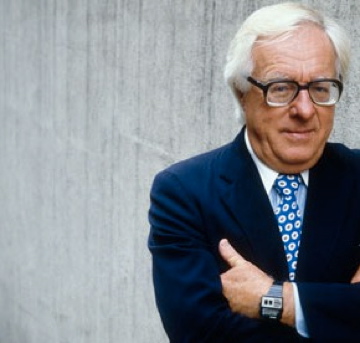
Bless You, Ray Bradbury

I was sad to hear of the passing of Ray Bradbury, a giant in my life.  He was 91, so he lived a good long life, and he gave us amazing writing like Something Wicked This Way Comes and Fahrenheit 451.  But I will always remember him for his collections of short stories, The Illustrated Man, Martian Chronicles, R is for Rocket, S is for Space, Medicine for Melancholy, and others.  They fueled my imagination–as I’m sure they did many people.  But I can truthfully say that Ray Bradbury–with his lyrical writing, his vivid description and interesting stories–shaped me as a writer. I heard he was one of those bridge writers–the ones that transcended genre.  But that didn’t matter.  What mattered was that he took me places, expanded my imagination, urged me to tell stories.

We met once.

I was in Lubbock, working, I think, on my last year at a degree at Wayland Baptist University.  It was 1992.  Ray was speaking at a Young Author’s conference, but also as a public speaker.  I was there to meet my hero.  I brought a copy of Martian Chronicles with me, and the picture of him in the paper.

He talked about his time working for the Smithsonian, designing famous garages of inventors; his work on the Moby Dick screenplay for John Huston.  He didn’t talk much about making science fiction…  but I was rapt nonetheless.  This man had produced so much.  His imagination was so vivid.

Afterwards, there was of course a line up to get signatures. Ray sat behind a small table, and I worked my way up to him.  While I was still a couple of people away, a woman came out of nowhere and jumped the line–with a stack of ten books, all open to the front page.  These she plunked down in front of Ray, saying “These won’t take you but a minute.”  Then she grabbed him by the shoulders and turned him sideways so her daughter could snap a picture.  I think Ray was a bit miffed–a whole line of people trailed out in front of him.

After quickly signing all her books, while she babbled, he turned back to the line with a huge amount of graciousness for our patience.  When I got up there, I put my newspaper and book in front of him, and said, “You’re the reason I started writing.”

He looked up.  “Are you sending stuff out?”

“Well, I’m trying to…I mean…” I stammered.  I wasn’t a very confident writer in 1992, with no sales to my name, but thirty bad stories completed and sitting around somewhere.

“You have to send them out.  Send one out a week.  That’s what I did.  I wrote one story a week–started on Sunday and mailed it on Saturday.  I did this for years.  That way I had 52 stories in the mail and some of them had to sell!”

He laughed.  He shook my hand.  I assured him I would do that. I didn’t keep that promise.  I went on to college, studied writing, but never writing one story a week–until I got to Clarion Writing Workshop and had to write one story a week–(I got five out of six weeks!)

That day back in 1992 I felt blessed by Ray Bradbury.  My hero took time with me, gave me advice.  Perhaps he was fueled by the woman who had taken the time he wanted to give us–maybe he felt an extra special need to be encouraging to me.  I don’t know, but I’ll never forget it.

Bless you, Ray Bradbury.  Bless you for blessing me that day.  And bless you for all the wonderful stories and novels and essays you left us.  And how you crafted magic out of an ordinary day.

Which do you want? Love or Power: Wagner’s Der Ring des Nibelungen

I was living with my folks the last time I saw the Ring Cycle on PBS in the US.  I made my parents endure several hours of it before they said, enough!  After all I had hi-jacked the TV for several nights.  And I was in the middle of Siegfried, and well, maybe…..  actually my mother came to me and said, “Are you really enjoying this?” with a hint that she’d probably prefer something else.  And actually, then, without the absence of distraction–I was inside the living room of an active six person house with dog–I don’t remember much of the Ring Cycle at all.  I do remember telling my mom that we could change the channel.

I know, high recommendation eh?  But it was a small tv, on a fuzzy station, in a mad house of six people and dog— it wasn’t the Yukon Arts Centre, with its HD and surround sound.  It’s giant screen.  And it wasn’t hunky Bryn Terfel, the Wotan of this Ring Cycle.  I’m unabashedly crushing on Bryn Terfel.

Needless to say, I am looking forward to going through my first RING CYCLE in its entirety!  As a fully realized, aware, culturally-interested adult (without a dog).  I want the t-shirt that says I got through it.  I may ask Triple J’s to make some!

Anyway, a FREE movie begins the cycle–it’s Wagner’s Dream: the Making of the Ring Cycle at 7pm on Saturday, May 12.

________________________

Because we are offering the Ring Cycle and because I’m kind of the defacto host of these Met Opera’s, I needed to know more about it–so I looked up the story.  It’s freakin’ amazing!

It might sound familiar: A ring forged that will let the wearer rule the world, dwarves fighting for the ring, dragons that guard it, doomed lovers— seems like Wagner’s Ring Cycle might be  The Lord of the Rings with music.  It’s not true.

Though there is a strong case that Wagner and Tolkien both got their source material from the same places–German and Norse mythology and sagas–what they crafted is very different.  And with all proper credit to Tolkien, Wagner’s opera has just as much amazing storytelling as the tale of hobbits and wizards.

Tolkien’s Trilogy of books starts off with a prelude book, The Hobbit, just as Wagner’s trilogy of operas starts off with Das Rheingold.

Continue reading

Writing Faith Workshop begins, Feb 10, 5-8pm, Whitehorse United Church

  How do you write about your “faith”?  How do you describe the indescribable, the ineffable, the otherworldly? the grief or joy or miracle or peace or disappointment that you have because of your faith?  Everyone can argue about the value or lack of value in “religion”–and it’s an easy connect-the-dots to create your own pictures of what organized religion has done in the world.  It’s harder to write about personal faith or your personal interactions with religion–what keeps you going, what happened to you that you know no one would believe, about the anguish of trying to live in a real, faulty, fragile world, when others ask you to strive for peace, patience, happiness, even joy.

This writing workshop will explore how people write about these very personal experiences, or their thoughts about faith and religion and its very real presence in their lives, or the lives of those around them.  We’ve had students write about their relationships with their parents, their children, their grandchildren, experiences in nature, in confronting others who aren’t on the same page.  We have had students who are believers, non-believers, unsure, people of various faiths.  All faiths are welcome–come with what’s important to you, open to what is important to others. This isn’t a dogma class.  It’s not a class to teach you from the top down.  It’s for you to teach us from the ground up through your experiences, your writing.

Continue reading

My short piece in Geez Magazine #24, “Privilege” issue, on coming out

Ironically, my pastor at RBC suggested I write for Geez magazine.  I don’t think he imagined what piece I would eventually write for them.  But here it is, Issue #24, on “privilege”.  I wrote the fast version of my coming out at church.  I centered it on the idea of privilege–of the privileges I had as a single, white male Christian who had leadership potential and of the privileges I no longer had when I added “gay” to that mix.

The church has to change.  It has to.  It may not change from those fighting it on the outside, but it will have to incorporate change if it is to survive further.  It faces irrelevance, it postures with discrimination, it plays favorites, it values money.

Not all churches–no.  (When I say a statement like this I have to stop and say, Thank you, churches that are moving more towards inclusion, social justice, focusing on issues like poverty, the environment, civil rights.  You do exist, but I wouldn’t, yet, call you the “Church”–as the “Church” tends to be the monolithic Catholic Castle or the Evangelical Juggernaut.  One day, you will take on that mantle–you will be the “Church” and it will have a positive ring.  You will convince other churches that focusing on discrimination is not the answer.)

Anyway, there it is, in Geez #24.  If this brings you to Talking Dog, welcome.  There’s lots there, I hope, that will spark conversation.  If this entry leads you to Geez, welcome to Geez.  There’s lots there that will spark conversation as well.  It’s a valuable, important magazine carrying on “the” conversations we need to have happen.  It is intrepid, bold, and unflinching.

I would marry Geez magazine if it looked like a bear and loved me back.

*apologies to Kevin James, pictured, who is not gay.

Characters with Something On Their Minds: the brilliant writing inside Deep Impact

Recently, I re-watched Deep Impact, one of two “asteroids-going-to-hit-Earth” movies that came out simultaneously (the other being, the poor-in-comparison, Armageddon).  Deep Impact builds slowly, and has amazingly drawn characters.  It’s worth it to watch just to pick up some tips on character development.  These are my thoughts after watching it.

1.  Every character in the movie has their own worries or concerns BEFORE their first scenes.  Jenny Lerner (Tea Leoni) wants to make a name for herself as a reporter and move up faster than the news organization’s corporate ladder will allow.  Leo Biederman (Elijah Wood) is falling in love.  Jenny’s mother (Vanessa Redgrave) is achingly going through the news of the marriage of her ex-husband to a younger woman; and the ex-husband has just married, and in the process, estranged his daughter.  Others are having babies, concerned about parties coming, or debts, or something.

It’s very easy for me as a writer to create characters who come into my scenes to do my bidding and then exit, stage left.  This makes them one-dimensional and cardboard–it also makes them a bit robotic, there to get my plot done for me.  BETTER are characters who have had something JUST happen to them when they come into your story, in other words, they are recovering from a cold, they are dealing with bills, parents passing, daycare that’s too expensive–something.  These scenes were really short, but they helped me care about the characters quicker because they had outside interests, outside agendas besides the imminent needs of the PLOT.

2.  They make CHOICES based on their previous problems or worries.  I was very surprised to see what kinds of choices they made, choices bound by the plot, yes, but could only have happened because of the natural cause-and-effect of the plot.  Someone chooses not to be saved; someone chooses to rescue someone else; someone kills themselves; each new choice brings about other choices–but choices that build on one another.

Sometimes writers (like me) create plots that are heavily structured because of what we want to see but we don’t quite take into consideration the kinds of choices  the characters would make—we make their choices from who they are in the beginning, not who they are BECOMING as the story progresses.  Events change us, and I was reminded that characters in the movies could not have made certain choices without having gone through the events in the movies. It’s a good thing to remember that the events of your story change your characters–and they do it gradually.

Change doesn’t happen because of one event, usually.  It happens because we are exposed again and again with events and choices.

Continue reading

“Amina” Acid and the Ballad of Bill of Tom: deception in the pursuit of activism

What to make of the sudden revelation that two prominent lesbian bloggers, both activists, were really men?

Tom MacMaster, an American student studying in Scotland, his subject Middle Eastern Studies, created the blog “Gay Girl in Damascus” as a way to give himself a voice in the debates about what was going on in Syria, a voice others would believe.  Well, he got more than he bargained for.  The new found fame–when other people started reading the blog—went to his head, he admits, and he took the opportunity to start pushing his opinions, through Amina Arraf, on all sorts of things related to Syria.  He wanted to make a difference and claimed that no one would listen to him as a white American male.  His blog seemed to be recording life during the “Arab Spring”–a time that’s exciting everyone all over the world.  Oddly, instead of a male protagonist, in Syria, he made his “character” a lesbian:

“It was part of the challenge of being someone who wasn’t me. It was a way of also drawing attention to things, I do think there is a certain orientalism, where we in the West tend to pay more attention to people that are like us, people we can relate to, someone marginalized is more interesting.

I also think I wanted to show that in Syria, too, there are people who are all different, gay, straight, people of every possible permutation.” (from the Washington Post)

When, in a dramatic turn of events in “Amina’s” life, MacMaster writes that she’s kidnapped, he suddenly got the world’s attention.  People were noticeably upset about what was happening to this lesbian blogger in Syria.  They wanted to help. The Post says that this is the moment when a blog that might have remained believable took a misstep.  It was that Amina had so many supporters, so many people “she” had talked to, that they wanted to help her.

Continue reading

How to Run Your Life as a Creative Professional–JC Herz’s Wisdom and Advice

Found this at Boing Boing (a site that’s like the proverbial treasure chest in your attic, full of both good and whimsical stuff). 

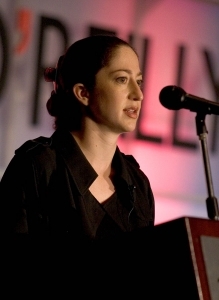
J. C. Herz (photo from the Speakers Bureau International website)

On May 6 2011, J.C. Herz gave the commencement speech at Ringling College of Art and Design, in her words, “the #1 art school in the country for computer animation and game art and design (grads go to Pixar, ILM, and EA)”.  The speech is something every creative professional needs to take to heart.  (I know I do.)

From the Ringling College site.  “J. C. Herz is a technologist with a background in biological systems and computer game design. Her specialty is massively multiplayer systems that leverage social network effects, whether on the web, mobile devices, or more exotic high-end or grubby low-end hardware. She currently runs an analytics company, Batchtags LLC, which sells a next-generation graph database and information visualization to enterprise customers, predominantly in the high tech and health care sectors. The Batchtags team has experience in algorithm and software development for large financial flows (e.g. Wall Street, cybersecurity), elegant visual presentation of complex, multidimensional information, and the development of intuitive game-like interfaces and interaction design.”

The speech is full of basic, down-to-earth advice about functioning as a creative professional in the world.  I can’t summarize it.  So here is the first couple of paragraphs and then a link to the speech itself.  I did save the speech for myself—and I wish I could turn it into a little grad book you could buy at a flower shop or a gift card store.  The advice she gives is what I needed to hear.

Continue reading