I Claudius, I Gertrude, I Polonius, I Hamlet: the humanity and unity of Bhaneja’s Hamlet {solo}

I just returned from a brilliant rendition of Shakespeare’s Hamlet at the Yukon Arts Centre.  One man, Raoul Bhaneja, did the whole play–or an edited version of the whole play–but he did every part, not just Hamlet’s soliloquies.  He had a box of light and an edge of darkness that he ran around making us believe he was seven or eight or ten people.  It was, in a word, stunning.  You might think that it will become boring–one man doing everything–and yet, every character received the same high quality attention.  I can’t imagine the inner-acting work that went on to understand every character, embody every person.  “I wanted to give everyone their chance,” Bhaneja said during the Q & A after the show.

It is a two hour show, and Bhaneja says about 15,000 words (from his own estimation).  He nuances characters with a gesture–Rosencrantz, his arm in the air; Guildentstern, leaning on one knee; Gertrude with her hand over her chest; Polonius stooped; Horatio a bit rigid and formal; Ophelia shy and uncertain.  His voice takes on multiple voices–a Sybil of sorts–but whose accents define the boundaries of the characters well enough for you to imagine, and I kept doing this, as if there were really six or seven people on stage and they were just being revealed to you one at a time as they spoke, as if they just came through the haze to speak.

Because Bhaneja edited the work, the transitions might be a bit altered, transitions from scene to scene.  But when I watched him end one scene with Hamlet and then start the next scene with Claudius I was struck by the statement it made about their characters.  Having one man portray both Claudius and Hamlet and crossfade into them gives the viewer this chance to see the two men as more similar, more equal, two sides of the same coin.  It’s easy to delineate the characters when they are played by separate actors, but when one man does them, it actually makes you think about how similar they all are.


Continue reading

Baked Café: Purveyors of Fine Coffees, Good Foods, and Perfect Days

A perfect day, and I’ve had them before, almost always contains a visit to Baked Café.  Some days I just come to sit on the black couches and look out the windows at Whitehorse going by.  Sometimes I bring a book to read.  Sometimes I plan official meetings there.  Other times I arrange to meet my friends.  Often, I run into them there unexpectedly.  Baked Café is a community hub, so naturally it’s a great venue for meeting.  There’s a lot of ambience in the wide room, and a lot of ambient noise so that you can speak frankly without being overheard.  Music on the radio.  People standing around talking.  It’s comfortable, and often crowded, but not in a jam-packed way, but more like having your best friends all over at your place, happy.  It’s probably the largest coffeeshop that Whitehorse has.

At the corner of First and Main, Baked Café serves a large range of specialty coffees and teas, cold drinks, as well as a wide repetoire of scones and pastries.  You cannot pass up a scone that is bigger than your hand.  It is a meal.  Cranberry Coconut, Cranberry Chocolate Chip, Blueberry Almond or Raspberry Walnut–they each come in three kinds: white, wheat and spelt.  Awesome soups–my favorites are any of their hearty chowders and their Tomato Basil with or without chicken.  They also serve sandwiches, beef pies, quiches, wraps, salads, cookies, and in the summer, several flavors of gelato. There is something for everyone.  It is a hot tourist spot in the summer, and just a hop away from the Whitehorse Trolley across the street.  Kids love it.  And it’s close to everything on Main Street–a place to begin your perfect day of shopping and touring around.  It’s a block away from the Museum, down the street from the Westmark, next to the river and the Whitepass Yukon Railway building.

Continue reading

Martin Luther King Jr, Nichelle Nichols, and Building a Positive Future Through Fiction, on NPR

Monday, the day the US celebrates Martin Luther King, Jr. day, there will be a special segment highlighting MLK’s conversation with Nichelle Nichols, the actress who played Lt. Uhura in Star Trek for both the first series and a majority of the movies.  While Trek fans are familiar with the story, most people aren’t aware that Nichols almost left the show after the first season.  She was tired of her very limited role on the series and wanted to return to the musical stage.

King said something very profound to her and I’d like to just comment on it.  When Nichols met King, he told her that he was a fan of the show.  When she said she was thinking about leaving the show, he had this to say:

Star Trek creator Gene Roddenberry, Nichols says King told her, was showing the nation a universe where  “‘for the first time, we [African-Americans] are being seen the world over … as we should be seen’.” And ” ‘you have created a character’ ” that is critical to that, he said.

King’s assertion that imagining a future, even in fiction, was powerful enough to create that future is a concept Science Fiction writers need to take to heart. If they see it, they can make it happen.  Yes, we made cell-phones to look like Trek communicators, and named our shuttle after the Enterprise, but more importantly, we modeled peaceful relationships with different races and different nationalities.  We saw Russians, Japanese, Scottish, American midwest, American Southern, Vulcan, and African-American all working together as a team.  King thought that this image of peace was as important as the peace itself–and that an image could lead us there.  It’s natural to imagine dystopia after dystopia, and even, sadly, Star Trek, seems to mess with every Utopia it showcases.  But I think we can imagine a better place, a better us.

Writers have the ability to model the future we want.  While stories must have conflict, we can guide people towards something positive by helping them imagine it.  Blueprinting.  King thought we could too.  And his inspirational talk with Nichols kept her on the show at a time when we needed to see that we could work together.  (I wish someone would design a show with an American and North Korean working side by side.)

You can hear snippets of Nichols’ interview with NPR on their site, and listen in Monday, on the show Tell Me More.  The link has listening times.

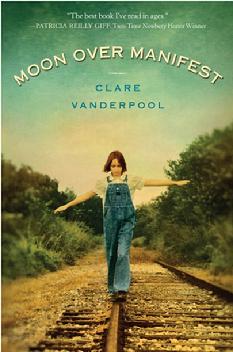
Moon Over Manifest Wins 2011 Newbery Medal for First Time Novelist, Clare Vanderpool

Moon Over Manifest, the debut novel by Clare Vanderpool, just won the Newbery Medal.  According to the website for Newbery, “[the medal] is awarded annually by the Association for Library Service to Children, a division of the American Library Association, to the author of the most distinguished contribution to American literature for children.”

From the description on Clare’s site about the book:

Eleven-year-old Abilene Tucker, the only daughter of a drifter, and therefore a drifter in her own right, has just arrived in Manifest, Kansas during the Depression while her father works a railroad job back in Iowa.  Having heard her father, Gideon’s stories of the town in its 1918 hey-day, Abilene looks for the sign with big blue letters but finds the sign shot up so bad, all that was left read: “Manifest – A town with a past.”   She is disappointed to find that Manifest is just dingy and dried up like most other towns.  But her disappointment quickly turns to intrigue when she discovers a hidden cigar box that contains old letters, a collection of mementos, and mention of a spy known as The Rattler.

Abilene and her friends, Lettie and Ruthanne, embark on an honest to goodness spyhunt that ends up with someone leaving a note on their treehouse cautioning them to Leave Well Enough Alone.  But Abilene sets caution aside when she ventures down the mysterious Path to Perdition and ends up at Miss Sadie’s Divining Parlor.  Abilene isn’t sure if the Hungarian woman is really a diviner or just an old woman who tells stories of the past.  But through Miss Sadie’s stories, Abilene searches for the boy her father once was and the meaning of home.

Clare is a mother of four children.  The book took five years to write, and now she’s in the New York Times talking about it.

“Ms. Vanderpool, the Newbery winner, said she wrote “Moon Over Manifest” over five years, beginning in 2001, stealing bits of time while raising her four children.

“I would write during nap times, during ‘Sesame Street,’ that kind of stuff,” said Ms. Vanderpool, 46, by telephone from her home in Wichita, Kan., where she was born and reared. “It was just a nice little escape, a nice hobby. Then fortunately this year it got published.”

This particular Newbery winner means a lot to me because Clare is my friend.

I told Clare that I’d be cashing in all my “I knew her when” chips now!   Here I was scanning the New York Times and saw that the Newbery Medal was out, and WHOP!  I jumped up from the couch and said, “The NEWBERY!  SHE WON THE NEWBERY!!”

Continue reading

Hamlet: The Precipice of Belief and the Validity of Witness

I’m going to see Raoul Bhaneja’s one-man performance of Hamlet on Friday at the Yukon Arts Centre.  I’ve heard good things about it, and saw a good article in the Yukon News, and I love Shakespeare, but I’m going to see it because of the way Hamlet speaks about “belief.”  One of the main questions, arguably, is whether or not Hamlet should believe the ghost of his father.  He tells Hamlet that he was murdered by the King’s brother, Claudius, Hamlet’s uncle.  It is also this ghost that asks, begs, persuades Hamlet to avenge his murder.  Without the ghost, no play.  With the ghost, several dilemmas at once, not the least of which is whether you believe a spirit that you’ve seen.

I’m teaching a class this semester at the Whitehorse United Church in Writing about Faith, a nebulous topic, a difficult endeavor.  You neither want to sound as if you were deluded or over-zealous, but neither do you want to play down your experiences until they mean nothing.  The spiritual things that happen to us are a keen part of our lives–sometimes they are the anchor that holds us rooted when the world tosses us around, and other times, they are an anchor dragging behind us, stopping us from moving forward.  Either way, what value we give them determines how we proceed with our life: either our spiritual side is a nice addendum to everything else we have in our lives, or it is something profoundly different that affects our course of action. (Or we just ignore it altogether)

Hamlet is caught in a crisis of belief.  If he believes a ghost—just stop there to see how preposterous that sounds—then he has to believe that his father was murdered, and that his uncle is the villain, and that his mother could have been an accomplice.  Further, if that’s true, then the ghost must also be believed that he, Hamlet, can set it right.  That everything that Hamlet does hinges on the  believability of the words of a ghost means that the play is really about our belief, and how much it informs our real decisions.

Continue reading

Keithmoon Drumbeat teaches an online creative writing workshop at UBC in Second Life

Keithmoon Drumbeat leads a UBC creative writing workshop on Second LifeI just had an awesome experience today having my story critiqued in a workshop.  But this workshop is not in the real world but on Second Life, the online alternate world.  For those who are unfamiliar with Second Life, people choose an avatar and enter the world, run around, meet people, shop, make money, and in some cases, go to class.  This class, sponsored by the University of British Columbia and taught by Canadian writer, Kevin Chong, was an undergraduate creative writing workshop completely on Second Life.

The class members don’t have to be in the same place at all.  They just work it like an online class, each at their own computer, but the Second Life twist is that they can appear all in the same room together, chatting.  Everyone chooses a cool name.  On Second Life, you can belong to families—so they give you surnames to choose from, and then you pick your first name.  On Second Life, I am Bison Steampunk.

Next you choose an avatar, and Second Life has probably the best avatar creator on the web.  Even World of Warcraft is limited to the six or seven creatures to pick from….  but on Second Life, you can literally be anything: a toaster, a zombie, an animated foot, a stuffed animal.  One day I am going to get the Minotaur with the Battle Axe.  Hehe.  But for now, I stuck with the free avatar and shaped him myself.   I also picked up some free body parts, skins, and adaptations for my avatar at a Men’s retreat center online called Thor’s Den.  I’ll admit, I went a little crazy on the avatar and he’s easy on the eyes.  So he’s not a perfect rendition of me.  But that’s the joy of Second Life.  You can be anything and anyone you want to be.

Continue reading

Writing Your Faith: Workshop offered in January at the United Church

Olya telling me the Russian Faith and Light Movement StoryWhat is Faith to you?  How do you think about it?  How do you put it into words–to tell someone else what it means to you?  Does it only appear when you are going through struggles?  Is it constant like gravity?  I like this photograph by Grigory Kravchenko.  The woman looks up, but it looks as if she’s giving God a good talking to.  Faith seems to take place over coffee, and in a gritty real-world setting.

Starting January 21st (it was the 14th, but we canceled the first class due to extreme temps, -38C), the Whitehorse United Church and I have teamed up to offer a class in Writing Your Faith.  How do we put into words what is ineffable?

We’ll be looking at a lot of writers who have done just that.   Some you will find more effective for your style of writing than others.

While the majority of works that we look at will be of the Christian variety, they will not be texts that marginalize you.   They will be authors who struggle with the same kinds of questions that most people do when they are talking about a greater being in the world and how they interact with that being.  We’re not reading the selections to pick up content—it’s not an evangelical endeavor.  What we’re doing is looking at how people talk about their Faith, whatever their Faith might be.  So we’re picking up tips.  And those tips are good to use whether you are writing about yourself as a Christian or Muslim or Buddhist or Jewish or Agnostic.

Continue reading

WordPress compiles my blog’s 2010 in review

The stats helper monkeys at WordPress.com mulled over how this blog did in 2010, and here’s a high level summary of its overall blog health:

Healthy blog!

The Blog-Health-o-Meter™ reads Wow.

Crunchy numbers

Featured image

About 3 million people visit the Taj Mahal every year. This blog was viewed about 33,000 times in 2010. If it were the Taj Mahal, it would take about 4 days for that many people to see it.

In 2010, there were 55 new posts, growing the total archive of this blog to 221 posts. There were 107 pictures uploaded, taking up a total of 37mb. That’s about 2 pictures per week.

The busiest day of the year was January 6th with 282 views. The most popular post that day was Knowing: People Stuck in a Plot (a movie review).

Where did they come from?

The top referring sites in 2010 were facebook.com, urbanyukon.com, en.wordpress.com, voyagerangel.com, and google.com.

Some visitors came searching, mostly for new star trek series, star trek, startrek, star trek new series, and realms of fantasy submissions.

Attractions in 2010

These are the posts and pages that got the most views in 2010.

1

Knowing: People Stuck in a Plot (a movie review) March 2009
10 comments

2

Palin Eyes Role in New Star Trek Series January 2010
16 comments

3

Dream Jobs and Just Doing It: Star Trek Series August 2008
2 comments

4

Writing Advice from J.K. Rowling February 2009
2 comments

5

Realms of Fantasy re-opened and ready for your submissions October 2009

TRON: Legacy needs a CLU, gets a “journey without a goal”

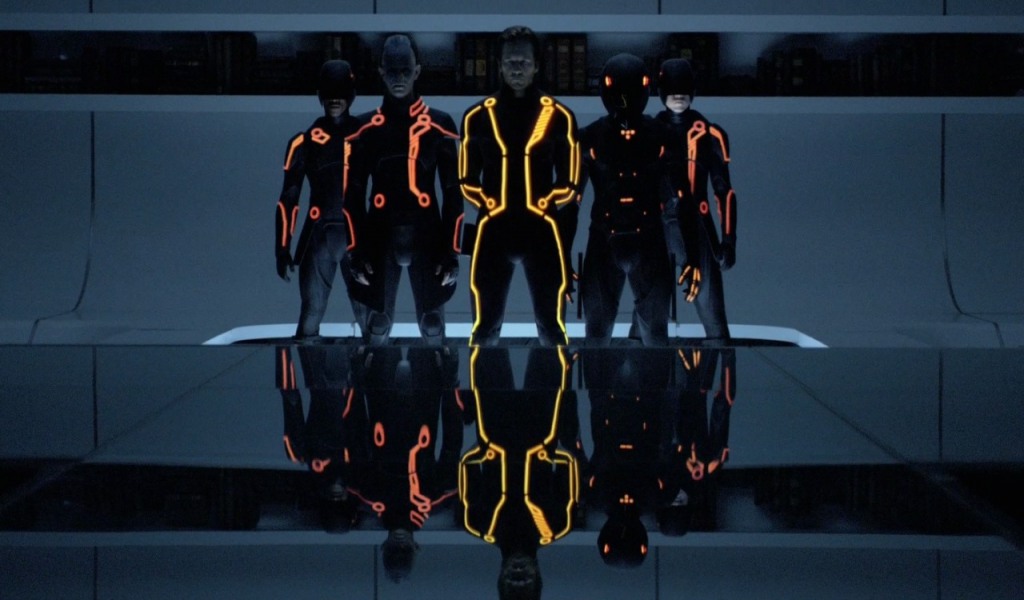
I wanted to like this movie.  I have such fond memories of the original TRON.  It was ahead of its time in many ways back then, and probably a little cheesy too…  It was wrapped up in religion a bit, which wasn’t bad— it gave programs a “culture,” a “faith.”  TRON: Legacy has kept up with the digital explosion in movies and taken it to grand heights, but it abandoned good writing and good characters along the way.  I found it hard not to roll my eyes, and even with such great visuals, found myself bored during the last quarter of the film.  How did they fumble such a beautiful opportunity?  I don’t know, but I have some ideas.  I offer these up for consideration.  I’m no Roger Ebert (but I’m a huge fan, Roger) but I think most critics have already agreed that the plot lacks something. The original TRON received 69% on the tomatometer from Rotten Tomatoes, the new Tron 49%.  Though, oddly the audience seems to like the second one more.  Critics agreed the light show and “glitter” are fun, and who can beat that soundtrack?  I loved the light show, the competitions, the music, but the plot is an epic fail.

Continue reading

How to Get Published by James D. Macdonald–good advice

Well, I keep track of Making Light, the blog by Patrick and Teresa Nielsen Hayden and all their friends and guests, and Jim Macdonald has a great post today:  How to Get Published.  You might have heard the advice a thousand times, but Macdonald gives it some fresh spin.

To be a writer, you must write.

Thinking about writing is not writing. Talking about writing is not writing. Pre-writing exercises are not writing. Only writing is writing.

Write every day. If you only write a page a day, at the end of a year you’ll have a novel. Read every day. If you want to be a writer, you must be a reader. If you are not a reader, perhaps being a writer is not in your future.

Write straight through to THE END.

The urge to give up, particularly in the dread Mid-Book, will be strong. The desire to go back and fix the beginning will be strong. Resist the urge. You won’t know what the beginning is until you reach the finish, and perhaps not even then.

Every synapse in your brain will be screaming “This Is Crud!” Perhaps it is. That’s okay. You can’t make a pot without clay. We’ll fix it all in the second draft. If you need permission to write badly, I grant it to you.

Note that while you will think that your writing is crud, and it may objectively be crud, you should still write to the very best of your ability.

Besides, if you give up in the middle, when and how will you learn to write endings?

The rest of this article, if you’re serious about writing, is worth your time to look over.