A perfect day, and I’ve had them before, almost always contains a visit to Baked Café. Some days I just come to sit on the black couches and look out the windows at Whitehorse going by. Sometimes I bring a book to read. Sometimes I plan official meetings there. Other times I arrange to meet my friends. Often, I run into them there unexpectedly. Baked Café is a community hub, so naturally it’s a great venue for meeting. There’s a lot of ambience in the wide room, and a lot of ambient noise so that you can speak frankly without being overheard. Music on the radio. People standing around talking. It’s comfortable, and often crowded, but not in a jam-packed way, but more like having your best friends all over at your place, happy. It’s probably the largest coffeeshop that Whitehorse has.
At the corner of First and Main, Baked Café serves a large range of specialty coffees and teas, cold drinks, as well as a wide repetoire of scones and pastries. You cannot pass up a scone that is bigger than your hand. It is a meal. Cranberry Coconut, Cranberry Chocolate Chip, Blueberry 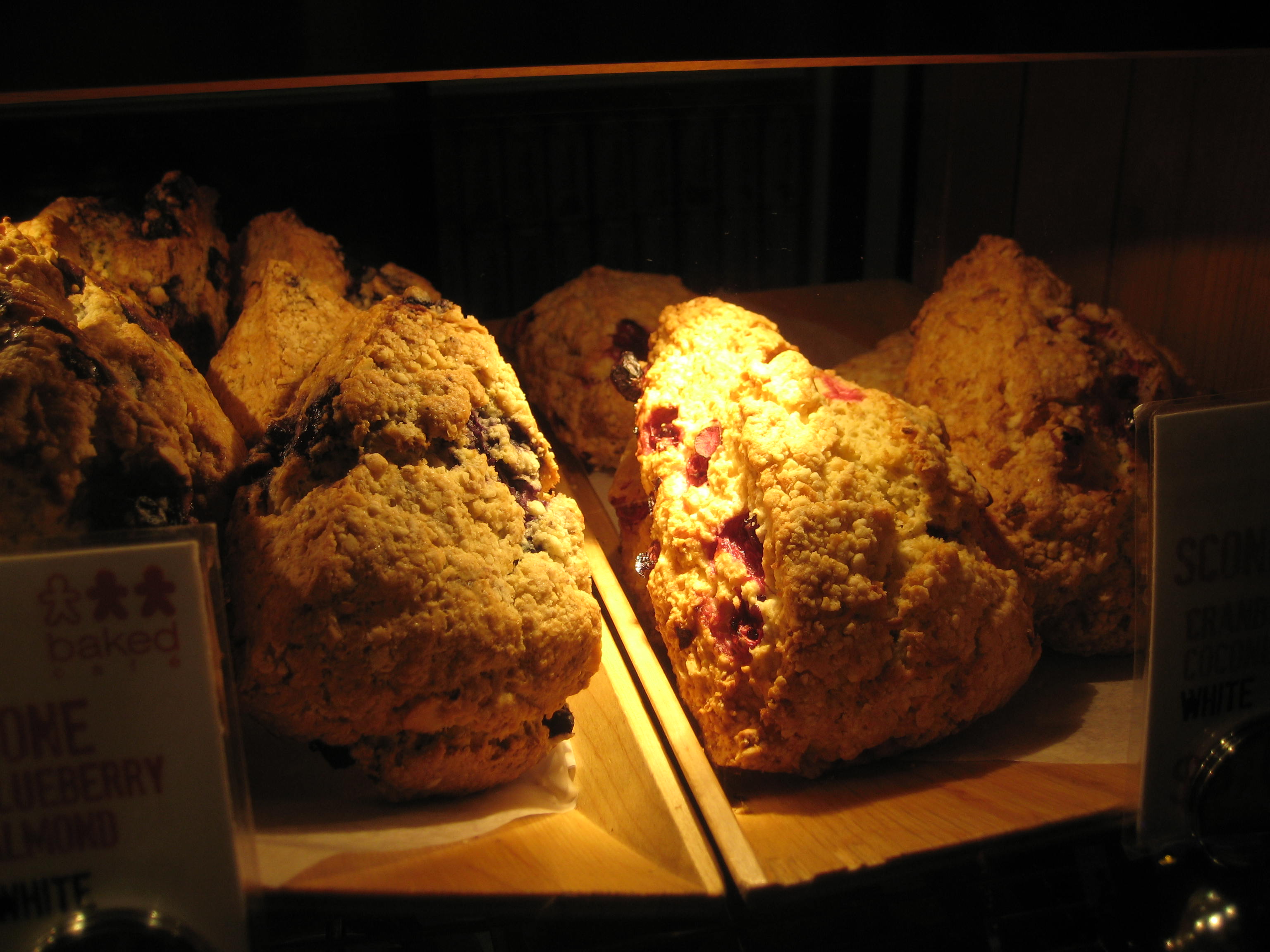 Almond or Raspberry Walnut–they each come in three kinds: white, wheat and spelt. Awesome soups–my favorites are any of their hearty chowders and their Tomato Basil with or without chicken. They also serve sandwiches, beef pies, quiches, wraps, salads, cookies, and in the summer, several flavors of gelato. There is something for everyone. It is a hot tourist spot in the summer, and just a hop away from the Whitehorse Trolley across the street. Kids love it. And it’s close to everything on Main Street–a place to begin your perfect day of shopping and touring around. It’s a block away from the Museum, down the street from the Westmark, next to the river and the Whitepass Yukon Railway building.